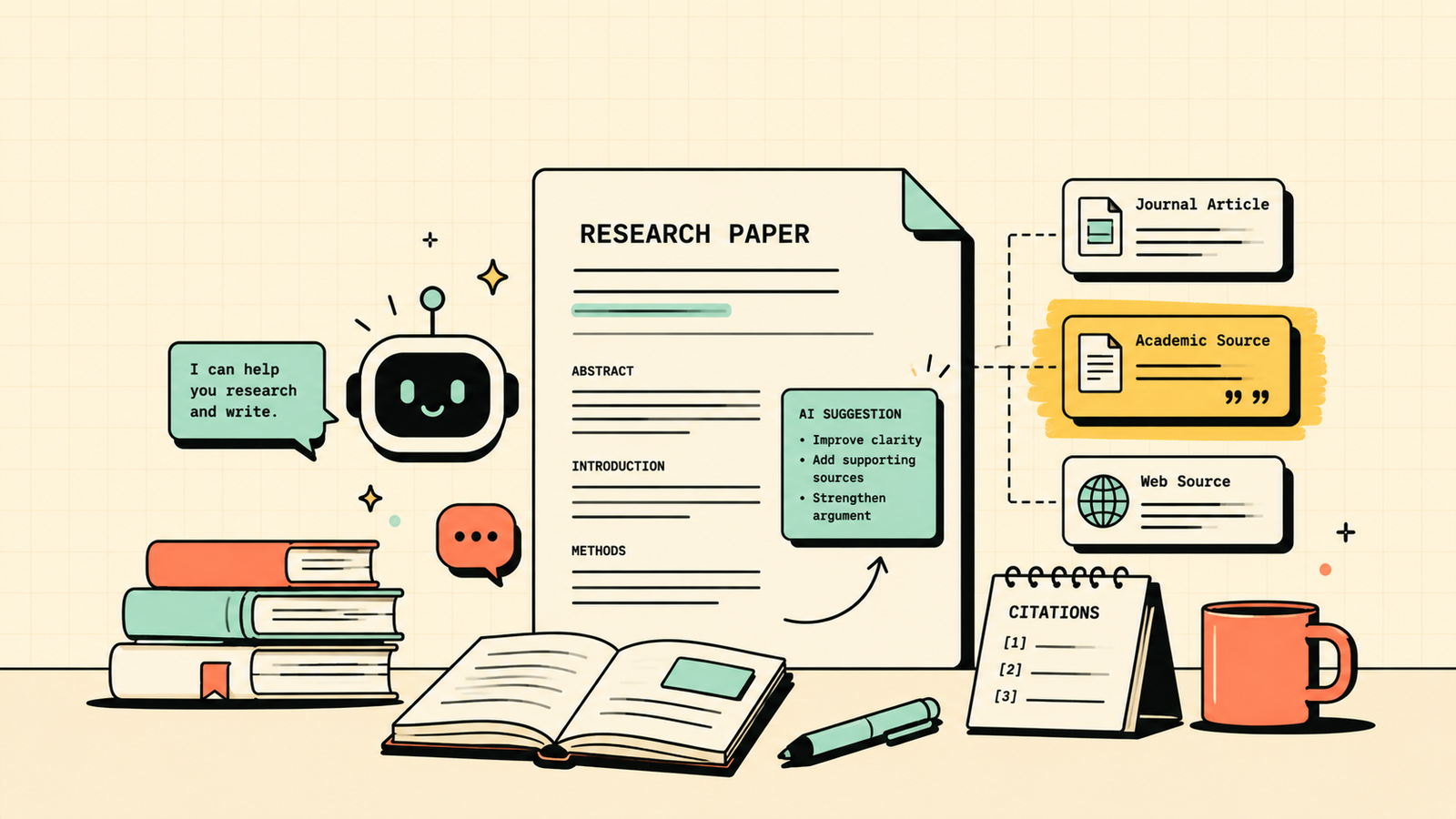
You are staring at a blank document, 47 tabs open, a deadline closing in, and all you have so far is a title and the sinking feeling that this paper is going to take forever. Research papers are one of the hardest things students and academics write, because they demand original thinking, proper sourcing, clean structure, and polished language all at once. AI cannot do the thinking for you, and it should not write the paper for you, but the right tools can genuinely speed up the painful parts: finding sources, organising what you have read, outlining your argument, and cleaning up your writing. This guide covers the best AI tools for writing a research paper, what each one actually helps with, which ones are free, and how to use them without crossing into plagiarism.
What AI can and cannot do for a research paper
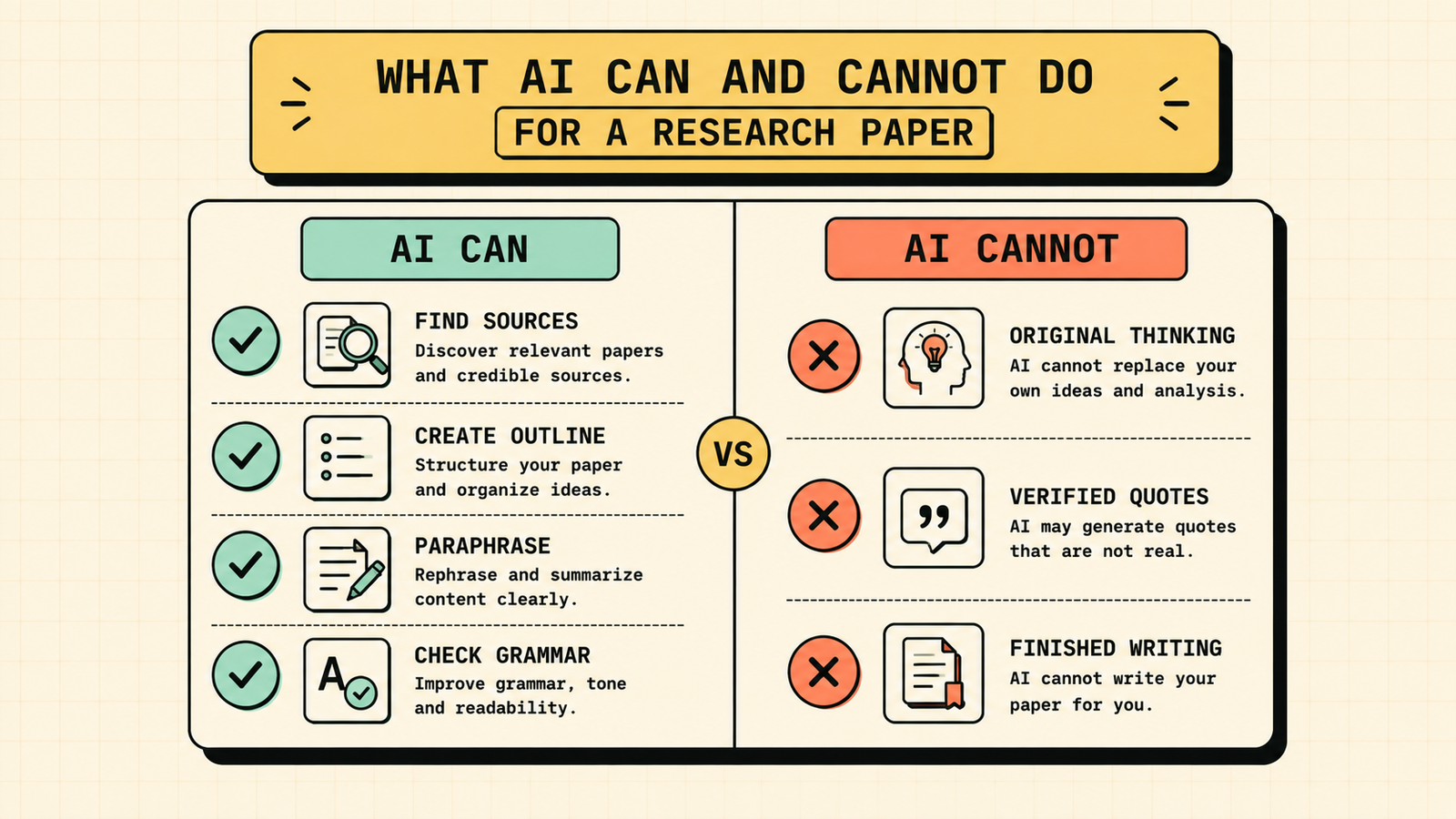
Setting expectations saves frustration. AI is genuinely useful for finding and summarising academic sources, organising notes and readings, generating outlines and structure from your ideas, paraphrasing and improving your own writing, checking grammar and clarity, and speeding up citations and references. AI is not reliable for writing finished paragraphs you submit as your own (that is plagiarism), generating accurate facts or quotes without verification (it hallucinates), replacing your own analysis, argument, or critical thinking, or guaranteeing citation accuracy without you double-checking. Use AI for the process, not the product. It helps you work faster and better, but the thinking and the final words need to be yours.
Best AI Tools for Students
The best AI tools for research paper writing
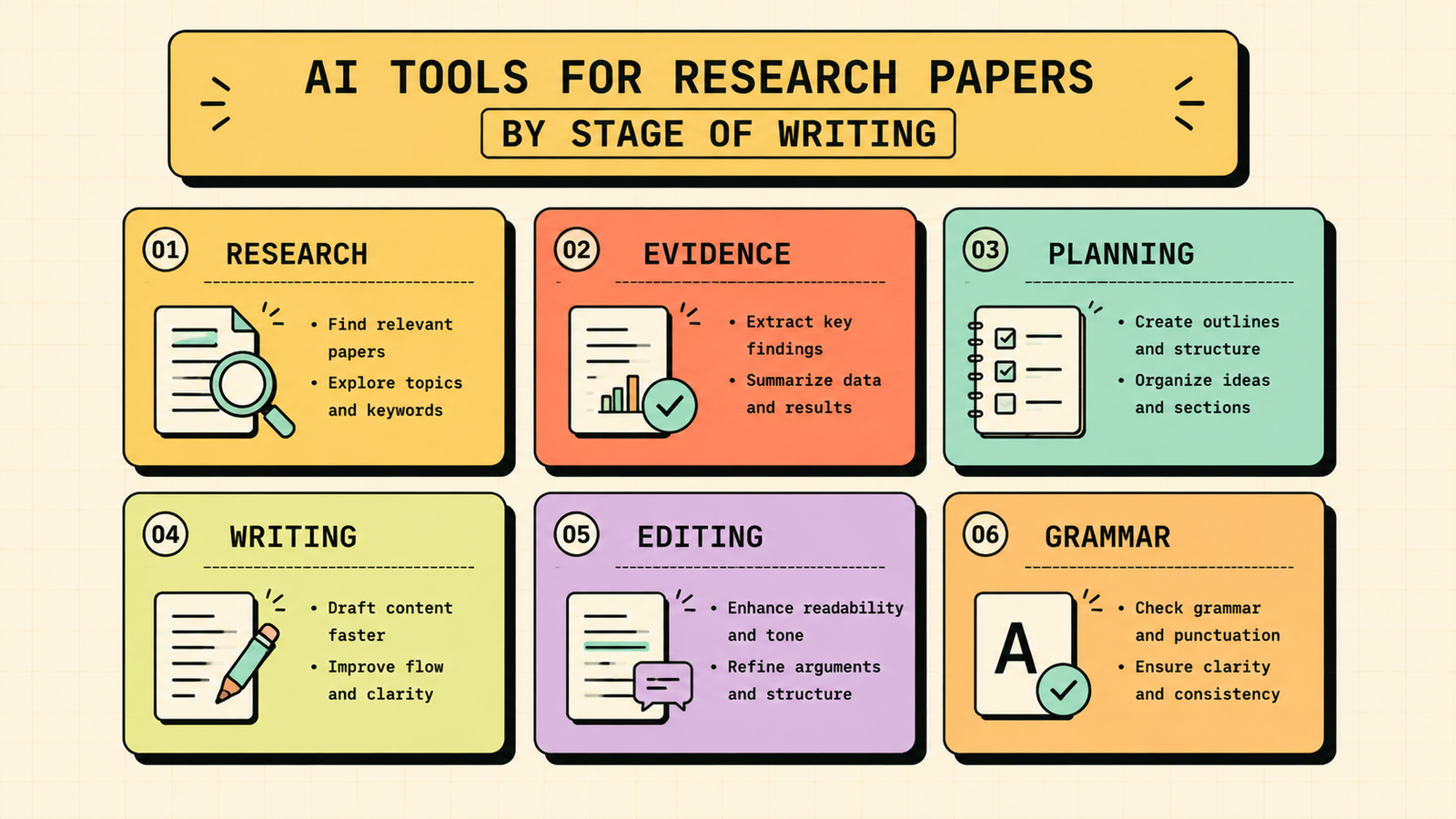
Here are the tools that actually help, matched to the stage of writing where they add the most value.
Perplexity
Perplexity is the strongest AI for the research stage. It searches the web and academic sources in real time and gives you answers with inline citations, so you can see exactly where every fact comes from. That makes it excellent for exploring a topic, finding relevant papers, building an initial reading list, and verifying claims. The free plan is powerful, and Pro adds deeper search, file uploads, and longer answers. Use it early to map your topic and find sources you can trust.
Consensus
Consensus is built specifically for academic research. It searches a database of peer-reviewed papers and gives you evidence-based answers drawn directly from published studies, with links to the original papers. It is not a general chatbot. It is a research tool that answers questions using real scientific literature. The free plan covers basic searches, with Pro adding more features. Use it when you need to find what the published evidence actually says on a question.
ChatGPT
ChatGPT is the most flexible tool on this list. It helps with brainstorming angles, generating outlines from your notes, explaining difficult concepts, restructuring your argument, and improving the clarity of your own writing. It does not cite sources natively, so never trust it for facts without checking, but as a thinking and structuring partner it is hard to beat. The free plan (GPT-4o) is strong. Use it for the planning, outlining, and editing stages, not for sourcing or finished writing.
Jenni AI
Jenni AI is designed specifically for academic writing. It helps you write alongside your sources, offering suggestions as you type, managing your citations, and helping you structure sections in the formats academic papers require (APA, MLA, Chicago). It integrates with your references and keeps the writing connected to your source material. It has a free tier with limited words and paid plans for heavier use. Use it when you want an AI writing assistant that understands academic structure and citations.
Paperpal
Paperpal focuses on the editing and polishing stage. It checks your academic writing for grammar, clarity, tone, and style, specifically tuned for research papers and manuscripts rather than general text. It also suggests improvements to make your writing more concise and publication-ready. It has a free plan with paid tiers for more checks. Use it as a final pass before submission to catch issues a general grammar tool would miss.
Quillbot
Quillbot is a paraphrasing and grammar tool that helps you rewrite sentences in your own words, check grammar, and run a plagiarism scan. It is useful when you need to rephrase source material properly or improve the flow of your own writing. The free plan covers basic paraphrasing and grammar, with Premium adding more modes and the plagiarism checker. Use it for rewriting and cleaning up your drafts.
What Is SEO and How Does It Work?
AI tools for research papers compared
| Tool | Best stage | What it does | Free plan | Sources/citations |
|---|---|---|---|---|
| Perplexity | Research and sourcing | Finds facts with cited sources | Yes | Yes, inline |
| Consensus | Evidence search | Answers from peer-reviewed papers | Yes (basic) | Yes, academic papers |
| ChatGPT | Planning, outlining, editing | Brainstorming, structure, clarity | Yes (GPT-4o) | No native citations |
| Jenni AI | Writing with sources | Academic writing with citation management | Yes (limited) | Yes, integrated |
| Paperpal | Editing and polishing | Academic grammar, style, tone | Yes | No |
| Quillbot | Rewriting and grammar | Paraphrase, grammar, plagiarism | Yes (basic) | Plagiarism check only |
Perplexity vs Consensus vs ChatGPT: which is best for research papers?
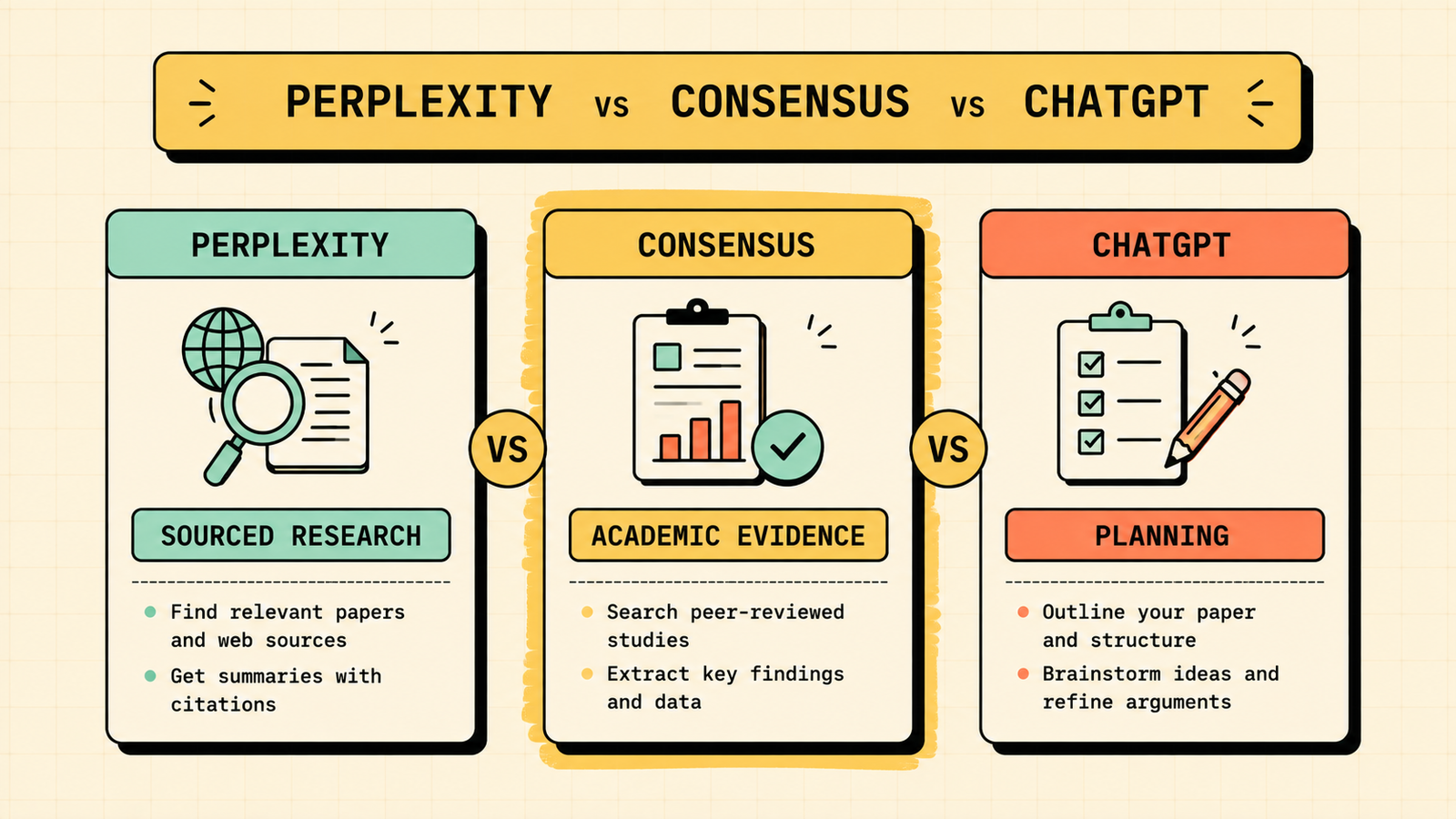
Each wins at a different stage. Pick Perplexity when you are exploring a topic and need sourced facts quickly from across the web and academic literature. It is the best starting point for any research paper. Pick Consensus when your question is specifically about what published scientific evidence says, since it searches only peer-reviewed papers. Pick ChatGPT when you have done your research and need help organising your argument, building an outline, or improving your writing, but remember it does not provide reliable sources. Many students use Perplexity or Consensus for the research, then ChatGPT for the structuring and editing, which gives you the strengths of each.
Best free AI for research paper writing
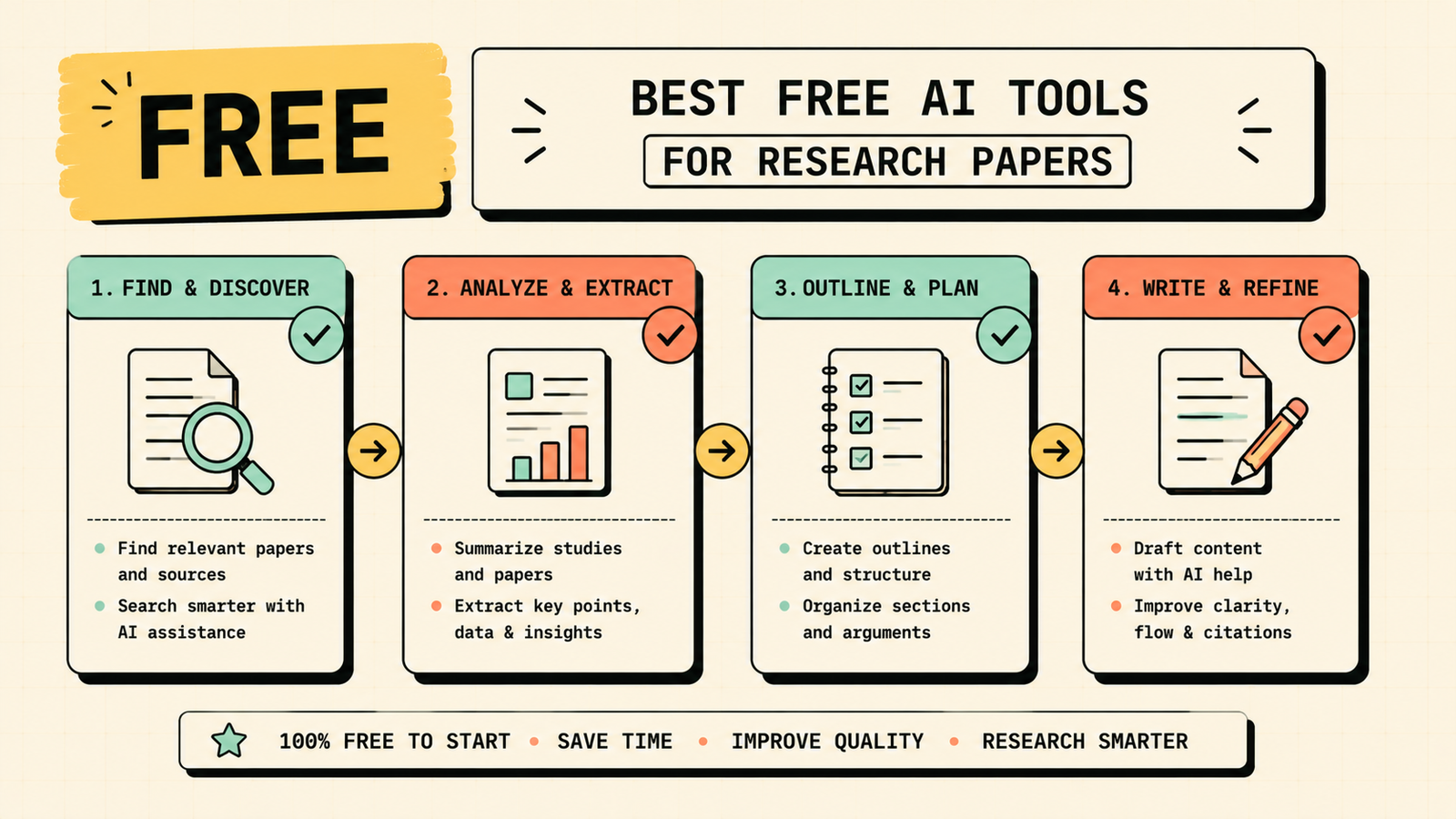
If you are not paying for anything, you still have a solid workflow. Use Perplexity free to find and verify sources with citations. Use Consensus free to check what the academic literature says. Use ChatGPT free to brainstorm, outline, and improve your writing. Use Quillbot free for paraphrasing and grammar. Together, these four cover the research, planning, writing, and editing stages at zero cost. Paid plans add convenience and heavier usage, but the free tools handle a full paper workflow.
We'll show you exactly which AI tools fit your research workflow and which ones are just noise.
Get a clear, practical plan to build your own AI research stack that actually saves time without cutting corners.
How to use AI without plagiarising
This is the line that matters. AI should help you think, not replace your thinking. Use it to find sources, then read and understand those sources yourself. Use it to generate outlines from your own ideas, then write the paper in your own words. Use it to improve and paraphrase your own drafts, not to generate paragraphs from scratch. Always cite your actual sources properly, and never submit AI-generated text as your own work. If your university has an AI policy, follow it, and when in doubt, disclose your use. Treating AI as a research assistant and editor keeps you on the right side of the line.
Best AI for citations and references
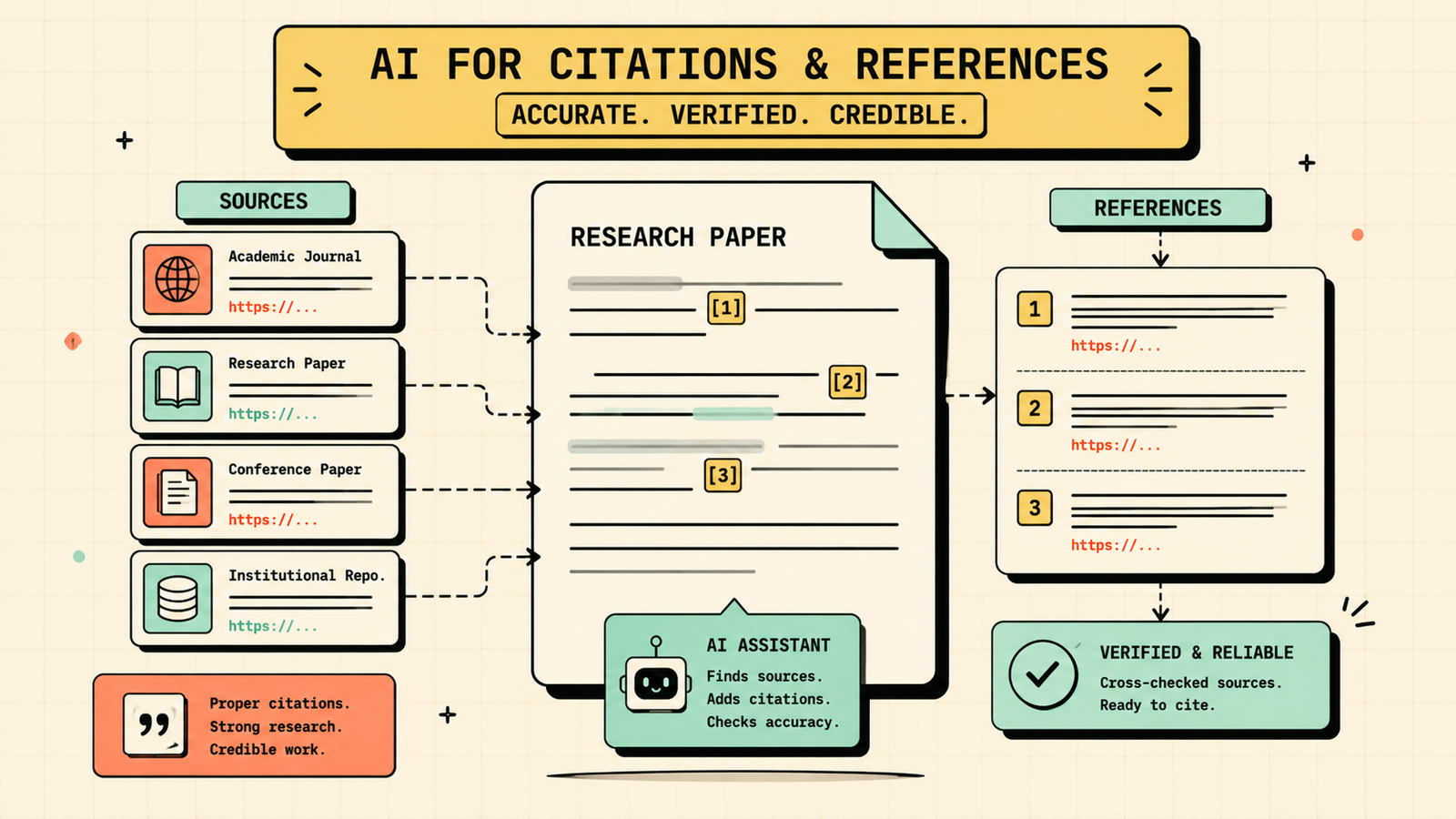
Getting citations right is one of the most time-consuming parts of a research paper, and AI can help. Perplexity gives you inline citations with links to original sources as part of every answer, which makes building a reference list faster. Consensus links directly to the peer-reviewed papers it draws from, so you can cite the original study. Jenni AI manages citations inside your writing and supports APA, MLA, and other formats. And dedicated reference managers like Zotero (free) integrate with your workflow to keep everything organised. Always double-check AI-provided citations against the original source, because formatting errors and hallucinated references do happen.
Best AI for a literature review
A literature review is one of the most researched-heavy sections, and the right tools make it far less painful. Use Consensus to find what the published evidence says on your question, since it searches peer-reviewed papers directly. Use Perplexity to explore the broader landscape and find studies Consensus might miss. Use ChatGPT or Claude to help you organise and structure the themes you found into a coherent narrative. And use Jenni AI if you want to write inside a tool that keeps your citations connected as you draft. The AI helps you find, organise, and structure, but the synthesis and critical analysis need to come from you.
Best AI Tools for Making Presentations
The full AI-assisted research paper workflow
Here is how the tools fit together from start to finish, so you can see the complete picture rather than just a list of options.
Start with Perplexity to explore your topic broadly and find initial sources with citations. Use Consensus to dig into what the published academic evidence says on your specific research question. Read the papers yourself, take notes, and form your own argument. Bring your notes and ideas into ChatGPT to brainstorm your angle, build an outline, and structure your sections. Write your first draft yourself, using Jenni AI if you want citation management as you go, or a plain editor if you prefer. Run your draft through Paperpal to catch academic style and clarity issues, and through Quillbot to tighten phrasing and check for unintentional similarity. Finally, double-check every citation against the original source before submitting. Each tool handles the stage it is best at, and you handle the thinking in between. That division is what makes the workflow fast without making it dishonest.
LetMeRank
The bottom line
AI tools can genuinely speed up writing a research paper, but only when you use them for the right jobs. Use Perplexity and Consensus to find real, cited sources. Use ChatGPT to plan, outline, and clarify your thinking. Use Jenni AI to write with integrated citations. Use Paperpal and Quillbot to polish and paraphrase. Keep the original thinking, argument, and final writing yours, and you get a faster, better paper without crossing any lines.
If you found this useful, LetMeRank publishes practical guides on AI tools and organic growth for students, founders, and small teams.