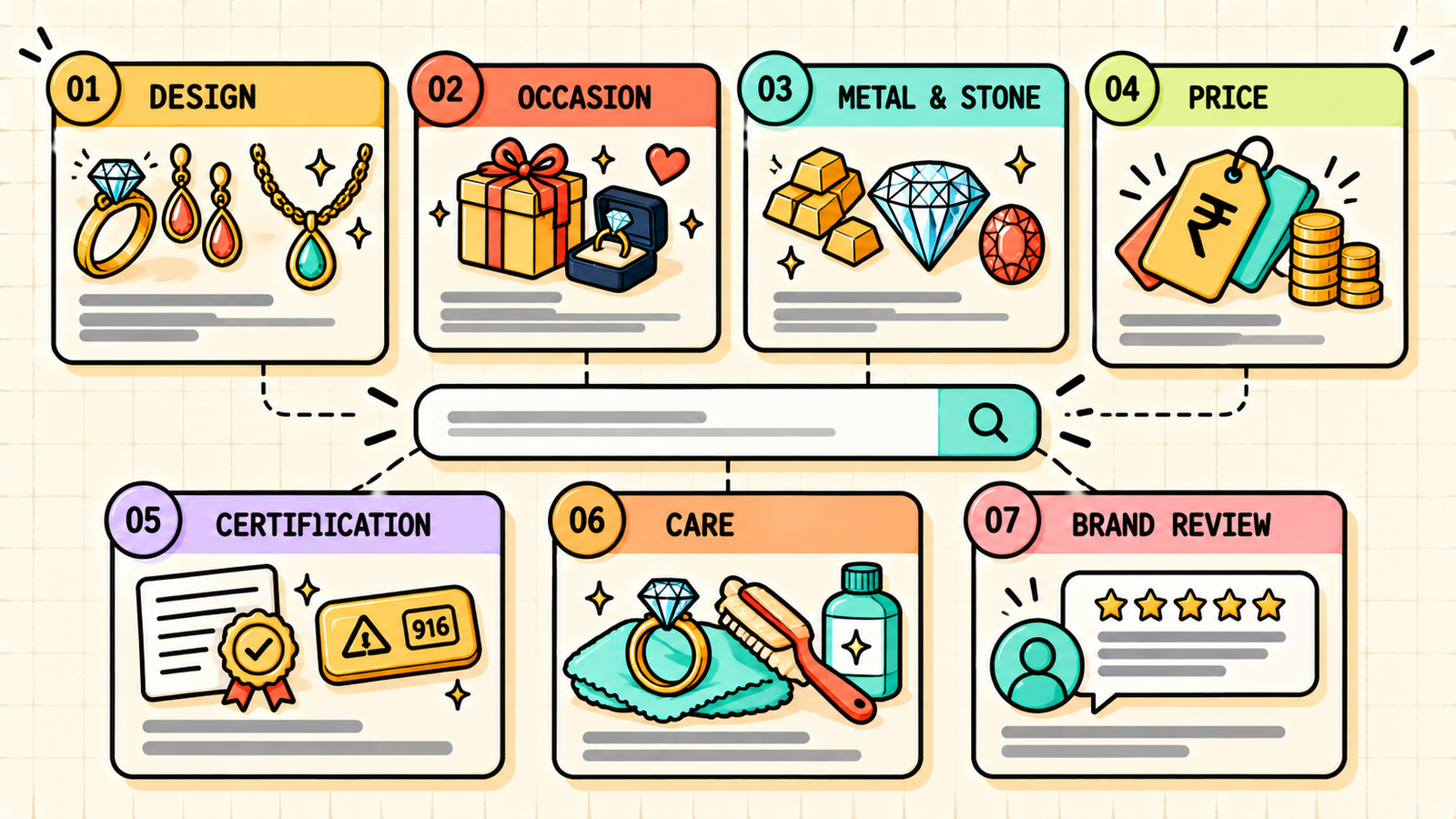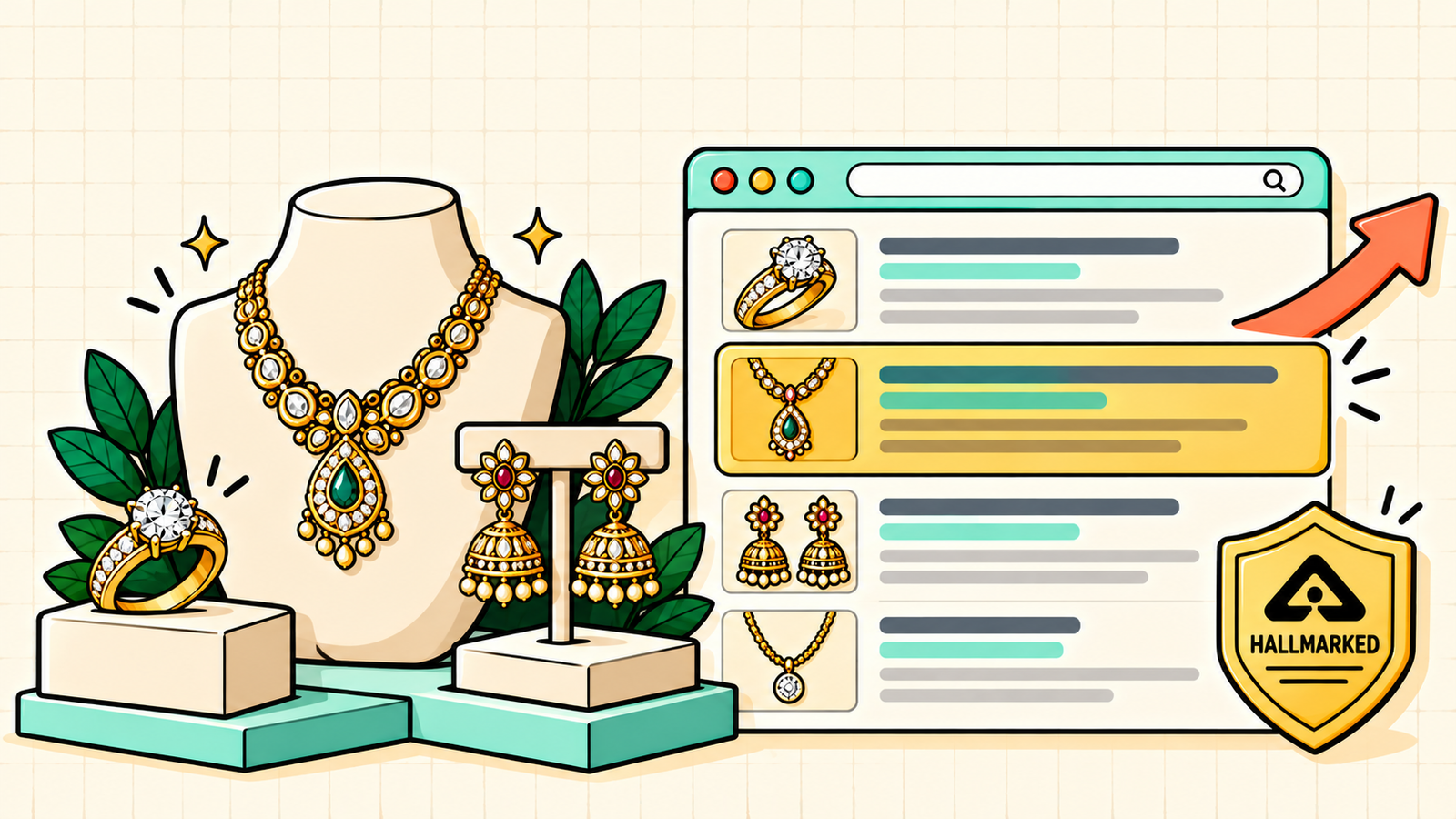
Jewellery is one of the most trust-sensitive purchases in India. Whether it is a 22-carat gold chain, a lab-grown diamond ring, a silver anklet, or demi-fine everyday jewellery, buyers worry about purity, authenticity, pricing, and whether the piece will look as good in person as it does on screen. Big jewellers have decades of in-store trust. New D2C brands have to earn it online. SEO is one of the best ways to earn that trust. Jewellery buyers search for designs, occasions, metal and stone information, care tips, pricing, and certification details long before they buy. A brand that answers those questions clearly becomes familiar and credible at the exact moment a buyer is deciding. This guide covers how SEO works for jewellery brands, the pages that drive sales, how to build trust in a high-value category, and the mistakes that keep most jewellery websites invisible.
Why SEO matters for jewellery brands
Jewellery purchases involve a long consideration period, especially for gold, diamonds, and bridal pieces. Buyers compare designs, check prices against gold rates, read about purity and certification, look at reviews, and often visit a store or ask family before deciding. Every step of that research is a search opportunity.
SEO also reduces dependence on Instagram ads, which are crowded and expensive in jewellery. A ranking collection or buying guide brings buyers who are already looking, and in a category where average order values are high, even a modest number of organic customers can be worth a lot.
How jewellery buyers search
| Search type | Example queries | Best page type |
|---|---|---|
| Design and category | gold chain designs for men, diamond stud earrings, oxidised silver jhumkas | Collection pages |
| Occasion and gifting | engagement ring designs, anniversary gift for wife, mangalsutra designs | Occasion and gifting collections |
| Metal and stone education | 22k vs 18k gold, lab grown vs natural diamond, how to check silver purity | Education guides |
| Price and value | gold ring price for women, diamond ring under 50000, making charges explained | Price guides, transparent pricing pages |
| Trust and certification | how to check hallmark, BIS hallmark HUID, IGI certified diamond | Certification and trust pages |
| Care and styling | how to clean silver jewellery, how to style layered necklaces | Care and styling guides |
| Brand evaluation | [brand] review, [brand] return policy, is [brand] real gold | Product pages, policy pages, FAQ |
Design and occasion searches drive revenue. Education, price, and trust searches decide whether the buyer trusts you.
The jewellery SEO playbook
1. Build strong collection pages
Collections for each category (rings, earrings, necklaces, bangles, chains, mangalsutras) and each important style (temple, minimal, oxidised, diamond, kundan) target the highest commercial searches. Add an introduction describing the style, metals, and who it suits, plus more helpful text and an FAQ below the products. Collections with only an image grid are very hard to rank.
2. Create occasion and gifting collections
Jewellery is deeply occasion-driven: engagements, weddings, anniversaries, Akshaya Tritiya, Dhanteras, Karwa Chauth, Raksha Bandhan, birthdays. Build permanent occasion collections and gifting pages by recipient and budget ("gifts for wife under 20000"), and update them before each season. Keep the same URLs every year so they build authority.
3. Publish metal and stone education
Buyers search constantly to understand what they are buying: the difference between 22k and 18k gold, what hallmarking means, lab-grown versus natural diamonds, sterling silver versus silver plating, the 4Cs of diamonds, and what demi-fine jewellery is. Clear, honest education guides build authority, rank well, and reassure buyers before they spend.
4. Be transparent about pricing
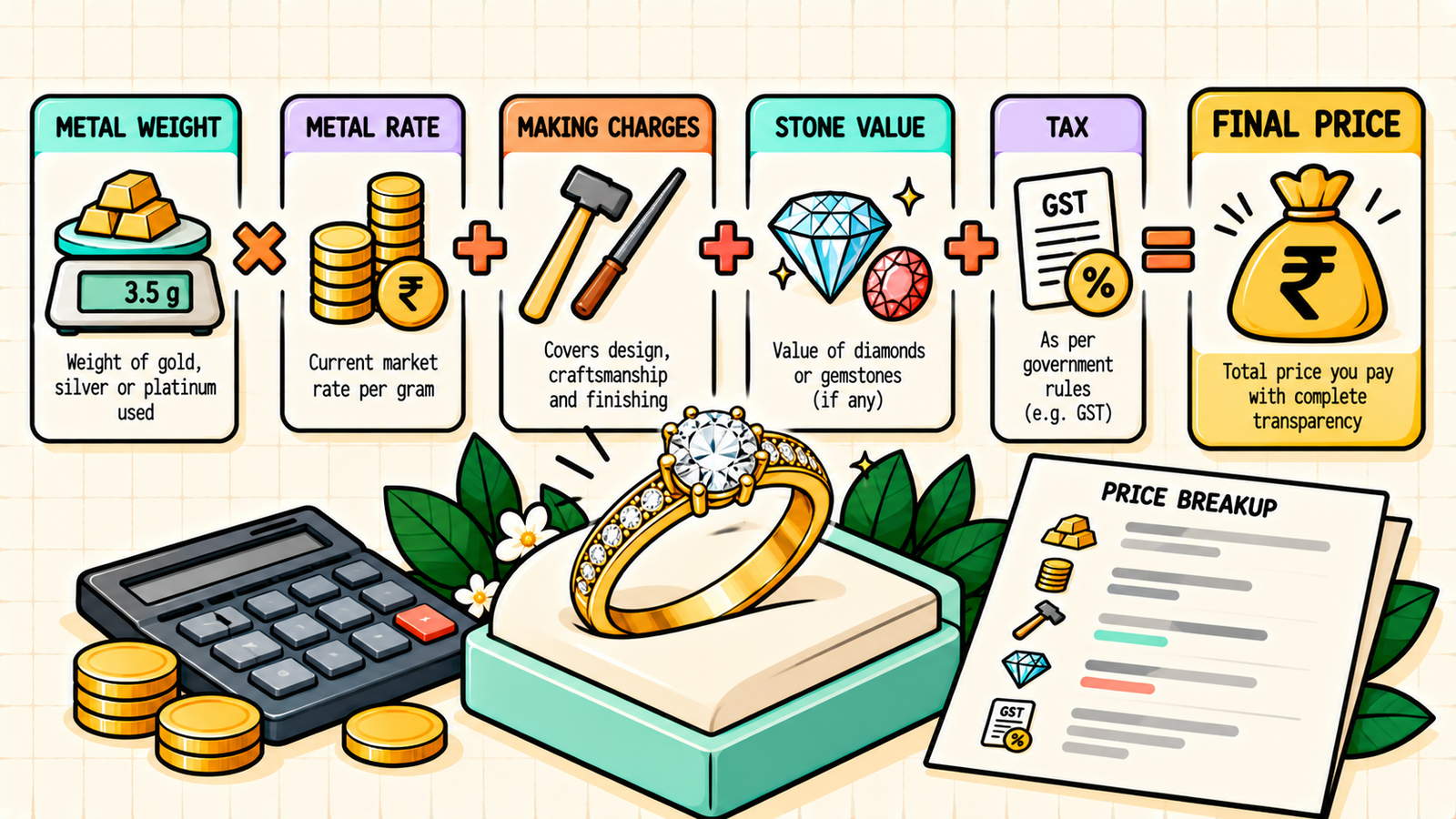
Pricing confusion is a major barrier in jewellery. Explain how your prices are calculated: metal weight, current metal rate, making charges, stone value, and taxes. Show price breakups on product pages where possible. A page explaining making charges and how gold jewellery is priced answers common searches and builds trust that hidden pricing destroys.
5. Make certification and authenticity visible
For gold, explain BIS hallmarking and the HUID number, and how buyers can verify it. For diamonds, show certification from recognised labs. For silver, state purity clearly. Create a dedicated authenticity page and reference it on every product page. These details answer searches like "how to check hallmark" and "is [brand] real gold," which are among the most important searches in this category.
6. Make product pages complete
Include metal type and purity, gross and net weight, stone details and certification, dimensions and size options, price breakup, how it looks when worn (with model or hand photos for scale), care instructions, delivery and insurance information, return and exchange policy, real reviews, and an FAQ. Multiple high-quality images and a short video showing the piece in natural light help buyers judge what they cannot touch.
7. Write care and styling guides
Searches like "how to clean gold jewellery at home," "how to store silver to prevent tarnish," and "how to style a choker with a saree" bring steady traffic and keep customers engaged after purchase. Link each guide to relevant collections.
We'll find exactly where your jewellery brand is losing trust and traffic.
Get a clear, data-backed plan to rank collections, build trust with education and certification content, and turn search traffic into high-value customers.
Building trust in a high-value category
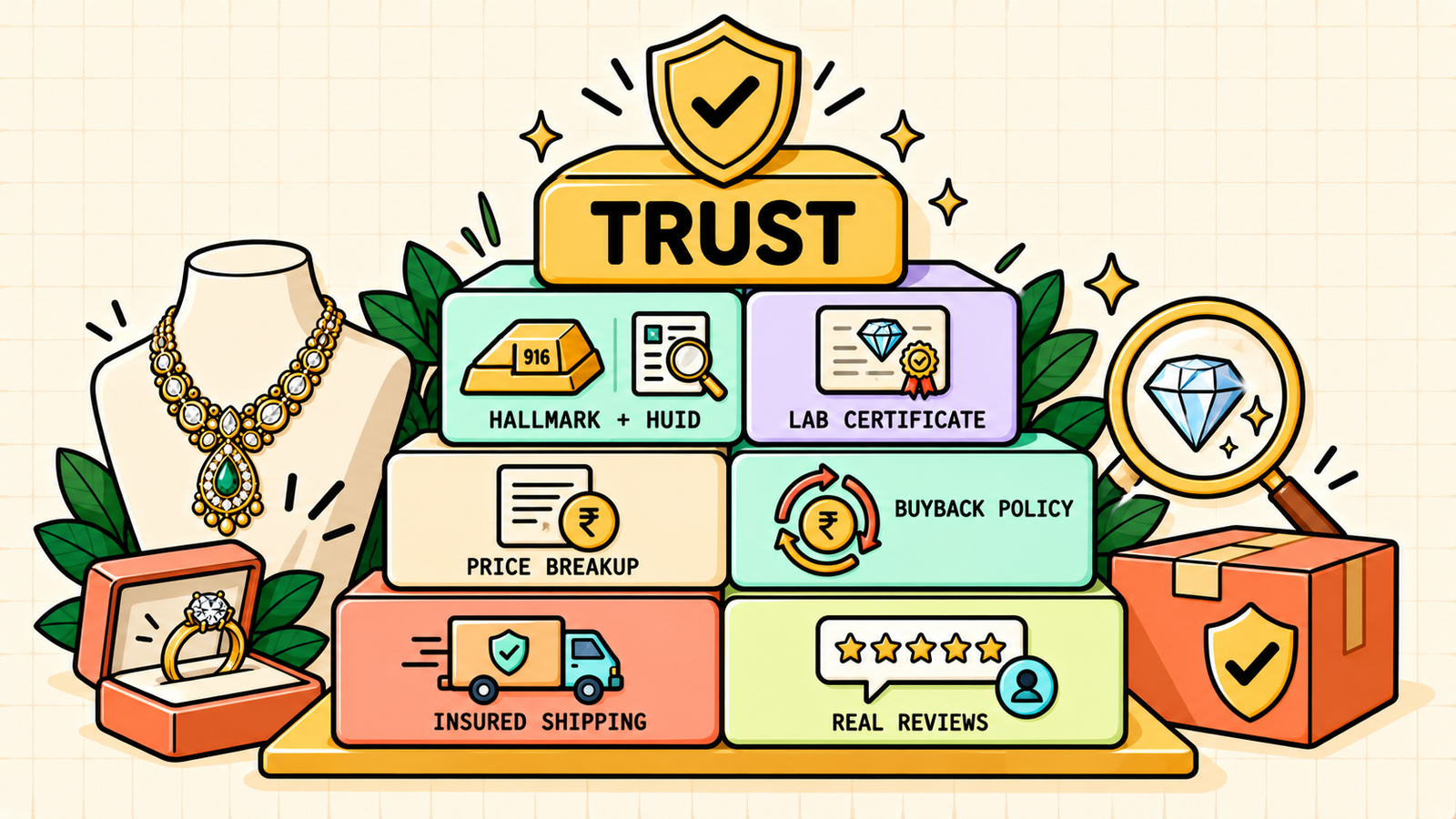
Trust signals matter more in jewellery than almost anywhere else. Show your physical store or workshop if you have one, with address and Google Business Profile. Display certifications, hallmark information, and lab reports clearly. Offer and explain buyback, exchange, lifetime exchange, or return policies. Show insured shipping and secure packaging details. Feature genuine reviews with photos. And show the people behind the brand: designers, artisans, and founders. Each of these signals answers a question a cautious buyer is already asking.
Lab-grown diamonds and new categories
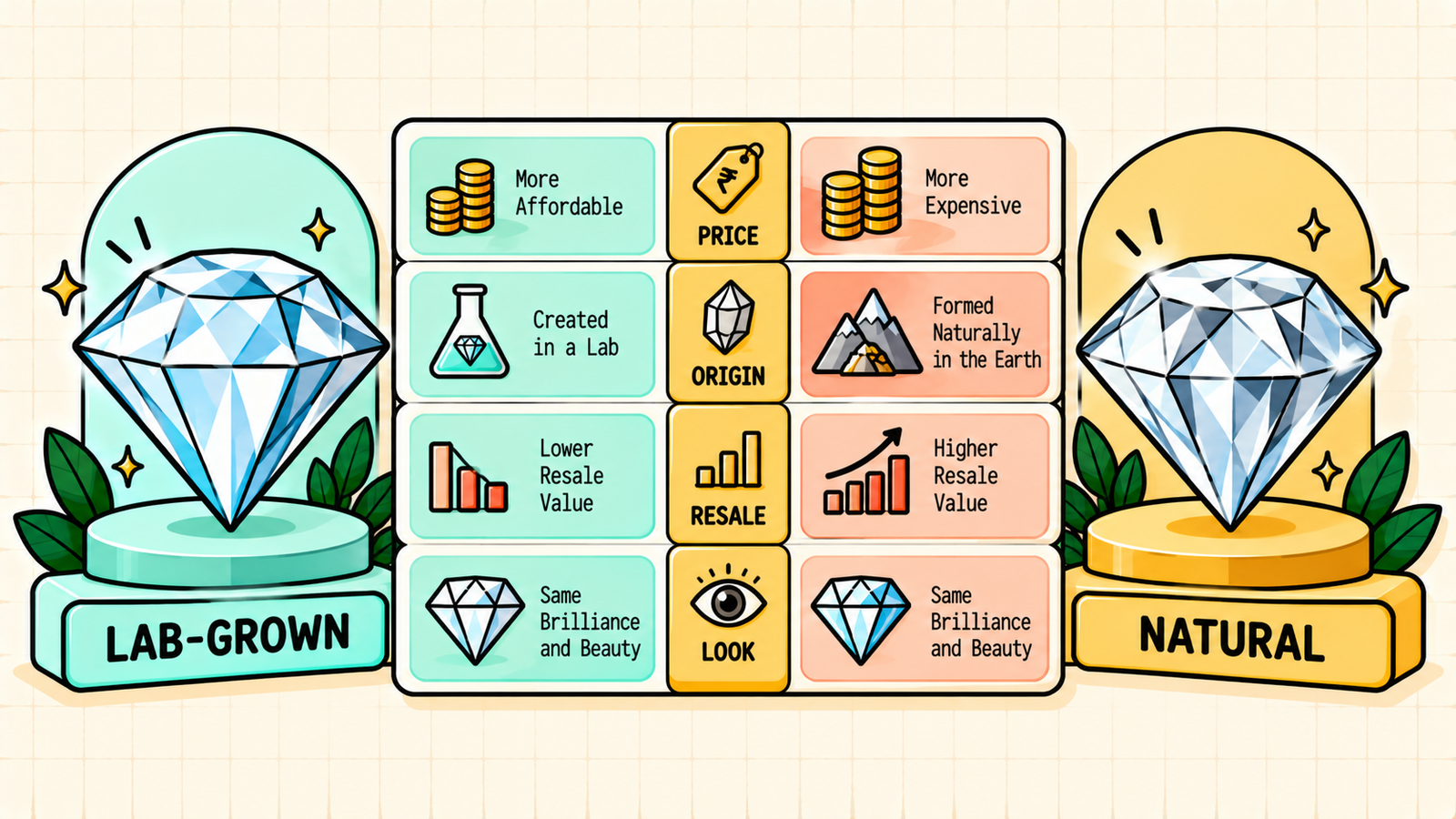
Lab-grown diamonds, demi-fine jewellery, and sterling silver everyday pieces are fast-growing segments with heavy search interest from buyers who are curious but uncertain. Honest comparison content, such as "lab-grown vs natural diamonds: what is the difference," "is lab-grown diamond worth it," or "demi-fine vs fine jewellery," captures this curiosity and positions your brand as the trustworthy guide. Be balanced: explain resale value, durability, and pricing honestly, including where traditional options may suit someone better.
Local SEO for jewellery stores
Many jewellery brands combine online sales with physical stores, and many buyers still want to see pieces in person before buying high-value items. Optimise a Google Business Profile for each store with accurate address, hours, photos, and reviews. Create a store page for each location on your website. Encourage online buyers to visit for try-ons, and in-store buyers to leave Google reviews. Searches like "jewellery shop near me" and "gold jewellers in [city]" are high-intent and local.
Virtual try-on and size guidance
Ring size, bangle size, and chain length are common reasons buyers hesitate online. Publish clear size guides with printable ring sizers, bangle size charts in Indian sizing, and chain length visuals showing where each length sits on the neck. Where possible, add virtual try-on or photos of pieces worn by models of different builds. Searches like "how to measure ring size at home" and "bangle size chart India" bring steady, purchase-ready traffic, and good size guidance reduces returns on high-value orders.
Competing with Tanishq, CaratLane and marketplaces
Large jewellers and marketplaces dominate broad terms like "gold earrings." D2C jewellery brands win on specificity: niche styles, regional and craft-based designs, specific occasions, budget-based gifting, and education content the big brands keep generic. A clear point of view, such as minimal everyday gold, sustainable sourcing, or traditional craft, gives you content angles and searches the giants do not focus on.
Bridal and wedding content
Wedding jewellery is planned months in advance, so publish bridal guides early: regional bridal sets, what to buy for each ceremony, and how to plan a bridal budget.
Using Instagram, Pinterest and YouTube
Jewellery is highly visual. Pinterest works like a visual search engine for designs ("bridal necklace designs," "minimal gold ring ideas"), and pins can bring traffic for months. Instagram reels showing pieces in natural light and on real people build desire. YouTube videos on care, styling, and how to check purity rank well and build trust. Embed videos on product and guide pages.
Jewellery SEO and AI search
Buyers ask AI assistants questions like "is lab-grown diamond a good investment" or "best brands for lightweight gold jewellery in India." AI tools favour clear, factual, trustworthy sources. Transparent pricing explanations, certification details, balanced education content, and consistent brand information across your site, marketplaces, and review platforms make your brand easier to describe and recommend.
How to measure jewellery SEO
Track organic revenue and average order value, rankings for collection and occasion keywords, traffic to education and trust pages and how often those visitors move to products, store visits and calls from Google Business Profile, branded search growth, and assisted conversions. Jewellery buyers often visit several times before purchasing, so look at the full journey, not just last-click sales.
How long does SEO take for jewellery brands?
Branded, certification, and care searches can improve within weeks. Education guides and specific style collections often rank within three to six months. Broad category collections can take six to twelve months against large jewellers. Occasion pages perform best when published well before the season and kept at permanent URLs.
Common jewellery SEO mistakes
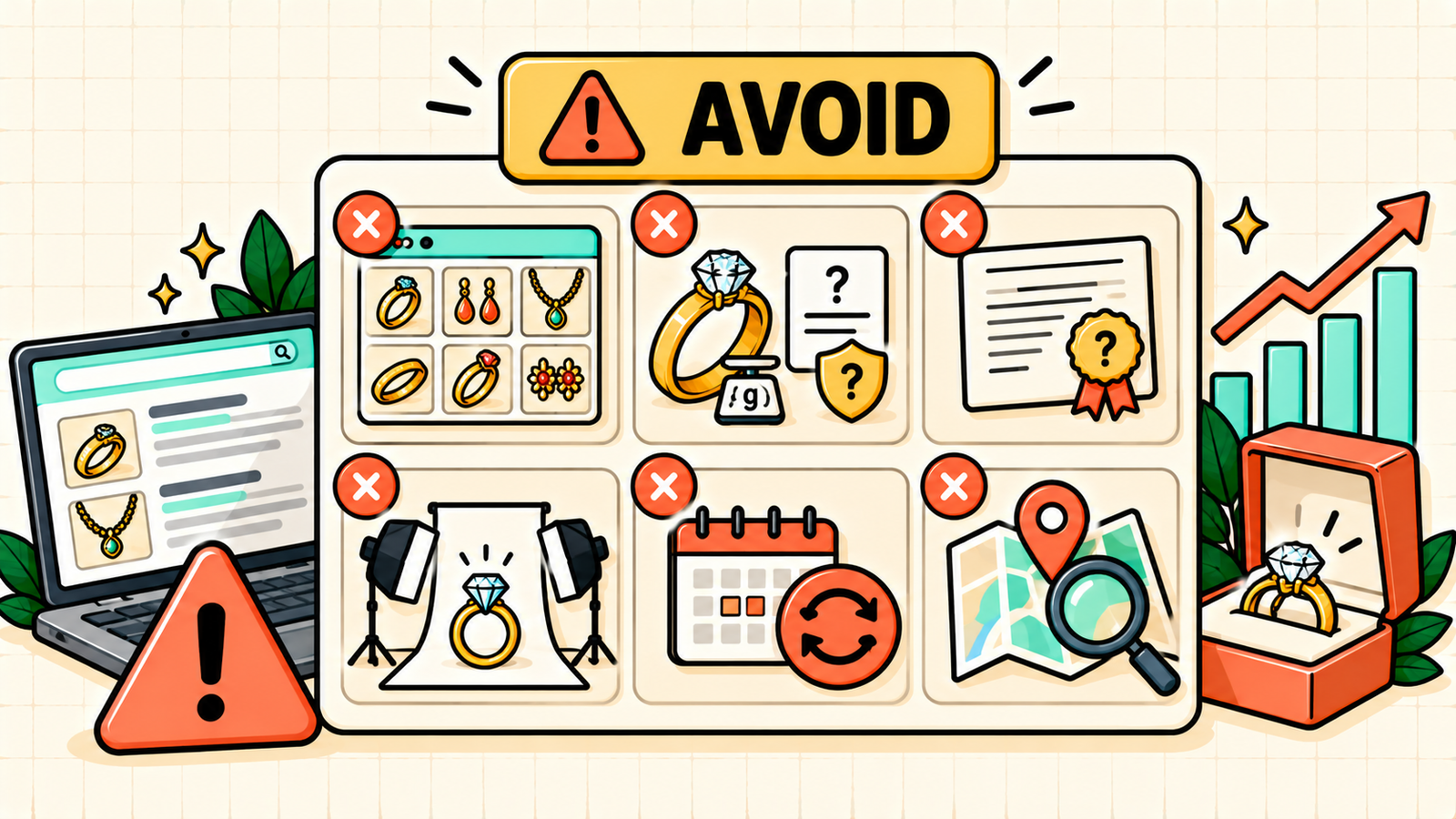
A few patterns appear in almost every jewellery audit. Collection pages without text give Google little to rank. Product pages missing weight, purity, or price breakup lose cautious buyers. Hiding certification and hallmark information raises doubts. Using only studio images without scale or natural light makes pieces hard to judge. Creating new festive URLs every year resets authority. And ignoring local SEO for physical stores misses some of the highest-intent searches.
SEO for Supplement Brands: How Nutrition Brands Rank in a High-Trust Category
The bottom line
SEO for jewellery brands works when trust leads every page. Build strong collection and occasion pages, publish honest metal and stone education, explain pricing transparently, make certification and authenticity visible, complete your product pages, and support local stores with Google Business Profile. Use visual platforms to build desire and your website to answer every question a buyer has before spending. In a category where trust decides the sale, the clearest and most transparent brand wins.
If you want an SEO strategy built for a jewellery or accessories brand, LetMeRank works with Indian D2C brands, including Shark Tank India brands, on organic growth, starting with a free audit.