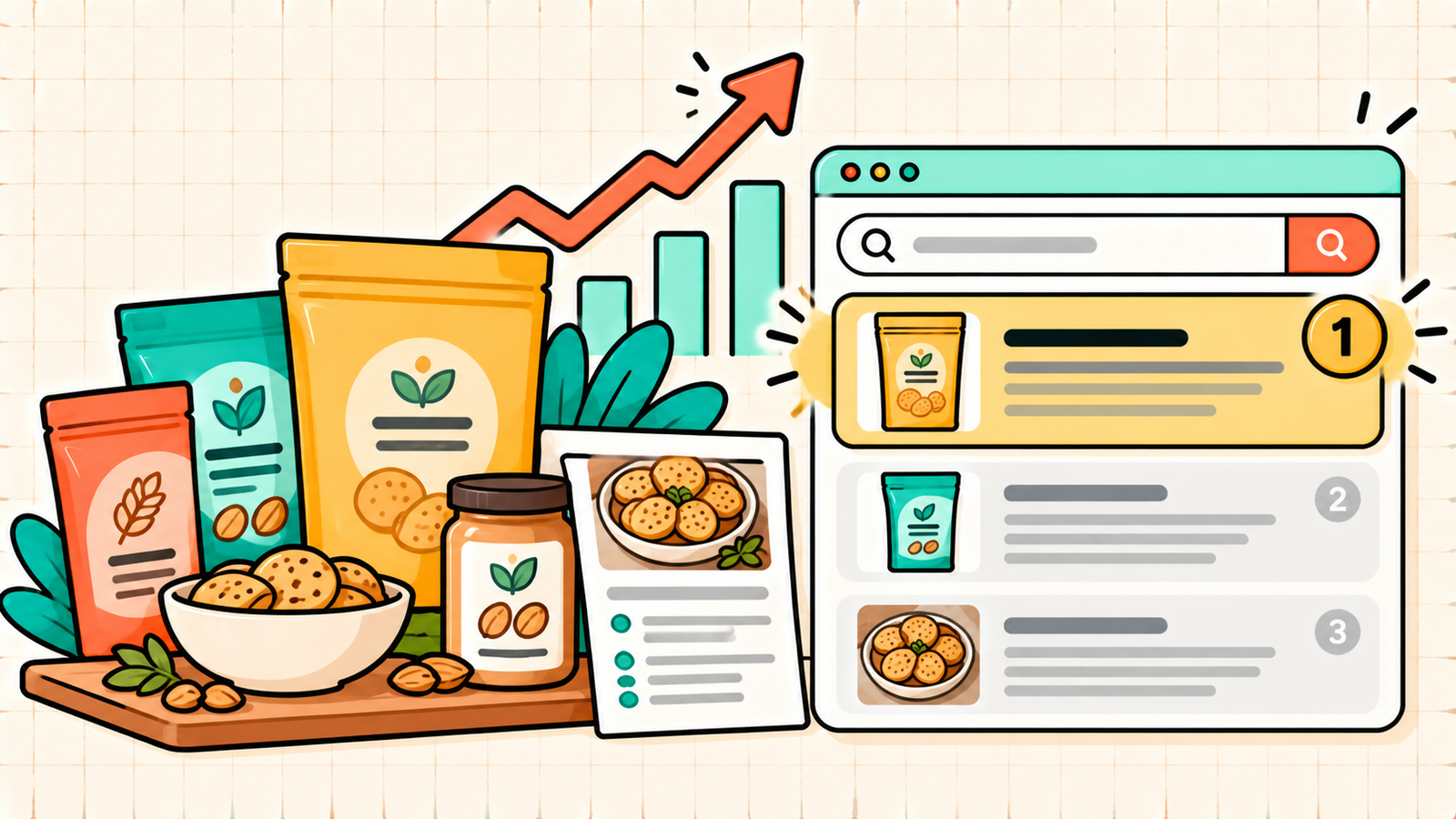
Indian D2C food brands have more distribution than ever. Quick commerce apps, marketplaces, modern trade, and your own website all sell your products. But on most of those channels, you are one tile among hundreds, the platform owns the customer, and visibility depends on ad spend and discounts. SEO is the one channel where a food brand can build demand it actually owns. People search constantly for recipes, healthy snack options, ingredients, diet-friendly foods, and gifting ideas. A food brand that shows up for those searches earns attention before the shopper ever opens a quick commerce app.
This guide covers how SEO works for food and snack brands, the content that drives sales, how to handle health claims responsibly, and the mistakes that keep most food brand websites invisible.
Why SEO matters for food brands
Food is a high-frequency category. People search about food every day: what to cook, what to snack on, what is healthy, what suits their diet. That gives food brands far more search opportunities than most categories. Recipes, ingredient guides, and diet content can bring large, recurring traffic, and each visit is a chance to introduce your product as part of the answer.
SEO also helps food brands justify a direct website. Many founders treat their own site as a brochure because most sales happen on marketplaces and quick commerce. But a website that ranks for recipes and buying guides builds brand recall, captures repeat customers with subscriptions and bundles, and makes every other channel work better because shoppers already know your name.
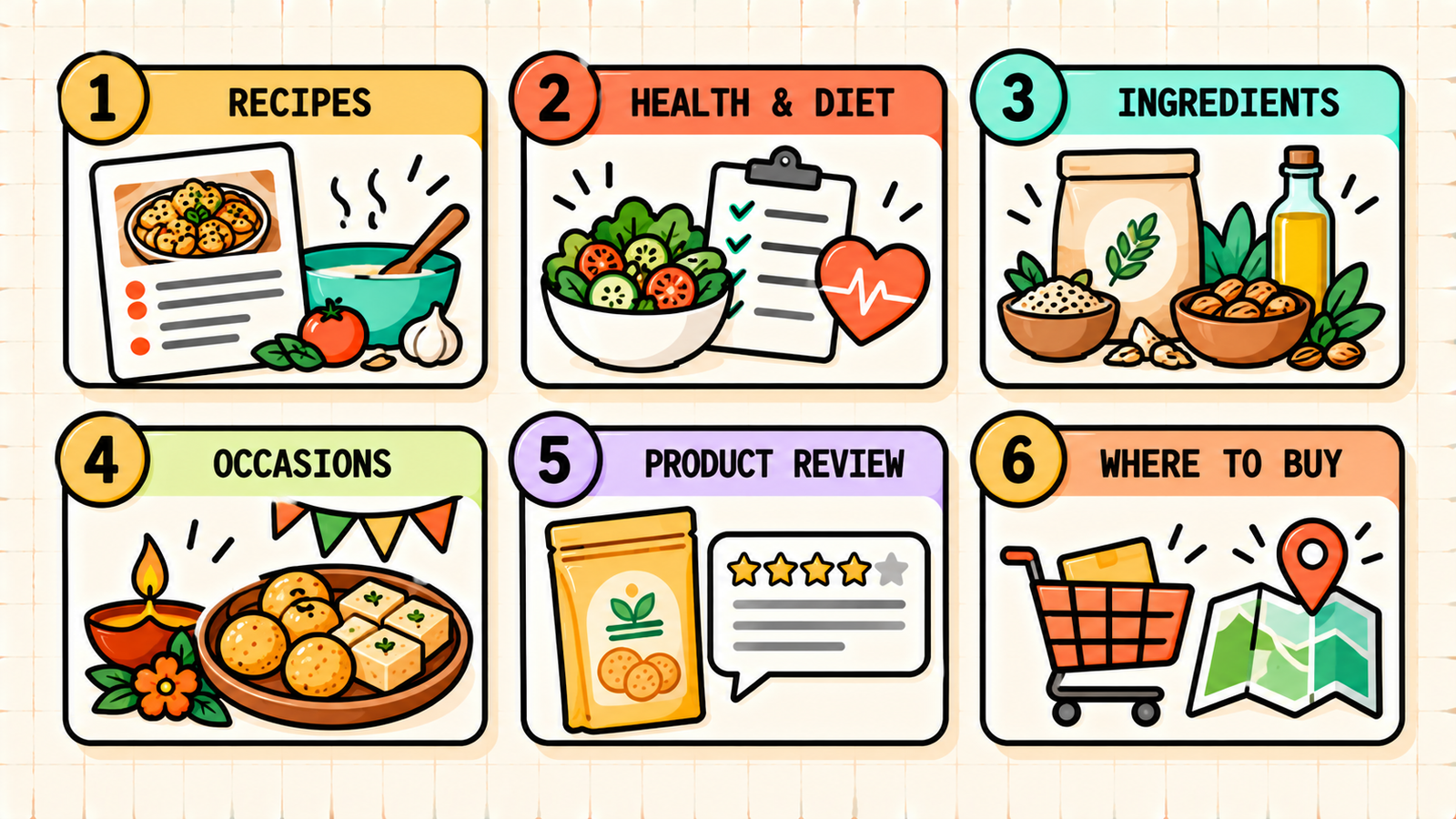
How people search for food
| Search type | Example queries | Best page type |
|---|---|---|
| Recipes | healthy breakfast recipes, millet dosa recipe, protein smoothie recipe | Recipe pages using your products |
| Health and diet | high protein vegetarian snacks, low sugar snacks for diabetics, keto snacks India | Buying guides, diet-specific collections |
| Ingredients | benefits of makhana, ragi vs oats, is jaggery healthy | Ingredient explainers |
| Occasions | Diwali gift hampers, healthy snacks for office, tiffin ideas for kids | Gifting and occasion pages |
| Product evaluation | [brand] review, [product] calories, [brand] protein bar ingredients | Product pages, nutrition pages, FAQ |
| Where to buy | [brand] near me, [product] online | Store locator, where-to-buy page |
Recipes and health searches bring the most volume. Occasion and product searches convert best.
The food brand SEO playbook
1. Build recipe content around your products
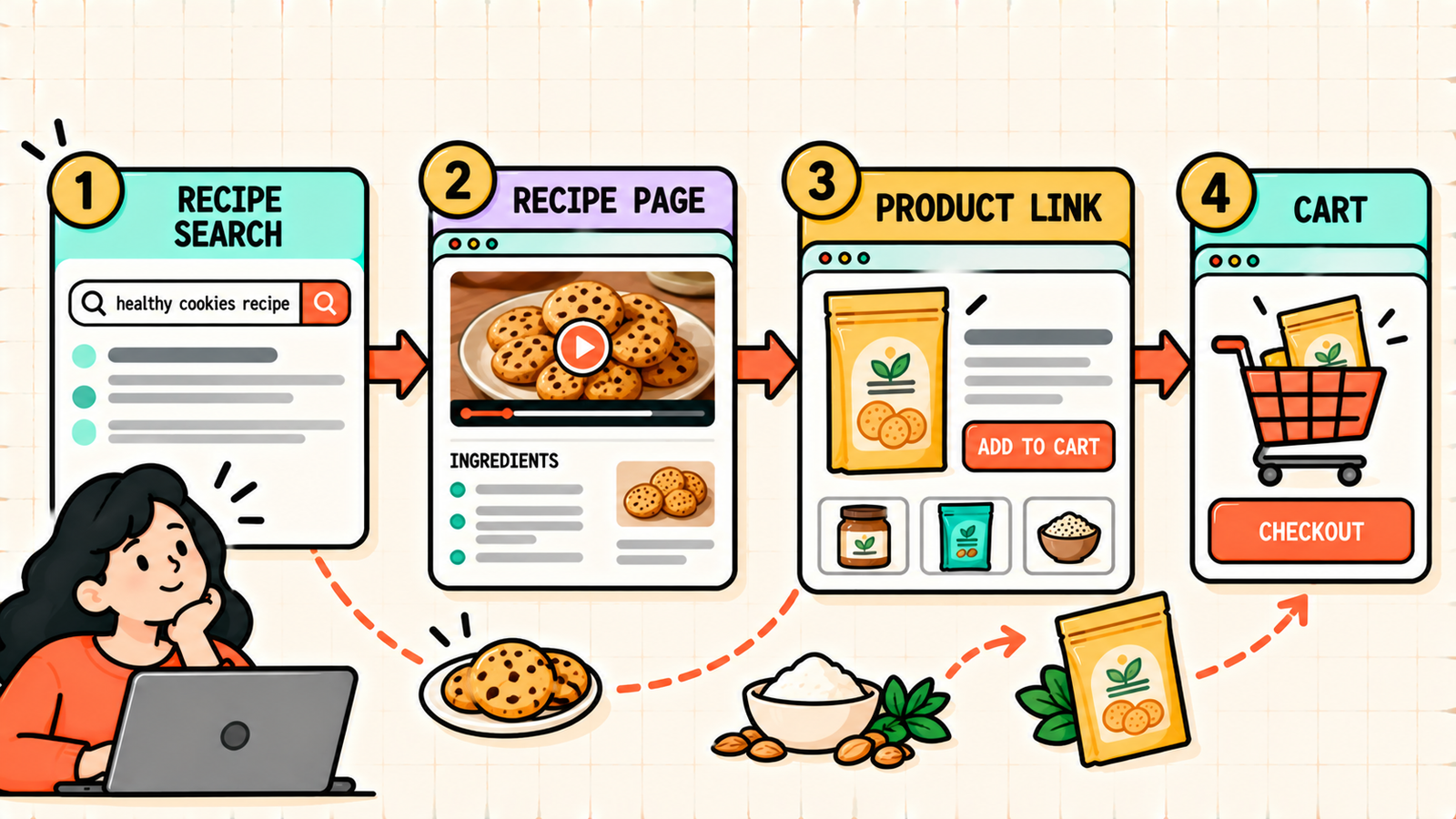
Recipes are the most powerful SEO asset for food brands. Create recipes that genuinely use your products as ingredients: a millet flour brand publishes millet roti, dosa, and cookie recipes; a peanut butter brand publishes smoothies, energy balls, and breakfast bowls. Write each recipe properly: ingredients with quantities, steps, cooking time, servings, tips, and nutrition information where possible. Add Recipe schema so Google can show rich results with images, time, and ratings. Link the product used in the recipe clearly.
2. Create diet and health collections
Shoppers search by diet and need: high protein, low sugar, gluten free, vegan, Jain-friendly, millet-based, diabetic-friendly. Build collection pages around these needs with helpful text explaining what qualifies, how to choose, and what to watch out for. These pages match how people search and convert better than generic "shop all" pages.
3. Write ingredient explainers
Indian shoppers are increasingly curious about ingredients: makhana, millets, jaggery, seeds, A2 ghee, cold-pressed oils. One clear page per key ingredient you use, covering benefits, nutrition, how to use it, and which of your products contain it, builds authority and connects curiosity searches to products.
4. Make product pages complete
Every product page should include full ingredients, nutrition information per serving, allergen information, shelf life and storage, how to use or serve it, taste and texture notes, pack sizes and price, real reviews, and an FAQ. Shoppers comparing snacks look for exactly these details, and thin product pages send them to a competitor or marketplace.
5. Build occasion and gifting pages
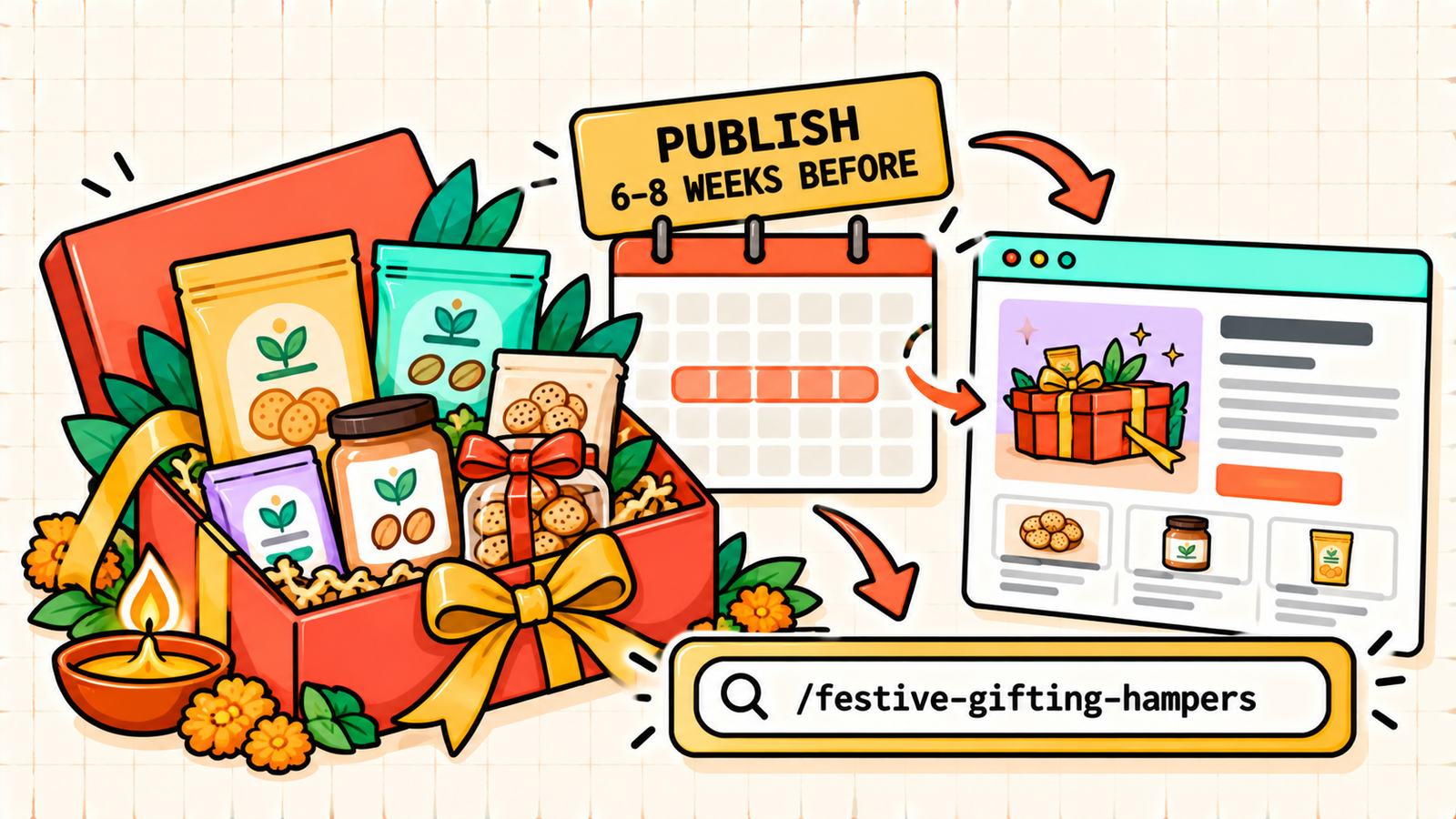
Festive gifting is huge for Indian food brands. Create permanent pages for Diwali hampers, Raksha Bandhan gifts, corporate gifting, and wedding favours, keep the same URL every year, and update them six to eight weeks before each season. Also create everyday occasion content: office snacks, kids' tiffin ideas, travel snacks, and pre-workout foods.
6. Own your branded searches
Shoppers search "[brand] review," "[product] calories," and "is [brand] healthy." Make sure your site answers these clearly with nutrition pages, honest FAQs, and genuine reviews.
Food claims and compliance
Food brands in India operate under FSSAI regulations, which govern labelling, nutrition information, and what health and nutrition claims can be made. Advertising standards also discourage misleading claims. Your website content should follow the same care as your packaging.
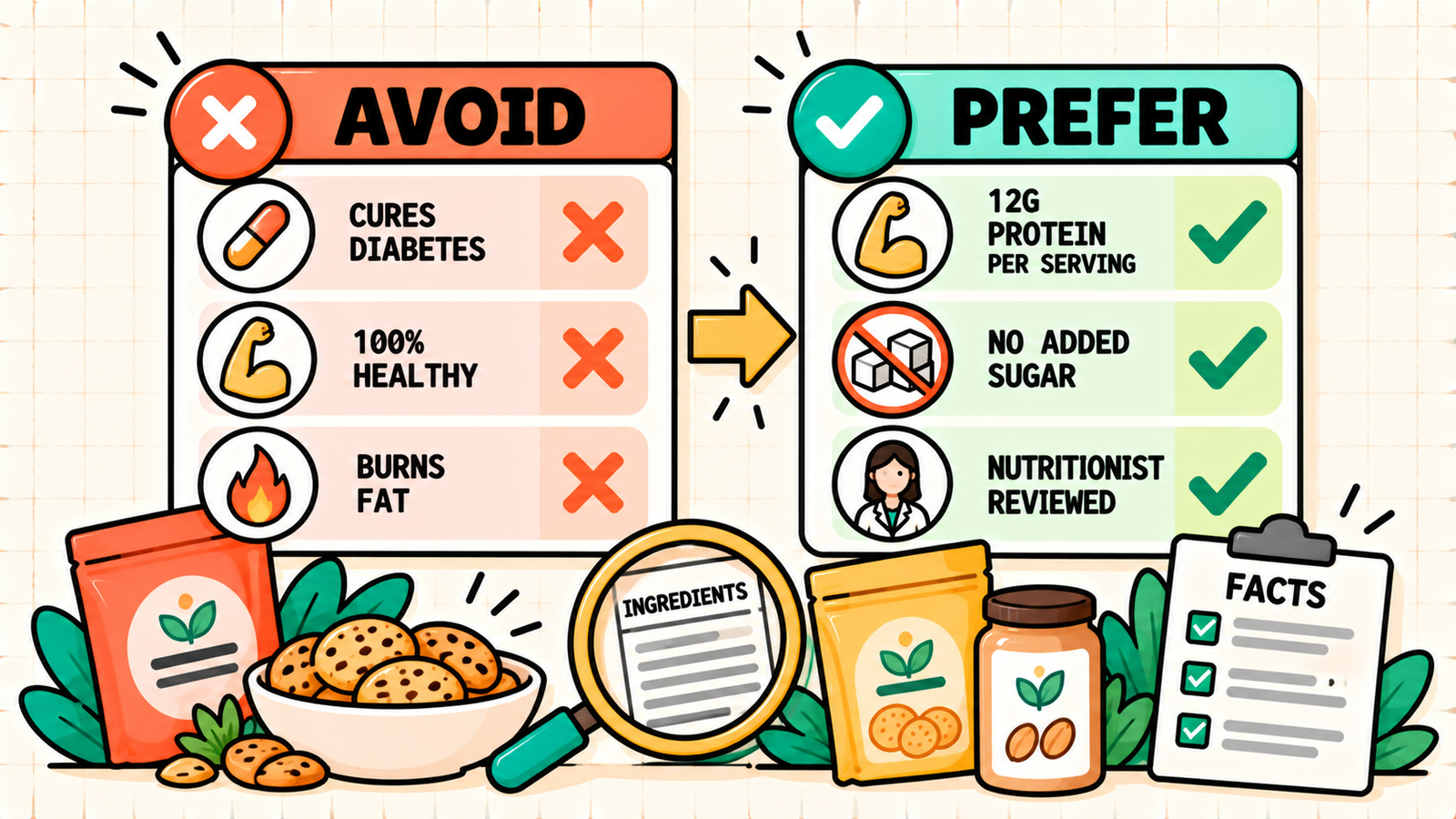
| Avoid | Prefer |
|---|---|
| "Cures diabetes" or "reverses disease" | "Lower in sugar than [comparison], see nutrition table" |
| "100 percent healthy" | Specific facts: "12g protein per serving, no added sugar" |
| "Burns fat" | "Higher protein snack that can fit a balanced diet" |
| Unverified "doctor recommended" | "Reviewed by [named nutritionist, credentials]" |
Specific, factual nutrition statements are more credible to shoppers and safer than broad health promises. For diet and health content, a review by a qualified nutritionist or dietitian strengthens trust and E-E-A-T.
We'll find exactly where your food brand is losing organic revenue.
Get a clear, data-backed plan to build recipe content, diet collections, and product pages that bring shoppers and turn them into repeat customers.
Competing with quick commerce and marketplaces
You will not outrank Blinkit, Zepto, or Amazon for "peanut butter" or "protein bar." Those platforms win broad product searches. Food brands win on recipes, specific diet and health searches, ingredient questions, occasion content, and their own brand name. Give shoppers a reason to buy direct too: subscriptions, exclusive flavours, bundles, gift packaging, and loyalty rewards. And create a clear "where to buy" page listing your quick commerce and marketplace availability, so search traffic converts even when shoppers prefer an app.
Using YouTube and Instagram for food SEO
Food is visual. Short recipe videos, product demos, and "what I eat in a day" style content perform well on YouTube, YouTube Shorts, and Instagram, and video results often appear in Google for recipe searches. Embed recipe videos on your recipe pages, which keeps visitors on the page longer and gives Google a richer page to rank. Partner with food creators for recipes that use your products, with proper disclosure.
Local and regional food searches
Many food searches are regional: "Bengali sweets online," "Kerala banana chips," "authentic Rajasthani namkeen," "homemade pickles from Andhra." If your brand has regional roots or regional products, build content around that origin, the story, the traditional recipes, and regional festivals. Regional authenticity is a strong differentiator that large FMCG brands cannot easily copy, and regional and Hinglish searches often have little competition.
Turning search visitors into repeat customers
Food is a repeat purchase, so the real value of an SEO visitor is not the first order. It is the tenth. Capture recipe and guide visitors with a useful free offer, such as a weekly healthy recipe email, a meal planner, or a first-order discount, and follow up with recipes that use your products. Offer subscriptions for staples like flours, nut butters, and snacks. Use WhatsApp for reorder reminders timed to how long a pack usually lasts. A brand that turns search traffic into a subscriber list builds a customer base that no marketplace algorithm can take away.
Use your packaging to drive search
Your pack is a free marketing channel. Add a QR code that leads to recipes using that product, nutrition details, or a reorder page. Print your website and a simple search prompt such as "search [brand] recipes." Every pack in a kitchen becomes a path back to your site, which builds branded search and repeat visits over time.
Food SEO and AI search
People increasingly ask ChatGPT and Gemini questions like "healthy snacks for diabetics in India" or "best millet brands." AI tools favour specific, factual, well-structured information. Clear nutrition tables, ingredient pages, accurate product details, and consistent information across your website and marketplaces make your brand easier to recommend. Genuine reviews and mentions on food blogs and publications also strengthen how AI describes your brand.
How to measure food brand SEO
Track organic revenue on your website, organic traffic to recipe and collection pages, how often recipe visitors click through to products, email and WhatsApp sign-ups from organic visitors, branded search growth, and festive page performance year over year. For brands that sell mostly on marketplaces, also watch whether branded search and marketplace sales rise as your SEO content grows, since awareness from search often converts elsewhere.
How long does SEO take for a food brand?
Specific recipes and ingredient guides can start ranking within two to four months. Diet-specific collections and occasion pages usually take four to eight months. Broad product category terms dominated by marketplaces can take a year or more. Seasonal gifting pages benefit most from being published well in advance and kept at the same URL year after year.
Common food brand SEO mistakes
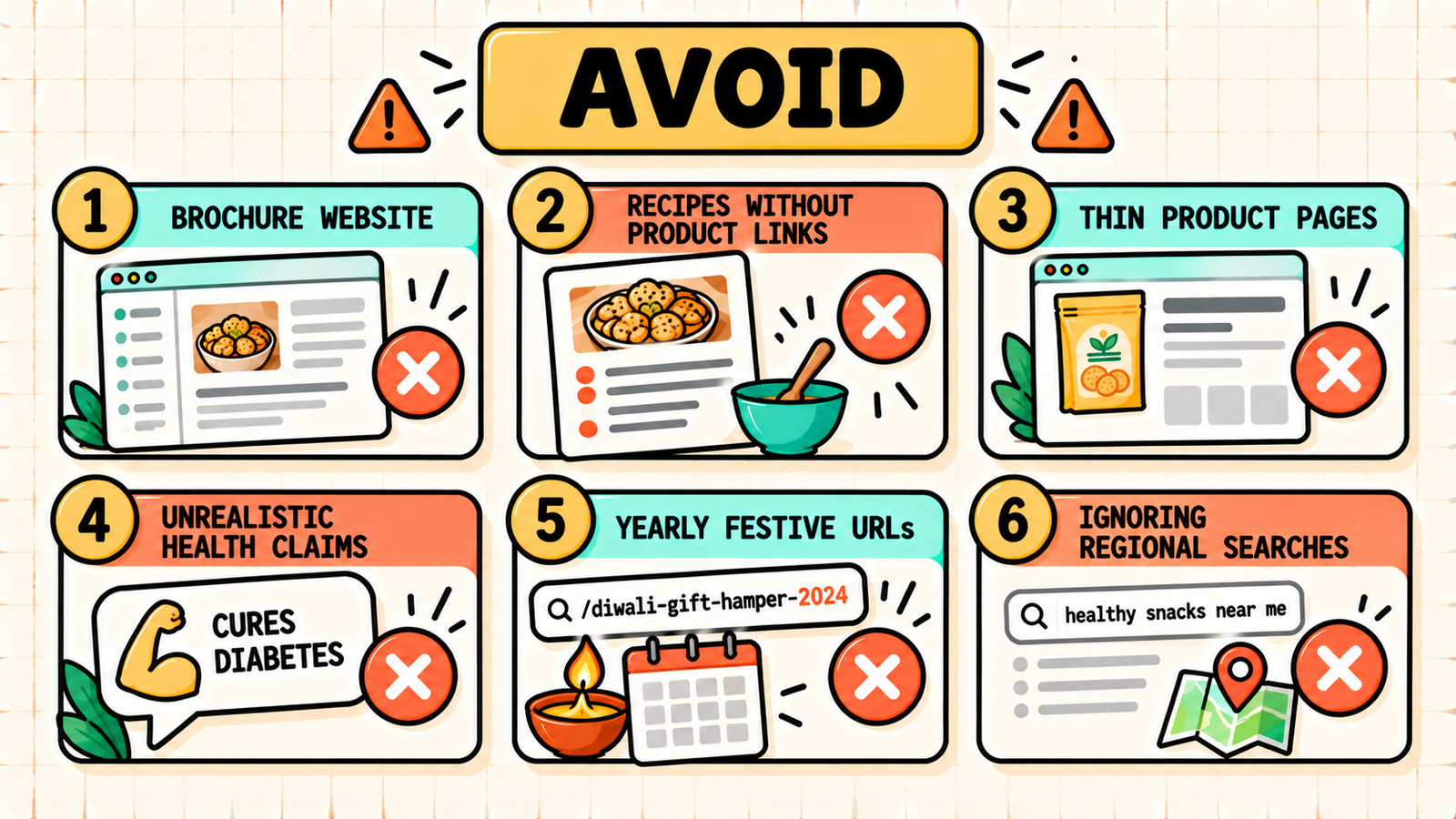
A few patterns appear in almost every food brand audit. Treating the website as a brochure with no content gives Google nothing to rank. Publishing recipes that never mention or link to the product wastes the traffic. Thin product pages without nutrition or ingredient details lose comparison shoppers. Making exaggerated health claims damages trust and creates compliance risk. Creating new festive pages every year with the year in the URL resets rankings each season. And ignoring regional and Hinglish searches leaves easy, low-competition traffic on the table.
Edtech SEO: How Indian Edtech Brands Get Student Leads
The bottom line
SEO for food brands works when you become part of everyday food decisions: recipes, diets, ingredients, occasions, and gifting. Build recipe content around your products with Recipe schema, create diet and health collections, write ingredient explainers, complete your product pages with nutrition and allergens, plan festive pages early, and keep every claim factual. Quick commerce wins the shelf, but search is where a food brand builds the demand that makes shoppers look for it there.
If you want an SEO strategy built for a food, snack, or beverage brand, LetMeRank works with Indian D2C brands, including Shark Tank India brands, on organic growth, starting with a free audit.