Digital Marketing
SEO for Baby Product Brands: How D2C Baby Brands Earn the Trust of New Parents
Oct 14, 2026 · 10 min
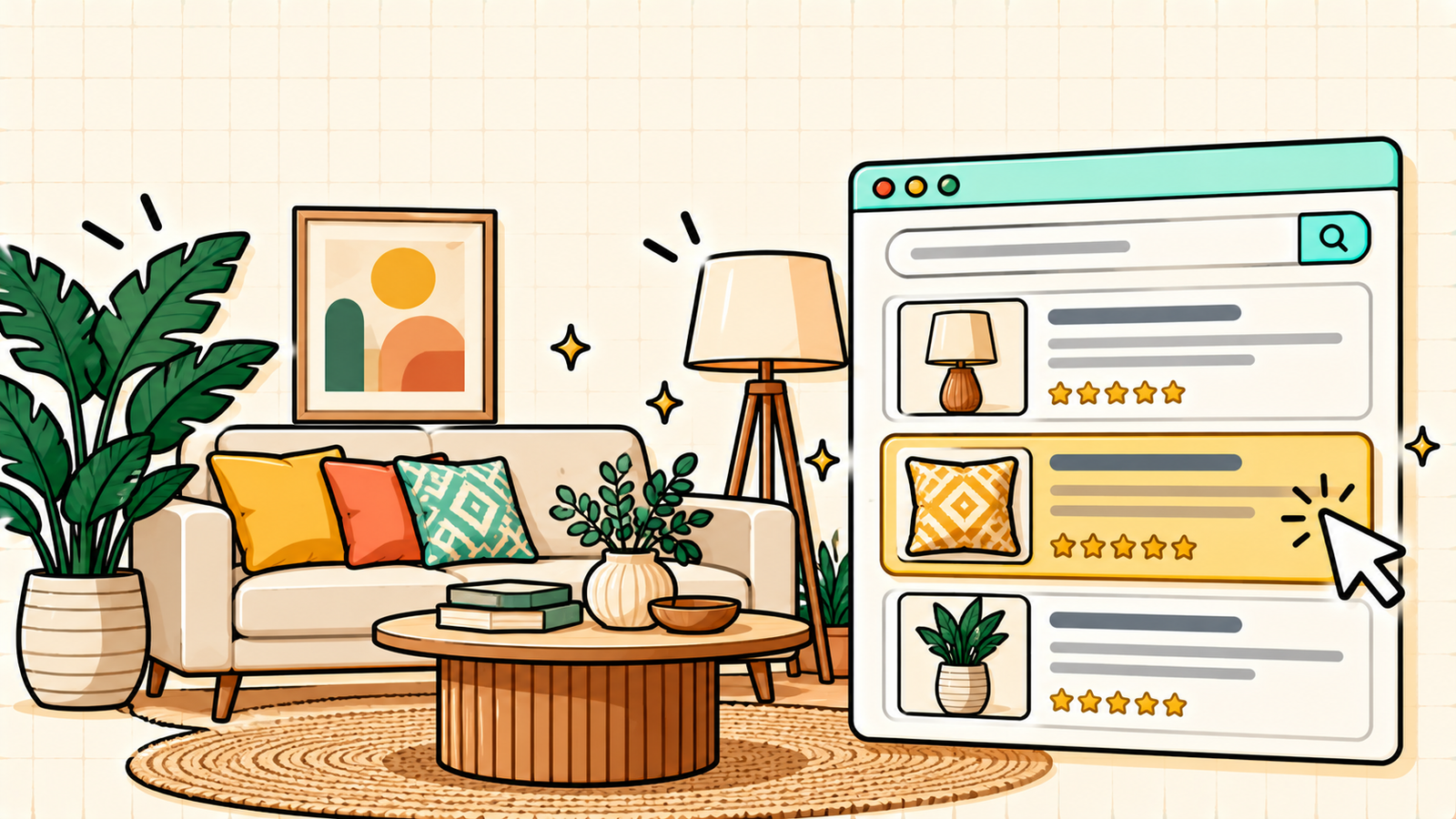
Home decor buyers rarely buy on impulse. They are planning a room, moving into a new flat, renovating, or getting ready for a festival. They save ideas for weeks, compare styles, measure their walls, and search for inspiration long before they add anything to a cart. That long planning phase is exactly where most D2C home brands are invisible.
SEO puts your brand inside that planning process. People search for room ideas, styles, materials, sizes, care tips, and gifting options constantly. A home decor brand that answers those searches becomes part of the plan, not just another listing on a marketplace. This guide covers how SEO works for home decor and furnishing brands, the pages that drive sales, how to compete with Pepperfry, IKEA, and Amazon, and the mistakes that hold most home brands back.
Home decor sits at the intersection of inspiration and research. Buyers look for ideas ("small balcony decor ideas"), then narrow down to styles and products ("boho wall hanging," "cotton bedsheet king size"), then check details like size, material, and care before buying. Each stage is a search opportunity.
Home decor also has strong seasonality and occasions in India: Diwali home makeovers, housewarming gifts, wedding gifting, and new home purchases. Content and collections built for these moments bring buyers who are ready to spend. And because many home products are bought in sets or as part of a room, a visitor who trusts your style often buys several items, raising order value.
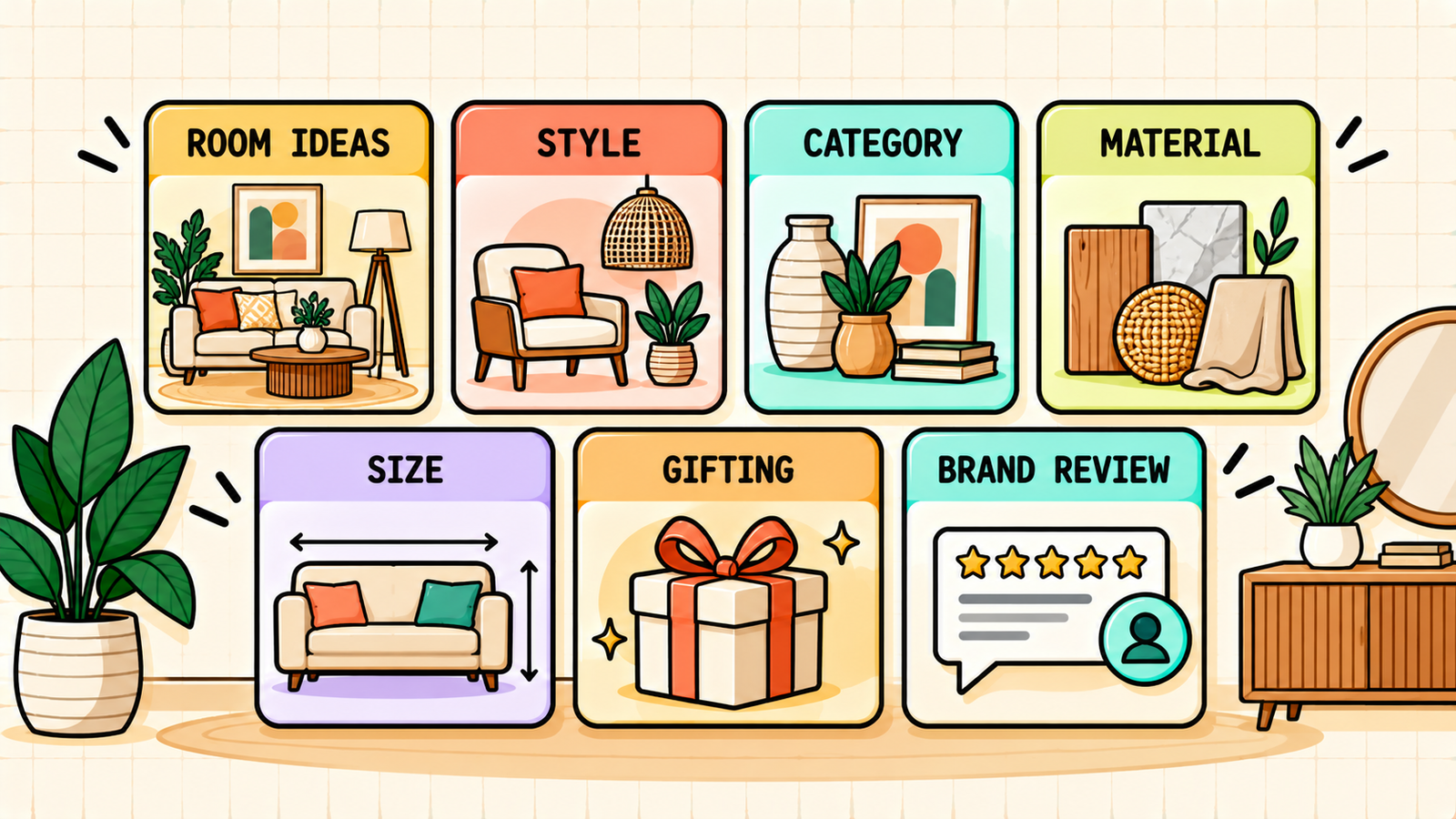
| Search type | Example queries | Best page type |
|---|---|---|
| Room ideas | small living room decor ideas, bedroom wall decor, balcony makeover | Room inspiration guides |
| Style | boho home decor, minimalist living room, Indian ethnic decor | Style guides and collections |
| Product category | cotton bedsheets king size, ceramic planters, wooden wall shelves | Collection pages |
| Material and quality | best fabric for bedsheets, solid wood vs engineered wood | Material guides |
| Size and fit | curtain size for 7 feet window, rug size for living room | Size guides and calculators |
| Occasion and gifting | housewarming gift ideas, Diwali home decor, wedding gift for couple | Gifting and festive collections |
| Brand evaluation | [brand] review, [brand] return policy, [brand] bedsheet quality | Product pages, policy pages, FAQ |
Room and style searches bring discovery. Category, size, and material searches drive purchases.
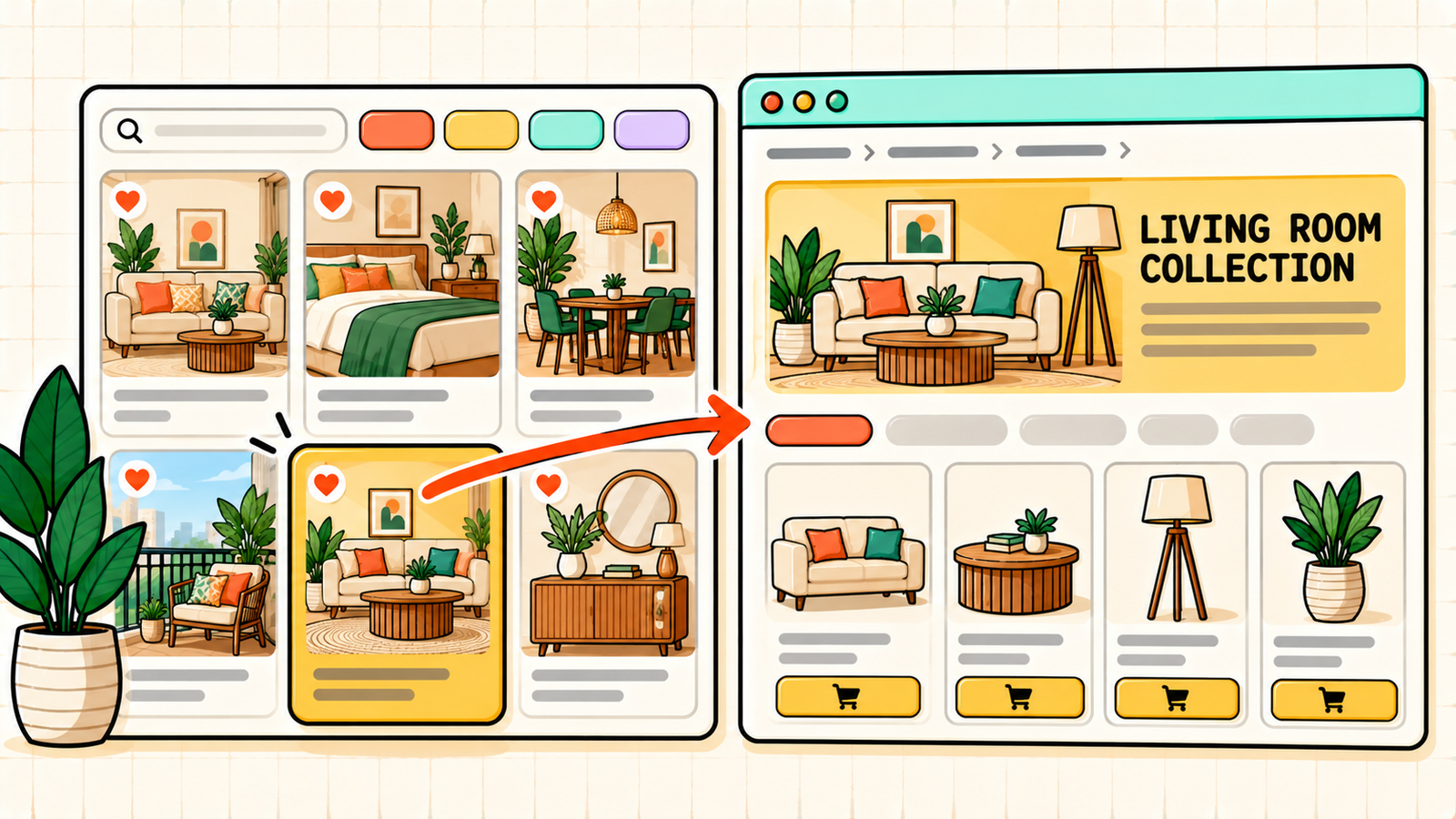
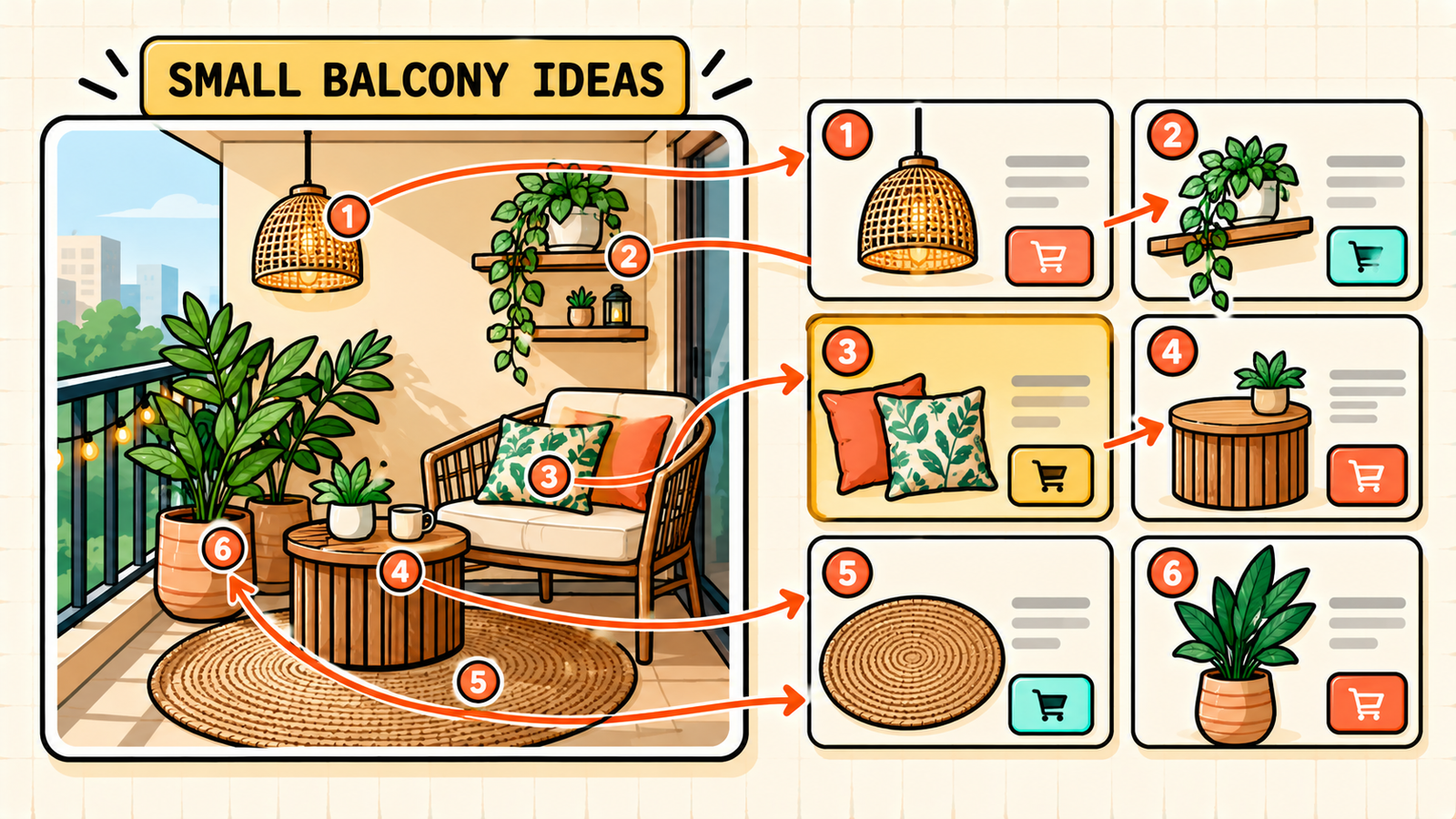
Create guides for each room and space: living room, bedroom, balcony, kitchen, study, pooja room, kids' room. Show styled spaces using your products, explain the design choices, and link every item to its product page. Practical guides for Indian homes ("decor ideas for small 2BHK flats," "rented apartment decor without drilling") are especially valuable because most global inspiration content does not fit Indian spaces, budgets, or rental realities.
Organise products by style as well as category: boho, minimalist, Scandinavian, Indian ethnic, earthy, modern classic. Style collections match how buyers search and help them find everything that fits their look in one place. Add a short style description and tips above the products and an FAQ below.
Your main category collections (bedsheets, cushion covers, curtains, planters, wall decor, lighting, rugs) carry the strongest commercial searches. Add useful text covering materials, sizes, how to choose, and care, plus filters that help buyers narrow down. Text-less collection grids are hard to rank and hard to shop.
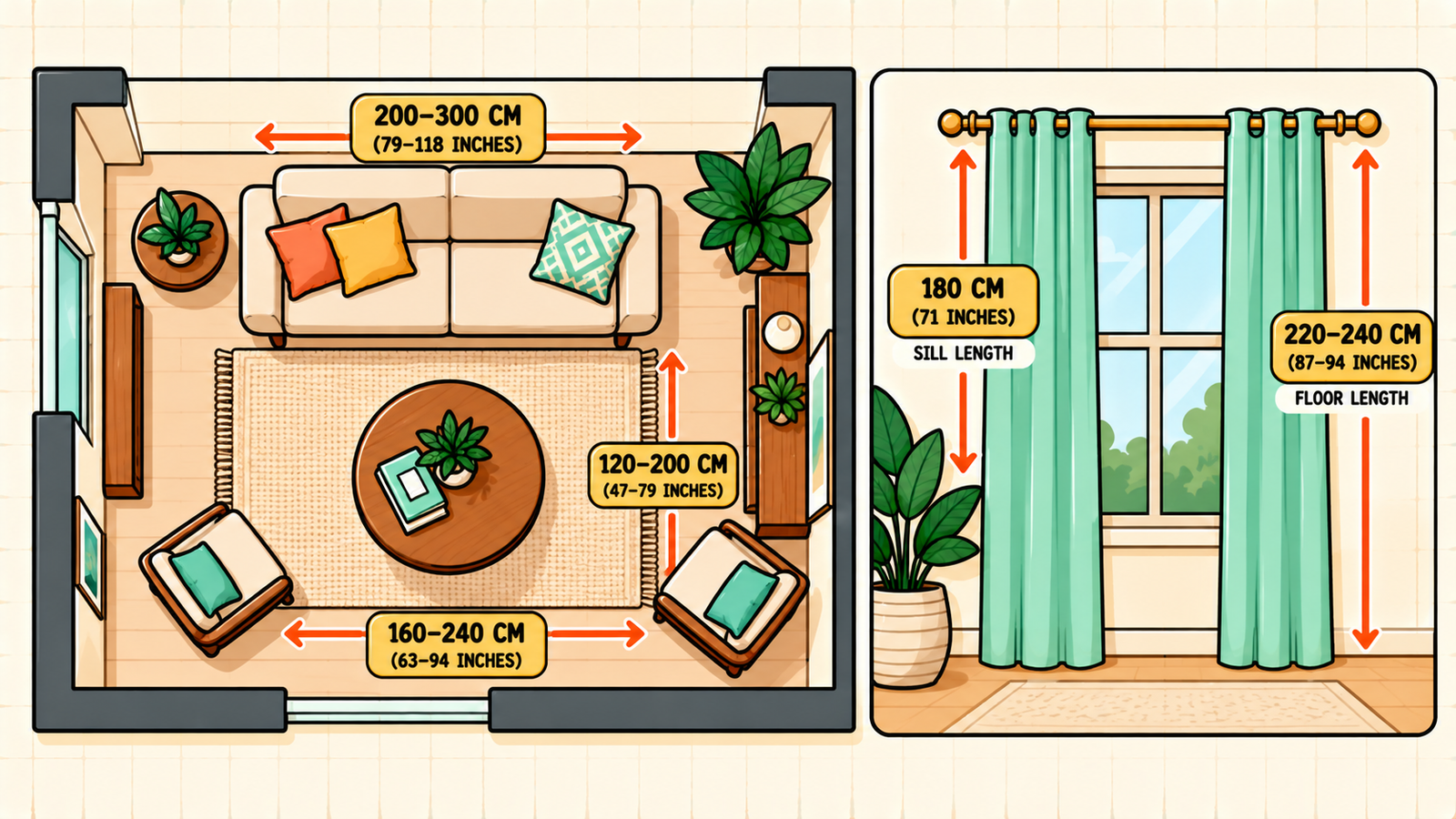
Size uncertainty causes hesitation and returns. "What size rug for a living room," "curtain length for a 7 foot window," and "bedsheet size chart India" are high-intent searches. Build clear size guides and simple calculators, show dimensions in centimetres and inches, and add in-room photos for scale on product pages.
Buyers want to know what they are paying for: thread count, cotton types, solid wood versus engineered wood, ceramic versus terracotta, natural versus synthetic fibres. Honest material guides build trust and justify price. Care guides ("how to wash cotton bedsheets so they last," "how to clean a jute rug") reduce complaints and bring steady search traffic.
Include exact dimensions, material and finish, what is included in the set, weight where relevant, care instructions, delivery and assembly information, multiple photos including in-room shots for scale, real reviews with customer photos, and an FAQ. In home decor, buyers cannot touch the product, so your page has to do the touching for them.
Diwali home decor, festive lighting, housewarming gifts, and wedding gifting bring some of the year's biggest demand. Create permanent collections and gifting guides by recipient and budget, and update them six to eight weeks before each season. Keep the same URLs every year.
A large share of Indian home decor buyers are renters, first-time home owners, or working with tight budgets. Searches like "room decor under 5000," "rented flat decor ideas without drilling," and "budget living room makeover India" have strong intent and are poorly served by global content. Create budget-based collections and guides that show complete looks at specific price points, and highlight removable, no-drill, and easy-to-move products. Practical, budget-honest content builds trust with buyers who might otherwise assume a D2C brand is out of reach, and it often converts better than aspirational content because buyers can picture doing it themselves.
Marketplaces and large retailers dominate broad terms like "bedsheets" or "wall decor." D2C home brands win on style, story, and specificity: distinctive designs, handcrafted and artisan products, regional crafts, sustainable materials, and room ideas built around their range. Craft-based searches like "block print bedsheets," "Channapatna toys decor," or "handwoven dhurrie" have clear intent and far less competition. A strong design point of view gives you content angles that generic retailers do not cover.
Home decor sites share several technical challenges with fashion sites. Large product catalogues with variants (sizes, colours, sets) can create duplicate pages, so use canonical tags or variant handling carefully. Filter combinations should only be indexable where there is real search demand. Images are heavy, so compress them, use modern formats, and lazy-load below-the-fold images while keeping the main product image fast. Out-of-stock items should stay live with a notify option, and discontinued products with traffic should redirect to the closest alternative.
People who have just bought or rented a new home search heavily for "new home essentials checklist," "housewarming decor ideas," and "how to set up a first apartment." These buyers often need many items at once, which makes them some of the most valuable visitors in home decor. Create a new home checklist and "set up your first home" guides that link to bundles and starter sets, and offer a new home discount or bundle to capture the full basket rather than a single item.
Home decor is one of Pinterest's strongest categories. People use Pinterest to plan rooms and save ideas for months, and pins linking to your room guides and collections can drive traffic long after you post them. Instagram reels showing room makeovers and styling tips build desire. YouTube makeover and "how to style" videos rank in Google and keep viewers engaged. Use these platforms to build inspiration and your website to convert it.
Customer photos of your products in real Indian homes are powerful. They show scale, colour accuracy, and how pieces look outside a studio. Encourage photo reviews, feature customer homes in a "shop the look" gallery, and invite customers to tag you on social media. Real home photos also add unique content to product pages and make your room guides more relatable.
Buyers ask AI assistants questions like "how to decorate a small living room on a budget" or "best Indian brands for cotton bedsheets." AI tools favour clear, practical, specific content and brands that are well described across the web. Room guides with concrete advice, accurate product details, and consistent brand information on your website and marketplaces make your brand easier to recommend.
Track organic revenue and average order value, rankings for collection and style keywords, traffic from room and style guides and how often those visitors click through to products, Pinterest referral traffic, branded search growth, and festive collection performance year over year. Home decor buyers often visit several times while planning, so watch returning visitors and assisted conversions, not just first-visit sales.
Specific room guides, care guides, and size guides can rank within two to five months. Style and craft collections often rank within four to eight months. Broad category terms can take a year or more against marketplaces. Festive collections benefit from being published early and kept at permanent URLs.
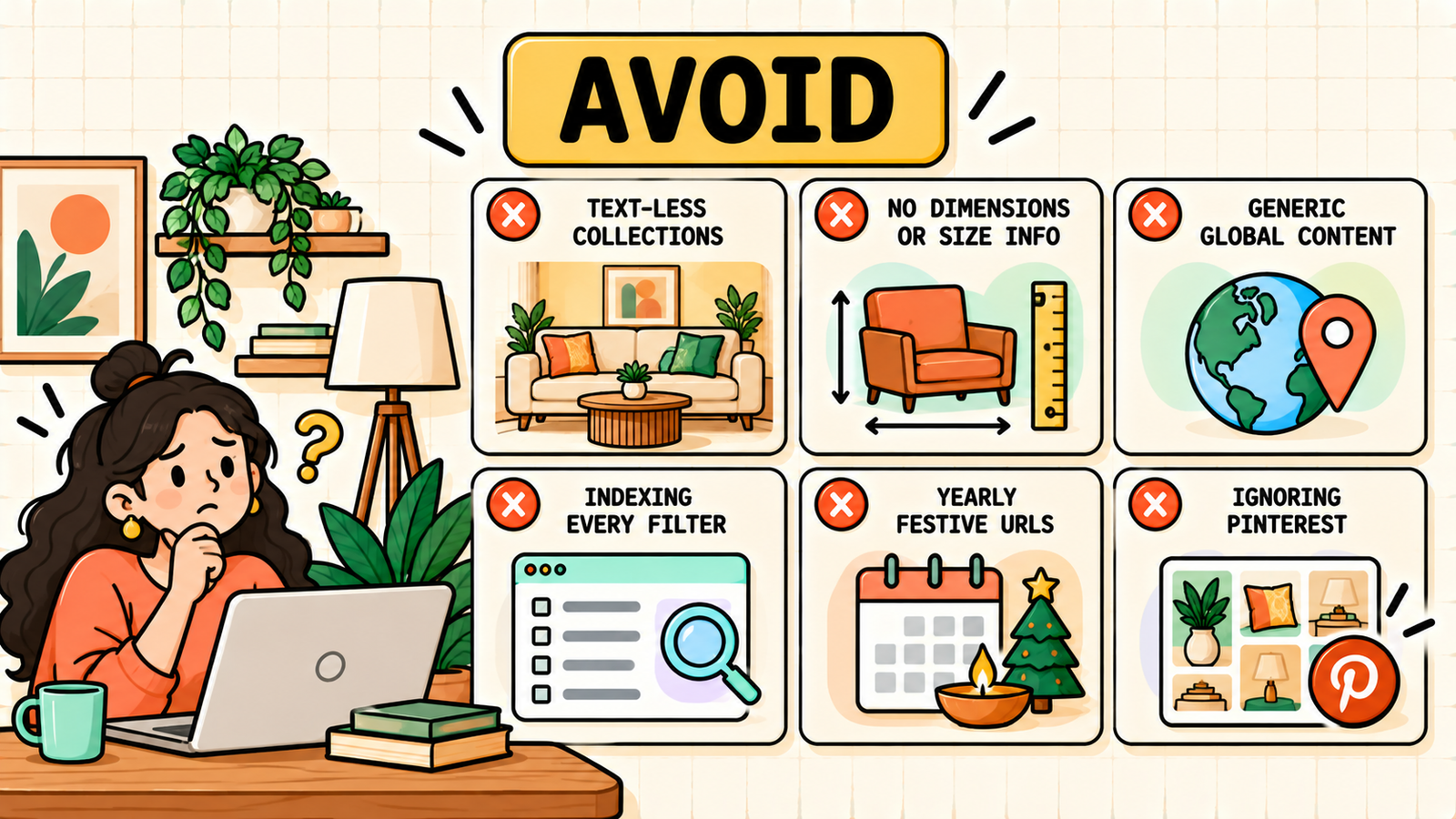
A few patterns appear in most home brand audits. Collection pages without text are hard to rank. Product pages without exact dimensions or in-room photos lead to hesitation and returns. Copying global inspiration content that does not fit Indian homes feels generic. Indexing every filter combination creates thin pages. Creating new festive URLs every year resets authority. And ignoring Pinterest misses one of the biggest discovery channels in the category.
SEO for home decor brands works when you become part of how people plan their spaces. Build room inspiration guides for Indian homes, create style and craft collections, optimise category collections, answer size and material questions, complete your product pages with dimensions and in-room photos, and plan festive collections early. Use Pinterest and Instagram to inspire and your website to convert. Marketplaces win the broad terms, but a brand with a clear design point of view can win the searches where buyers actually decide.
If you want an SEO strategy built for a home decor or furnishing brand, LetMeRank works with Indian D2C brands on organic growth, starting with a free audit.