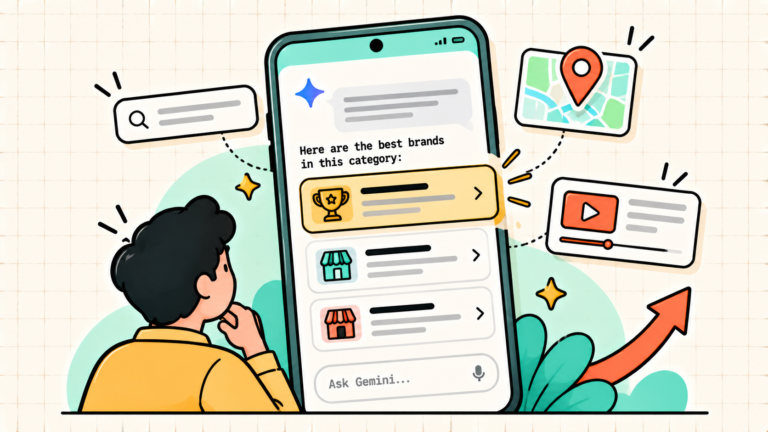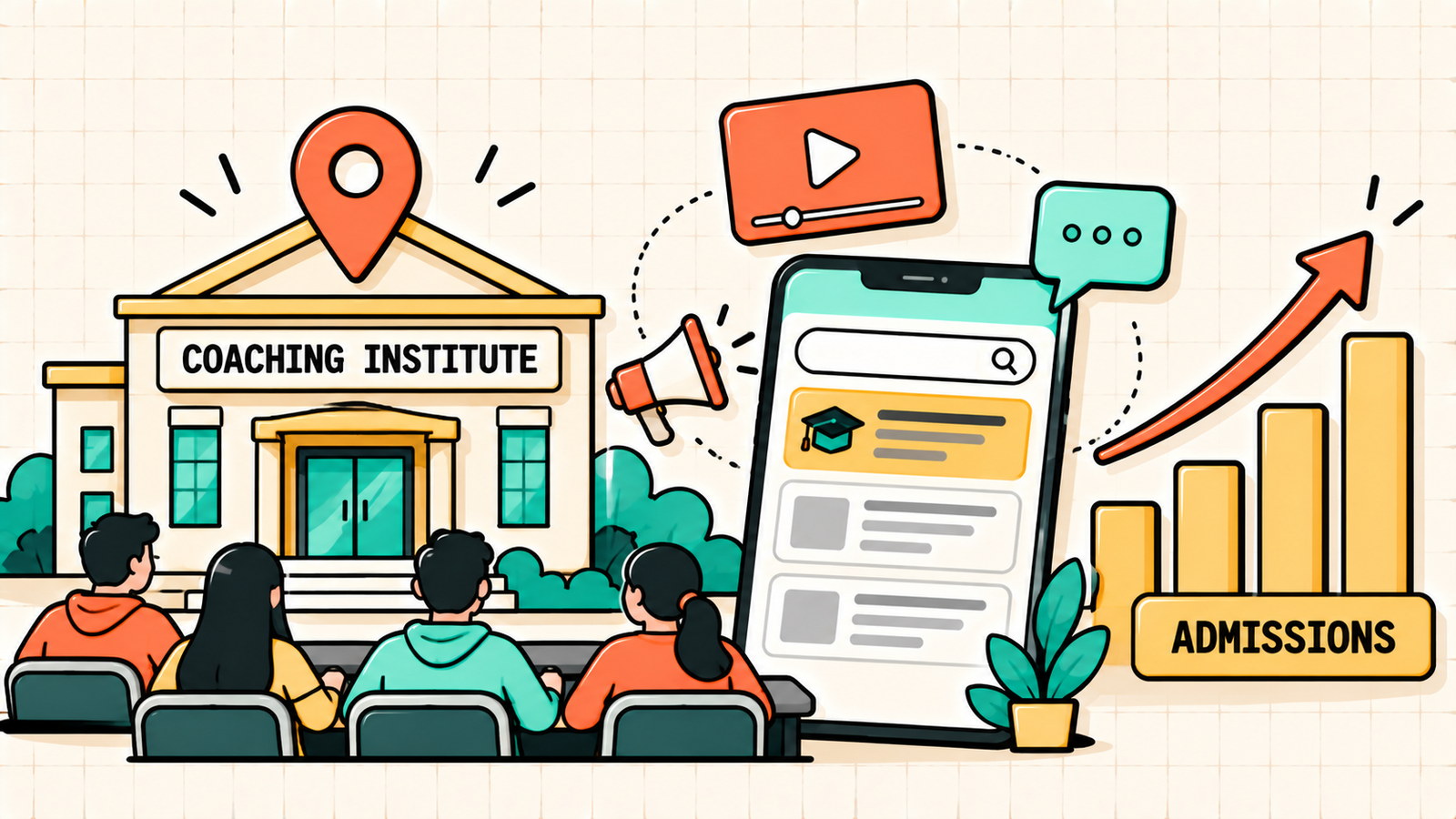
Every coaching institute owner knows the admission season panic. Results are out, students are deciding, and the institute down the road has hoardings on every corner and ads on every Instagram feed. Pamphlets in newspapers still bring a few calls, but each year fewer parents and students find their coaching that way. They search on Google, check reviews, watch YouTube, and ask friends on WhatsApp. Digital marketing for coaching institutes is not about copying what large edtech companies do with crores of ad budget. It is about being visible at the exact moments when students and parents are deciding: when they search "best JEE coaching in [city]," when they compare fees, when they look at results, and when they ask someone they trust.
This guide covers the channels that work for coaching institutes in India, what to do on each, how to plan around admission season, and the mistakes that waste money.
How students and parents choose a coaching institute today
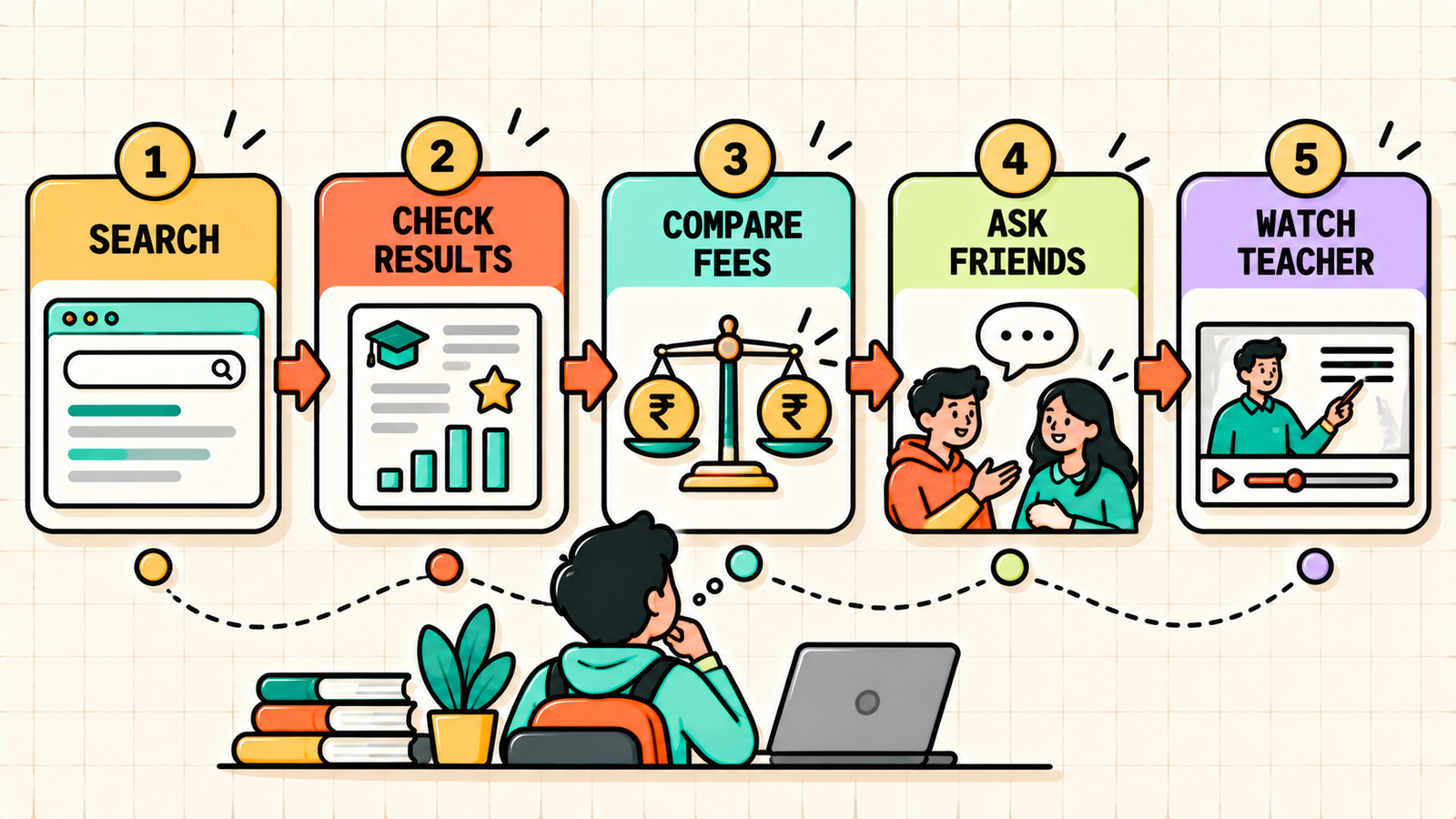
Understanding the decision process tells you where to show up.
They start with search. "Best NEET coaching in Durgapur," "JEE coaching near me," "class 10 tuition fees in [area]." These local searches are where most decisions begin.
They check proof. Results, toppers, selection numbers, faculty experience, and Google reviews carry more weight than any slogan.
They compare fees and batch details. Parents want clarity on fees, batch timings, batch size, study material, and test series.
They ask people they trust. Word of mouth now happens on WhatsApp groups and Instagram as much as at the school gate.
They want to see the teacher. A demo class, a YouTube lecture, or a short reel of a teacher explaining a concept builds more confidence than a brochure.
Each of these moments maps to a marketing channel.
The channels that work for coaching institutes
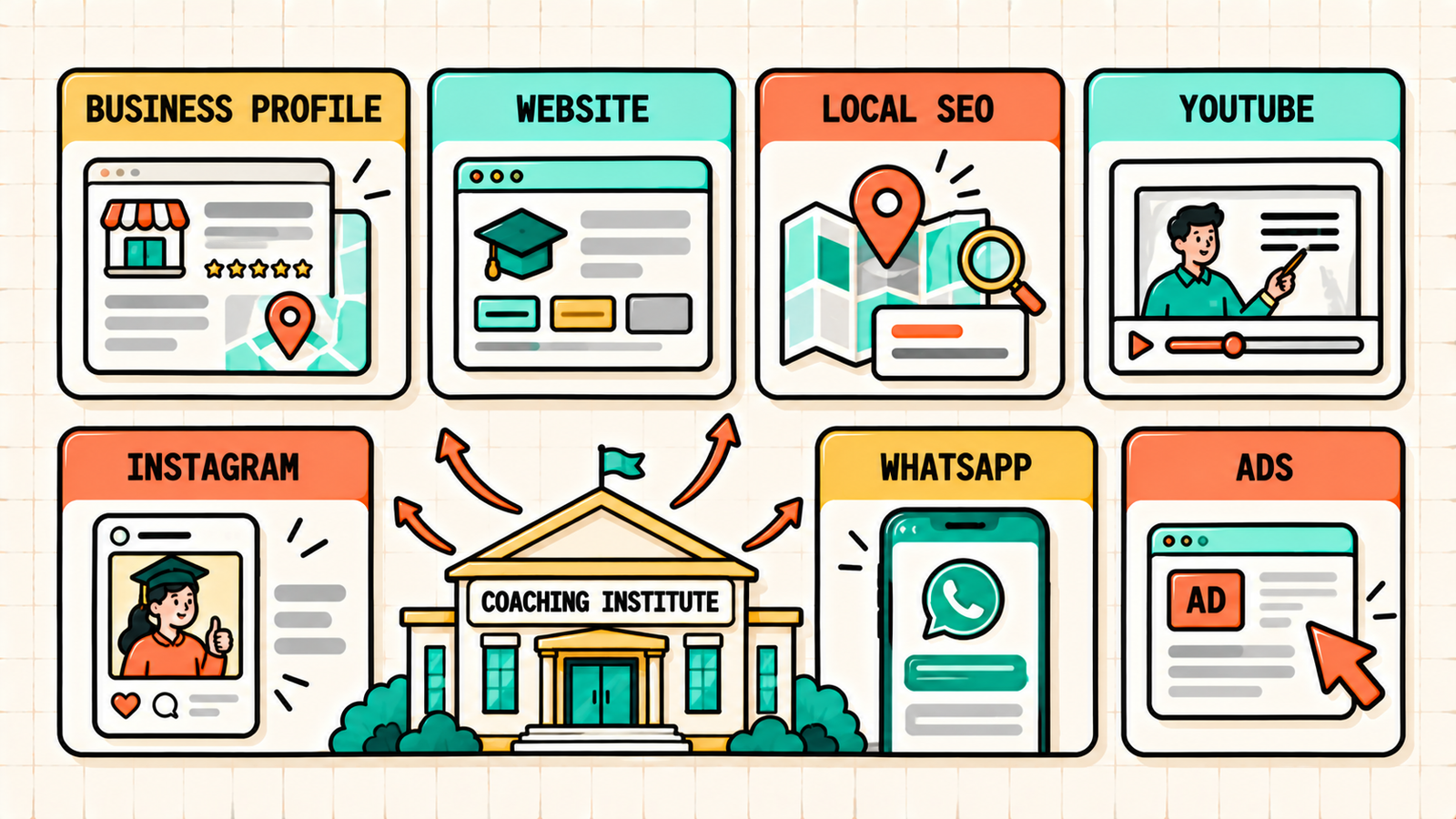
| Channel | What it does | Priority |
|---|---|---|
| Google Business Profile | Shows up in "coaching near me" and map results | Very high |
| Website with course pages | Gives fees, batches, results, and a way to enquire | Very high |
| Local SEO content | Ranks for "[exam] coaching in [city]" searches | High |
| YouTube | Shows teaching quality, builds trust, ranks in search | High |
| Reels, results, student stories, admission updates | Medium to high | |
| Follow-up, batch updates, parent communication, referrals | Very high | |
| Meta and Google Ads | Fills batches fast during admission season | Medium, seasonal |
Google Business Profile: your most important free asset
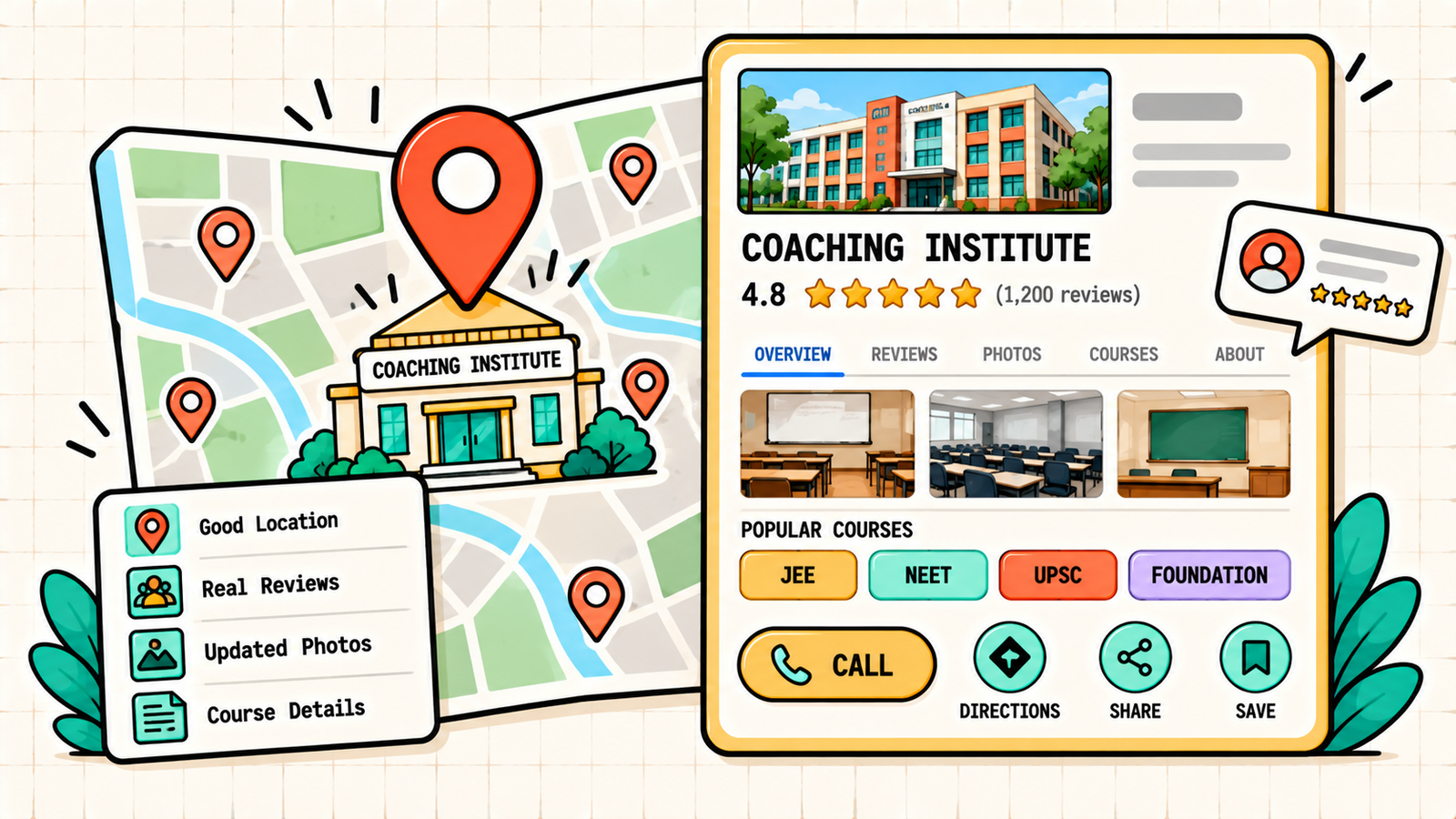
For a local coaching institute, Google Business Profile often brings more enquiries than the website. When someone searches "IIT JEE coaching near me," the map results appear above almost everything else.
Choose accurate categories (for example "Coaching center" plus relevant secondary categories). Add every service: courses, classes, exam types, and batch formats. Upload real photos of classrooms, faculty, and results boards, not stock images. Post updates regularly: new batch announcements, results, scholarship tests, and demo class dates. Collect Google reviews consistently from students and parents after results and at the end of each term, and reply to every review. Keep your phone number, address, and timings accurate. If you have multiple branches, create a separate profile for each.
Website and course pages
Your website should answer the questions parents ask on the phone, before they call. At minimum, create a separate page for each course or exam (JEE, NEET, Foundation, Class 10 boards, and so on) with the batch details, timings, duration, fees or fee range, faculty, study material, test series, and results for that course. Add a results page with toppers, ranks, and selection numbers, ideally with photos and student names (with permission). Include a clear enquiry form and a WhatsApp click-to-chat button on every page. Make sure the site loads quickly on mobile, because most parents and students will open it on a phone.
Local SEO for coaching institutes
Local SEO means ranking for searches that include your city, area, or "near me." Create content around the searches your students actually make: "best JEE coaching in [city]," "NEET coaching fees in [city]," "[exam] crash course [city]," and "class 11 science tuition [area]." Each course page should mention the city and areas you serve naturally. Get listed on local directories and education listing sites with consistent name, address, and phone number. Earn local links from school events, local news coverage of your results, and community sponsorships. A small institute that does local SEO well can outrank large national brands for searches in its own city.
YouTube: let students see your teaching
YouTube is one of the most underused channels for coaching institutes, and it is one of the strongest. Students already use YouTube to study. If they find your teacher explaining a tough concept clearly, they are halfway to enrolling. Publish short concept explanations, solved previous year questions, exam strategy videos, and topper interviews. Use clear titles with the exam and topic ("JEE Main rotational motion PYQs explained"), add chapters, and link to your website and WhatsApp in the description. Even one or two videos a week builds a library that keeps bringing students for years.
Instagram and social media
Instagram works for coaching institutes when it shows real people and real results. Post short reels of teachers solving problems, quick tips before exams, student success stories, behind-the-scenes from classrooms, and results announcements. Use local hashtags and location tags. Keep the bio clear: what you teach, where you are, and a link to enquire. Social media builds familiarity and trust, so by the time a parent searches for you, your name already feels known.
WhatsApp: where admissions actually close
Most coaching enquiries end up on WhatsApp. Use WhatsApp Business with quick replies for common questions (fees, timings, batch start dates), labels to track enquiry stages, and a catalogue for courses. Follow up every enquiry within hours, not days. Create broadcast lists for batch announcements and results. And use WhatsApp for referrals: a simple message to existing students and parents about a referral benefit during admission season can fill seats faster than ads.
Paid ads: use them for admission season, not all year
Meta and Google Ads can fill batches quickly, but only if the basics are ready: a clear landing page or course page, a fast WhatsApp follow-up process, and real proof such as results and reviews. Run ads during the windows when students are deciding: after board results, before new batch launches, and around scholarship tests. Target by location radius around your centre and by age and interests. Track cost per enquiry and cost per admission, not just clicks. Ads without strong follow-up waste money; ads with fast WhatsApp follow-up and visible results can work very well.
We'll find exactly where your institute is losing admissions online.
Get a clear, data-backed plan to fill batches with local SEO, WhatsApp follow-up, and admission-season campaigns that actually convert.
Planning around the admission calendar
Coaching marketing is seasonal, so plan backwards from your admission windows.
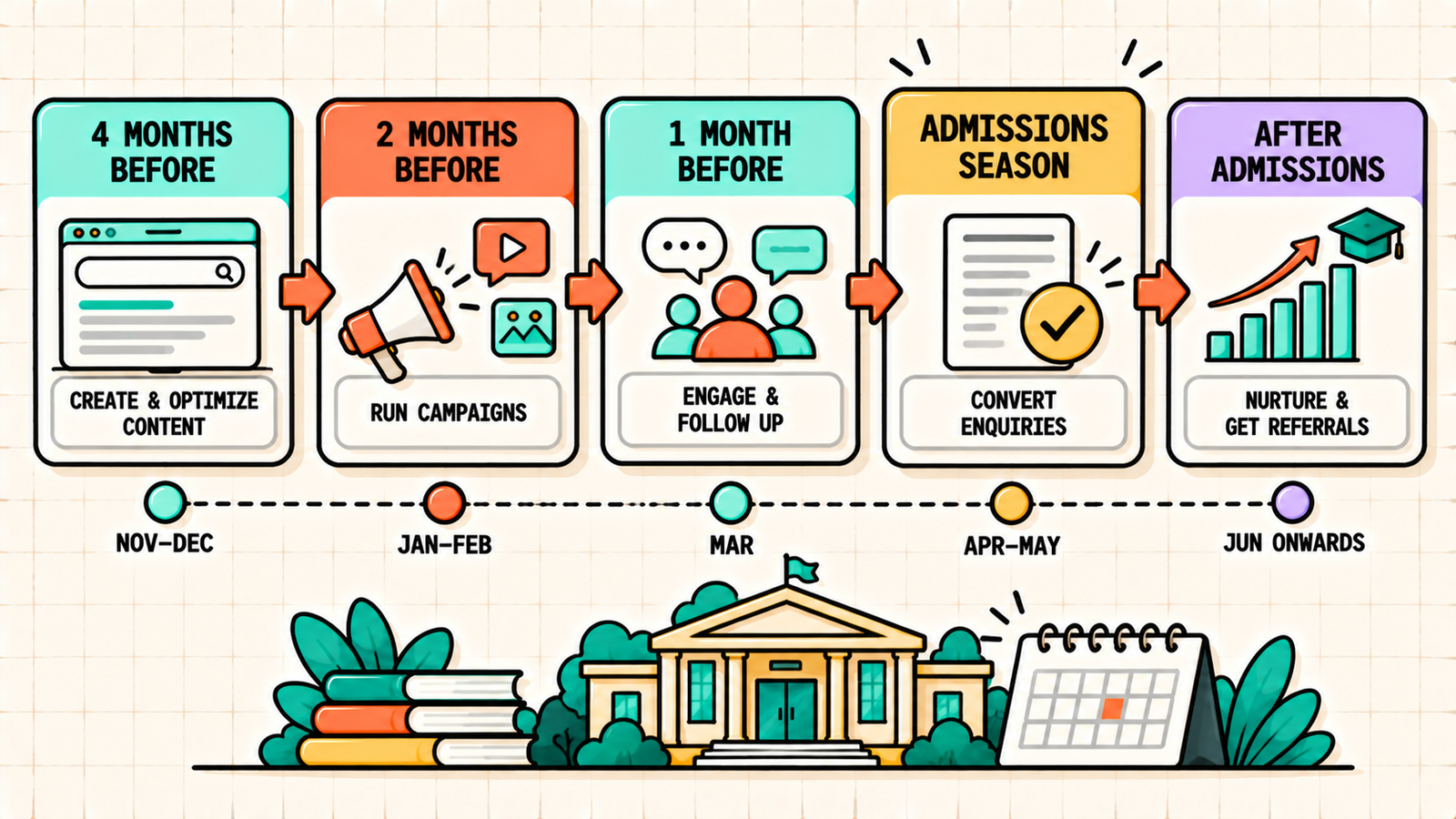
| Time before admissions | What to do |
|---|---|
| 3 to 4 months before | Publish course pages, update results, start YouTube and Instagram consistently |
| 2 months before | Push Google review collection, refresh Google Business Profile, announce scholarship test |
| 1 month before | Start ads, run demo classes, activate referral campaign on WhatsApp |
| Admission window | Fast follow-up on every enquiry, daily posts, results-focused ads |
| After batches start | Collect reviews, share student stories, keep content going for the next cycle |
SEO and YouTube take months to build, so they need to start well before the season. Ads and WhatsApp campaigns can be switched on closer to admissions.
How to measure what is working
Ask every new enquiry one simple question: "How did you hear about us?" Record the answer in a sheet or your WhatsApp labels (Google search, Google Maps, YouTube, Instagram, referral, ad, pamphlet). After one admission season, you will know exactly which channels bring admissions and which only bring likes. Combine this with Google Business Profile insights (calls, direction requests, website clicks) and website enquiry form data. This one habit stops most institutes from wasting money on channels that look busy but do not fill seats.
How much should a coaching institute spend on digital marketing?
A small institute can do a lot with very little cash: Google Business Profile, WhatsApp Business, Instagram, and YouTube are free, and the main cost is time. A basic website typically costs a one-time amount plus hosting. Paid ads during admission season are usually the biggest variable cost, and many local institutes start with a modest monthly ad budget for one or two months, then scale what works based on cost per admission. Measure every channel against admissions, not likes.
Common digital marketing mistakes coaching institutes make
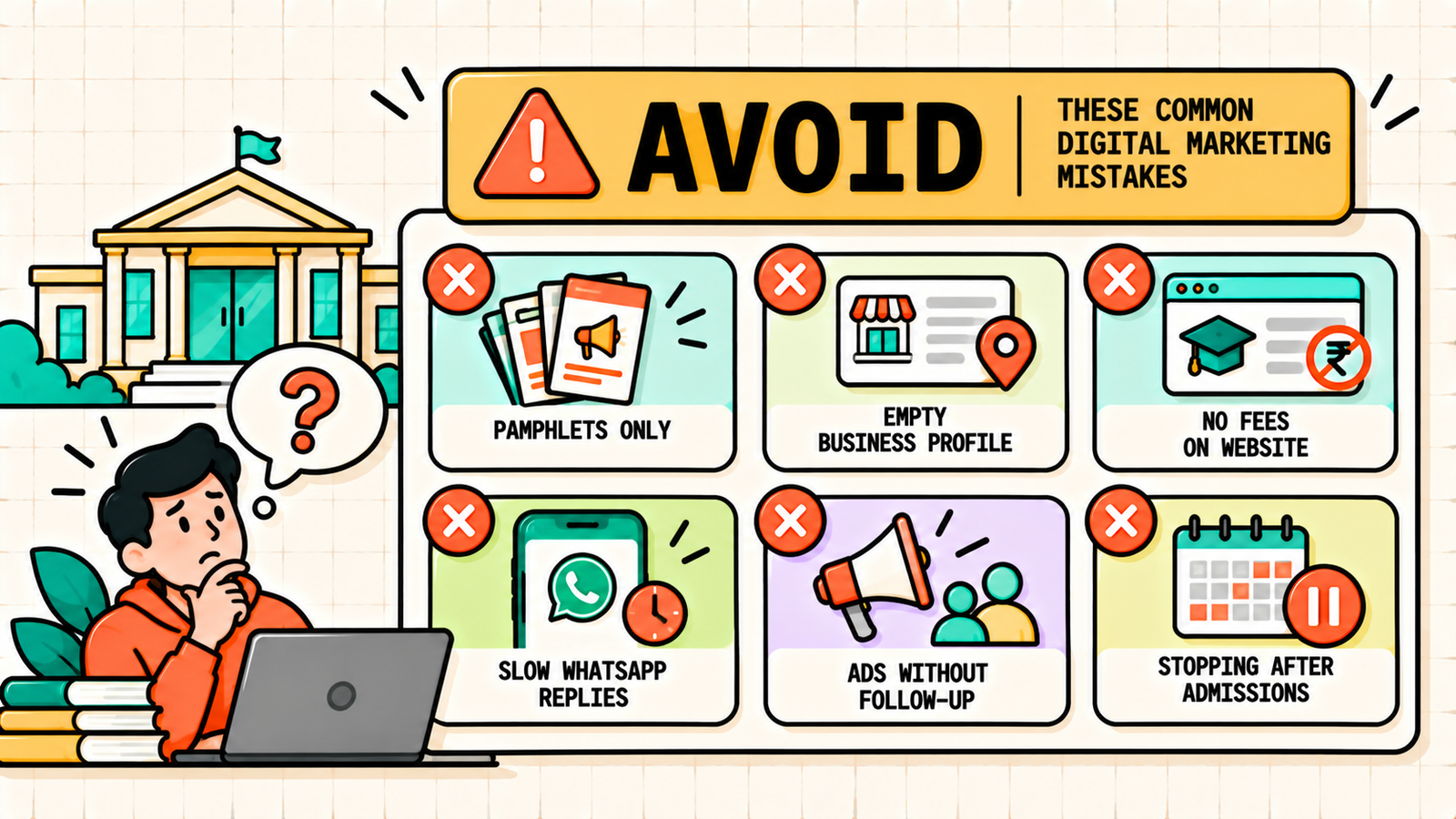
A few patterns waste money and opportunity. Relying only on pamphlets and hoardings while competitors capture search traffic. Leaving Google Business Profile incomplete, with old photos and few reviews. Having a website with no fees, batch details, or results, which forces parents to call or leave. Responding to WhatsApp enquiries slowly, which loses students to faster competitors. Running ads without a clear page or follow-up process. Posting only promotional content on social media instead of teaching and results. And stopping all marketing after admissions close, which means starting from zero every year.
SEO for Fintech: How Indian Fintech Brands Win Search Without Breaking Trust
The bottom line
Digital marketing for coaching institutes works when you show up at every moment students and parents are deciding. Make Google Business Profile your foundation, build a website with clear course pages and results, rank locally for "[exam] coaching in [city]" searches, let students see your teaching on YouTube, build familiarity on Instagram, close admissions with fast WhatsApp follow-up, and use paid ads only during admission season. Plan backwards from your admission calendar, collect reviews every term, and measure everything by admissions.
If you want help building a digital marketing system for your coaching institute, LetMeRank works with edtech and coaching brands on SEO, local visibility, and admissions-focused content, starting with a free audit.