Every month you rely on ads to bring shoppers to your store, you are renting traffic that disappears the second you stop paying, while a competitor quietly builds search rankings that send them buyers for free. That is the real cost of ignoring ecommerce SEO. It takes a few months to build, but it becomes the cheapest, most durable source of customers a store can have. This is the complete ecommerce SEO strategy for 2026, covering how it works, the site structure and pages that actually rank, the technical must-haves, and how to get your products surfaced in both Google and AI search.
What is ecommerce SEO?
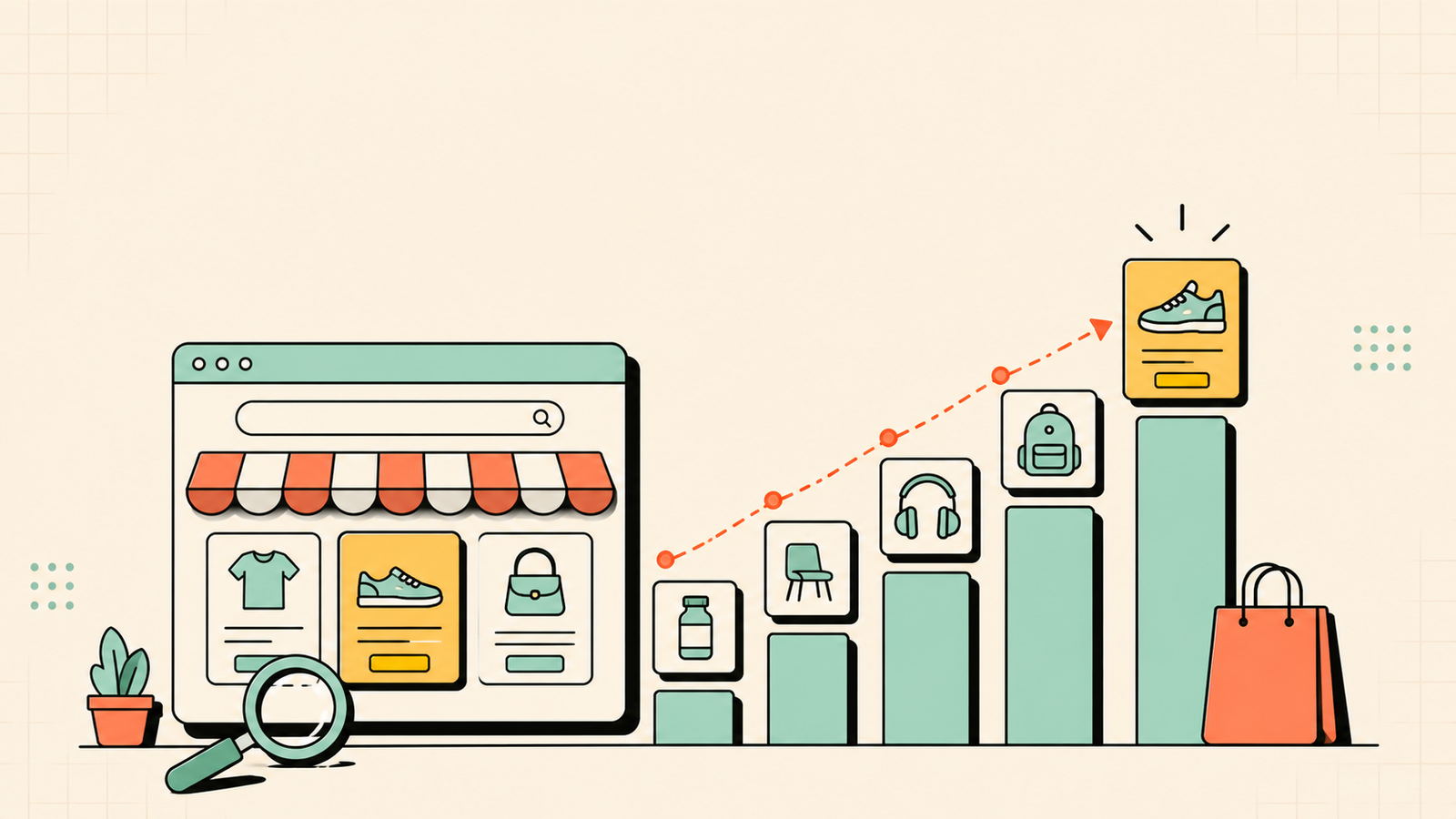
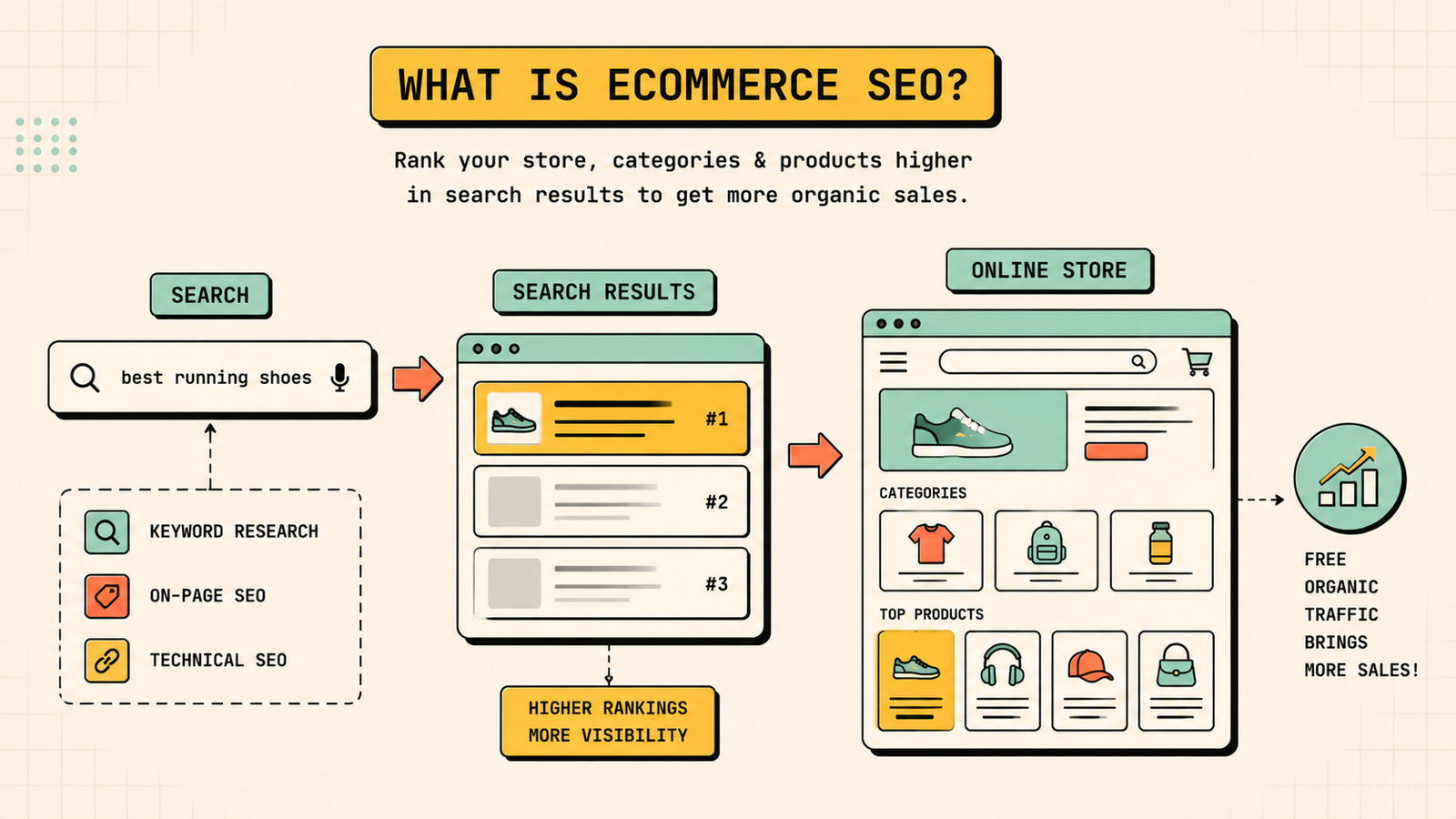
Ecommerce SEO is the practice of improving an online store's visibility in search results, so that when people search for the products you sell, your store appears. It covers your category pages, product pages, and content, and it works whether you are on Shopify, WooCommerce, Magento, or a custom platform.
The goal is to earn free, high-intent traffic. Someone searching for a specific product is often ready to buy, so ranking for those searches puts you in front of shoppers at the exact moment they are looking to spend. Unlike ads, that visibility does not switch off when your budget runs out.
SEO and Marketing for Edtech Brands
Why ecommerce SEO matters
The economics are the whole argument. Paid ads cost you for every single click, and those costs rise year after year as more brands compete. Ecommerce SEO flips that model. You invest upfront in content and optimization, and then you earn traffic without paying per visit, at a cost per customer that falls over time. For a store fighting to protect its margins against ever-rising ad costs, organic search is how you build a base of customers that gets cheaper to reach, not more expensive. It also compounds, because a product or category page that ranks keeps selling for months or years with no extra spend.
How is ecommerce SEO different from regular SEO?
Ecommerce SEO has challenges a simple blog or service site never faces, and understanding them is half the battle.
| Ecommerce challenge | Why it matters |
|---|---|
| Many pages | Stores have hundreds or thousands of product and category pages to manage |
| Thin product pages | Product pages often have little unique text to rank on |
| Duplicate content | Similar products and filtered pages create near-identical pages |
| Faceted navigation | Filters and sorting can generate endless low-value URLs |
| Out-of-stock pages | Discontinued products leave pages that need handling |
| Category vs product | Different page types must target different kinds of searches |
The stores that win are the ones that manage scale cleanly and make each page type earn its keep.
The ecommerce SEO strategy, step by step
Here is the full strategy, in the order that makes sense to build it.
1. Do keyword research for ecommerce
Map keywords to page types. Broad category terms (like "running shoes") belong on category pages. Specific product terms (like a brand and model) belong on product pages. Questions and how-to searches belong on your blog. Focus your commercial pages on buyer-intent keywords, the ones people search when they are ready to purchase, and save informational keywords for content. Targeting the right search on the right page is the foundation everything else builds on.
2. Build a clean site architecture
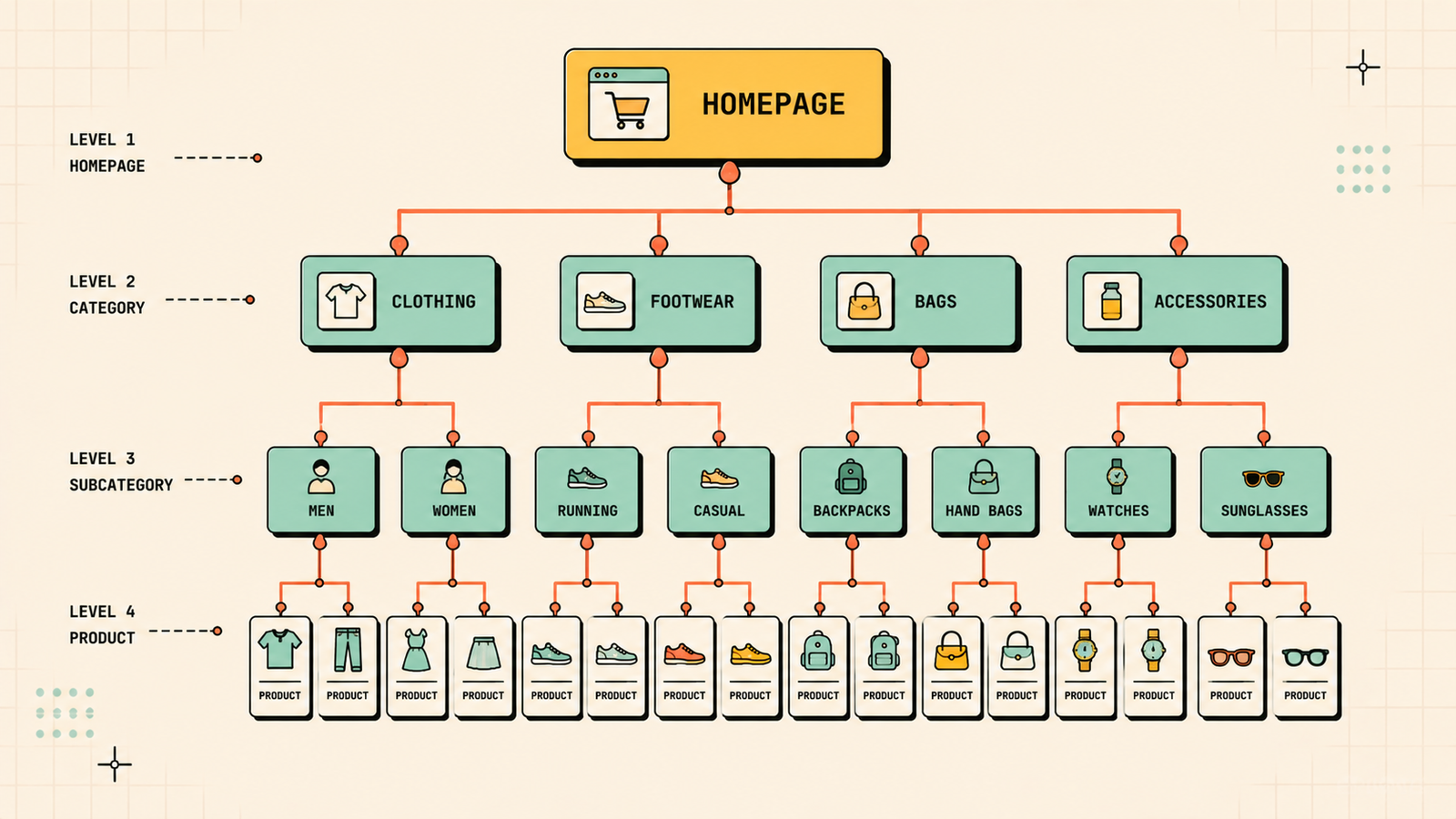
Organize your store so that any product is reachable within a few clicks from the homepage. A logical structure of homepage, then categories, then subcategories, then products, helps both shoppers and search engines navigate. A flat, well-linked structure spreads ranking power and makes sure your important pages get found and crawled. Messy, deep structures bury pages where neither Google nor customers reach them.
3. Optimize your category pages
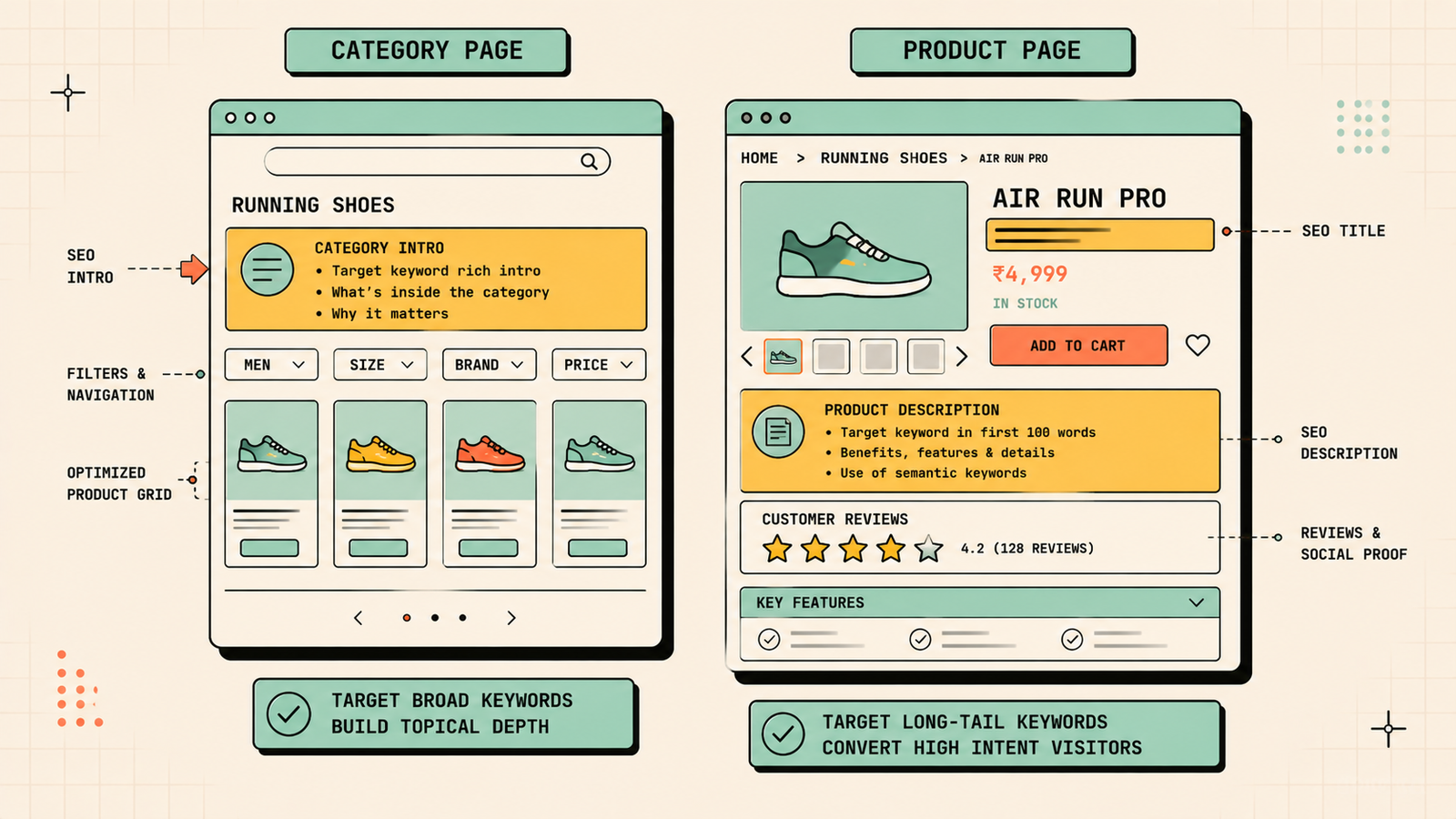
Category and collection pages are the biggest and most overlooked SEO opportunity in ecommerce, because they target broad, high-volume buying terms. Give each one a keyword-rich title and meta description, and add a block of genuine, useful intro text describing the category. Do not leave category pages as bare grids of products with no words for Google to read. A few helpful sentences plus a strong internal linking structure can make these pages your top traffic drivers.
4. Optimize your product pages
Product pages are where the sale closes, so make them work for search too. Write unique product titles and descriptions instead of pasting the manufacturer's copy, which creates duplicate content found on dozens of other sites. Include your target keyword naturally in the title, description, and image alt text. Add genuinely useful detail, answer common buyer questions on the page, and use customer reviews, which add fresh, keyword-rich content and build trust at the same time.
5. Fix the technical foundations
Technical SEO is where ecommerce sites live or die. Handle faceted navigation carefully so filters and sorting do not create thousands of thin, duplicate URLs, using canonical tags and sensible rules for what gets indexed. Decide how to handle out-of-stock and discontinued products, whether keeping the page, redirecting it, or offering alternatives. Make sure your sitemap is clean and your important pages are indexed. Use canonical tags to point Google to the right version of similar pages. Getting this right stops you from wasting Google's attention on pages that will never rank.
6. Make your store fast
Speed affects both rankings and sales, and stores slow down as images and apps pile up. Compress and correctly size images, remove scripts and apps you do not need, and choose fast, reliable hosting. In 2026, Core Web Vitals remain a ranking factor, so aim to load your main content in under 2.5 seconds. A faster store ranks better and converts more, so every improvement pays twice.
Best AI Marketing Tools for D2C Brands
7. Add schema markup
Schema is code that helps search engines understand your pages and can earn rich results like star ratings, prices, and availability directly in search. Make sure your product pages output complete Product schema with price, availability, and review ratings, and add FAQ schema where relevant. Richer, more eye-catching search listings win more clicks than plain ones.
8. Use content to capture informational searches
Your product pages cannot rank for the questions people ask before they buy, but your blog can. Create helpful content around the problems, comparisons, and questions your customers have on the way to a purchase. This brings in visitors early, builds topical authority, and gives you internal links to push toward your category and product pages. A buying guide or comparison article can quietly send qualified shoppers into your funnel for years.
9. Build internal links and backlinks
Internal links spread ranking power and guide shoppers deeper into your store, so link from blog content to relevant category and product pages, and relate products to each other. Backlinks from other reputable sites remain one of the strongest ranking signals and are how a smaller store competes with bigger ones. Earn them by creating link-worthy content, getting products into gift guides and roundups, and using digital PR.
10. Optimize for AI search (GEO)
Shoppers increasingly ask ChatGPT, Perplexity, and Google's AI answers for product recommendations, and stores with clear, well-structured content get named in those answers. To show up, write self-contained answers to buyer questions, use strong FAQ content and schema, include specific details and real reviews, and build a solid presence across the web. Getting your products cited in AI answers is fast becoming as valuable as ranking in classic results, and most stores have not started.
We'll show you exactly what's holding your store back and which fixes will move the needle first.
Get a clear, data-backed plan to reduce your ad dependence and build a durable, compounding source of organic sales.
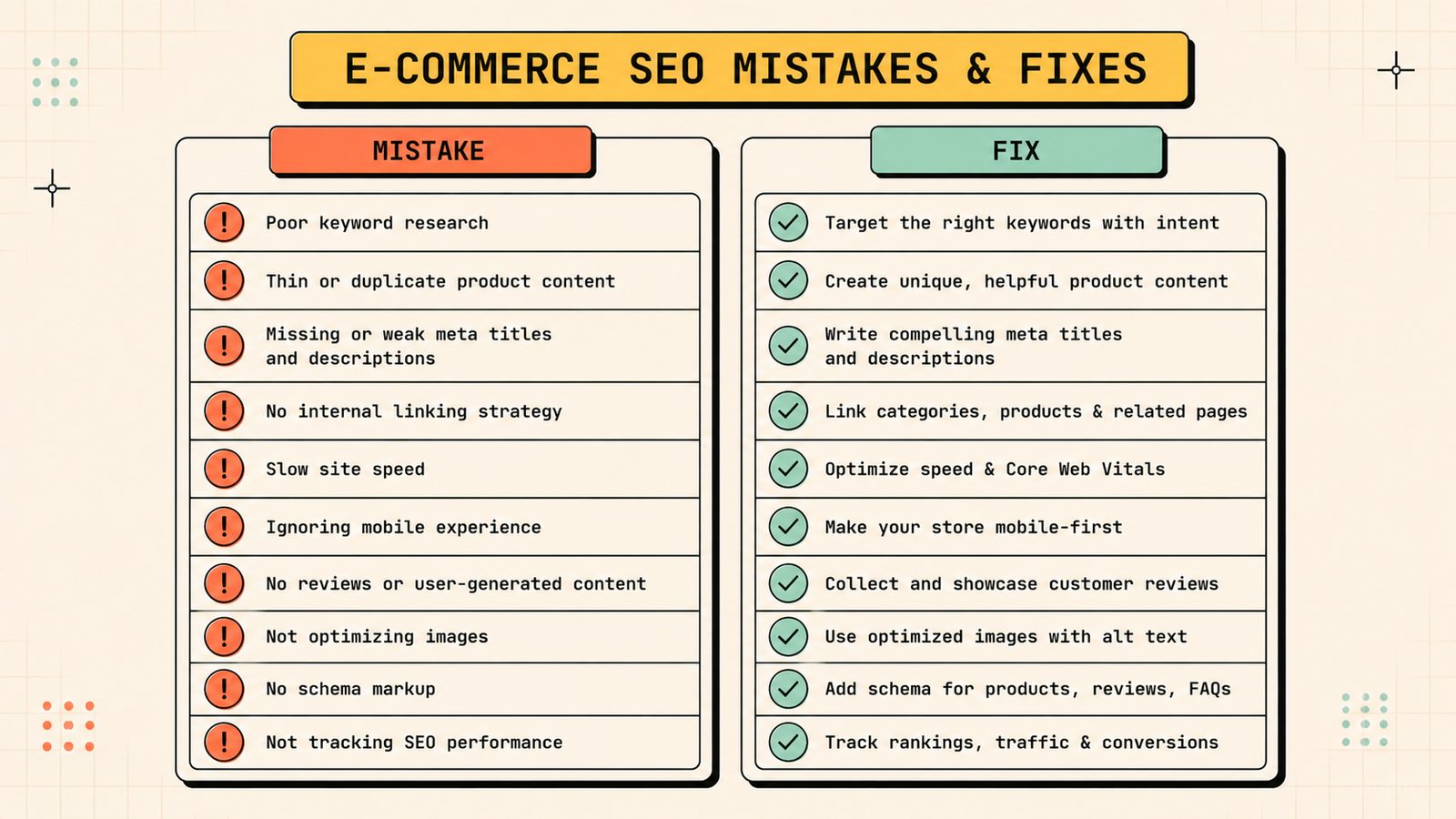
Common ecommerce SEO mistakes
A handful of errors hold most stores back. Here they are with the fix.
| Mistake | Fix |
|---|---|
| Thin category pages | Add unique intro copy and internal links |
| Duplicate product descriptions | Write original copy for every product |
| Uncontrolled faceted navigation | Use canonicals and indexing rules |
| Ignoring category pages | Optimize them as primary landing pages |
| Slow site | Compress images, cut apps, better hosting |
| Deleting out-of-stock pages carelessly | Redirect or keep with alternatives |
| No content strategy | Blog for informational searches |
Best ecommerce SEO tools
You do not need many, but a few make the work far easier.
| Tool type | What it does |
|---|---|
| Keyword and audit suites (Semrush, Ahrefs, Ubersuggest) | Keyword research, audits, and rank tracking |
| Google Search Console | Free indexing, performance, and error data |
| Site speed tools (PageSpeed Insights) | Diagnose and fix speed issues |
| Schema and technical tools | Add and validate structured data |
Quick ecommerce SEO tips and best practices
For fast reference: write unique titles and meta descriptions for every important page, keep URLs short and readable, add descriptive alt text to every product image, prioritize category pages as landing pages, use reviews to add fresh content, refresh top pages instead of only creating new ones, and check Search Console regularly for issues. Small, consistent habits compound into real rankings.
LetMeRank
How long does ecommerce SEO take?
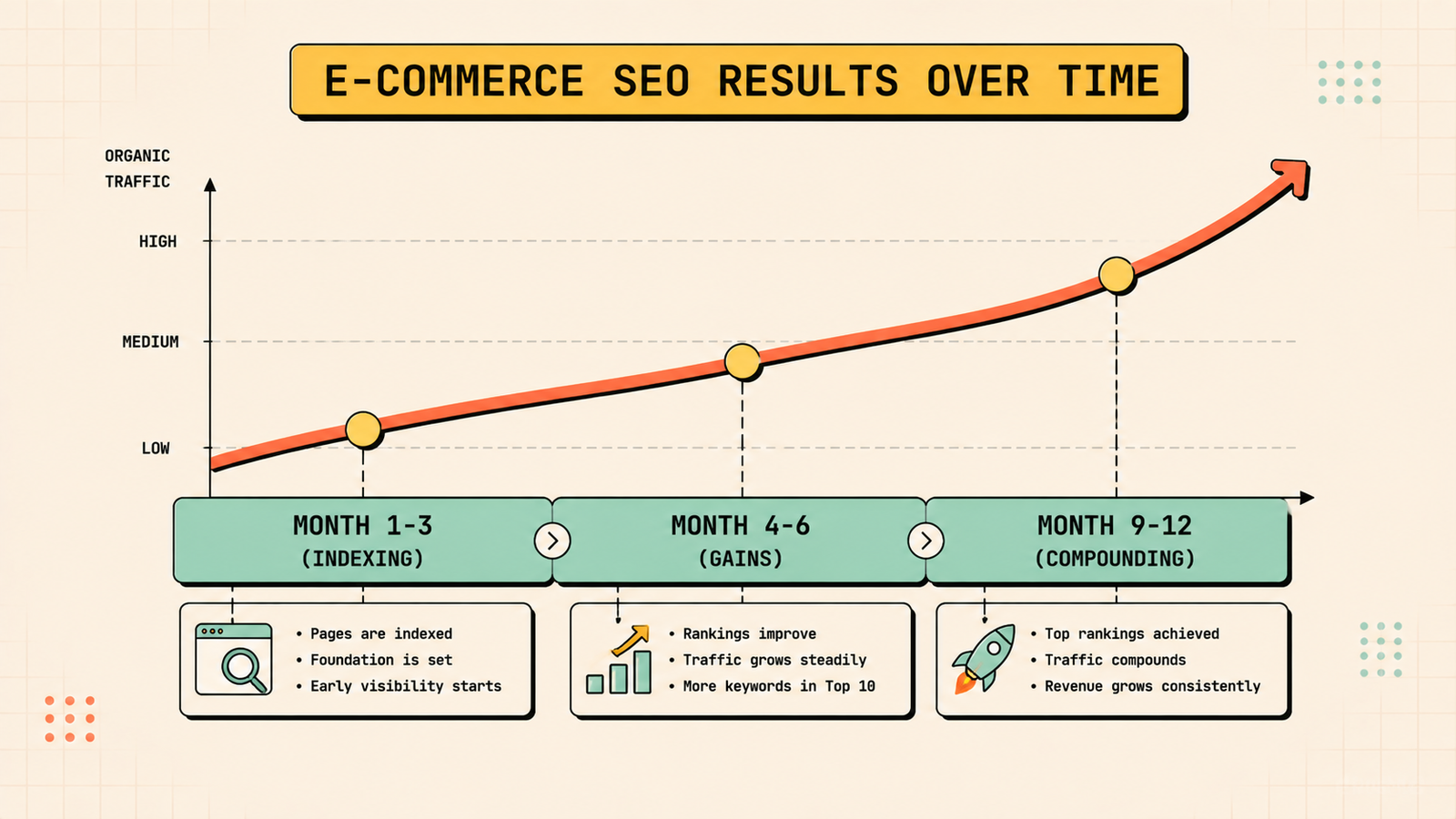
Ecommerce SEO follows the usual pattern. Expect little visible movement in the first three months while Google crawls and trusts your store, meaningful ranking gains around four to six months, and compounding traffic by nine to twelve months with consistent effort. Larger stores and more competitive categories take longer, so the earlier and more consistently you start, the sooner it pays off.
The bottom line for founders
Ecommerce SEO is how you stop renting shoppers and start owning a channel that gets cheaper over time. Nail your site structure, treat category pages as prime real estate, write unique product content, keep the technical side clean and fast, and optimize for both Google and AI search. Build it consistently and your store moves from ad-dependent to genuinely durable.
If you want experts to handle it, LetMeRank offers ecommerce SEO services for D2C brands, starting with a free audit that shows exactly what is holding your store back and which fixes will move the needle first.