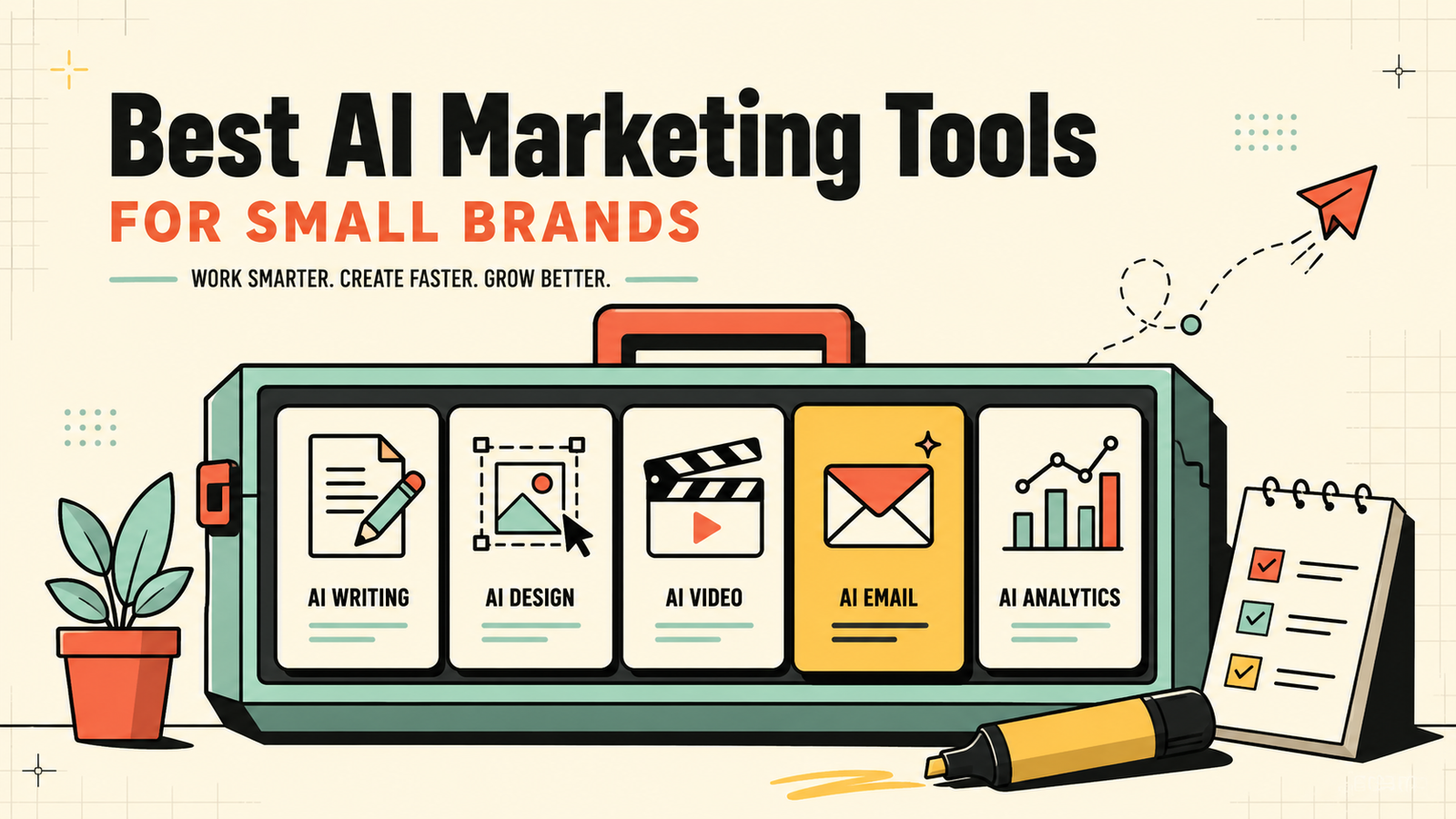
There are now more AI marketing tools than there are hours in your week to test them, and most founders waste money paying for five that overlap while missing the two that would actually move the needle. The problem is not a shortage of tools. It is knowing which ones matter for a small team with a real budget and no time to babysit software. This guide cuts through the noise. It explains what AI marketing tools do, how to choose without overspending, and the best tools organized by the job you actually need done, from content and SEO to design, video, email, and analytics.
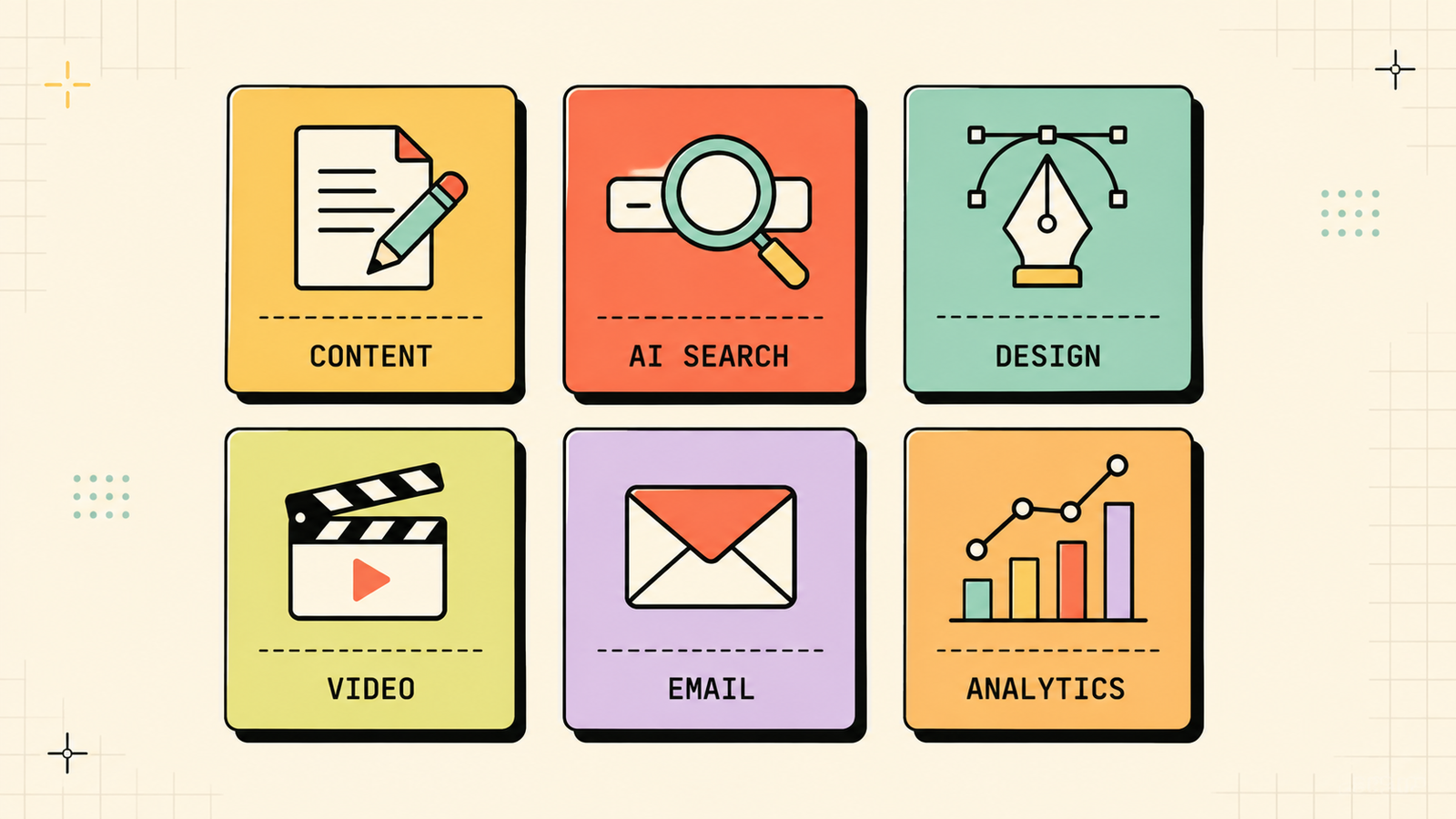
What are AI marketing tools?
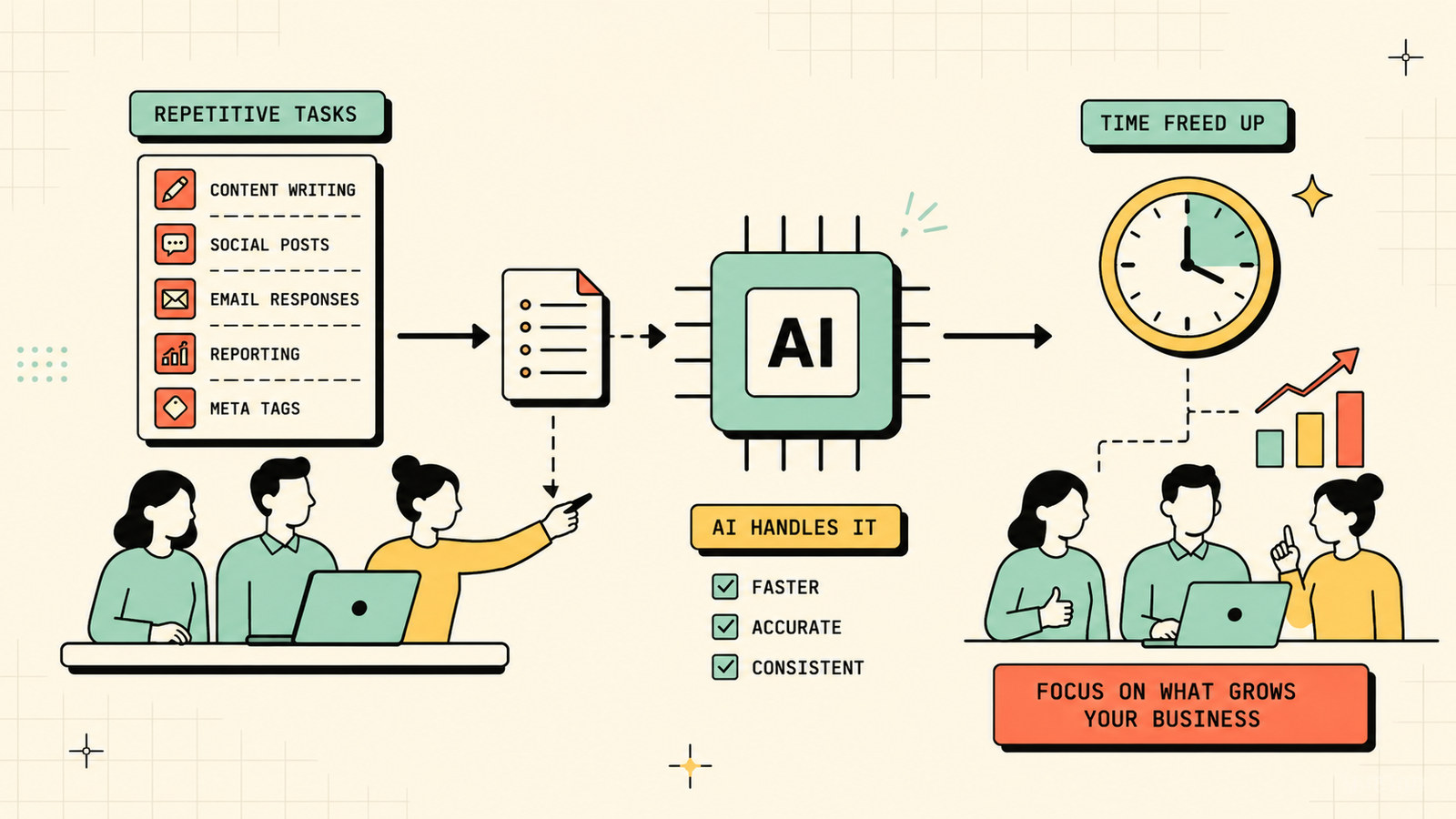
AI marketing tools are software that use artificial intelligence to help you do marketing work faster and better, from writing and design to research, automation, and analysis. Instead of doing every task manually, you hand the repetitive or time-heavy parts to AI and focus your time on strategy and judgment.
For a small brand, the appeal is simple. These tools let a lean team produce the volume and quality of marketing that used to need a much bigger one. Used well, they lower your costs and speed you up. Used carelessly, they drain budget on overlapping subscriptions and churn out generic content that does nothing. The difference is entirely in how you choose and use them.
LTV:CAC Ratio Guide
How to choose the right AI tools (without overspending)
Before you buy anything, get clear on the job you need done. The most common mistake is collecting tools you saw recommended rather than tools that solve your actual bottleneck. Start with your single biggest constraint, whether that is content volume, design, or ad management, and solve that first. Prefer one tool that does several jobs well over five single-purpose subscriptions. Use free trials and free tiers to test before committing. And remember that a tool is only worth it if it saves you more in time or money than it costs. Fewer, better-chosen tools always beat a drawer full of half-used ones.
The best AI marketing tools by use case
Here are the categories that matter for a small brand, with the kinds of tools worth knowing in each. Pick based on your bottleneck, not on the length of the list.
Content writing and SEO
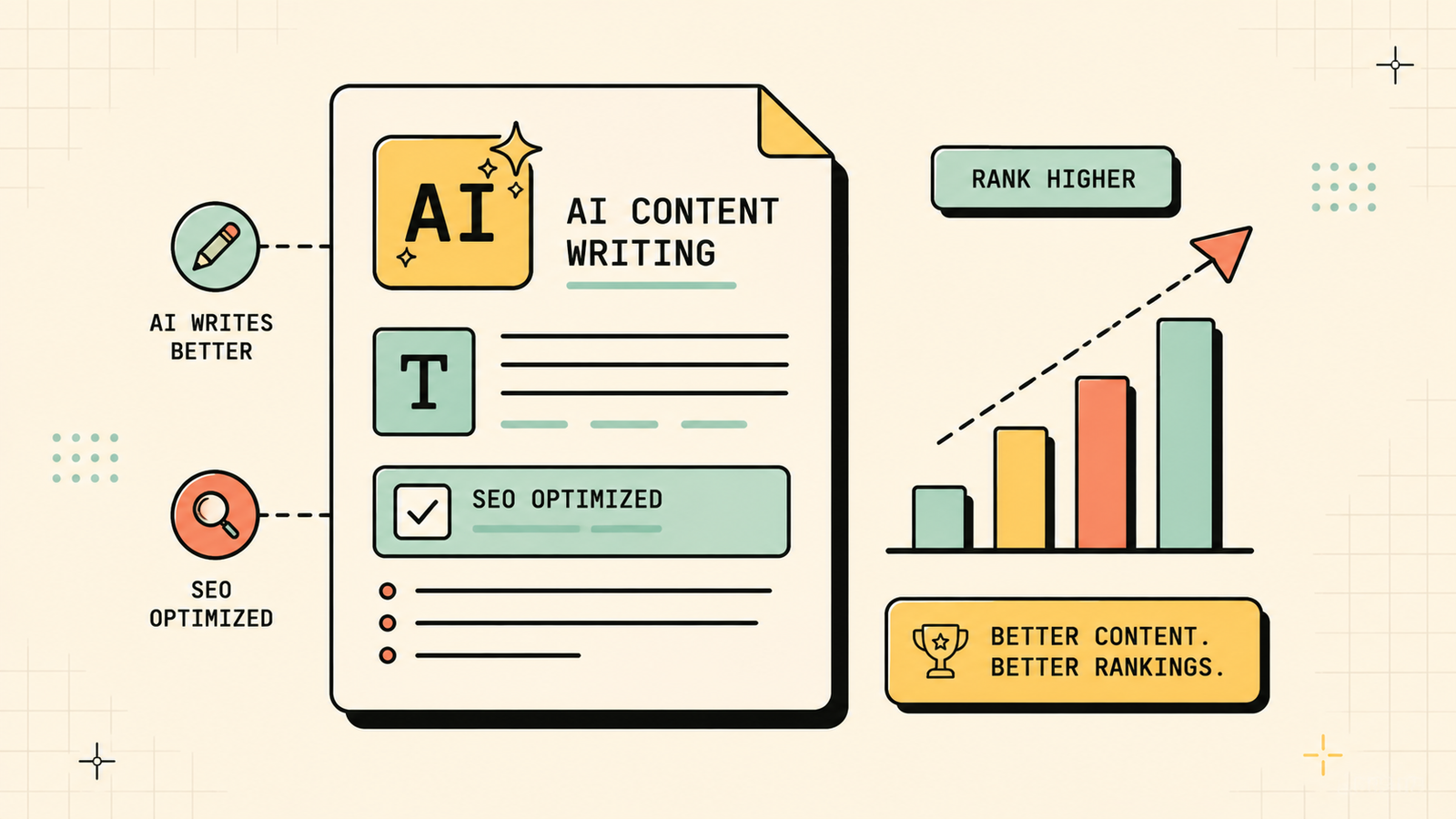
This is where most brands see the fastest payoff, since content is time-heavy and constant. AI writing assistants help you draft, outline, and edit faster, while AI-powered SEO tools help you find keywords and optimize content to rank.
| Tool type | What it does | Best for |
|---|---|---|
| General AI assistants (ChatGPT, Claude, Gemini) | Drafting, outlining, editing, ideas | Everyday writing and brainstorming |
| AI SEO content tools (Surfer, Clearscope) | Optimize content to rank for target keywords | On-page SEO and content briefs |
| Keyword and research suites (Semrush, Ahrefs, Ubersuggest) | Keyword data and content ideas with AI features | Planning what to write |
AI search and research (GEO)
As buyers shift to asking AI for recommendations, tools that help you research and optimize for AI search are becoming essential. Assistants like Perplexity are useful for fast, sourced research, and newer visibility tools track whether your brand appears in AI answers on ChatGPT, Perplexity, and Google AI Overviews.
Design and visuals
You no longer need a designer for every asset. AI design tools generate images, social graphics, and layouts in minutes.
| Tool type | What it does | Best for |
|---|---|---|
| AI design platforms (Canva Magic Studio) | Social posts, graphics, quick layouts | Everyday brand visuals |
| AI image generators (Midjourney, Adobe Firefly) | Original images and concept art | Unique hero and campaign visuals |
| Background and photo tools | Clean product shots and edits | Ecommerce product images |
Video and audio
Video is the highest-effort content, which is exactly why AI helps most here. Tools can turn long videos into short clips, generate voiceovers, create avatar presenters, and edit by editing text.
| Tool type | What it does | Best for |
|---|---|---|
| Clip and repurposing tools (Opus Clip) | Turn long video into short social clips | Reels, Shorts, and TikToks |
| Text-based editors (Descript) | Edit video and audio like a document | Podcasts and talking-head video |
| Voice and avatar tools (ElevenLabs, Synthesia, HeyGen) | Voiceovers and AI presenters | Explainers and scaled video |
Local SEO in 2026
Email, ads, and automation
AI helps you write better campaigns, personalize at scale, and automate the busywork that eats a founder's day.
| Tool type | What it does | Best for |
|---|---|---|
| Email platforms with AI (Klaviyo, Mailchimp) | Subject lines, copy, send-time optimization | D2C email and flows |
| Ad-assist features (Meta, Google AI) | Creative variations and targeting help | Running paid campaigns |
| Automation tools (Zapier, Make) | Connect apps and automate repetitive tasks | Saving hours on manual work |
Analytics and CRO
AI can read your data faster than you can and point to what to fix. Analytics assistants surface trends and anomalies, and CRO tools use AI to test and improve your pages so more of your traffic converts.
We'll show you exactly which AI tools your brand actually needs and which ones are just draining budget.
Get a clear, data-backed plan to build a lean marketing stack that moves the needle without overlapping subscriptions.
Free vs paid: what a small brand actually needs
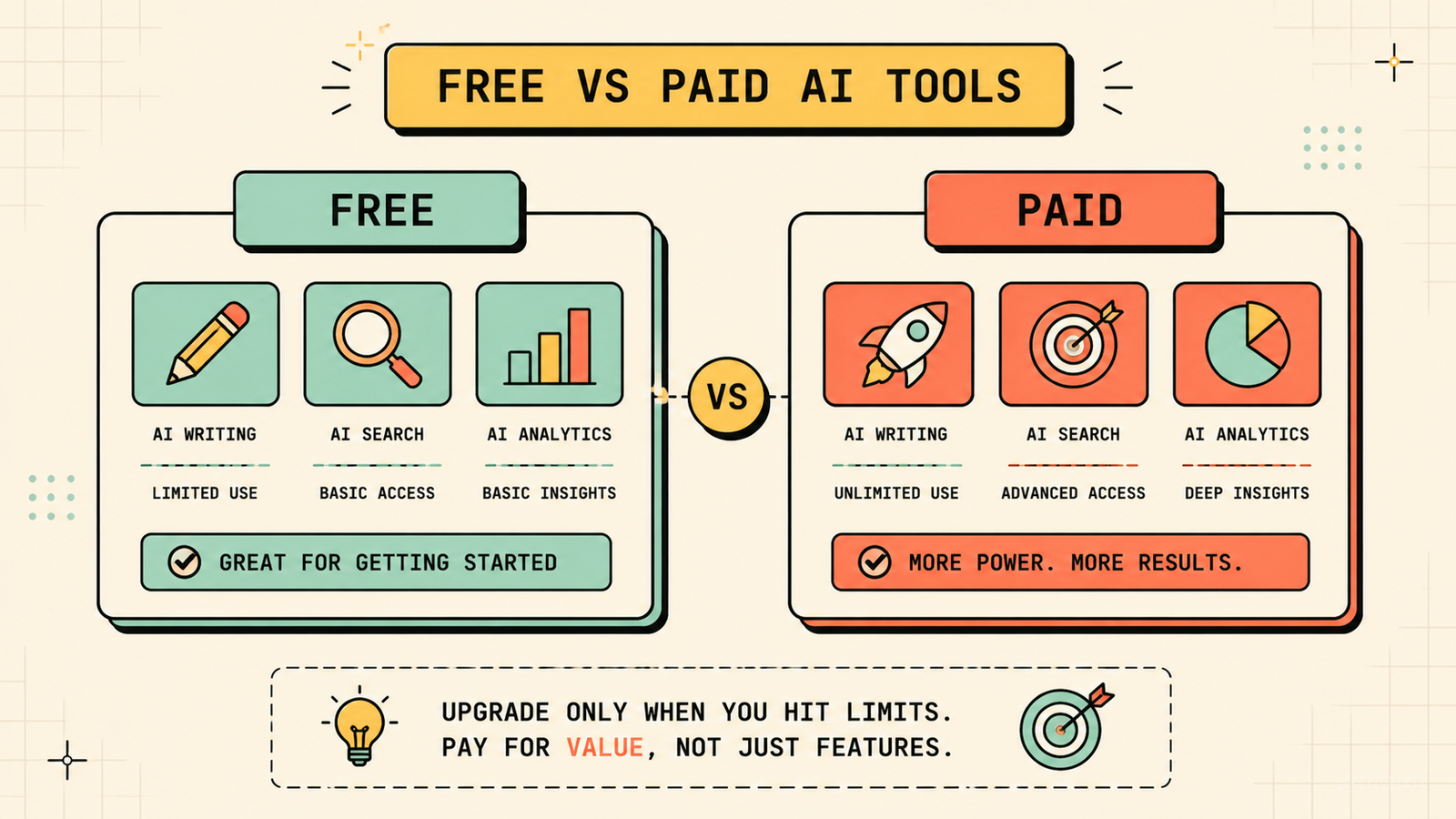
You can run a surprising amount of your marketing on free tiers. A general AI assistant, a free design tool, and the free features of your analytics and keyword tools cover a lot of ground when you are starting out. Pay for a tool only when you hit its free limits and the paid version clearly saves you more than it costs. The right stack for most small brands is one strong AI assistant, one design tool, one SEO or keyword tool, and your email platform, with everything else added only as a real need appears. Resist the urge to buy the whole toolbox before you know which tools you will actually use every week.
Can AI-generated content rank on Google?
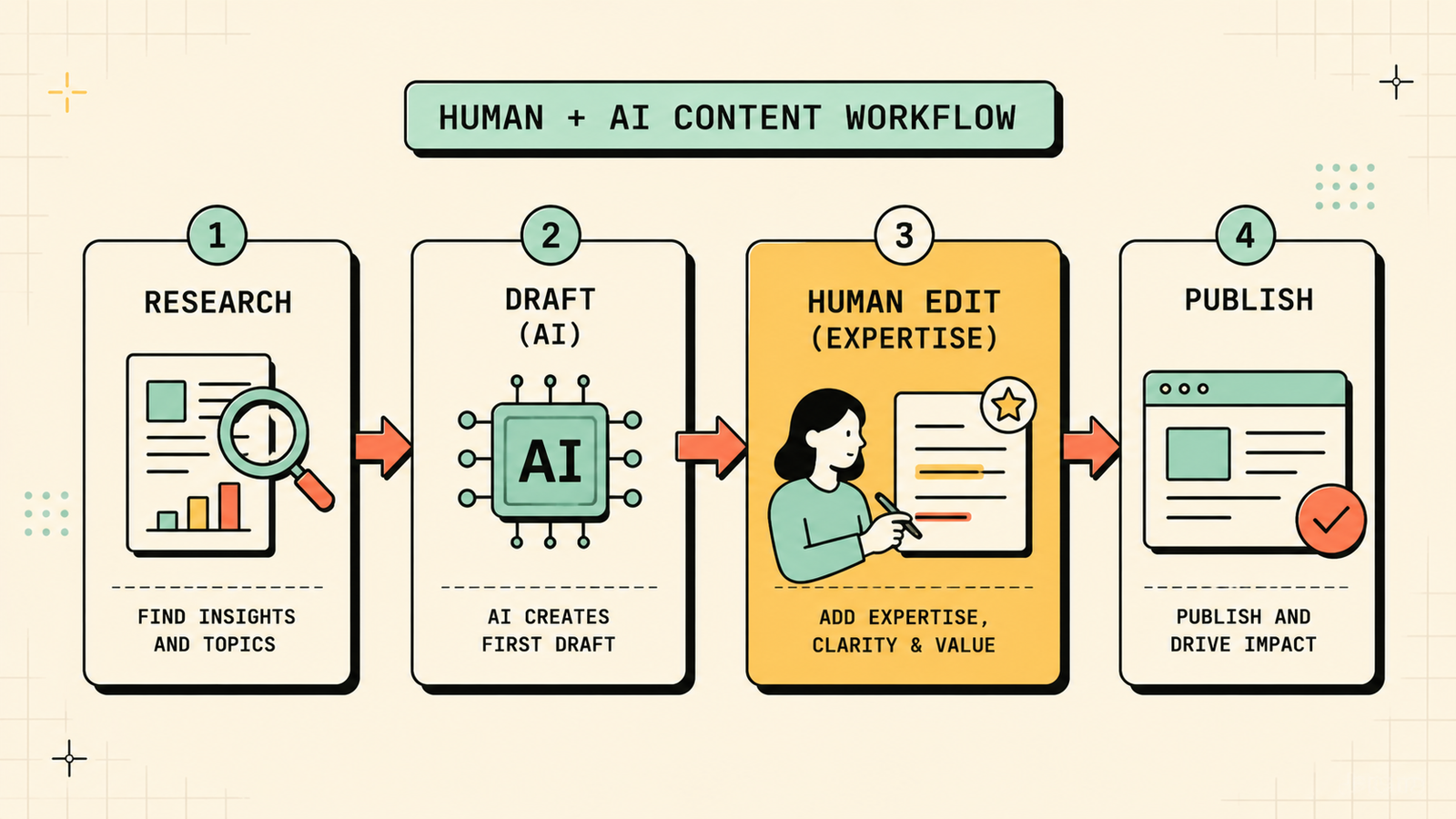
Yes, AI-generated content can rank on Google, but only if it is genuinely helpful. Google's position is that it rewards quality content regardless of how it is produced, and penalizes low-value content made purely to game rankings, whether written by a human or an AI. In practice that means raw, unedited AI output rarely ranks well, because it tends to be generic and lacks real experience or depth. The content that wins is AI-assisted but human-led: you use AI to draft and speed up, then add real expertise, original insight, accurate facts, and editing. Treat AI as a fast first draft, not a finished product.
The human plus AI workflow that actually works
The brands getting real results do not hand everything to AI or refuse to use it. They combine both. A simple workflow: use AI to research and outline, draft with an AI assistant, then have a human add genuine expertise, examples, and brand voice, fact-check everything, and edit for quality. AI handles the speed and the blank-page problem. You handle the judgment, accuracy, and originality that make content actually rank and convert. That division of labor is the whole game.
Common mistakes with AI marketing tools
A few errors waste the most money and goodwill. Buying overlapping tools you never fully use is the most common. Publishing raw AI content without editing produces generic pages that do not rank and can hurt your brand. Chasing every new tool instead of mastering a few slows you down rather than speeding you up. Using AI for volume over quality floods your channels with forgettable content. And forgetting that AI can be confidently wrong, especially on facts and figures, leads to errors going live. Avoid these and AI becomes a genuine advantage rather than an expensive distraction.
LetMeRank
The starter AI stack for a D2C or small brand
If you want a concrete place to begin rather than a long menu, here is a lean stack that covers the essentials without overlap. Add to it only when a real need appears.
| Job | One tool to start | Why it earns its place |
|---|---|---|
| Writing and ideas | A general AI assistant (ChatGPT or Claude) | Handles drafts, outlines, and brainstorming across everything |
| SEO and keywords | One keyword tool (Ubersuggest, Semrush, or Ahrefs) | Tells you what to write and how to rank it |
| Design | Canva with its AI features | Social posts, graphics, and product visuals in minutes |
| Email and retention | Your email platform's built-in AI (Klaviyo or Mailchimp) | Better campaigns and flows where your repeat revenue lives |
| Automation | Zapier or Make | Removes hours of manual, repetitive work |
That is five tools, most with free tiers, covering the jobs that actually drive a small brand's growth. Master this before adding anything else. A focused stack you use every day beats a sprawling one you barely touch, and it keeps both your budget and your attention where they belong.
The bottom line for founders
AI marketing tools can let a small team punch far above its weight, but only when you choose a focused stack around your real bottleneck and keep a human in charge of quality. Start with one strong assistant, one design tool, and one SEO tool, use AI to move faster, and add your own expertise so the output actually ranks and converts.
If you would rather have experts blend AI and human skill to grow your organic and AI-search visibility, LetMeRank does exactly that, starting with a free audit of where your marketing can move fastest.