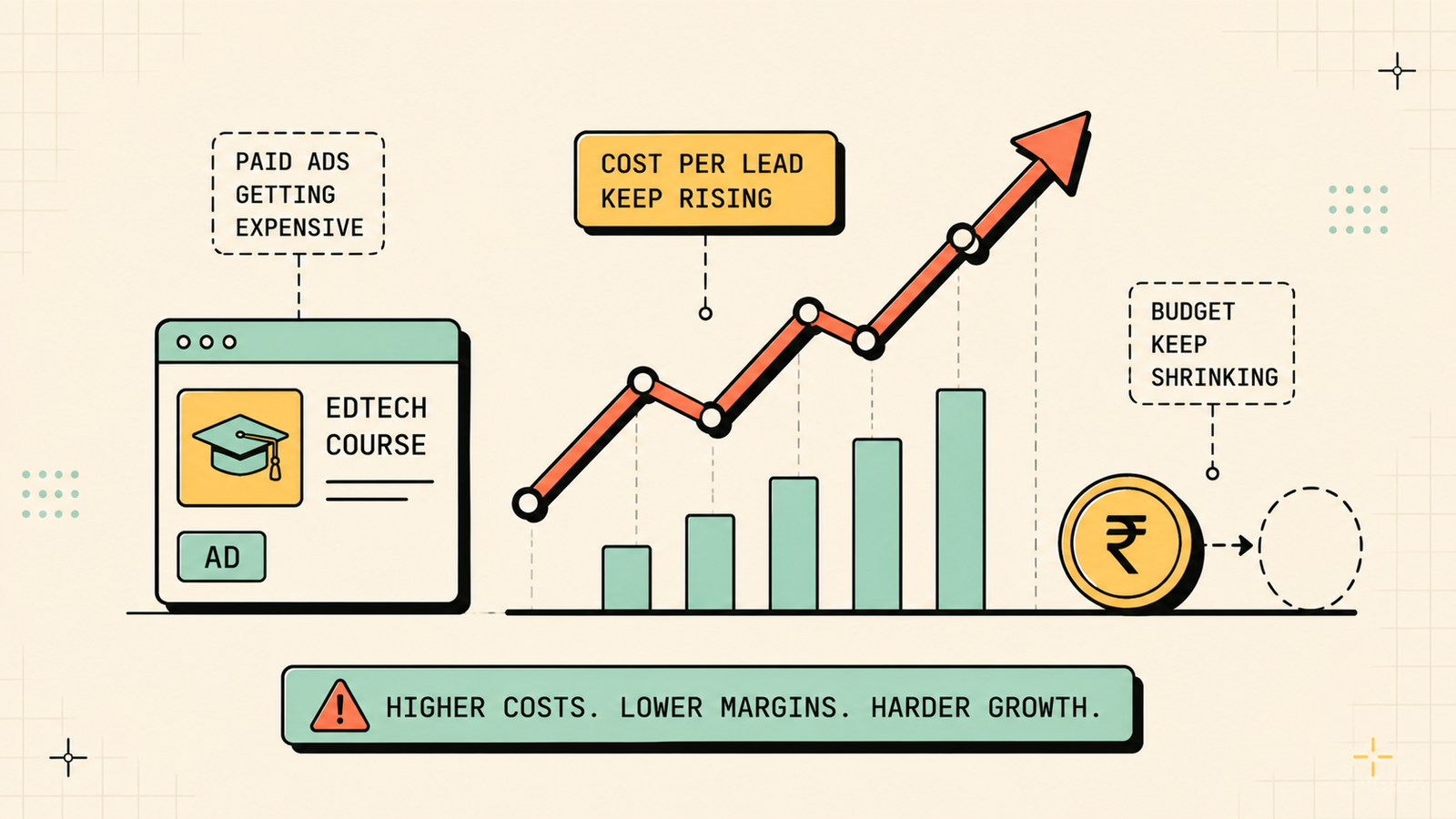
Most edtech founders discover the same painful truth about six months in: paid ads can fill a funnel fast, but they can also quietly eat the entire margin on a course you worked a year to build. Education is one of the most expensive categories to advertise in, because everyone is bidding for the same students and parents at the same moments. The brands that win long term are the ones that stop renting attention and start earning it through organic search and content. This guide covers why edtech marketing is so hard, how students and parents actually search, and how to build an SEO and content engine that brings you student leads without setting fire to your ad budget.
Why is edtech marketing so hard?
Three things make marketing an education brand uniquely difficult. First, acquisition costs are brutal, because education keywords are among the most competitive and expensive to bid on, and costs rise every year. Second, the decision is high-stakes and slow. Choosing a course, a tutor, or an exam program is a big commitment of money and time, so people research heavily and take weeks or months to decide. Third, trust is everything. Nobody buys education from a brand they do not believe in, which means you have to prove credibility before anyone converts. Paid ads can put you in front of people, but they cannot build the trust or answer the deep research that education buyers need. That is exactly where organic content wins.
Best AI Marketing Tools for D2C Brands
How do students and parents actually search?
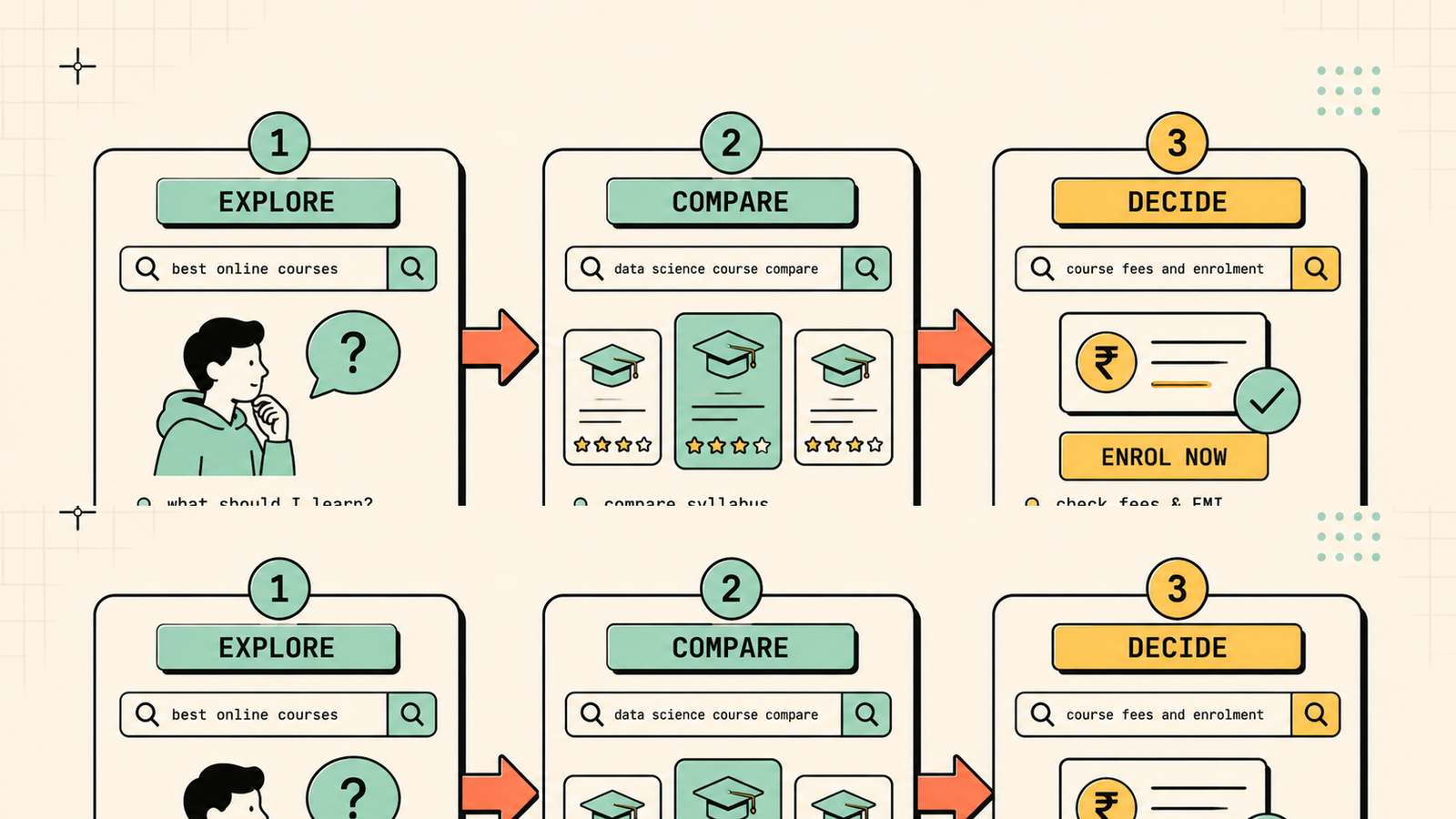
To capture demand, you have to understand the journey. Education buyers rarely search "buy course" on day one. They move through stages, and each stage is a search opportunity.
Early on, they search to understand: questions about a career, an exam, a skill, or a subject. In the middle, they compare: this course versus that one, this exam strategy versus another, reviews and rankings. Near the decision, they search with intent: specific programs, fees, batches, and providers. In markets like India, this plays out across exam prep like JEE, NEET, and UPSC, upskilling and job-focused courses, and study help, with parents often researching alongside students and tier-two and tier-three cities driving huge search volume.
If your content only targets the final buying searches, you miss the far larger audience asking questions earlier, exactly when you could win their trust first.
The keyword clusters that bring edtech leads
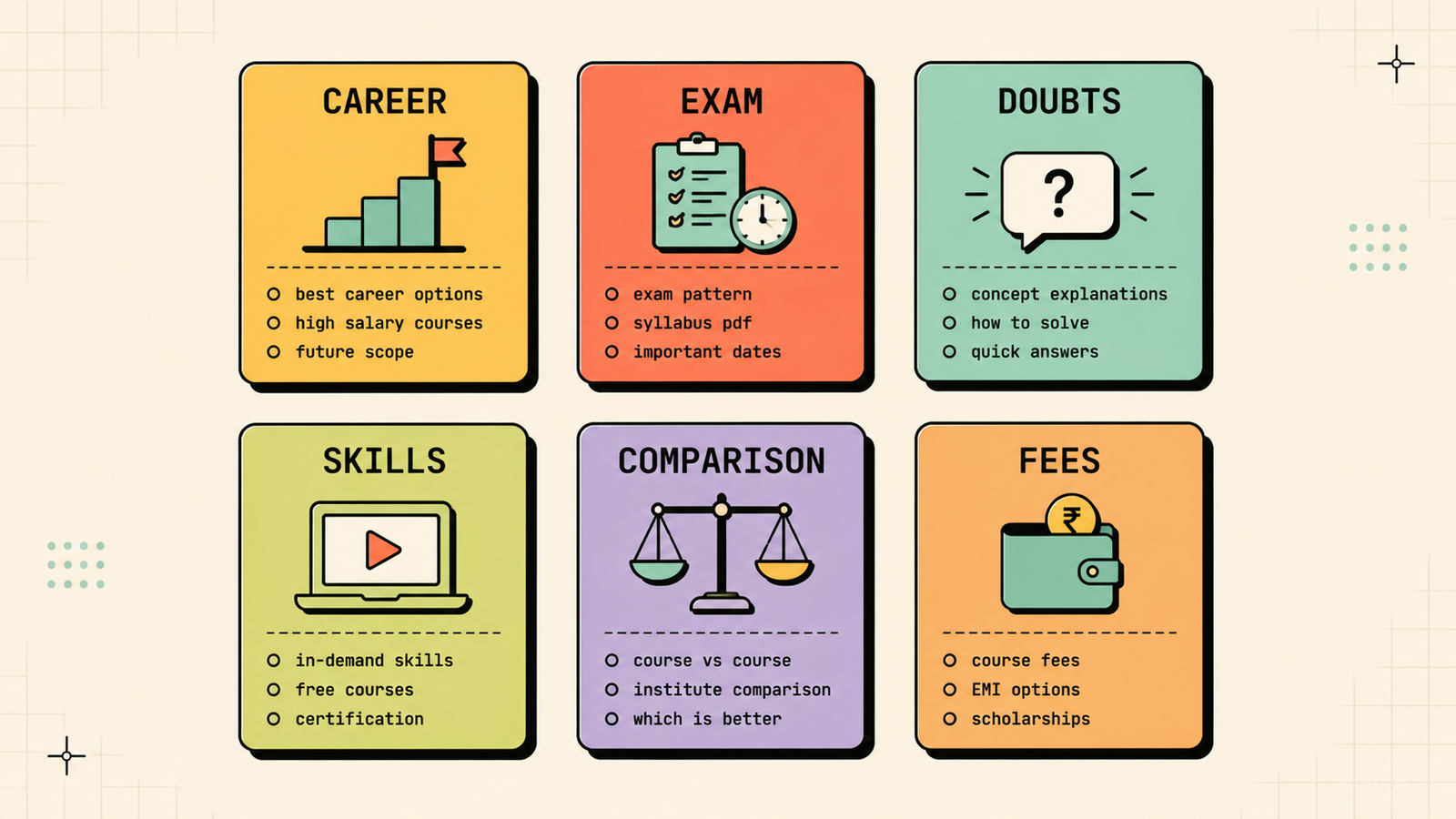
Great edtech SEO covers the whole journey, not just the bottom of it. Build content around these clusters.
| Cluster | Example searches | What it does |
|---|---|---|
| Career and outcome | "is X a good career", "jobs after Y" | Captures people exploring a path early |
| Exam and syllabus | "X exam syllabus", "how to prepare for Y" | Huge volume, builds trust with aspirants |
| Doubt and how-to | "how to solve X", "X explained" | Answers real study questions, earns authority |
| Skill and subject | "learn X", "X for beginners" | Reaches upskillers and students |
| Comparison and reviews | "X vs Y course", "best course for Z" | Catches buyers actively deciding |
| Provider and fees | "X course fees", "Y batch dates" | High-intent, closest to conversion |
The pattern is simple: answer the early and middle questions to build an audience and trust, then convert them with your comparison and provider content.
Content strategy for edtech
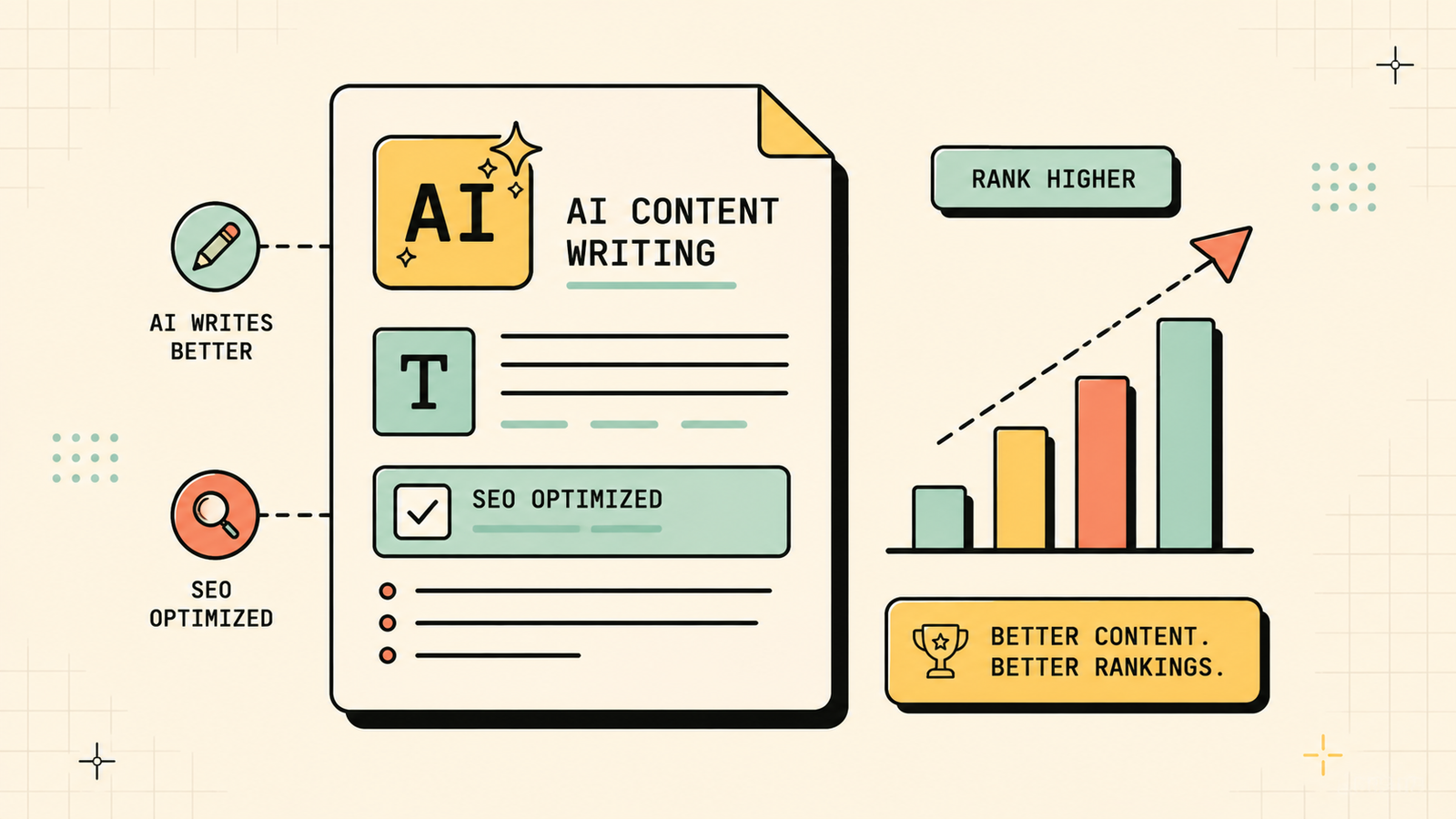
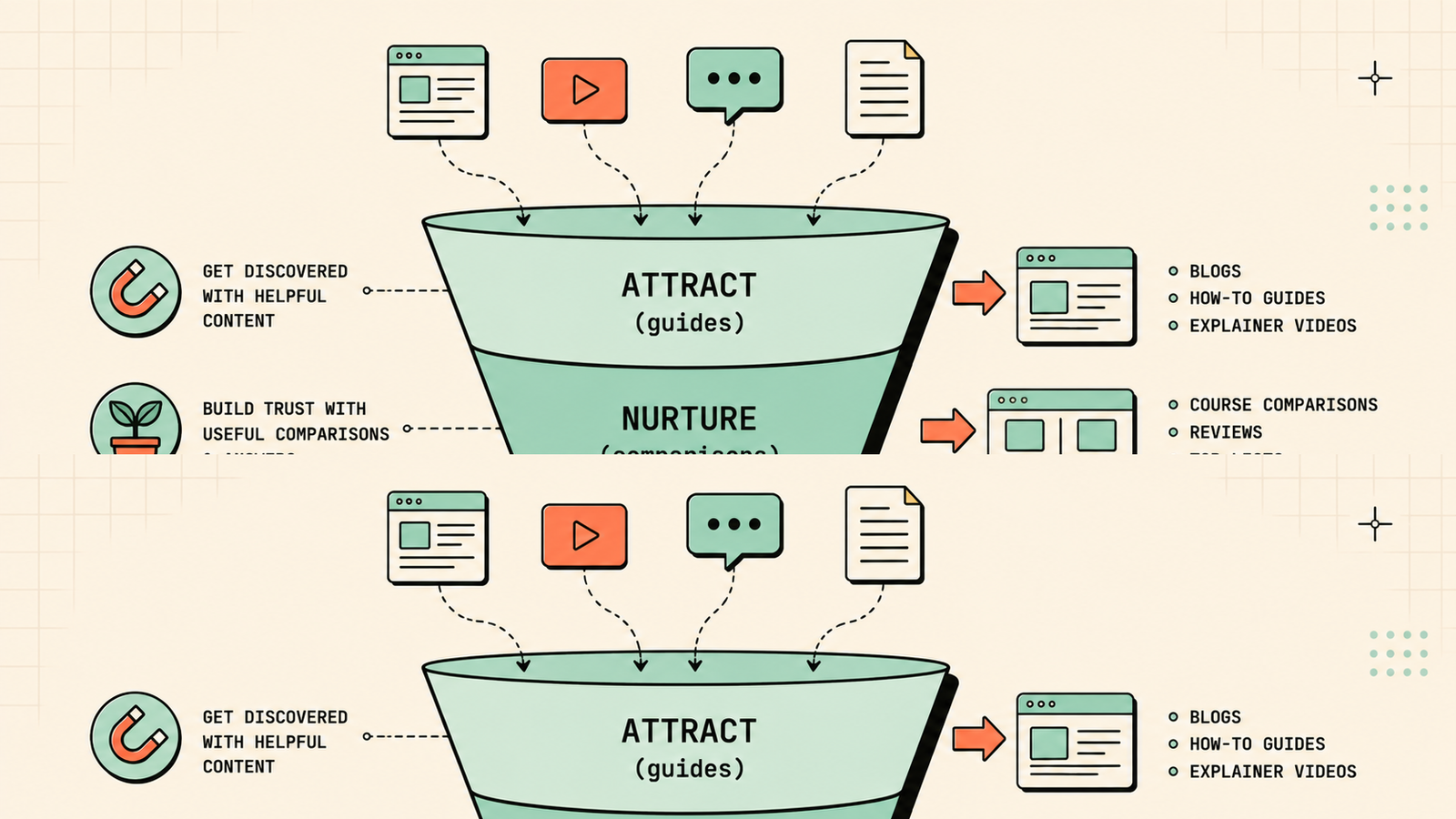
The winning strategy is topical authority. Instead of a few scattered posts, you build deep, connected content around your subject so Google (and students) see you as the go-to source. Cover a topic thoroughly, from beginner questions to advanced guides, and link it all together. Free, genuinely helpful content is your best marketing here, because it demonstrates your teaching quality before anyone pays. A student who learns something useful from your free guide already trusts you more than any ad could make them. Map your content to the funnel: educational guides to attract, comparisons and outcomes to nurture, and course and provider pages to convert.
Use programmatic SEO for scale
Edtech is one of the best fits for programmatic SEO, which means creating many structured pages from a repeatable template. If you have dozens of courses, exams, subjects, or locations, you can build a strong, consistent page for each one, targeting the specific searches around it. Done well, this captures a huge range of long-tail searches that individually seem small but add up to serious traffic. The key is to keep each page genuinely useful and unique, not thin and duplicated, or it works against you.
On-page and technical basics for edtech sites
The fundamentals still decide whether your content ranks. Give every important page a clear title and meta description built around its target search. Structure content with question-based headings so it matches how people search. Make your site fast and mobile-friendly, since most students search on phones. Add schema markup, including Course and FAQ schema, so search engines understand your offerings and can show rich results. And build a clean site structure that links your guides to your course pages, spreading authority and guiding visitors toward enrolling.
We'll show you exactly which searches your future students are making and how to capture them without burning ad budget.
Get a clear, data-backed plan to build organic demand, lower your acquisition cost, and grow student leads through search and AI search.
SEO and AI search for edtech
Students are increasingly asking AI assistants like ChatGPT and Google's AI answers for study help, course recommendations, and exam guidance. To show up there, structure your content to be quotable: clear, direct answers to real questions, strong FAQ content, genuine expertise, and accurate, specific information. The same depth and clarity that win traditional search are what get your brand cited in AI answers, and most edtech competitors have not adapted yet, which makes this a real opening.
Local SEO in 2026
Trust and authority matter more in education
Education is what Google treats as a sensitive topic, because it affects people's futures and finances, so it holds this content to a higher standard of trust. That works in your favor if you build genuine authority. Put real, qualified educators and experts behind your content with clear credentials. Show proof through student results, testimonials, and outcomes. Be accurate and cite reliable sources. Earn mentions and links from respected education sites. This kind of demonstrated expertise both lifts your rankings and does the exact job your marketing needs, which is convincing people you are worth learning from.
Paid ads vs organic for edtech
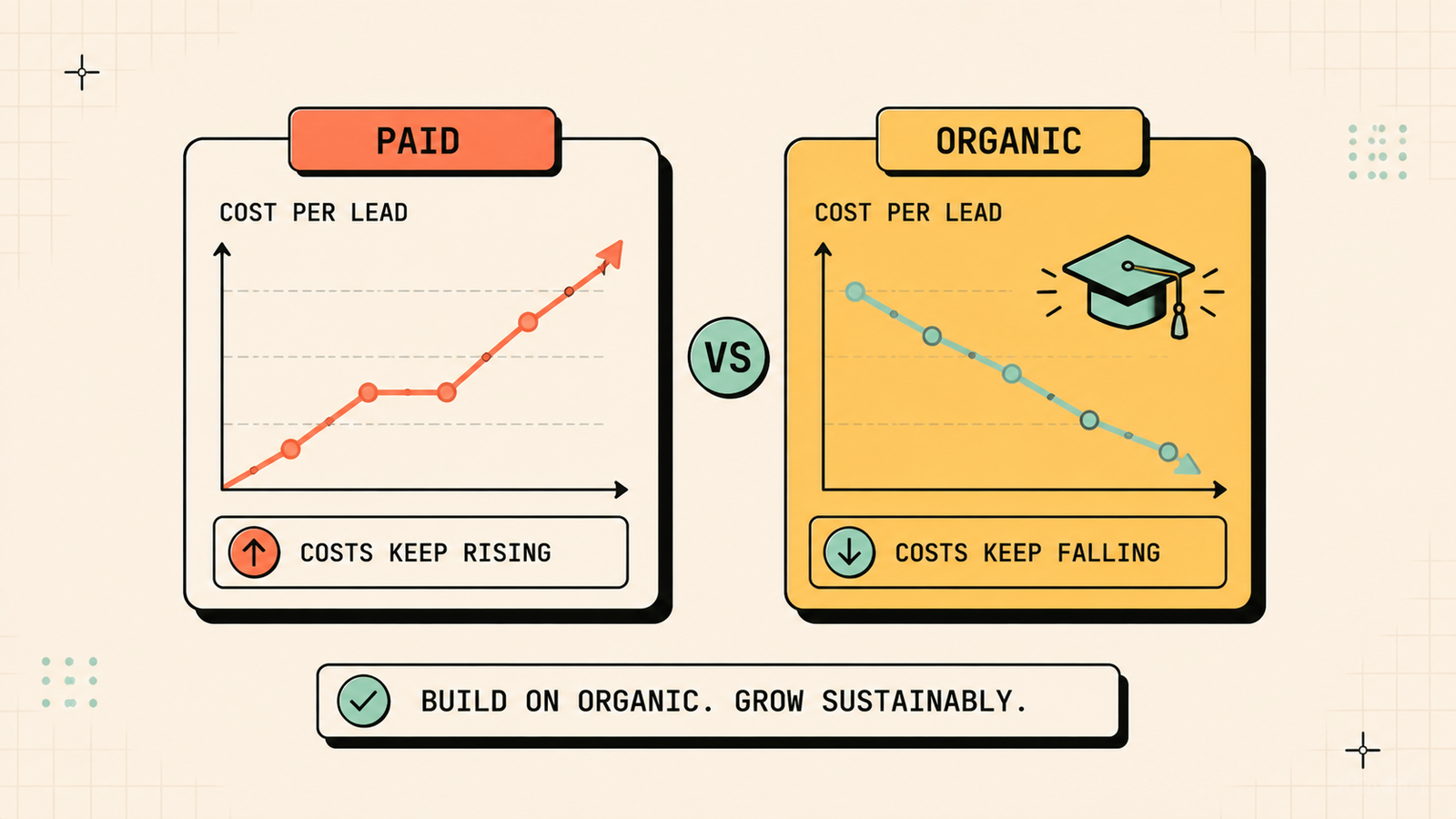
Paid ads have their place in edtech, especially for filling batches quickly or promoting a time-sensitive launch. But relying on them alone is what crushes margins, because education ad costs are high and keep climbing. Organic search works the opposite way. It takes a few months to build, but then it brings a steady stream of students at a cost that falls over time, and the trust-building content does your selling for you. The smart edtech play is to use paid for speed while building organic to structurally lower your cost of acquiring each student. Over a year, that shift is often the difference between a course that barely breaks even and one that is genuinely profitable.
Edtech SEO in India: what's different
The Indian edtech market has its own search patterns worth building for. Exam preparation drives enormous, predictable demand around JEE, NEET, UPSC, banking, and board exams, and aspirants search these terms in huge volumes year-round with seasonal spikes. Parents are active participants in the research, especially for school-age and competitive-exam students, so content that speaks to both students and parents wins more trust. Tier-two and tier-three cities now generate a large share of searches, often in a mix of English and regional languages, so plain, accessible content and regional-language pages can capture demand bigger players ignore. And price sensitivity is real, which means honest content around fees, value, and outcomes converts better than hype. Building your content calendar around the Indian exam and admission cycle, rather than a generic one, puts your best pages live exactly when demand peaks.
LetMeRank
Common edtech marketing mistakes
A few patterns hold edtech brands back. Spending everything on ads while building no organic base keeps acquisition costs high forever. Publishing only bottom-of-funnel course pages misses the far larger audience asking questions earlier. Thin, generic content fails in a category where Google demands demonstrated expertise. Hiding your educators and credentials wastes the trust signals that matter most here. Ignoring mobile and speed loses the students who search on phones. And treating content as a one-time push rather than an ongoing engine means rankings never compound. Avoiding these keeps your marketing building on itself instead of resetting every month.
The bottom line for founders
Edtech is expensive to advertise in and impossible to fake trust in, which is exactly why organic search and content are your strongest long-term channels. Understand how students and parents search, build deep and genuinely helpful content across their whole journey, prove real expertise, and optimize for both Google and AI search. Do that and you build a lead engine that gets cheaper and stronger over time instead of more expensive.
If you want help building organic student demand without burning your ad budget, LetMeRank works with edtech brands to grow leads through SEO and AI search, starting with a free audit of where your fastest wins are and which searches your future students are already making.