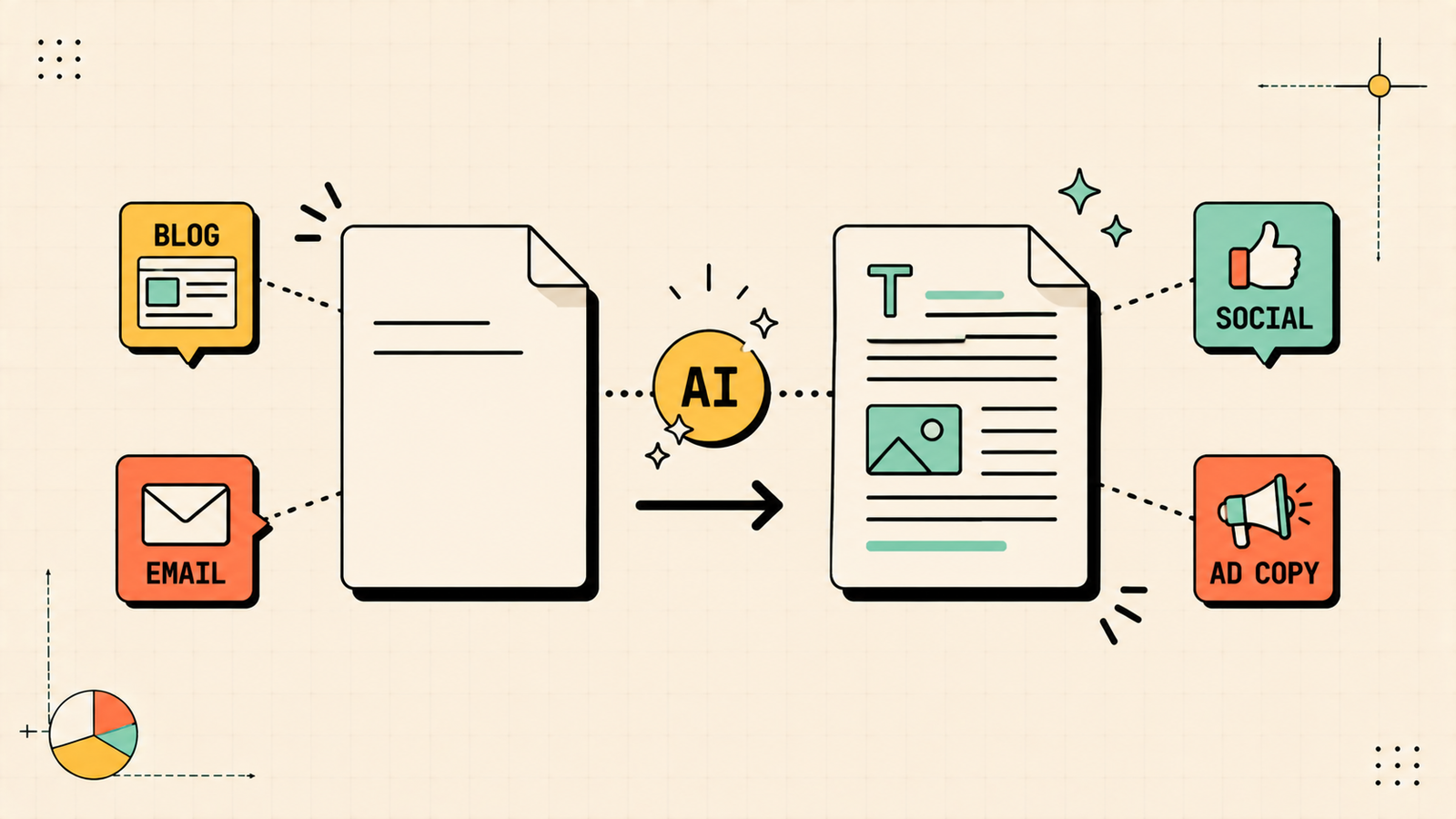
You know what you want to say. You just cannot get it out of your head and onto the page without it taking three times longer than it should. That is the job AI writing tools were built for. Not to write for you, but to break the blank-page paralysis, speed up the drafting, and help you get from rough idea to polished text in a fraction of the time. This guide covers which AI is actually best for writing, the tools that handle each type of writing well, which are free, and how to keep the output worth publishing.
What to look for in an AI writing tool
Not all AI writes the same way. Before choosing, check a few things. How natural and readable is the output, since robotic-sounding text needs heavy editing? How well does it handle long-form work like blog posts and reports versus short-form like captions and ads? Can it match a specific voice or tone when you give it instructions, or does everything sound the same? Does it have a free plan that covers real usage? And can you use it for the kind of writing you actually do most? A tool that is great for ad copy may be mediocre for blog posts, and vice versa.
Which AI Is Best for Research?
The best AI tools for writing
Here are the tools worth knowing, matched to the writing job they handle best.
Claude
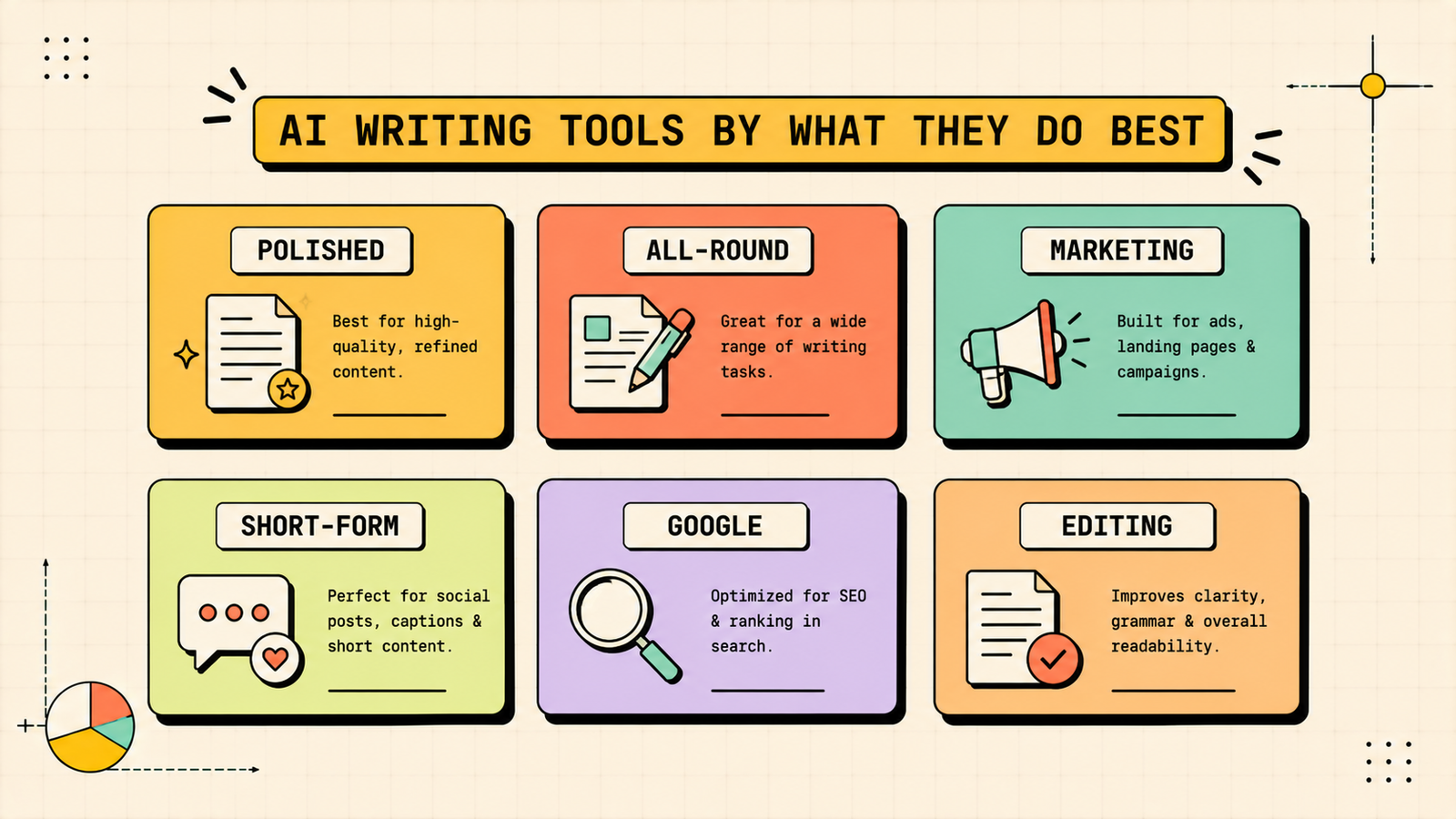
Claude is the strongest AI for careful, polished, long-form writing. Blog posts, reports, newsletters, strategy documents, and anything where structure, tone, and readability matters comes out cleaner and more natural from Claude than from most alternatives. It handles very long context, so you can paste in background material, brand guidelines, and existing content and it keeps everything consistent. Free plan available, paid for heavier use. Best for long-form, polished writing where quality matters more than speed.
ChatGPT
ChatGPT is the most versatile writing tool and the best all-rounder. It handles blog posts, social captions, emails, ad copy, scripts, outlines, and creative writing across every format. It is fast, flexible, and responds well to specific instructions. The free plan (GPT-4o) covers most writing needs. It is not always as polished as Claude on long-form work, but its speed and range make it the best starting point for most people. Best for everyday writing across any format.
Jasper
Jasper is built specifically for marketing teams that produce a high volume of brand-consistent copy. It has brand voice controls, campaign templates, team workflows, and AI trained for marketing language. It is paid only and is most valuable for businesses producing dozens of assets per week that all need to sound the same. Best for high-volume marketing copy with brand consistency.
Copy.ai
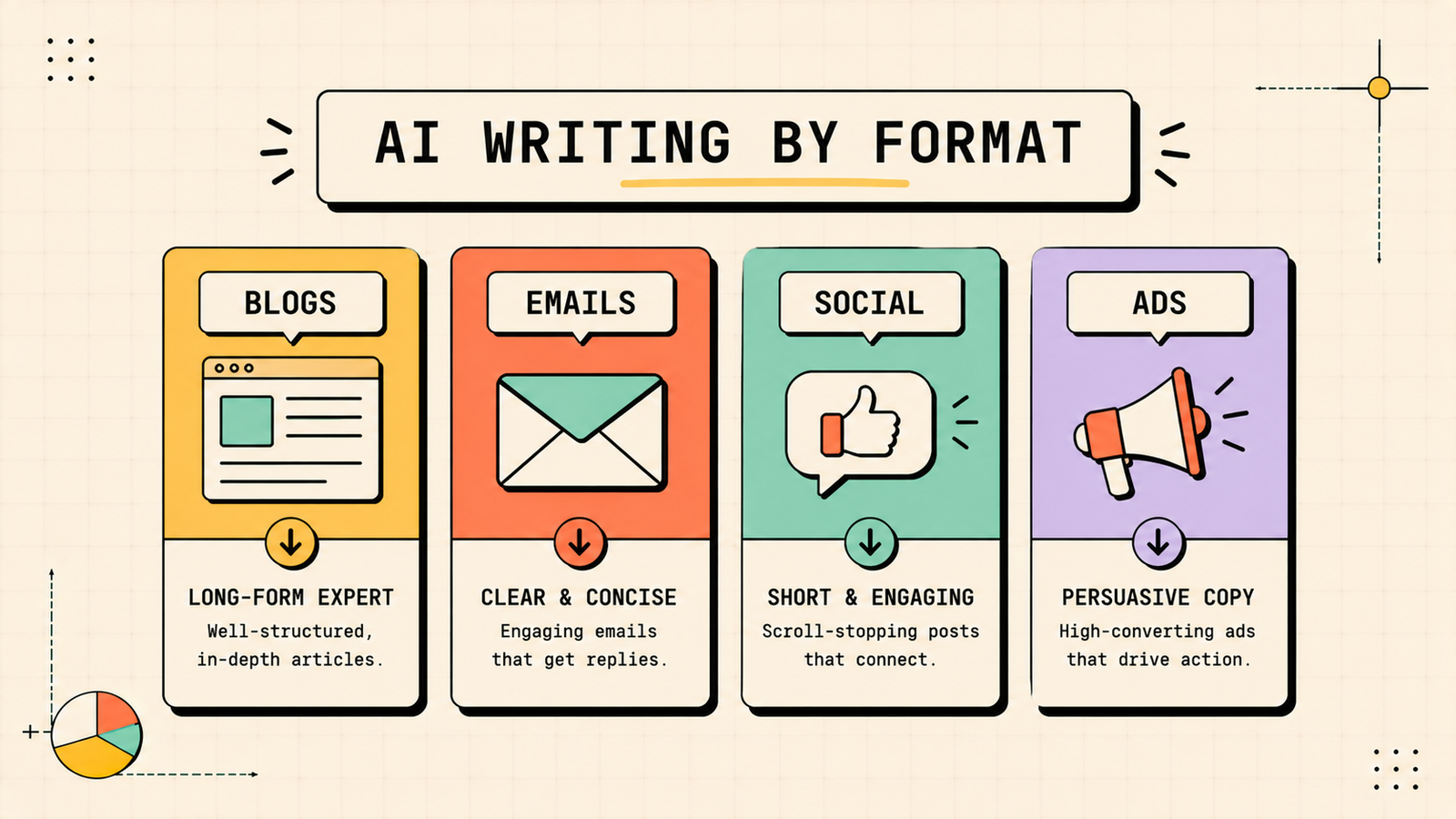
Copy.ai focuses on short-form marketing content: ad copy, product descriptions, social captions, email subject lines, and landing page text. It has templates for common marketing formats and generates multiple variations quickly. Free plan with limits, paid for more. Best for short-form marketing copy and quick variations.
Gemini
Gemini handles writing tasks across formats and integrates with Google Workspace, so it can help draft inside Gmail and Docs. It is a solid general writing assistant, though not as strong as Claude for polish or ChatGPT for flexibility. Free plan available. Best for writers who live in Google Workspace and want AI inside their existing tools.
Grammarly
Grammarly is not a content generator but a writing improvement tool. It checks grammar, clarity, tone, and conciseness, and its AI features now suggest rewrites and help you adjust your style. Free plan covers basic grammar, Premium adds tone and clarity. Best for polishing and proofreading your own writing after drafting.
Best AI Tools for SEO
AI writing tools compared
| Tool | Best for | Long-form quality | Short-form speed | Brand voice | Free plan |
|---|---|---|---|---|---|
| Claude | Polished long-form writing | Excellent | Good | Via prompting | Yes |
| ChatGPT | All-round, any format | Good | Excellent | Via prompting | Yes (GPT-4o) |
| Jasper | High-volume marketing copy | Good | Excellent | Built-in controls | No (paid) |
| Copy.ai | Short-form marketing | Limited | Excellent | Templates | Yes (limited) |
| Gemini | Google Workspace writing | Good | Good | Via prompting | Yes |
| Grammarly | Editing and proofreading | N/A (editing tool) | N/A | Tone detection | Yes (basic) |
Claude vs ChatGPT vs Jasper: which is best for writing?
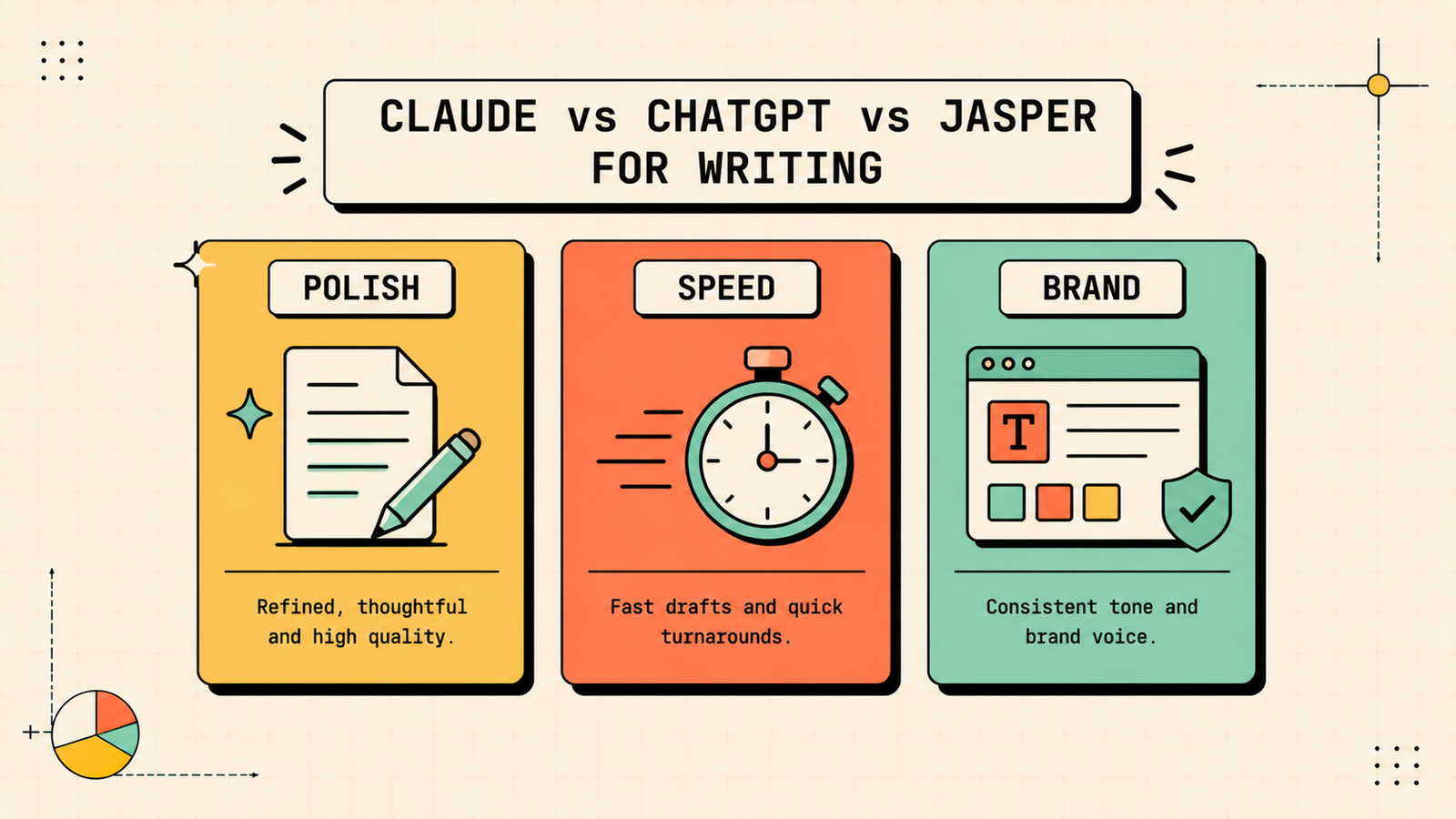
These three come up most, and each wins at a different job. Pick Claude when the writing needs to be genuinely good: well-structured, clear, natural-sounding, and polished. It is the best choice for blog posts, newsletters, reports, and any content where readability and depth matter. Pick ChatGPT when you need speed and flexibility across many formats, from emails and captions to scripts and outlines. It is the best all-rounder for everyday writing. Pick Jasper when you run a marketing team producing a high volume of on-brand copy and need built-in brand voice controls and templates. For most individual writers and small teams, Claude or ChatGPT covers everything without needing Jasper.
Best free AI for writing
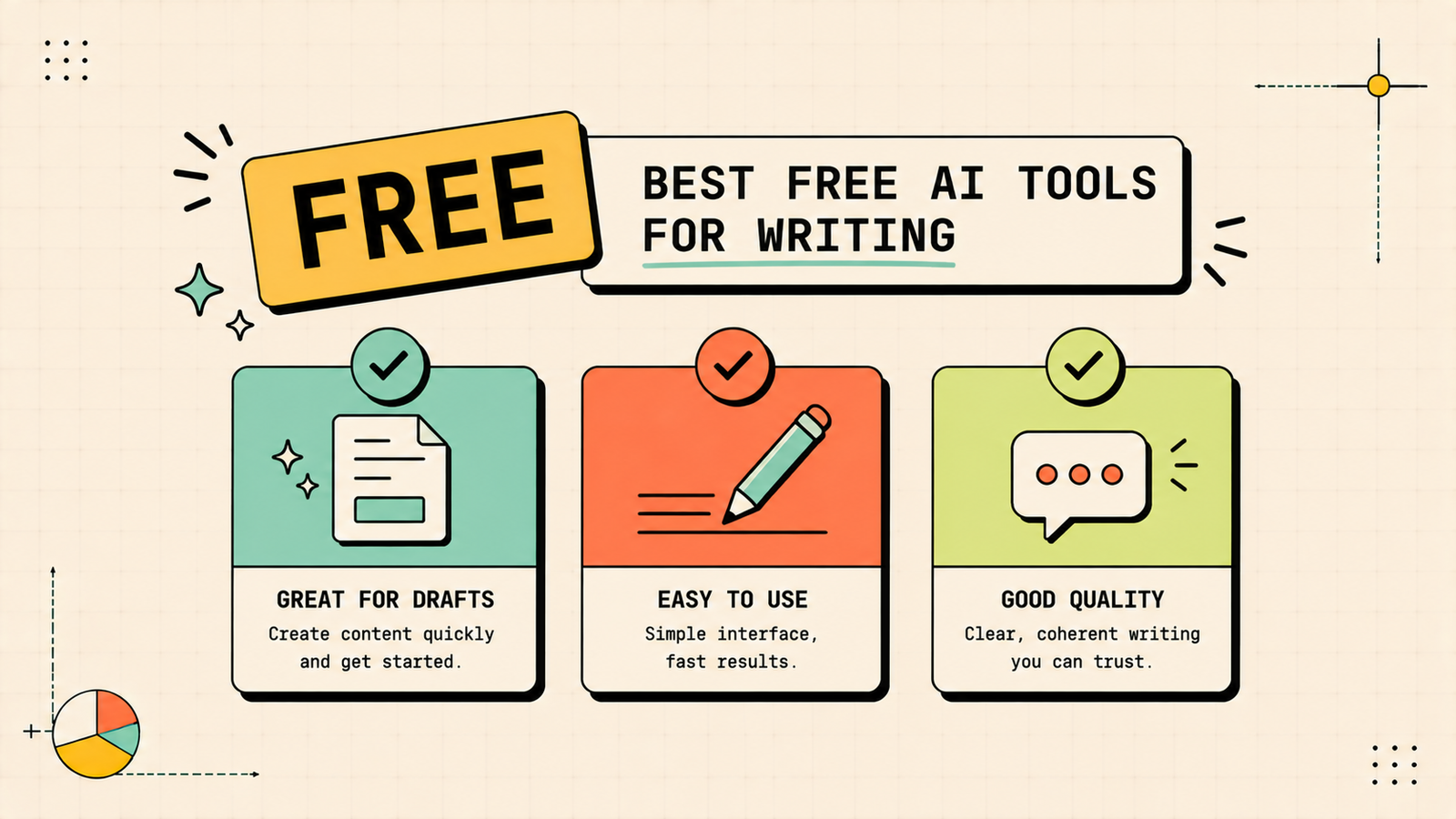
If you are not paying for anything, Claude free and ChatGPT free together cover almost all writing needs. Use Claude free for your most important long-form work where quality matters. Use ChatGPT free for everything else: brainstorming, outlines, emails, captions, and quick drafts. Add Grammarly free for a final grammar and clarity pass. Between these three free tools, you have a writing workflow that handles blogs, marketing copy, emails, and editing at zero cost.
We'll show you exactly which AI writing tools fit your workflow and save you the most time.
Get a clear, practical plan to build a writing toolkit that gets you from idea to polished text faster.
Best AI for blog posts and long-form content
For blog posts, guides, and long-form articles, Claude produces the cleanest, most readable output. Give it your topic, target keyword, audience, and any brand voice notes, and it generates well-structured content that needs less editing than most alternatives. ChatGPT is a close second and is faster, which makes it the better pick when you are producing at volume and editing speed matters more than first-draft polish. For either, the output still needs your expertise, examples, and editing to rank and convert, since raw AI content is generic no matter how clean the writing is.
Best AI for emails and professional communication
For emails, proposals, and professional messages, ChatGPT is the fastest and most practical pick. It understands tone, context, and formality levels, and it can draft a professional email in seconds. Claude is the better choice for important, high-stakes communication where every word matters, since it produces more carefully worded output. For routine daily communication, ChatGPT free handles it. For communication that represents your business at its best, spend the extra minute with Claude.
Best AI for social media and ad copy
For social captions, ad copy, and short-form marketing text, ChatGPT and Copy.ai are the strongest picks. ChatGPT generates variations quickly across any platform. Copy.ai has purpose-built templates for ads, product descriptions, and subject lines. Jasper is the best at scale with brand voice controls. For a single founder or small team, ChatGPT free covers social and ad copy without needing an extra subscription.
Can AI-written content rank on Google?
Yes, but only when it is genuinely helpful and human-edited. Google does not penalise content for being AI-assisted. It penalises content for being low quality, regardless of how it was made. The content that ranks is AI-drafted but human-led: you use AI for the first draft and structure, then add your expertise, original examples, accurate facts, and real editing. Treat AI as a writing accelerator, not a publishing button, and the output can rank as well as anything hand-written.
AI Tools for Marketing
Which AI writes the most human-sounding text?
Claude consistently produces the most natural, human-sounding writing among general AI assistants. Its output has better sentence variety, smoother transitions, and a less robotic feel, especially at longer lengths. ChatGPT is close behind and improving, especially with clear tone instructions. Both sound significantly more natural than older AI writing tools. The key to human-sounding output from any AI is giving it specific tone and voice instructions rather than accepting the default, and always editing the result yourself.
Common mistakes when using AI for writing
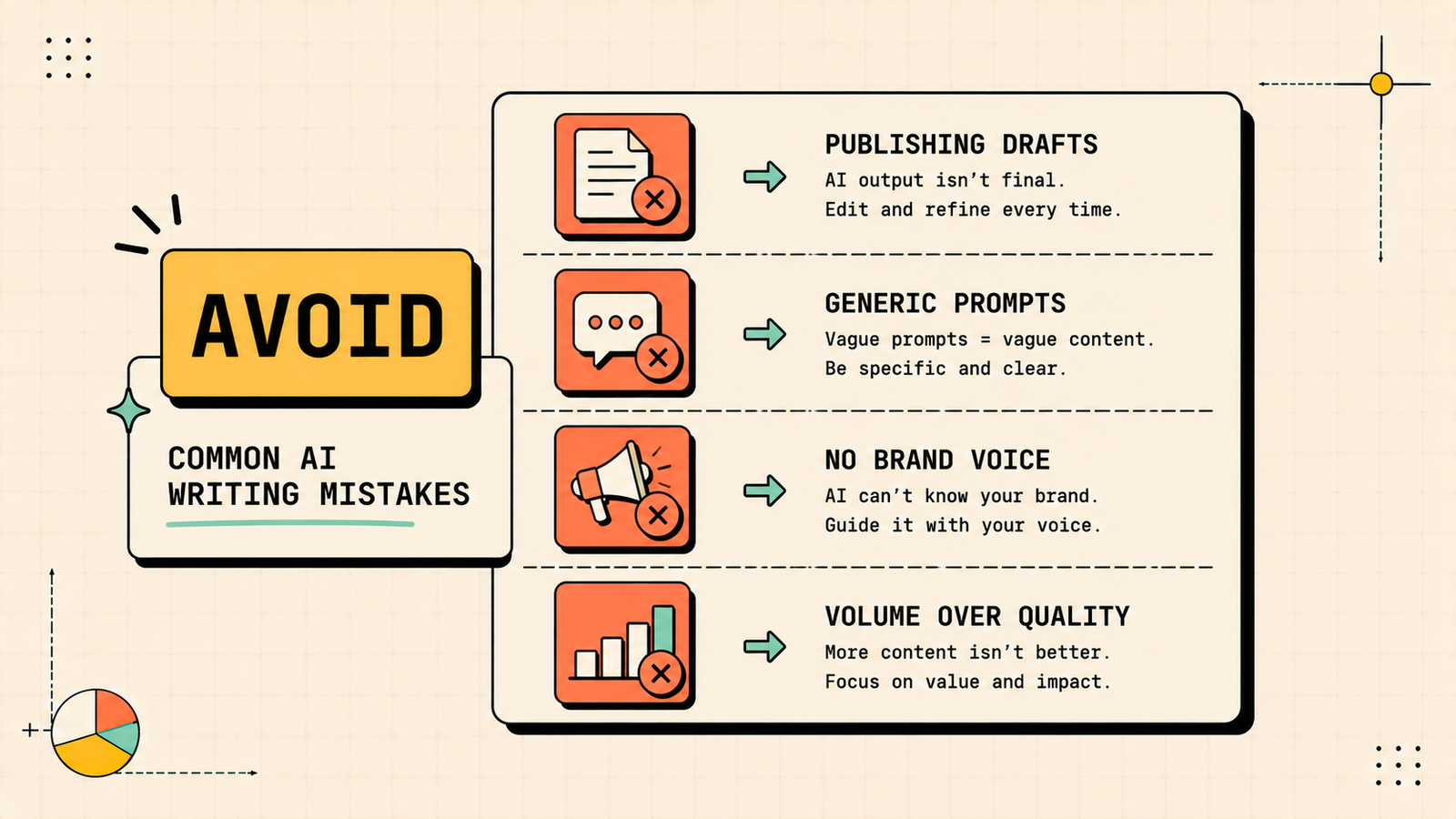
A few patterns produce the worst results. Publishing first drafts without editing is the most common, since even Claude's polished output needs your expertise and fact-checking. Using the same generic prompt every time produces the same generic output every time. Not giving the AI your brand voice, tone, and audience details means it writes for nobody in particular. Expecting AI to replace your thinking produces content with no original perspective. And using AI for volume over quality floods your channels with forgettable text that neither ranks nor converts. Speed is the advantage. Quality is still your job.
LetMeRank
The AI writing workflow that produces the best results
Here is the workflow that gets you from idea to published piece faster without sacrificing quality. Start by defining what you need: topic, audience, tone, format, and length. Feed that as a clear brief to Claude or ChatGPT and get a structured outline. Review the outline and adjust the angle, since the AI does not know your audience the way you do. Generate the first draft from the approved outline. Then edit: add your own expertise and examples, cut anything generic, fact-check every specific claim, and rewrite anything that does not sound like you. Run a final pass through Grammarly for grammar and clarity. This workflow takes about half the time of writing from scratch, but the output reads like yours because you made the decisions at every step. The AI handles the blank page and the word count. You handle the voice and the value.
The bottom line
The best AI for writing depends on what you write most. Claude for polished long-form, ChatGPT for versatile everyday writing, Jasper for high-volume marketing at scale, Copy.ai for quick short-form variations, and Grammarly for final editing. Start free with Claude and ChatGPT, give the AI clear instructions on voice and audience, add your own expertise and editing, and you get writing that is both faster to produce and worth reading.
If you found this useful, LetMeRank publishes practical guides on AI tools, content, and organic growth for founders and teams.