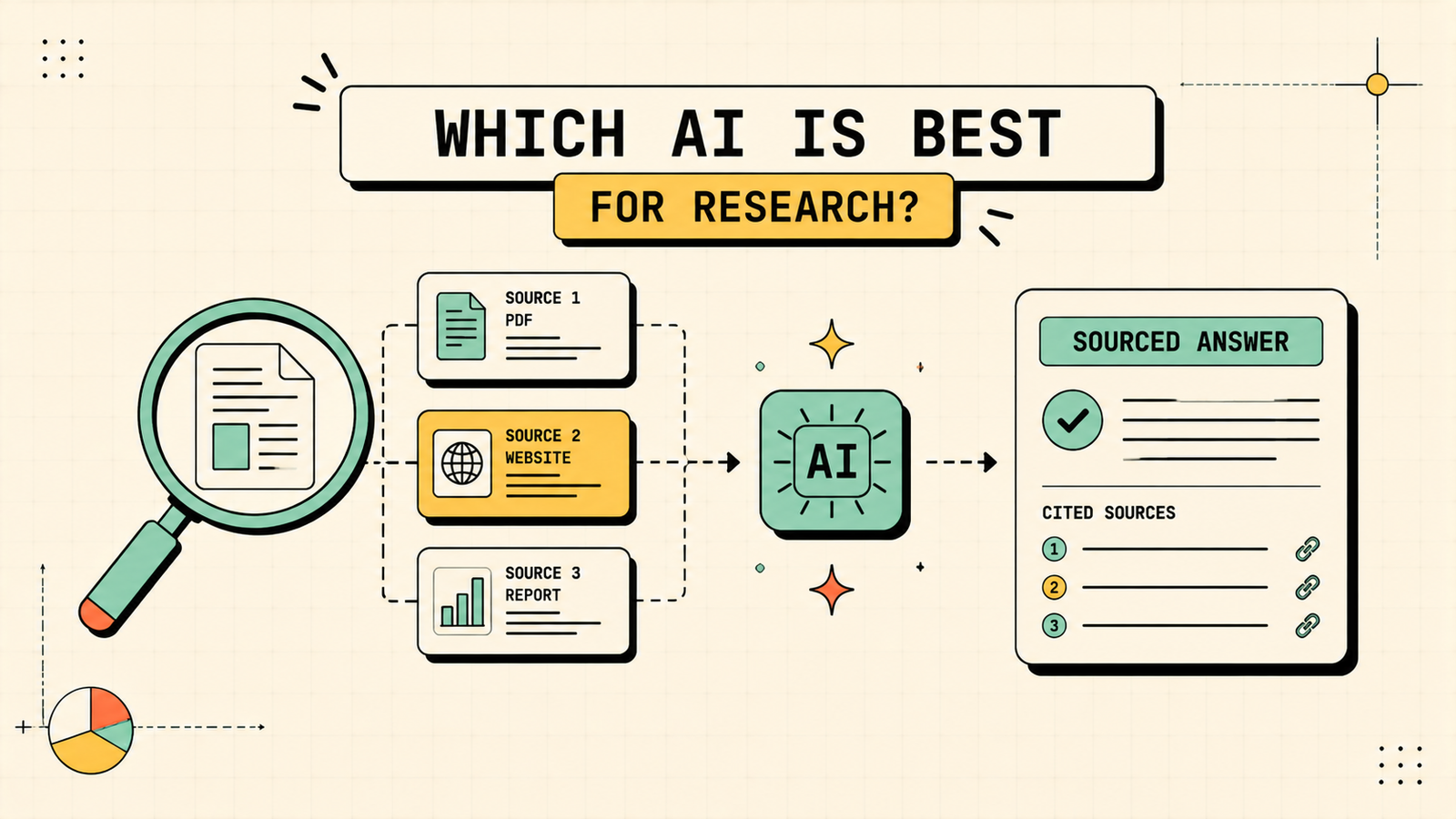
You need to find the facts, understand a topic, and build something real on top of it, and you cannot afford to trust an AI that confidently gives you made-up information with no sources. That is the core problem with using AI for research: some tools are excellent at finding and citing real information, and others just sound convincing while making things up. This guide covers which AI is actually best for research, the tools that give you real, verifiable answers, which ones are free, and how to use them so your research is fast without being wrong.
What to look for in an AI research tool
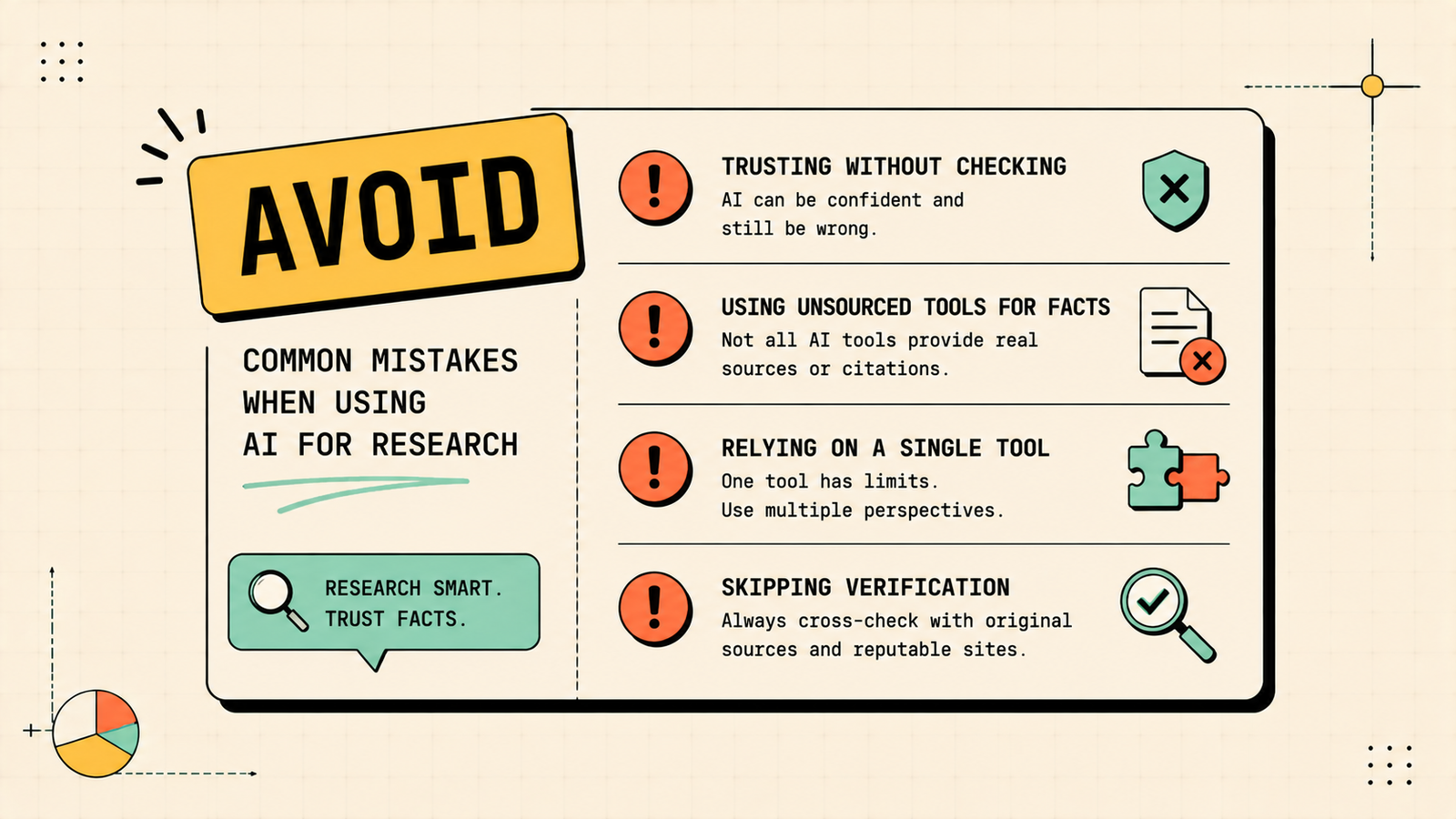
Research has higher stakes than general conversation, so the tool matters more here. Look for sourced answers with citations, so you can check where every fact comes from rather than trusting it blindly. Check whether the tool searches real, current information or just draws from training data that could be outdated. See whether it can access academic and scholarly sources, not just general web results, if your research is academic. Check the accuracy track record, since some tools hallucinate less than others. And make sure there is a free plan that handles real research queries, since premium features should add depth rather than lock out the basics.
Best AI Tools for Business
The best AI tools for research
Here are the tools that genuinely help with research, matched to the kind of research they handle best.
Perplexity
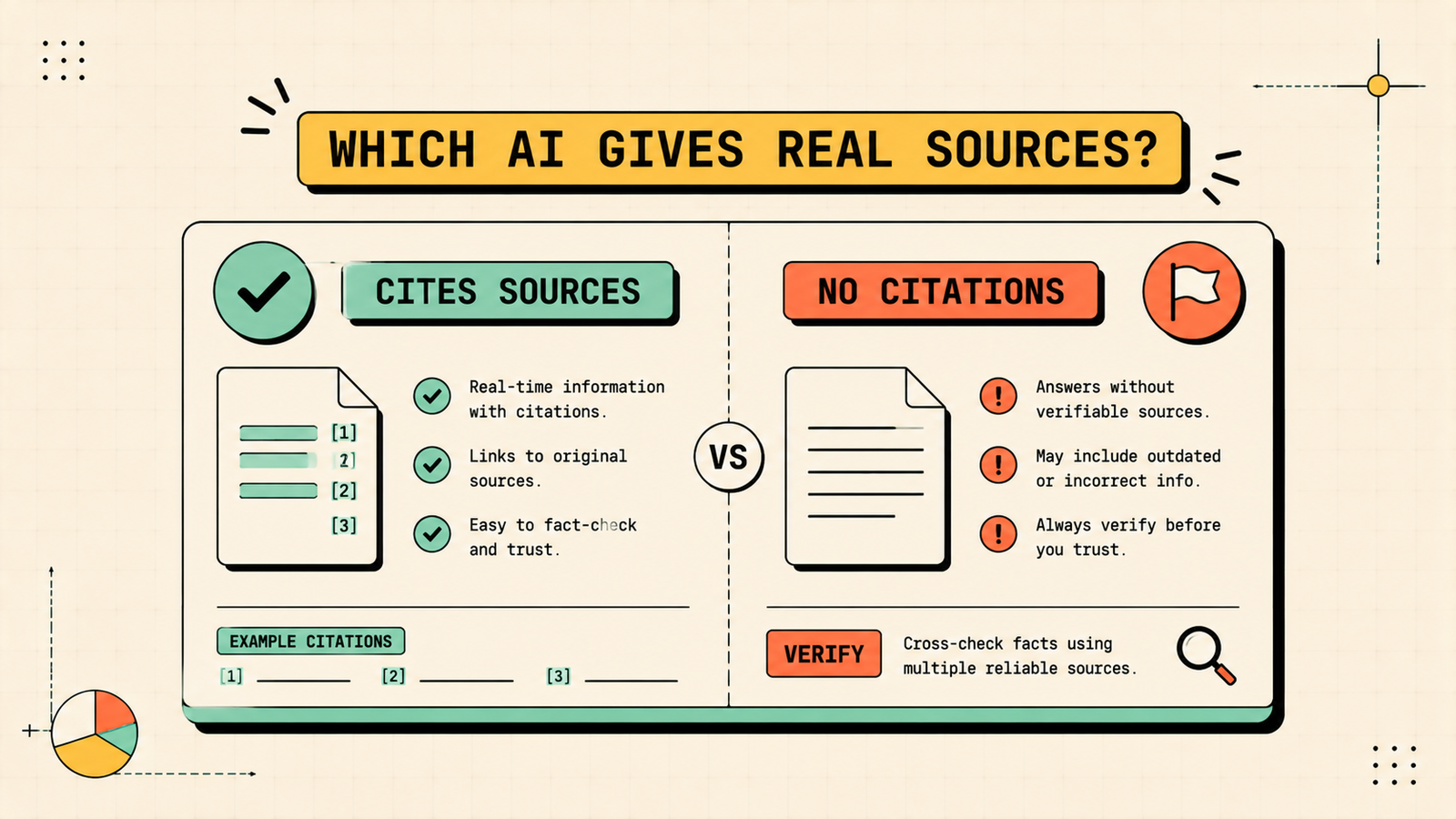
Perplexity is the best general-purpose AI research tool available. It searches the web in real time and gives every answer with inline citations, so you can see exactly where each fact comes from and follow the link to verify it. It handles broad topics, current events, factual lookups, and deep-dive exploration well. The free plan is strong, and Pro adds deeper search, file uploads, and longer answers. Best for any research where you need sourced, verifiable facts from across the web.
Consensus
Consensus is built specifically for academic and scientific research. It searches a database of peer-reviewed papers and gives evidence-based answers drawn directly from published studies, with links to the original papers. It does not use general web content, only published scientific literature. The free plan covers basic searches, with Pro adding more features. Best when you need to find what the published evidence actually says on a question.
ChatGPT
ChatGPT is the most versatile AI assistant and is useful in research for brainstorming angles, explaining complex topics in plain language, summarising what you have found, organising your notes into structure, and generating questions to guide further research. It does not cite sources natively, so never trust it for facts without verifying elsewhere, but as a thinking and organising partner it is hard to beat. The free plan (GPT-4o) handles most research tasks well. Best as a research companion for thinking and structuring, not for sourcing.
Claude
Claude handles very long documents, which makes it excellent for research that involves reading and analysing lengthy papers, reports, or documents. You can paste an entire paper and ask it to summarise, extract key findings, identify methodology, or compare with another source. Its answers tend to be careful and well-structured. Free plan available. Best for deep analysis of specific documents and long-form research synthesis.
NotebookLM
NotebookLM (by Google) is designed for working with your own research materials. Upload your papers, articles, notes, and sources, and it builds an AI that answers questions based only on that content. No hallucinated facts, no irrelevant web information, just answers grounded in what you gave it. It is completely free. Best for synthesising and navigating your own collected sources.
Elicit
Elicit is another academic research tool that searches scholarly literature, extracts key findings from papers, and helps you build literature tables and evidence summaries. It is designed for systematic, structured academic research. Free tier available with paid plans for heavier use. Best for structured academic literature reviews and evidence synthesis.
Best AI Tools for SEO
AI research tools compared
| Tool | Best for | Source type | Citations | Free plan |
|---|---|---|---|---|
| Perplexity | General research with sources | Web (real-time) | Yes, inline | Yes |
| Consensus | Academic evidence | Peer-reviewed papers | Yes, paper links | Yes (basic) |
| ChatGPT | Thinking, explaining, organising | Training data | No native citations | Yes (GPT-4o) |
| Claude | Long document analysis | Your uploaded docs | No native citations | Yes |
| NotebookLM | Your own collected sources | Your uploads only | Grounded in uploads | Yes (fully free) |
| Elicit | Structured lit reviews | Scholarly literature | Yes, paper links | Yes (limited) |
Perplexity vs ChatGPT vs Consensus: which is best for research?
Each wins at a different stage of research. Pick Perplexity when you need to find facts quickly with real sources you can check and cite. It is the best starting point for almost any research question. Pick Consensus when your research requires academic evidence and you need to find what published studies actually say, since it searches only peer-reviewed literature. Pick ChatGPT when you have already gathered your sources and need help thinking through them, organising your notes, brainstorming angles, or explaining a complex topic to yourself. The strongest research workflow uses Perplexity or Consensus to find and source, then ChatGPT or Claude to think and structure.
Best free AI for research
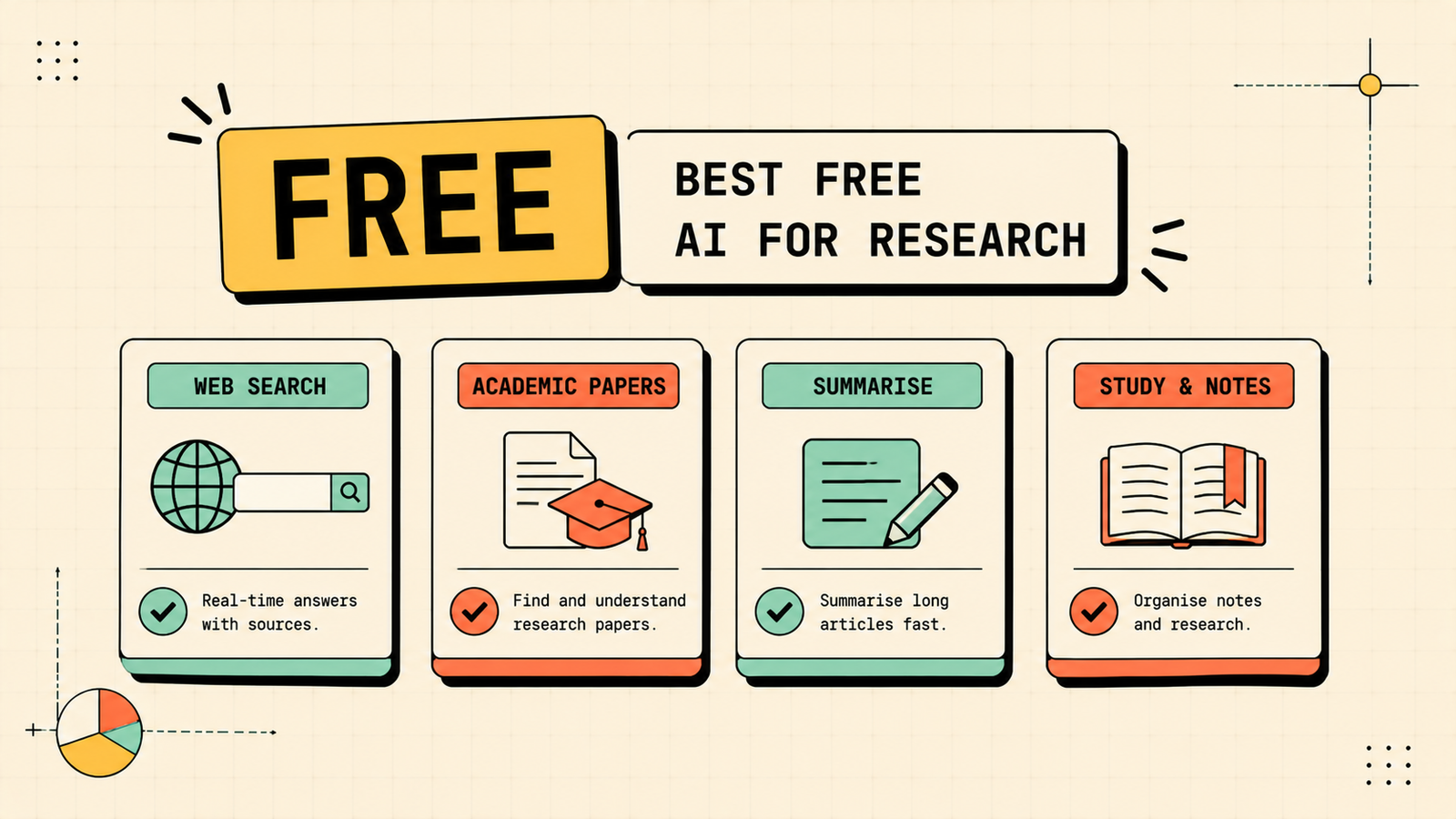
If you are paying for nothing, the free stack is strong. Perplexity free gives you sourced answers from across the web with inline citations. Consensus free gives you evidence from peer-reviewed papers. ChatGPT free helps you brainstorm, explain, and organise. NotebookLM is completely free and lets you work with your own uploaded sources. Between these four, you can find, source, analyse, and organise research at zero cost. Paid plans add more depth and heavier usage, but the free tools handle a genuine research workflow.
We'll show you exactly which AI research tools fit your workflow and save you the most time.
Get a clear, practical plan to build a research toolkit that gives you real, verifiable answers fast.
Which AI gives real sources and citations?
This is the most important question for research. Perplexity gives inline citations with every answer, linked to the