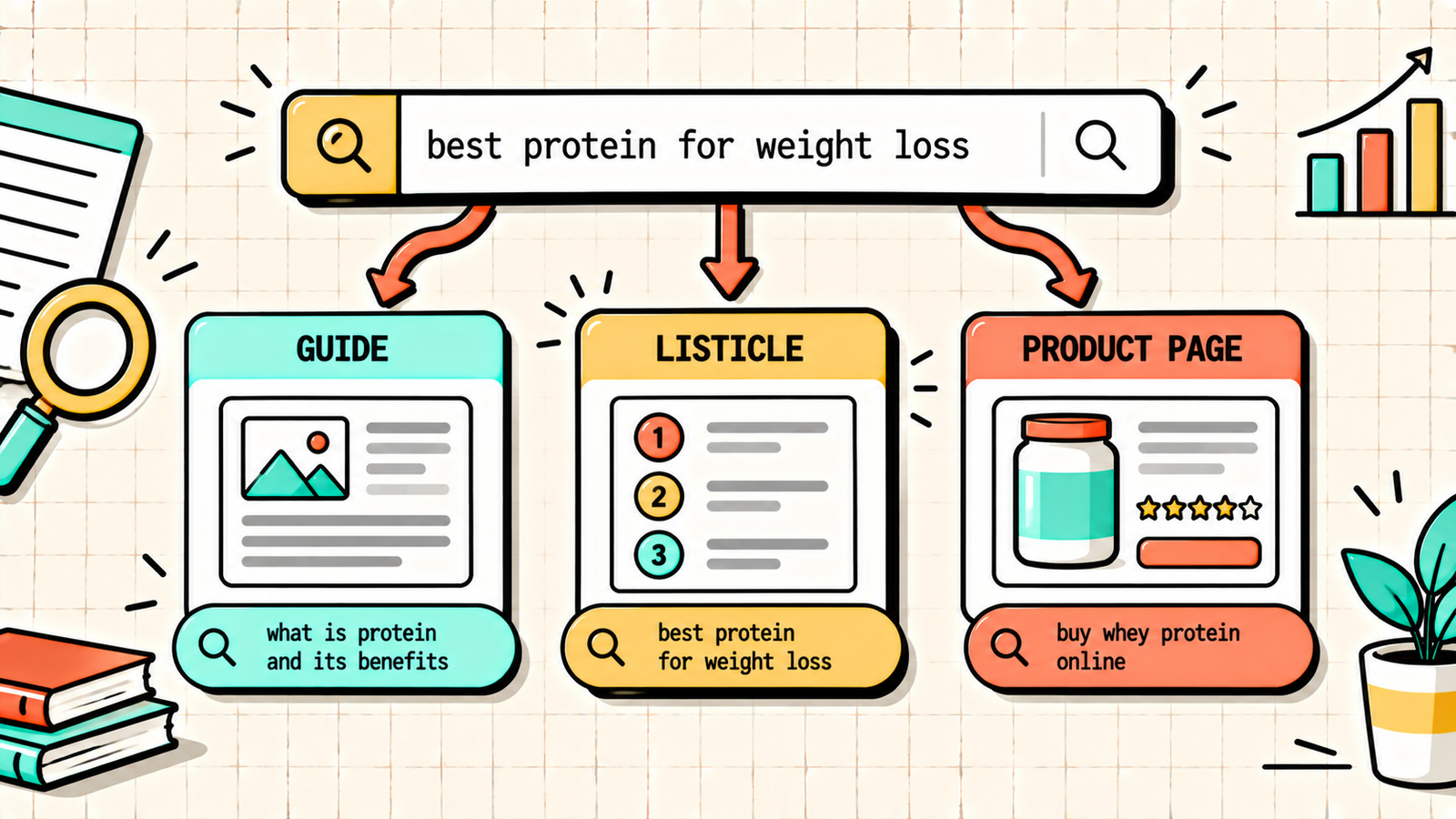
You wrote a 3,000-word guide targeting a keyword with decent volume. You optimised the title, built some links, and waited. Six months later, the page is nowhere near page one. Meanwhile, a 600-word listicle from a competitor with half your domain authority ranks in the top three. What happened? You wrote the wrong type of content for that search. The competitor matched the search intent. You did not. Search intent is one of the most powerful and most misunderstood concepts in SEO. Get it right and everything else works harder. Get it wrong and no amount of optimisation will save you.
What is search intent?
Search intent (also called user intent or keyword intent) is the reason behind a search. It is what the person actually wants when they type a query into Google. They are not just typing words. They want something specific: an answer, a comparison, a product, a website. Google's entire ranking system is built around identifying what the searcher wants and serving the result that best satisfies that want.
When your content matches the intent behind the keyword, Google has a reason to rank you. When it does not, Google has a reason to ignore you no matter how well-optimised or well-linked your page is.
The four types of search intent
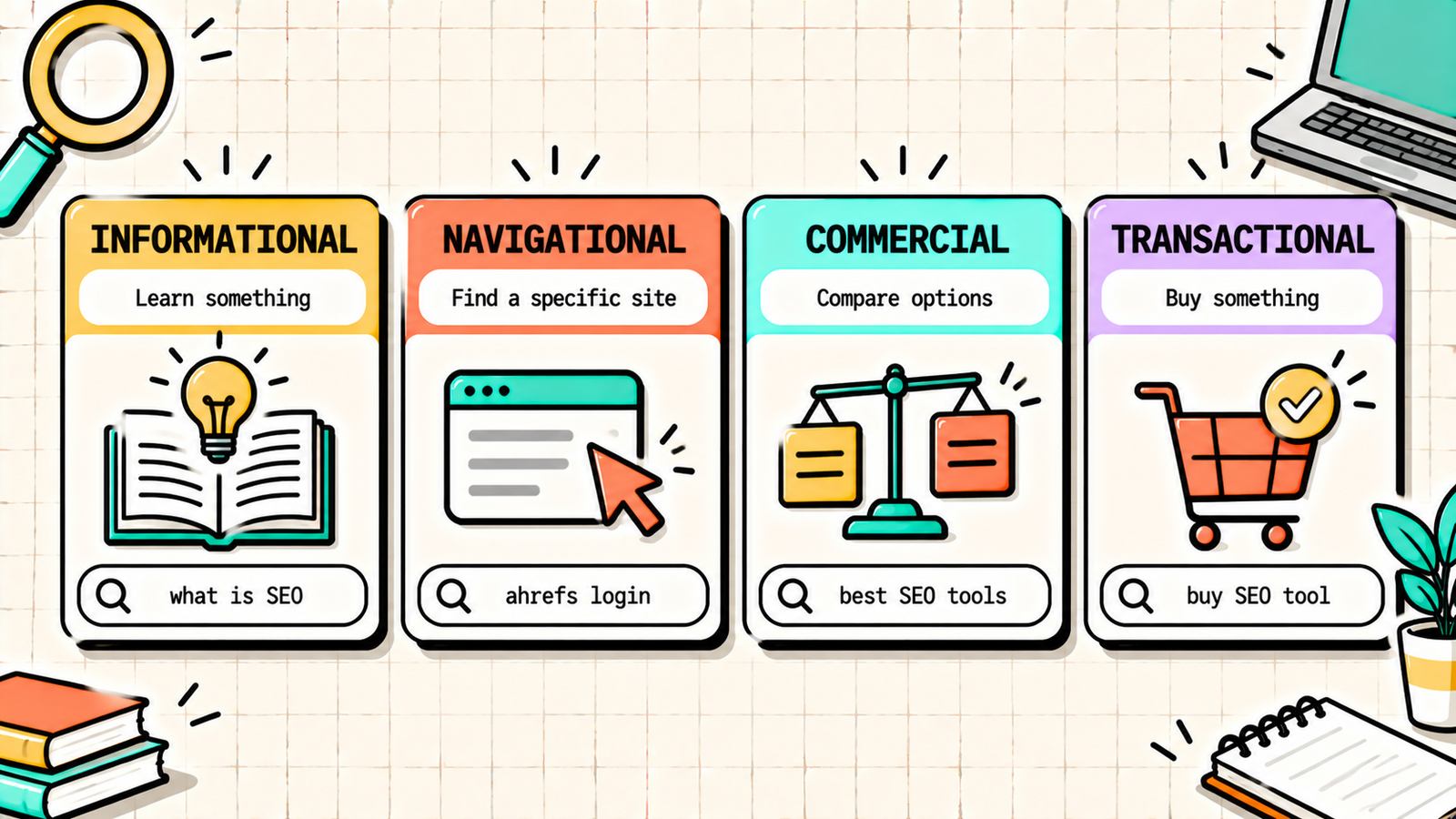
Every search falls into one of four categories.
1. Informational intent
The person wants to learn something. They are looking for an answer, an explanation, or knowledge. Examples: "what is SEO," "how does photosynthesis work," "benefits of cold email."
2. Navigational intent
The person wants to find a specific website or page. They already know where they want to go. Examples: "Facebook login," "LetMeRank blog," "Amazon customer service."
3. Commercial intent
The person is researching before buying. They want to compare options, read reviews, or find the best product. Examples: "best CRM software," "Notion vs Asana," "top running shoes 2026."
4. Transactional intent
The person is ready to act. They want to buy, sign up, or complete a specific action. Examples: "buy standing desk online," "Notion pricing," "book a dentist appointment."
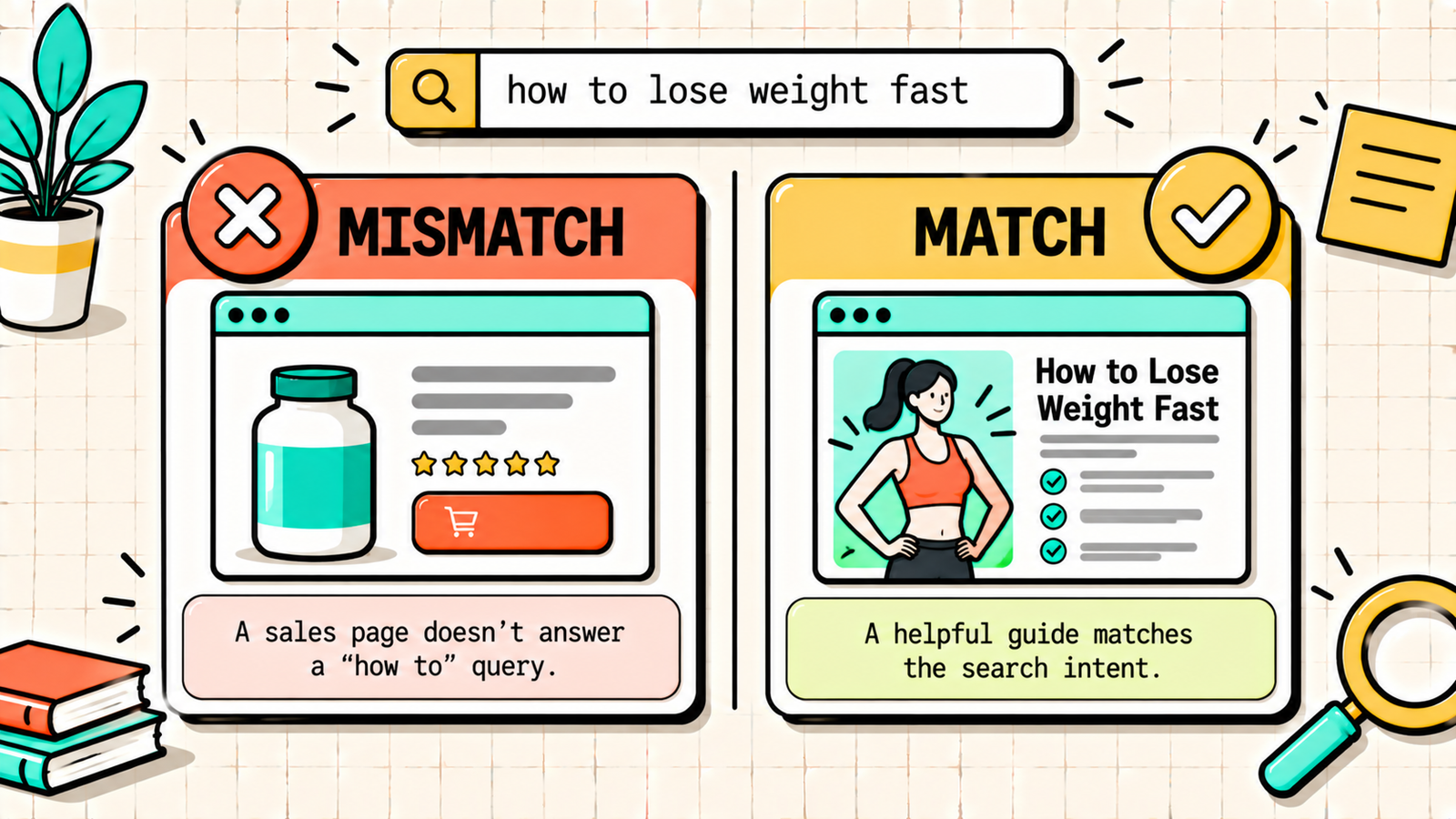
This is why intent trumps everything else: you can have perfect on-page SEO, a strong backlink profile, and a high domain authority, but if your content is the wrong type for the search, it loses to a weaker page that matches the intent correctly. Intent is the gatekeeper. Everything else is an optimisation within the gate.
How to determine search intent for any keyword
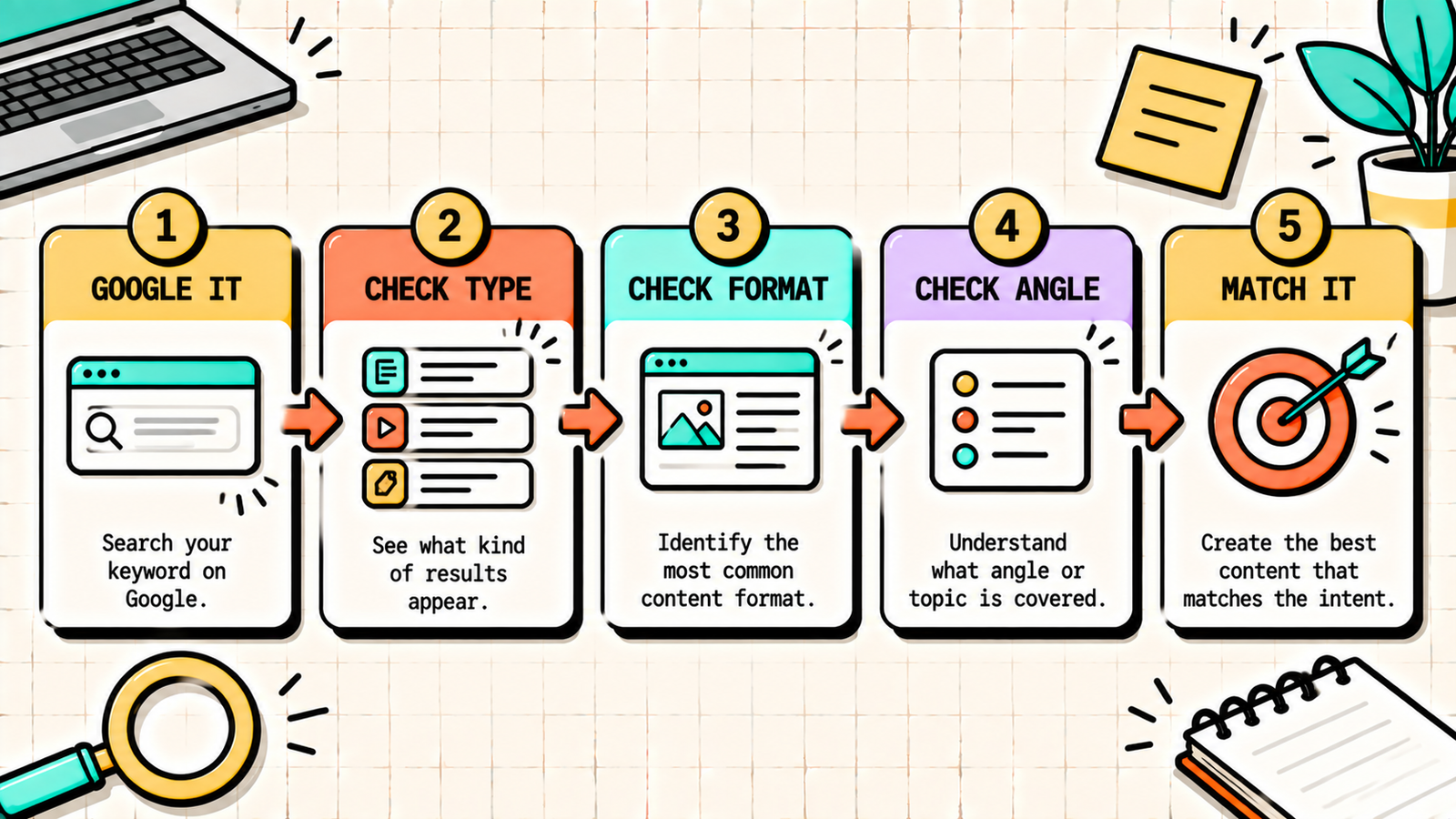
The simplest and most reliable method is to search the keyword and look at what already ranks.
Step 1: Google the keyword
Search your target keyword in an incognito window (to avoid personalised results) and look at the top five to ten results. This is Google telling you exactly what it thinks the searcher wants.
Step 2: Identify the content type
Are the top results blog posts, product pages, landing pages, videos, or tools? If nine out of ten results are blog posts, the intent is informational or commercial. If they are product pages, the intent is transactional.
Step 3: Identify the content format
Within the content type, what format dominates? How-to guides, listicles, comparison tables, step-by-step tutorials, video walkthroughs? If the top five results are all "best X" listicles, that is the format Google rewards for that keyword.
Step 4: Identify the content angle
What specific angle do the top results take? Are they focused on beginners or experts? Free options or paid? A specific use case or general? The dominant angle is what the audience expects.
Step 5: Match your content to what you found
Create content that matches the type, format, and angle you identified. If the top results are listicles comparing tools, write a listicle comparing tools. If they are beginner guides, write a beginner guide. Do not fight the intent. Match it and then be better within the format.
We'll find exactly why your content isn't ranking and how to fix it.
Get a clear, data-backed plan to match search intent, build content Google wants to rank, and grow your organic traffic.
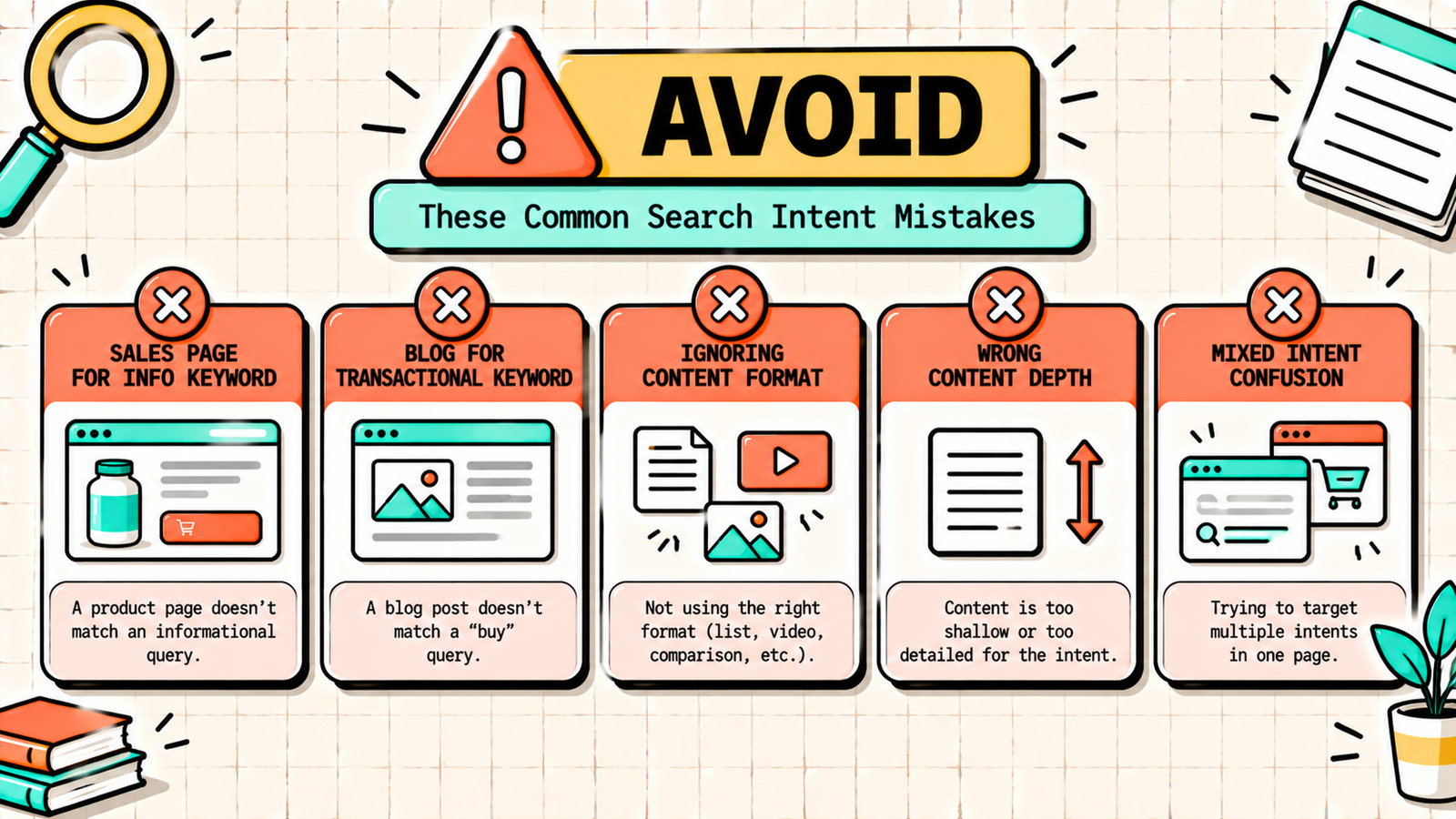
Common search intent mistakes
These patterns explain most ranking failures related to intent.
Publishing a sales page for an informational keyword. If someone searches "how to write a business plan," they want a guide, not a page selling your business plan template. The sales page belongs on a different keyword.
Publishing a blog post for a transactional keyword. If someone searches "buy standing desk online," they want a product page or a shopping results page, not a blog about the benefits of standing desks.
Publishing a comprehensive guide for a keyword that expects a short answer. If someone searches "what time is it in Tokyo," they want a quick answer, not a 2,000-word guide about time zones. Match the depth to the intent.
Ignoring the dominant format. If every top result for "best CRM software" is a listicle with comparison tables, publishing a single long narrative essay about CRM philosophy will not rank, because it is not what the searcher or Google expects.
Targeting mixed-intent keywords without choosing. Some keywords have mixed intent: "email marketing" could be informational (what is it?) or commercial (best tools). Check what ranks to see which intent Google currently favours for that keyword, and match that.
How search intent affects your content strategy
Understanding intent changes how you plan your entire content strategy. For each keyword in your plan, determine the intent before you write. Then assign each keyword to the right page type: informational keywords get blog posts and guides, commercial keywords get comparison and review content, transactional keywords get product, service, or landing pages, and navigational keywords are handled by your site structure and brand presence.
This mapping ensures every page on your site has a clear purpose aligned with what the searcher wants. It also prevents cannibalisation: you will not accidentally create a blog post and a landing page competing for the same keyword, because you will know which format the keyword requires.
Search intent and the sales funnel
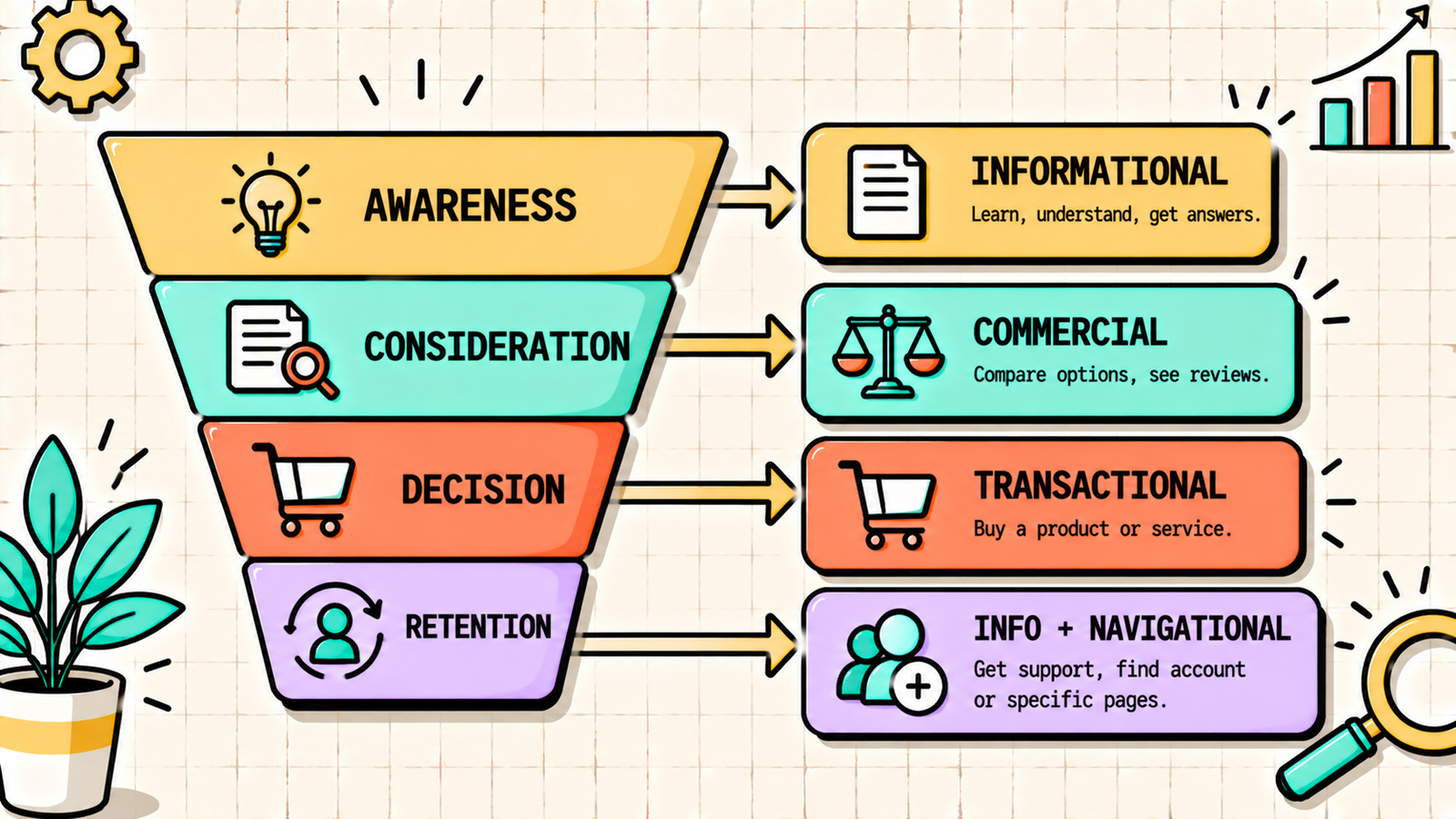
Intent maps neatly onto the sales funnel, which makes it useful for planning content that serves every stage.
| Funnel stage | Intent type | Content |
|---|---|---|
| Awareness | Informational | Blog posts, guides, educational content |
| Consideration | Commercial | Comparisons, reviews, case studies |
| Decision | Transactional | Product pages, pricing, demos, free trials |
| Retention | Informational + navigational | Help docs, tutorials, community |
Planning content across all four intent types ensures you are not just attracting visitors but moving them through the funnel toward a purchase.
How to optimise content for search intent
Once you have matched the intent, optimise within it. Answer the primary question immediately so the searcher gets what they came for fast. Cover the subtopics that top-ranking pages cover, since Google uses comprehensiveness as a quality signal within the intent. Use the format the SERP favours (tables for comparisons, steps for how-tos, lists for "best of"). Include the related questions from "People also ask" as sections or FAQs. And add unique value that the top results do not have, whether that is original data, personal experience, a better comparison, or a more practical framework. The combination of matching intent and being better within it is what earns page-one rankings.
How search intent is changing with AI search
AI search tools (Google AI Overviews, ChatGPT search, Perplexity) are changing how intent is satisfied. For simple informational queries, AI often answers directly without the user clicking a link. This means informational content needs to be the source AI cites, which requires clear, concise, authoritative answers structured for extraction (question-based headings, direct definitions, FAQ schema). For commercial and transactional queries, AI still directs users to websites because those actions require visiting a page. The shift is not that intent no longer matters. It is that how each intent type gets satisfied is evolving, and your content needs to be structured for both traditional search and AI citation.
How to Improve Website Speed: The Complete Guide to a Faster Site
The bottom line
Search intent is the most important concept in modern SEO. It determines whether Google even considers ranking your page, regardless of how well-optimised or well-linked it is. Before writing any content, search your keyword, identify the type, format, and angle the top results use, and match it. Then be better within that format. Do this consistently and you remove the single biggest barrier to ranking: creating the wrong type of content for what the searcher actually wants. Every blog post in your content plan should have the intent documented before a word is written. That one habit prevents more ranking failures than any other single practice in SEO. Master intent matching and every other optimisation you do, from on-page to link building to technical fixes, produces better results because it is applied to content that Google already wants to rank.
If you want experts to build a keyword strategy matched to search intent, LetMeRank helps founders and brands create content that matches what Google rewards, starting with a free audit.