You have a website. You want it to show up when people search for what you sell. Google has other plans, apparently, because your site sits somewhere on page four and nobody has ever scrolled that far in their life. Ranking on Google is not luck and it is not magic. It is a set of specific, learnable steps that tell Google your page deserves to be at the top. This guide covers what Google actually looks for, the exact steps to rank higher, how long it takes, and the mistakes that quietly keep most sites buried.
What does it take to rank on Google?
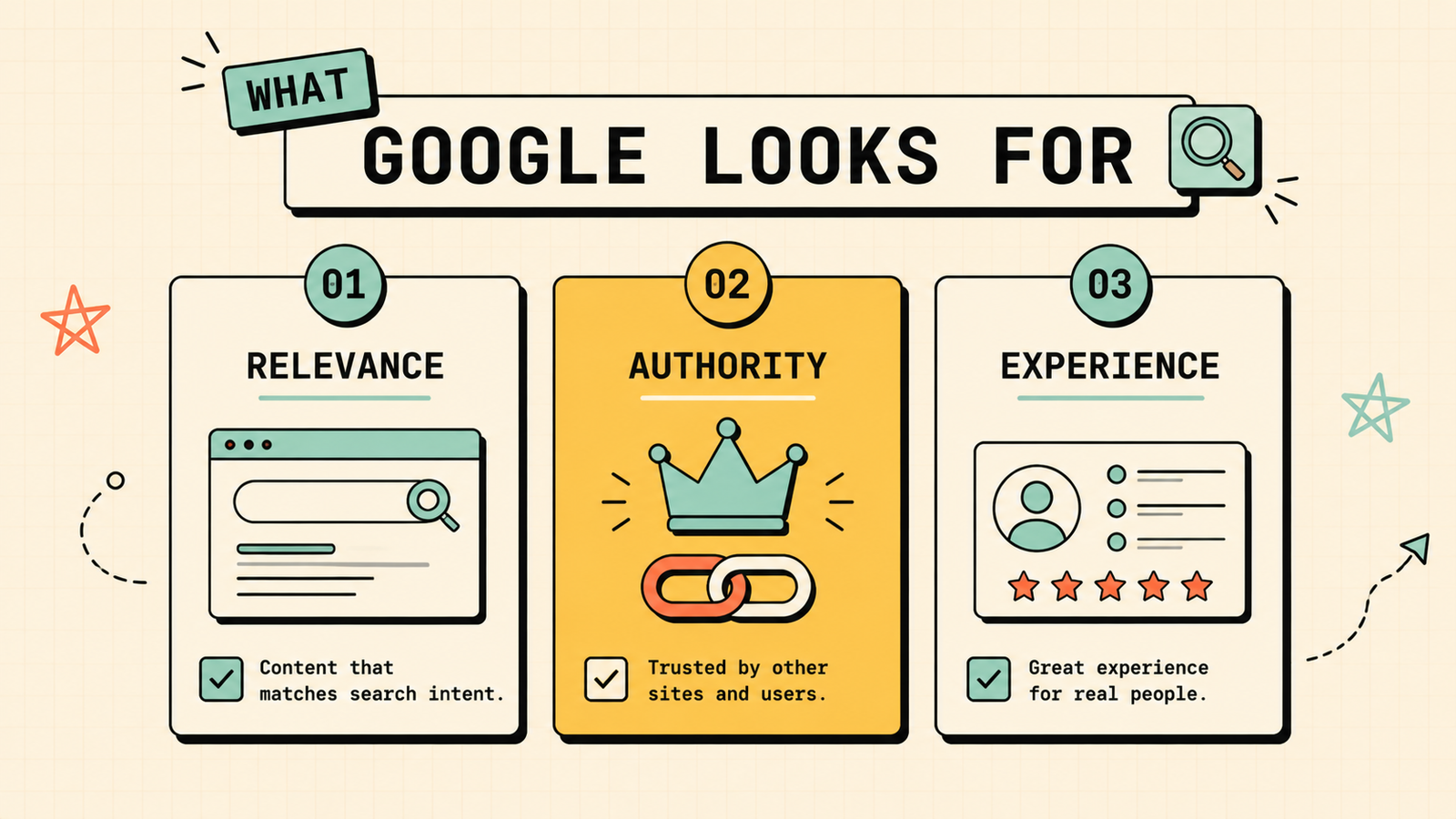
Google wants to show the best, most helpful result for every search. So ranking comes down to three things: relevance (your page matches what the person searched for), authority (other sites trust and link to you), and experience (your page loads fast, works on mobile, and gives the searcher what they came for). Everything in SEO, from keyword research to backlinks to page speed, is about strengthening one or more of these three signals. Get all three right and you rank. Miss any one and you struggle.
Which AI Is Best for Resume Writing?
How Google ranks pages
Understanding the process makes everything else click. Google sends bots to crawl the web and discover pages. It stores what it finds in its index. When someone searches, it sorts through the index and ranks pages by which best answers that query, using hundreds of signals that boil down to relevance, authority, and experience. Your job is to make sure Google can find your pages (crawling), wants to store them (indexing), and sees them as the best answer (ranking).
How to rank on Google, step by step
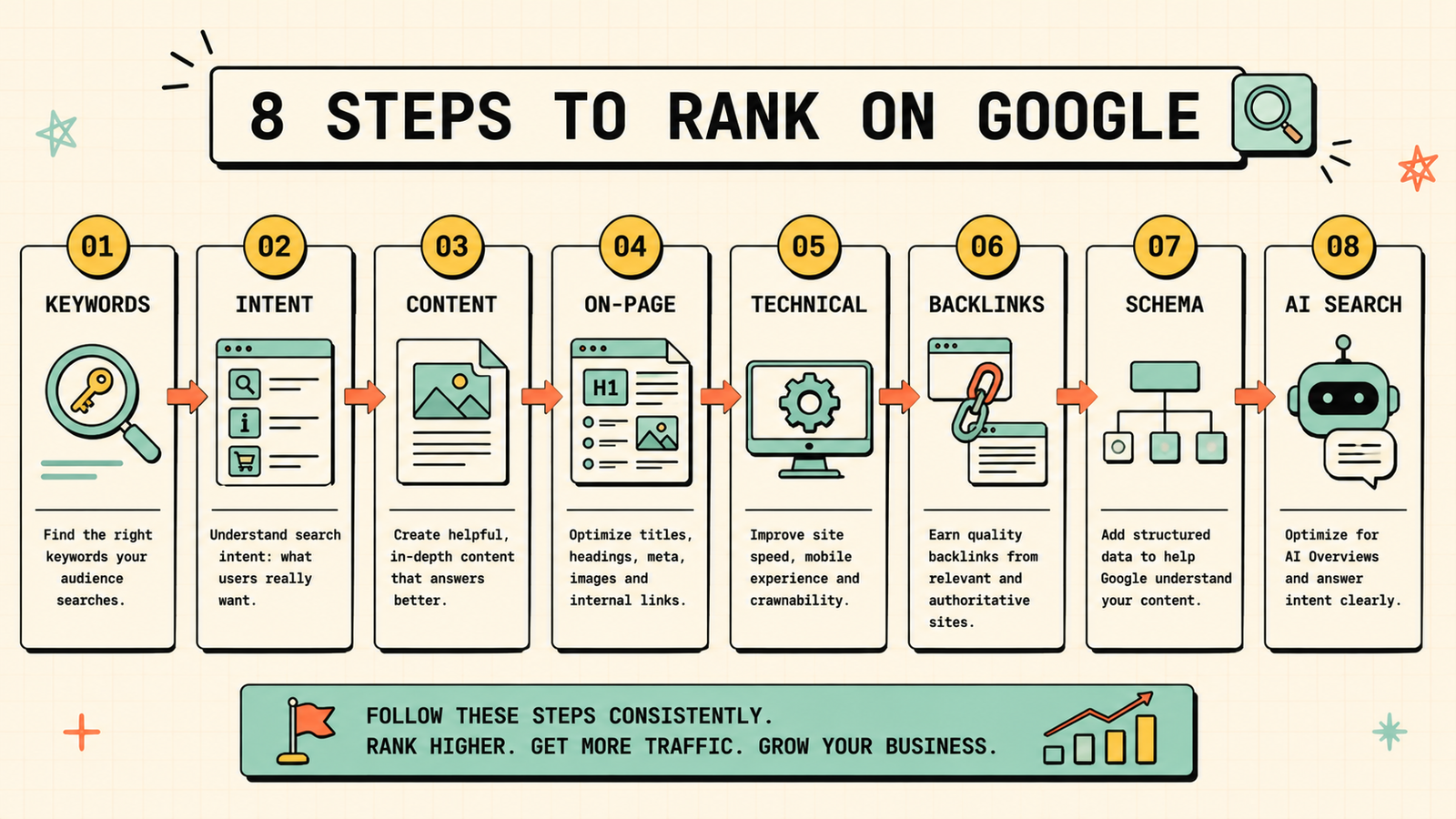
Here is the full process, in the order that makes sense to follow.
1. Find the right keywords
Everything starts here. Find the words and phrases your audience actually types into Google, then build pages around them. Use a keyword tool to check search volume and difficulty, and focus on terms you can realistically rank for. Target buyer-intent keywords on your commercial pages and question-based keywords on your blog.
2. Match search intent
Before writing anything, look at what already ranks for your keyword. If the top results are how-to guides, write a guide. If they are product pages, make a product page. Matching what the searcher actually wants is one of the biggest factors in whether a well-optimised page ranks or sits invisible.
3. Create the most helpful page on the topic
Google wants to rank the page that helps the searcher most. Cover the topic thoroughly, answer the question directly, add real depth and original insight, and aim to be better than everything already ranking. Thin, generic content does not rank because there is always something more useful above it.
4. Optimise your page (on-page SEO)
Put your target keyword in the title tag, the first paragraph, at least one heading, the URL, and naturally throughout the content. Write a compelling meta description. Use clear headings that structure the content logically. Add descriptive alt text to images. These signals tell Google exactly what the page is about and help it match your page to the right searches.
5. Fix the technical basics
Make sure Google can crawl and index your page. Check that it is not accidentally blocked by robots.txt or set to noindex. Submit your sitemap in Google Search Console. Make your site fast (aim for main content loading in under 2.5 seconds) and mobile-friendly, since most searches happen on phones. A technically broken site cannot rank no matter how good the content is.
6. Build backlinks
Backlinks from other reputable websites are still one of the strongest ranking signals. They tell Google that other sites trust your content. Earn them by creating link-worthy content, guest posting, digital PR, getting featured in roundups, and building genuine industry relationships. Quality matters far more than quantity.
7. Add schema markup
Schema is code that helps Google understand your page and can earn rich results like star ratings, FAQs, and prices in search. Add Article, FAQ, Product, or other relevant schema so your listing stands out and gets more clicks.
8. Optimise for AI search
Google now shows AI-generated answers at the top of many searches. To get your page cited in those answers, structure your content with clear, direct answers under question-based headings, use tables and specific numbers, add FAQ schema, and demonstrate real expertise. The same content quality that ranks in regular search is what gets you cited in AI answers.
Digital Marketing Strategy Guide
How long does it take to rank on Google?
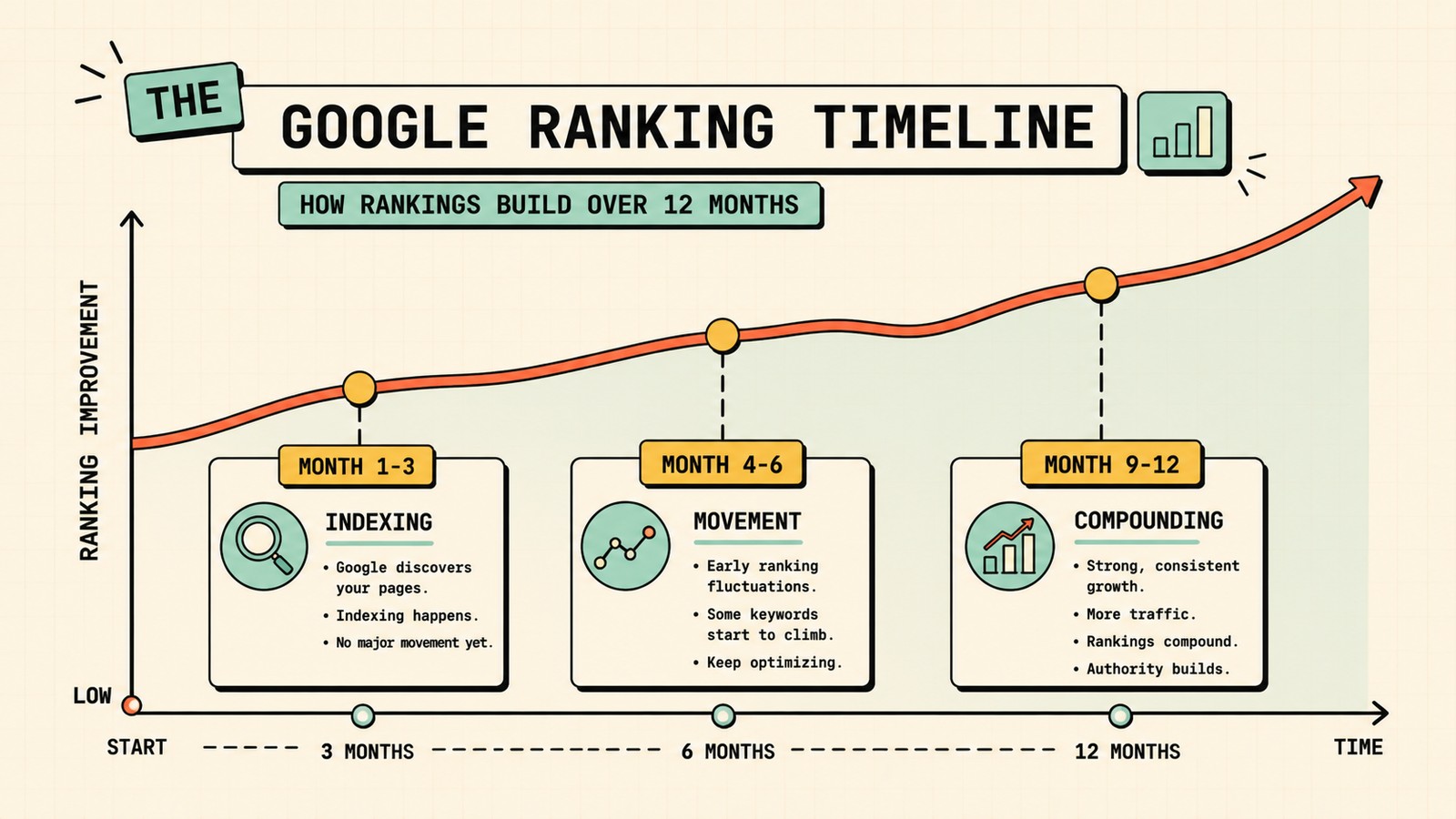
For a brand-new page on a new or young site, expect little visible movement in the first three months, meaningful ranking gains around four to six months, and compounding traffic by nine to twelve months. Pages on established sites with existing authority can rank faster. Competitive keywords take longer than easy ones. And pages that match intent and quality well can sometimes break through faster than expected. The key is consistency: keep publishing, keep building authority, and the rankings follow.
| Timeframe | What to expect |
|---|---|
| Month 1 to 3 | Indexing, early signals, little visible movement |
| Month 4 to 6 | Rankings start moving, first traffic appears |
| Month 9 to 12 | Compounding traffic, established positions |
We'll show you exactly what is holding your site back and the fixes that will move you up the page.
Get a clear, data-backed plan to rank higher on Google, with the specific steps your site needs to climb.
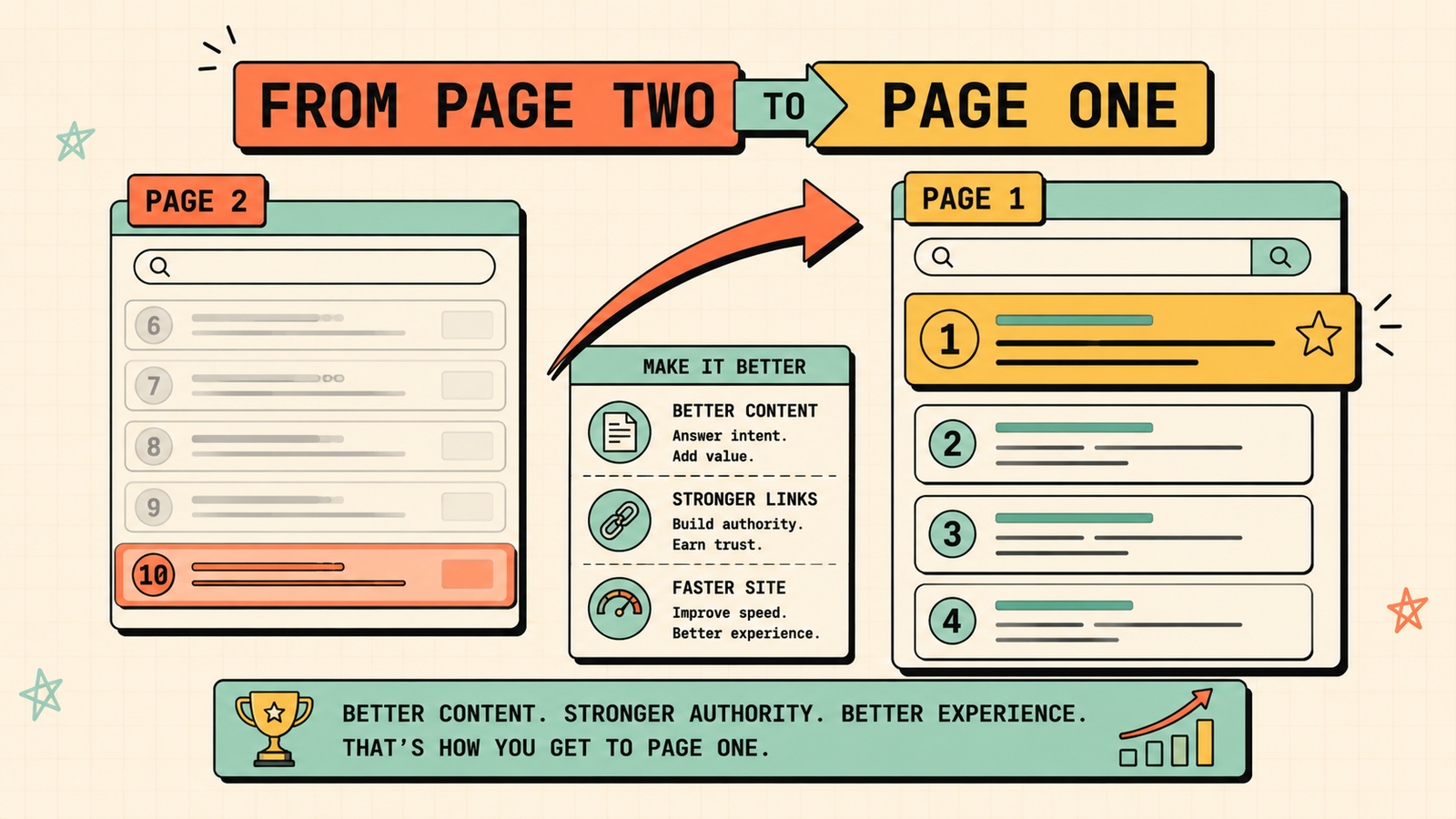
What to do if you are stuck on page two
Page two of Google might as well be page twenty, because almost nobody clicks past the first page. If you are stuck there, here is what usually moves the needle. Upgrade your content to be more thorough, more current, and more helpful than what ranks above you. Add the information, tables, and FAQs that the top pages have and you do not. Earn a few quality backlinks, since authority is often the difference between page one and page two. Fix any technical issues (speed, mobile, schema) that might be dragging you down. And re-check your intent match, because sometimes a page is good but it is not giving the searcher what they expected. Small, targeted improvements to a page already on page two are often the fastest path to page one.
How to rank for competitive keywords
Competitive keywords are harder, but the path is the same, just longer. Build topical authority by publishing multiple related pages that cover the topic from every angle, which signals to Google that you are an expert on the subject. Earn stronger backlinks from higher-authority sites. Make your content genuinely better than the competition, not just longer, but more useful, more specific, and more current. And be patient, because competitive terms are won by the sites that keep showing up consistently, not the ones that publish once and hope.
How to rank locally on Google
If you serve a local area, local ranking factors add a layer on top of regular SEO. Claim and fully optimise your Google Business Profile with the right categories, complete information, photos, and regular posts. Collect genuine reviews consistently. Keep your name, address, and phone number consistent everywhere online. And create locally relevant content on your website. Local SEO often shows results faster than broader SEO because the competition is limited to your area.
AI Tools for Marketing
Can you rank on Google for free?
Yes. SEO is the practice of earning unpaid, organic rankings. It costs time and effort rather than money per click, and you can do much of the work yourself using free tools like Google Search Console, Google Analytics, and the free tiers of keyword tools. Paid tools and professional help make it faster and more effective, but the rankings themselves are free. That is the fundamental advantage of SEO over ads: you earn a position that keeps sending you traffic without ongoing payment.
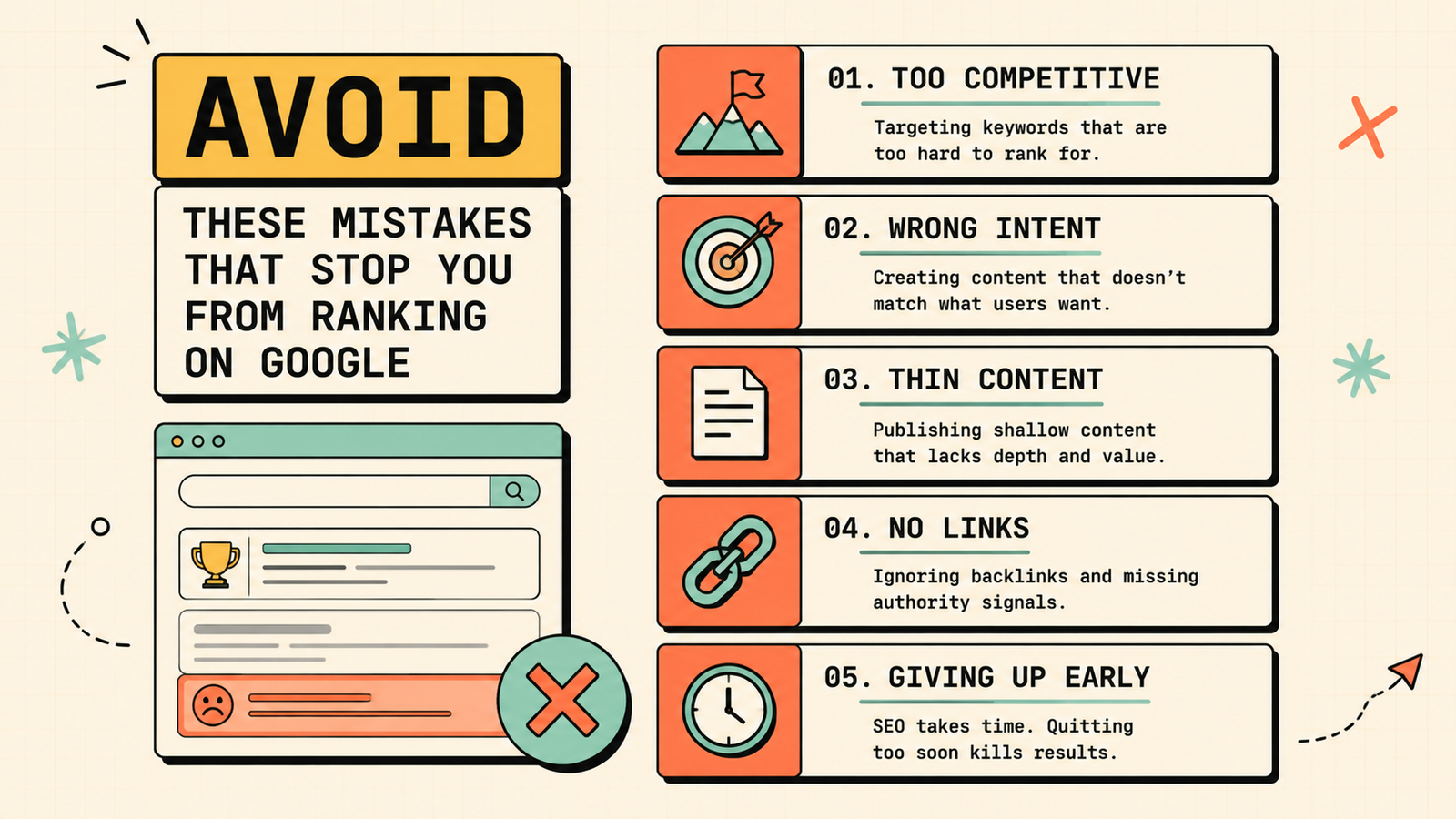
Common mistakes that stop you from ranking
A handful of errors keep most sites buried. Targeting keywords that are too competitive for your site's authority means you never break through. Ignoring search intent means your page does not match what the searcher wants, regardless of how well it is optimised. Thin, generic content gives Google no reason to rank you above the thousands of deeper pages on the same topic. Neglecting technical basics means Google cannot find or load your pages. Having no backlinks leaves you without the authority signal that separates page one from page ten. And giving up after three months, before SEO has had time to build, is the most common mistake of all. Fix these and you remove the barriers that quietly hold good pages down.
How Google algorithm updates affect your rankings
Google updates its algorithm constantly, with major updates several times a year that can shift rankings noticeably. Most updates reward the same things this guide covers: helpful content, genuine expertise, good user experience, and natural authority. When an update hits and your rankings drop, it almost always means one of those areas needs improvement, not that Google changed the game entirely. The best defence against updates is to follow the fundamentals consistently: create the most useful page on the topic, earn real backlinks, keep your site technically healthy, and never rely on shortcuts. Sites built on quality and real value tend to recover and grow through updates, while sites built on tricks tend to fall.
LetMeRank
How to keep rankings once you have them
Ranking is not a one-time achievement. Competitors publish, content gets outdated, and Google keeps evolving. To maintain and grow your positions, refresh your top-performing pages regularly with current information, new examples, and improved depth. Monitor your rankings and traffic in Google Search Console to catch drops early. Keep earning backlinks, since authority needs ongoing reinforcement. And stay consistent with new content, because topical authority grows when you keep publishing, not when you stop after ten posts. The sites that rank long-term are the ones that treat SEO as an ongoing system, not a project with an end date.
The bottom line
Ranking on Google comes down to three things: be relevant (target the right keywords and match intent), be authoritative (earn backlinks and build trust), and be useful (create the best page on the topic and keep it fast and mobile-friendly). Follow the steps in this guide, stay consistent, and your pages climb. It takes months, not days, but once it builds, it becomes the cheapest, most durable source of customers your business can have.
If you want experts to get your site ranking faster, LetMeRank helps founders and brands grow through SEO and AI search, starting with a free audit of where your biggest ranking opportunities are.