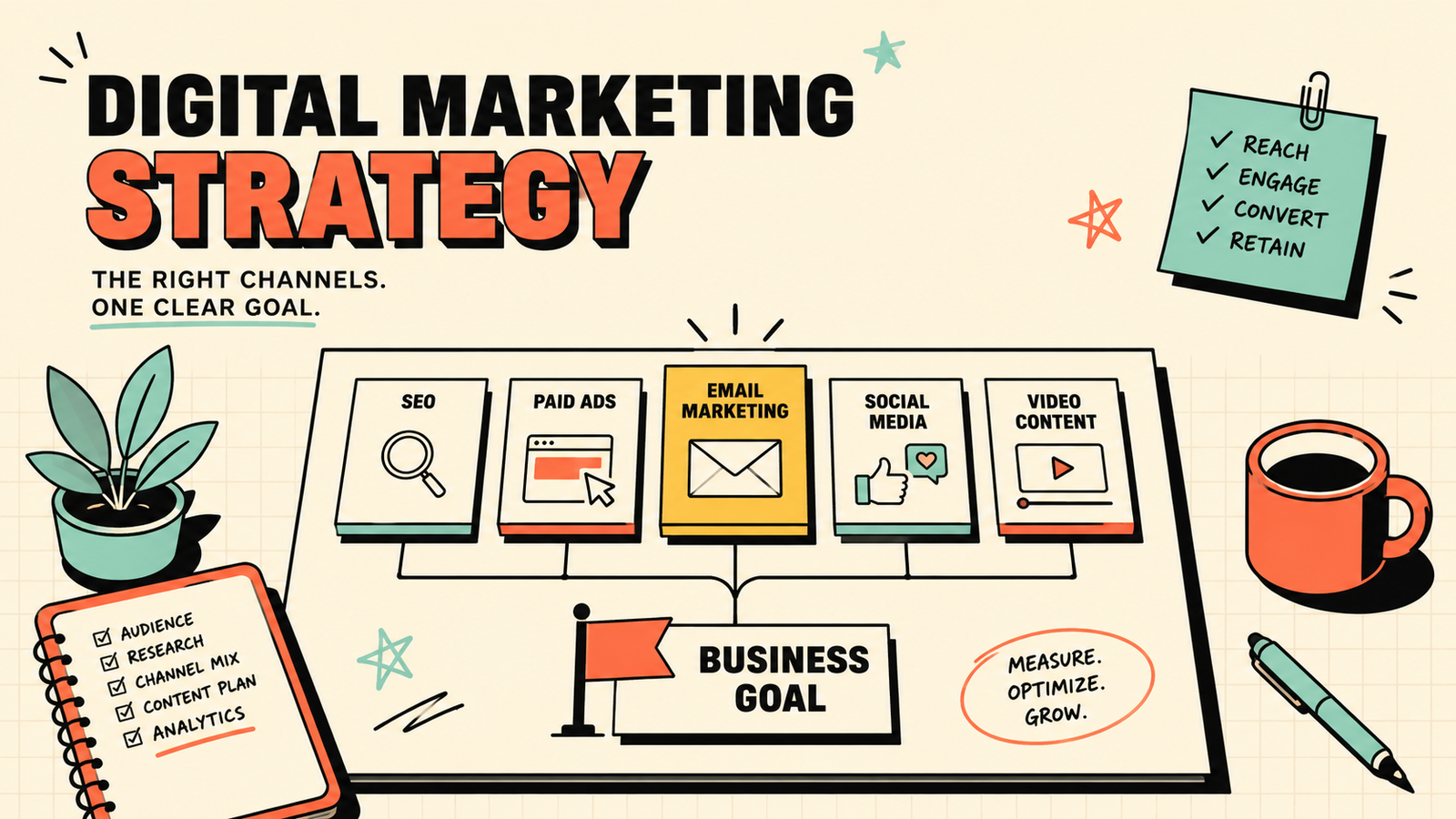
Posting on social media, running a few ads, and hoping for the best is not a digital marketing strategy. It is the thing people do instead of having one. A real strategy connects every channel, every piece of content, and every rupee you spend to a specific goal, so your marketing compounds into growth instead of noise. Most small businesses and founders never build one, which is exactly why the ones who do tend to win. This guide walks you through what a digital marketing strategy is, why it matters, and how to build one step by step, even with a small team and a limited budget.
What is a digital marketing strategy?
A digital marketing strategy is your plan for how you will use online channels to reach, attract, and convert your ideal customers. It defines who you are targeting, what channels you will use, what you will say, how you will measure success, and how it all connects to your business goals.
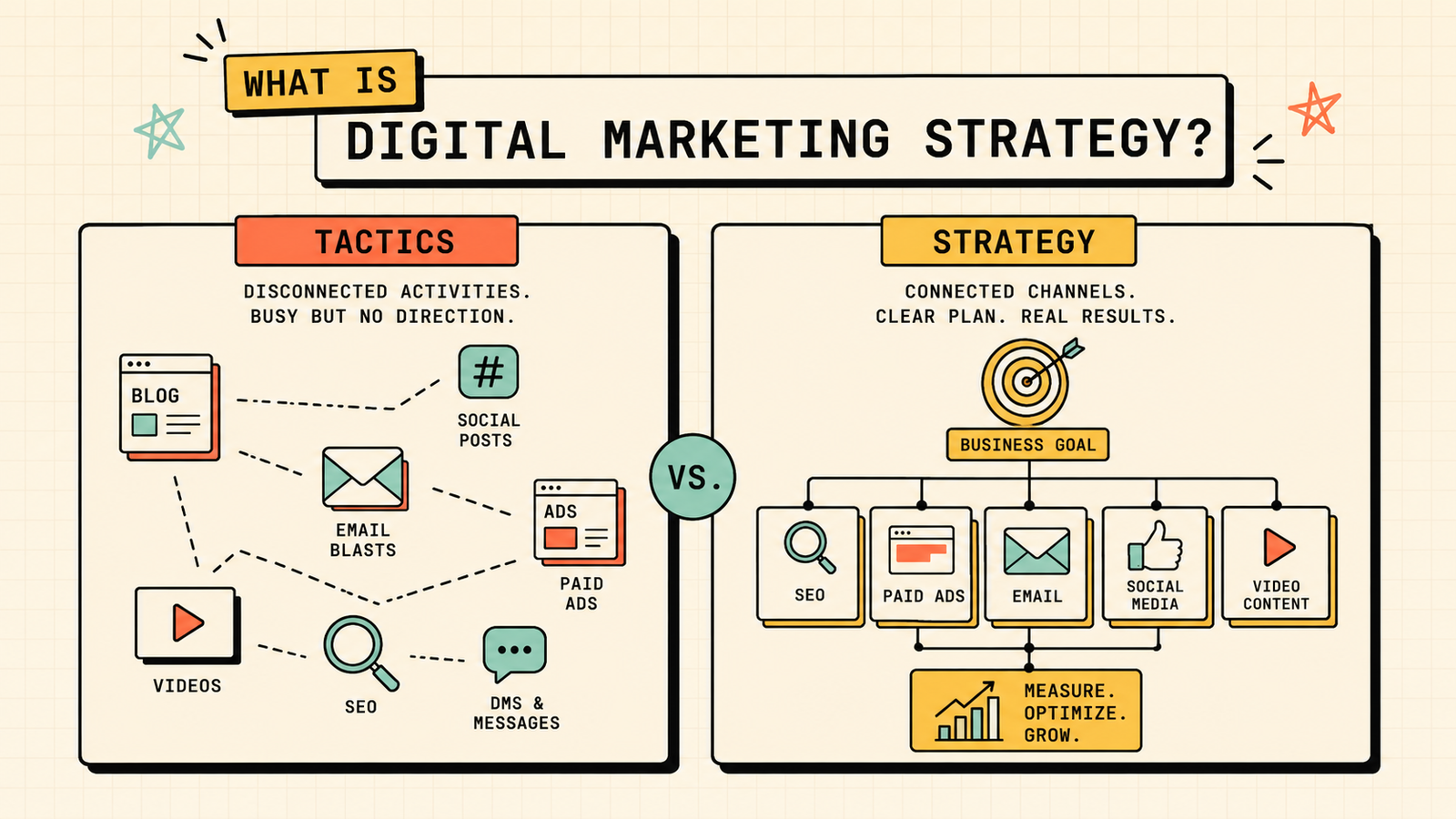
It is not a list of tactics. "Run Google Ads" is a tactic. "Use SEO and content to capture people searching for our product, retarget them with ads, and convert them with email" is a strategy. The difference is that a strategy has a logic tying everything together, while a list of tactics is just a collection of activities that may or may not add up.
Which AI Is Best for Resume Writing?
Why a digital marketing strategy matters
Without one, you waste money and time on channels that do not work, you cannot tell what is actually driving results, and every new idea feels equally urgent. With one, you know where to focus, what to measure, and what to ignore. A strategy also compounds: channels that support each other (SEO feeding content, content feeding email, email feeding sales) grow faster together than any of them alone. For founders and small teams, a strategy is how you compete with bigger budgets by being smarter rather than louder.
How to build a digital marketing strategy
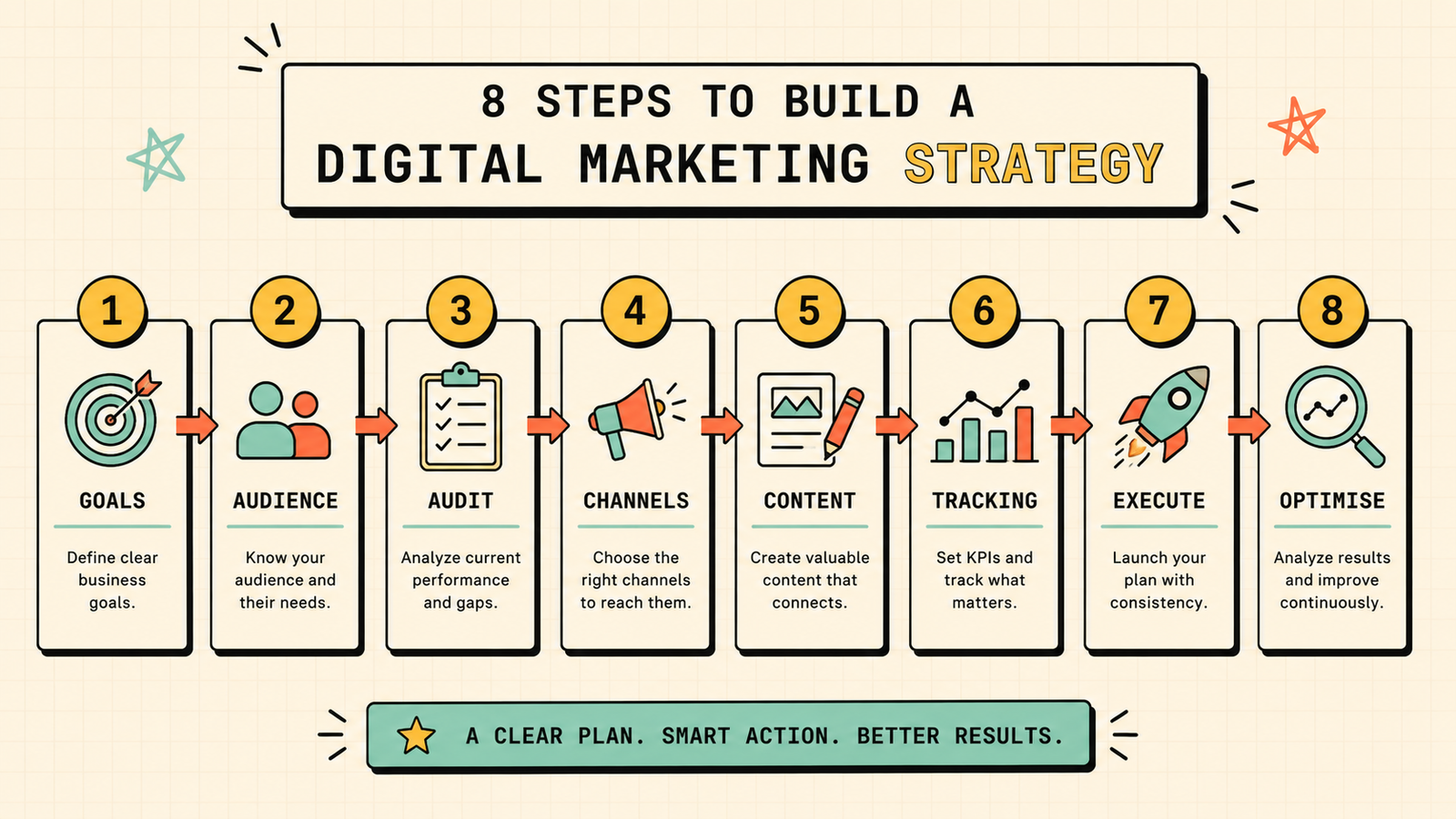
Here is the step-by-step process.
1. Set clear business goals
Start with what you actually want: more traffic, more leads, more sales, lower acquisition costs, or brand awareness. Make the goals specific and measurable, like "100 organic leads per month in 6 months," not "grow the brand." Everything in the strategy serves these goals.
2. Define your target audience
Know exactly who you are trying to reach: their problems, what they search for, where they spend time online, and what makes them buy. A strategy aimed at "everyone" hits no one. The more specifically you define your audience, the more effective every channel and message becomes.
3. Audit where you stand now
Before building forward, look at what you already have. What channels are you on? What is driving traffic and leads today? Where are the gaps? An honest audit prevents you from rebuilding what already works and points straight at the biggest opportunities.
4. Choose your channels
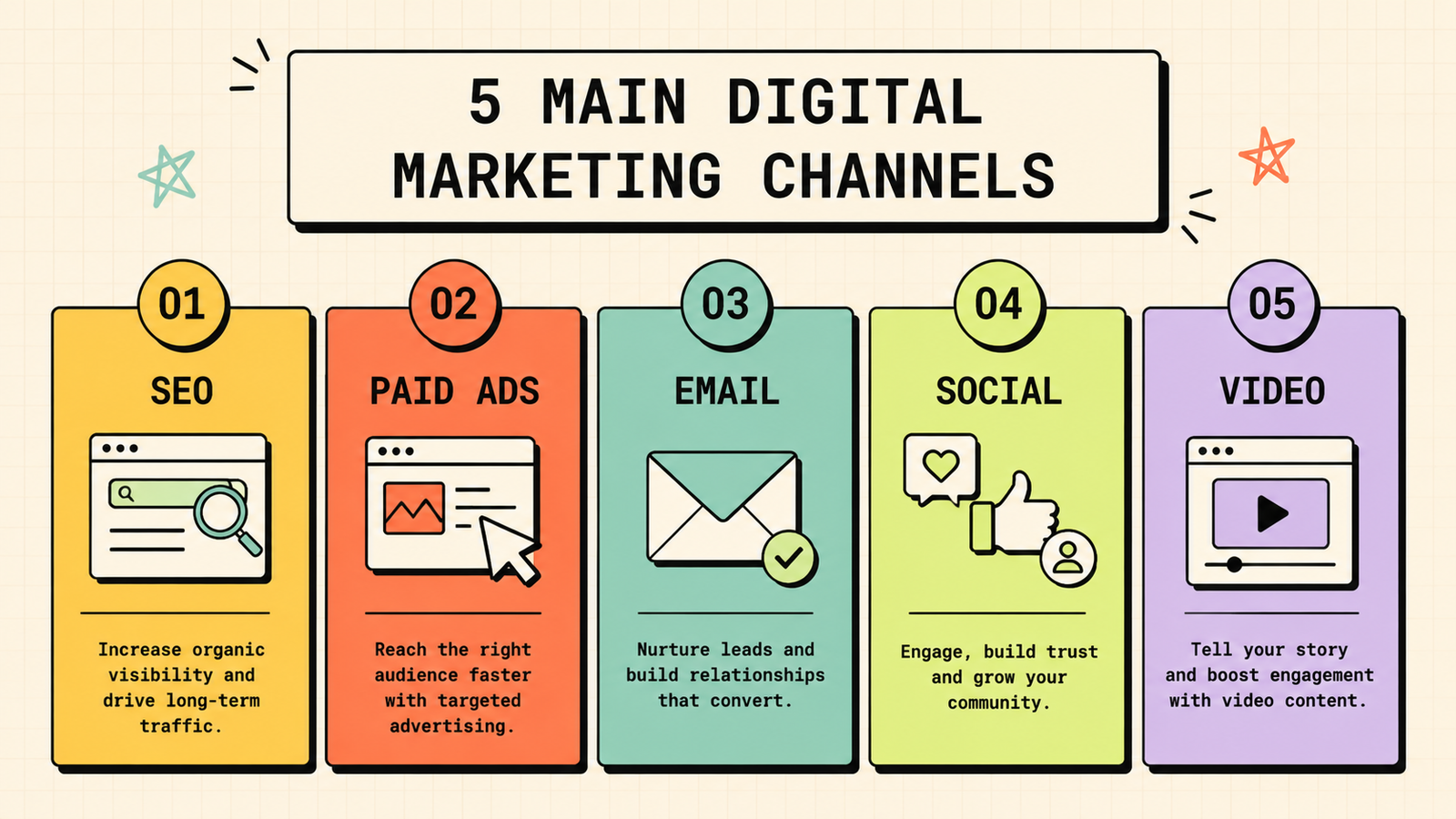
You cannot do everything well, so choose the channels that match your audience and goals. The major digital marketing channels are SEO and content (organic search), paid ads (Google, Meta), email marketing, social media, and video. Pick two or three to start and do them well rather than spreading thin across all of them.
5. Build your content and messaging
Create content and messaging that speaks to your audience's problems and positions your product as the solution. Map content to the buyer journey: awareness content (helpful guides, answers to questions) at the top, consideration content (comparisons, case studies) in the middle, and conversion content (product pages, demos, offers) at the bottom.
6. Set up tracking and measurement
Install analytics, set up conversion tracking, and define the metrics that matter for each channel. If you cannot measure it, you cannot improve it. Track traffic, leads, and sales by channel so you know what is working and what is not.
Which AI Is Best for Building a Website?
7. Execute consistently
A strategy only works if you actually do it, consistently. Build a calendar, assign responsibilities, and show up week after week. Consistency is the most underrated advantage in digital marketing, because most competitors start and stop.
8. Review, learn, and optimise
Check your results monthly. Do more of what works, fix or cut what does not, and adjust as you learn. A strategy is not a one-time document. It is a living system that gets better the more data you feed it.
The digital marketing channels explained
Here is what each major channel does and when it fits.
| Channel | What it does | Best for | Timeline |
|---|---|---|---|
| SEO and content | Free traffic from people searching for what you offer | Long-term, compounding growth | 3 to 12 months |
| Paid ads (Google, Meta) | Instant visibility, pay per click or impression | Speed, testing, launches | Instant |
| Email marketing | Nurture and convert your owned audience | Retention, repeat sales, relationship | Ongoing |
| Social media | Build awareness, community, and brand | Reach and engagement | Ongoing |
| Video (YouTube, Reels) | High-engagement visual content | Education, trust, discovery | Ongoing |
Which channels to choose for your business
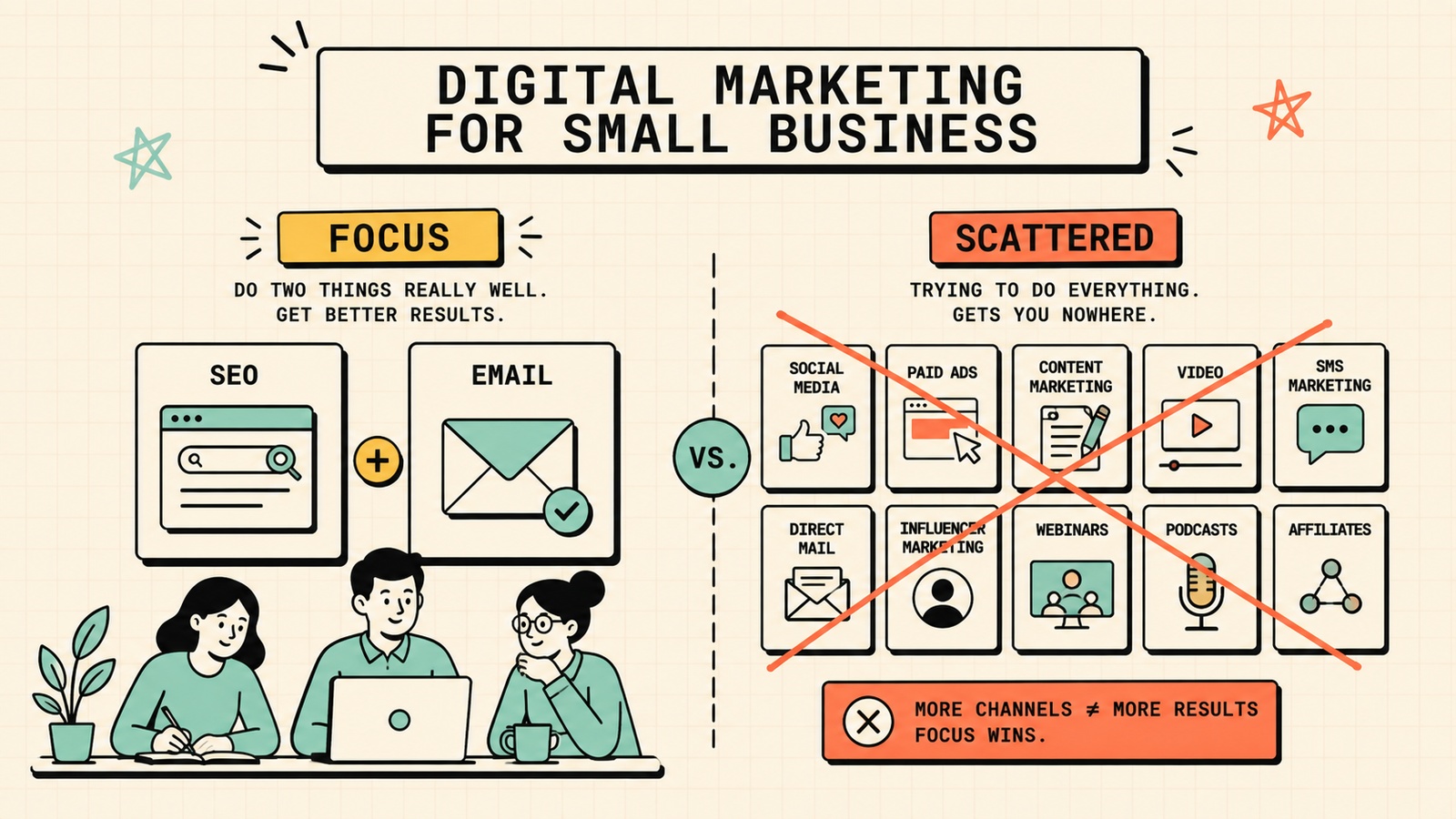
The right mix depends on your business and audience. If people search for what you sell, SEO and content should be your anchor, because it builds an owned channel that gets cheaper over time. If you need results immediately, add paid ads for speed while organic builds. If you sell something people buy repeatedly, email is essential for retention and repeat revenue. If your product is visual or lifestyle-driven, social and video pull more weight. For most businesses, the strongest foundation is SEO plus email, with paid ads for speed and social for reach. Start with two channels, master them, then add the next.
Digital marketing strategy for small businesses
You do not need a big team or a big budget to have a real strategy. For a small business, the approach is the same as for a large one, just narrower. Pick one or two channels, focus on genuine helpfulness over volume, and be consistent. A small brand publishing one strong blog post a week with a solid email nurture behind it will outperform a bigger one running scattered campaigns with no strategy. The advantage small businesses have is focus: you can be deeply relevant to a specific audience in a way big brands cannot. Use that.
We'll show you exactly which channels will drive the most growth for your business and how to build a plan that compounds.
Get a clear, data-backed strategy to stop guessing and start growing, even with a small team and budget.
Digital marketing strategy for D2C and ecommerce
D2C and ecommerce brands have a specific challenge: rising ad costs eating their margins. The strategic answer is to shift from renting all your traffic through ads to owning some of it through organic channels. That means building SEO and content to capture buyers searching for your products, using email and WhatsApp to retain and resell to existing customers, and using social and video to build brand awareness cheaply. Paid ads stay in the mix for launches and pushes, but they should not be the only channel keeping the business alive. A D2C strategy that balances acquisition with retention and paid with organic is the one that scales profitably.
How much should you spend on digital marketing?
There is no universal number, but here is a practical framework. Early-stage businesses often invest 10 to 20 percent of revenue in marketing, with a heavier lean toward paid for speed. As organic channels build, the spend can shift: more toward content, SEO, and email that compound, and less toward the paid channels with rising costs. The rule is to spend where the return is clear, measure it honestly, and shift budget from underperforming channels to ones that work. Spending nothing on marketing is a strategy for staying invisible. Spending everything on ads with no organic base is a strategy for rising costs. The middle ground, with a plan and a shift toward owned channels, is what works.
Common digital marketing mistakes
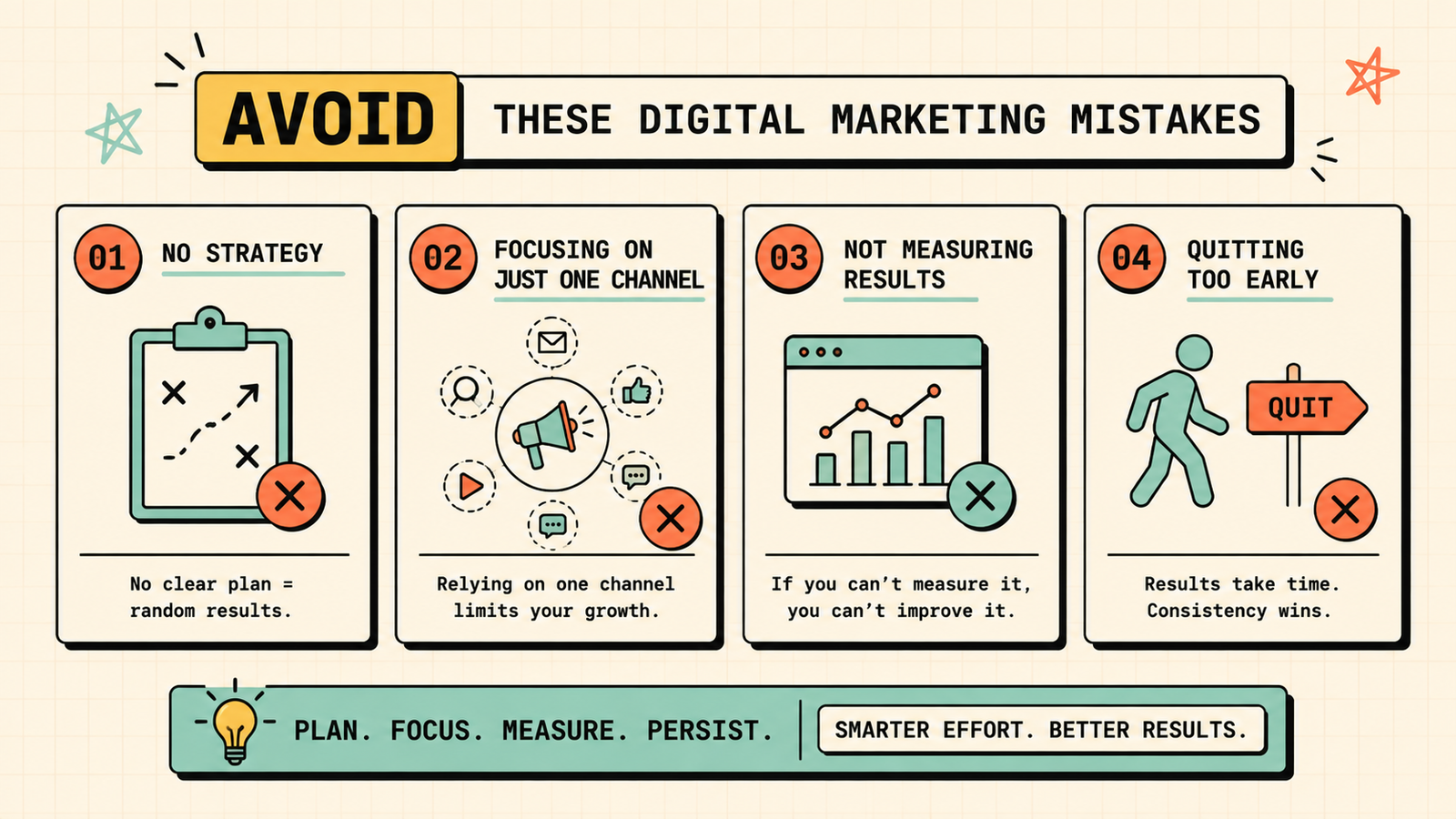
A few patterns waste the most money and time. Having no strategy and just "doing things" leads to scattered effort with no compounding. Relying on a single channel means one platform change can kill your growth overnight. Ignoring organic channels keeps your cost of growth permanently high. Not measuring results means you cannot tell what works. Chasing every new platform instead of mastering a few spreads you too thin. And quitting before the strategy has time to compound is the most common mistake of all, since the first months of any strategy are the build, not the payoff.
How digital marketing channels work together
The real power of a strategy is not any single channel. It is how they reinforce each other. SEO and content bring in visitors who are actively searching. Email captures those visitors and nurtures them into repeat buyers. Social media builds awareness that drives more branded searches, which lifts your SEO. Paid ads fill gaps and give you fast data on what messaging converts, which you feed back into your organic content. And video builds trust and authority that make every other channel stronger. When channels support each other like this, the whole grows faster than the sum of the parts. That compounding is what a strategy creates and random tactics miss.
AI Tools for Marketing
How to allocate your budget across channels
A practical starting split for most small businesses: put your biggest share into SEO and content, because it compounds and gets cheaper over time. Allocate a share to paid ads for speed and testing, especially early on when organic has not built yet. Set aside budget for email (the tool, not the content, which comes from your writing effort). And reserve a small amount for tools and analytics. As results come in, shift budget toward whatever is delivering the best return. The mistake is locking into a fixed split and never adjusting. Review monthly, move money from what is underperforming to what is working, and treat the budget as a living allocation, not a set-and-forget decision.
LetMeRank
The bottom line
A digital marketing strategy is how you stop guessing and start growing. Set clear goals, know your audience, choose the right channels, create content that maps to the buyer journey, measure everything, and be consistent. Do that and your marketing compounds into a system that grows cheaper and stronger over time, instead of a collection of random activities that go nowhere.
If you want experts to build and run a digital marketing strategy for your business, LetMeRank helps founders and brands grow through SEO, content, and AI search, starting with a free audit of your biggest growth opportunities.