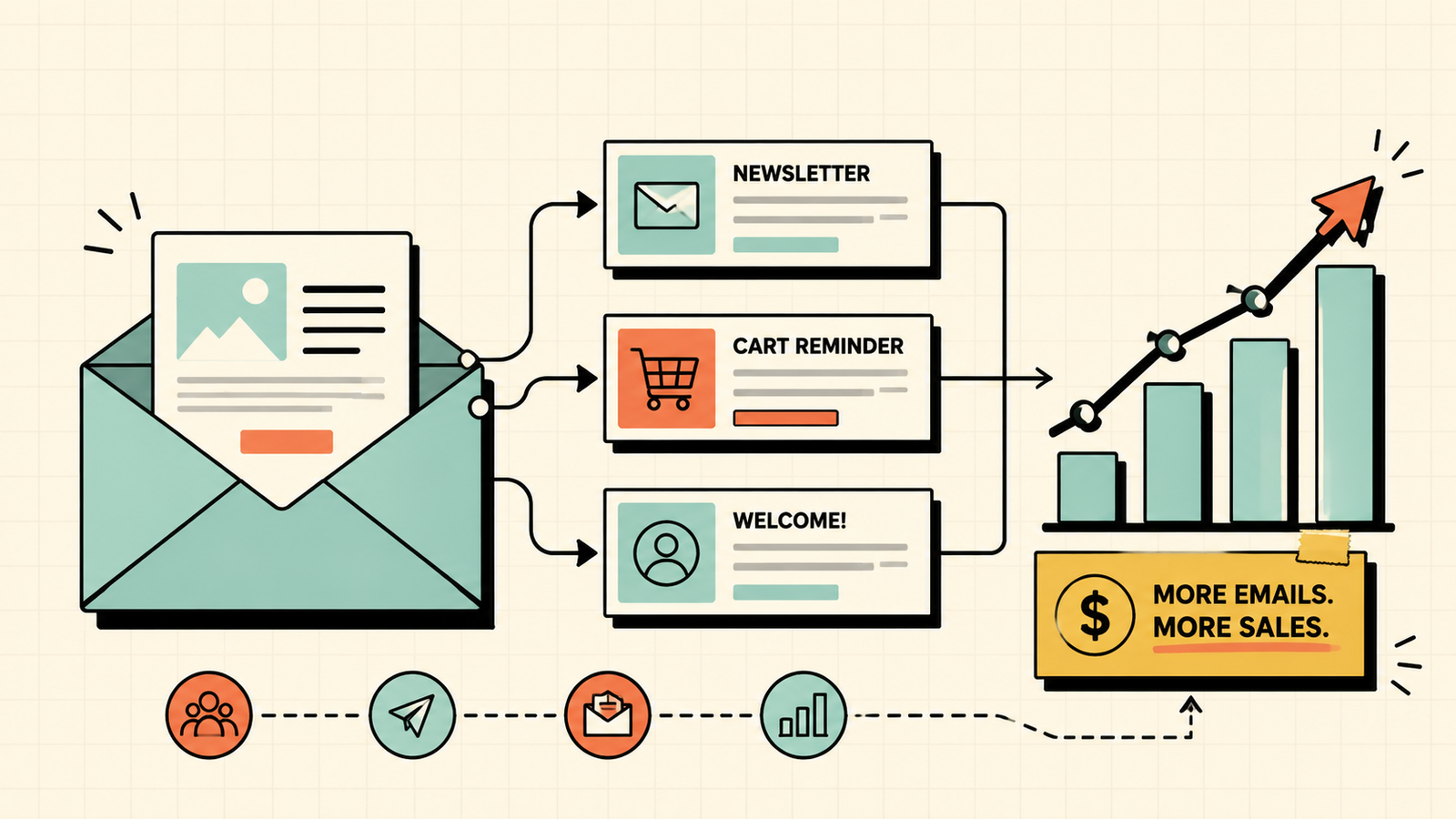
You have a list of email subscribers. You send them something every week. They open it sometimes. Nobody buys. And you are starting to wonder whether email marketing actually works or whether you are just shouting into an inbox. Here is the truth: email is still the highest-ROI marketing channel there is, but only when there is a strategy behind it. Most businesses send random emails with no plan and wonder why the results are random too. This guide covers how to build an email marketing strategy that actually drives sales, how to grow a list worth having, what to send, how often, and the mistakes that kill most email efforts before they start.
What is email marketing?
Email marketing is the practice of using email to build relationships with your audience, nurture potential customers, and drive sales. It covers newsletters, promotional campaigns, automated flows (welcome sequences, abandoned cart, post-purchase), and any email you send with a business purpose.
What makes email different from every other channel is ownership. Your social followers belong to the platform. Your ad traffic stops when the budget does. But your email list belongs to you. No algorithm change, no price hike, no platform shutdown can take it away. That is why every smart business treats their email list as one of their most valuable assets.
How to Rank on Google
Why email marketing still works
Email consistently delivers the highest return on investment of any digital marketing channel, and it is not close. For every dollar spent on email, the average return is somewhere around 36 to 42 dollars, depending on the study. It works because you are reaching people who already raised their hand by subscribing, which means they are warmer than a cold ad audience. You control the timing, the message, and the frequency. And you can personalise at scale, sending the right message to the right person based on what they have done. No other channel gives you that combination of ownership, targeting, and cost-effectiveness.
How to build an email marketing strategy
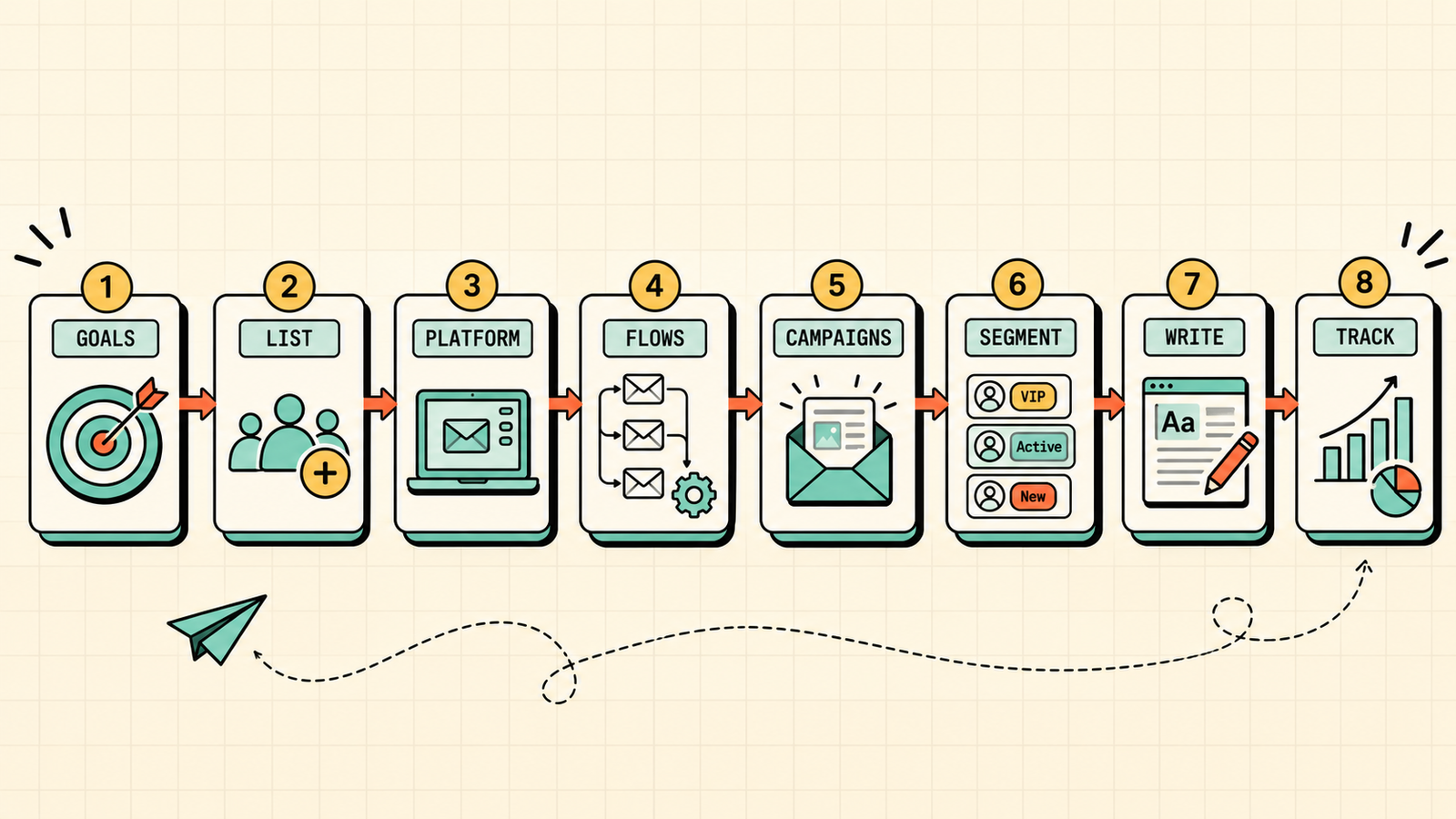
Here is the step-by-step process.
1. Set clear goals
Define what you want email to achieve: more repeat sales, lead nurturing, onboarding new customers, recovering abandoned carts, or building a relationship with your audience. Clear goals shape what you send and how you measure success.
2. Build your list the right way
A list of people who actually want to hear from you is worth more than a huge list of people who do not. Grow your list with genuine value: offer something useful in exchange for an email (a guide, a discount, a tool, a template), make signup easy and visible on your site, and never buy a list. Bought lists have terrible engagement, damage your sender reputation, and often violate regulations. Quality over quantity, always.
3. Choose the right platform
Pick an email platform that fits your size and needs. For most small businesses, Mailchimp, Klaviyo, ConvertKit, or Brevo covers everything you need: list management, templates, automation, and analytics. Klaviyo is the strongest pick for ecommerce and D2C because its automation and segmentation are built for purchase behaviour. Do not overthink the platform choice early on. Pick one, learn it, and switch later only if you genuinely outgrow it.
4. Set up your core automated flows
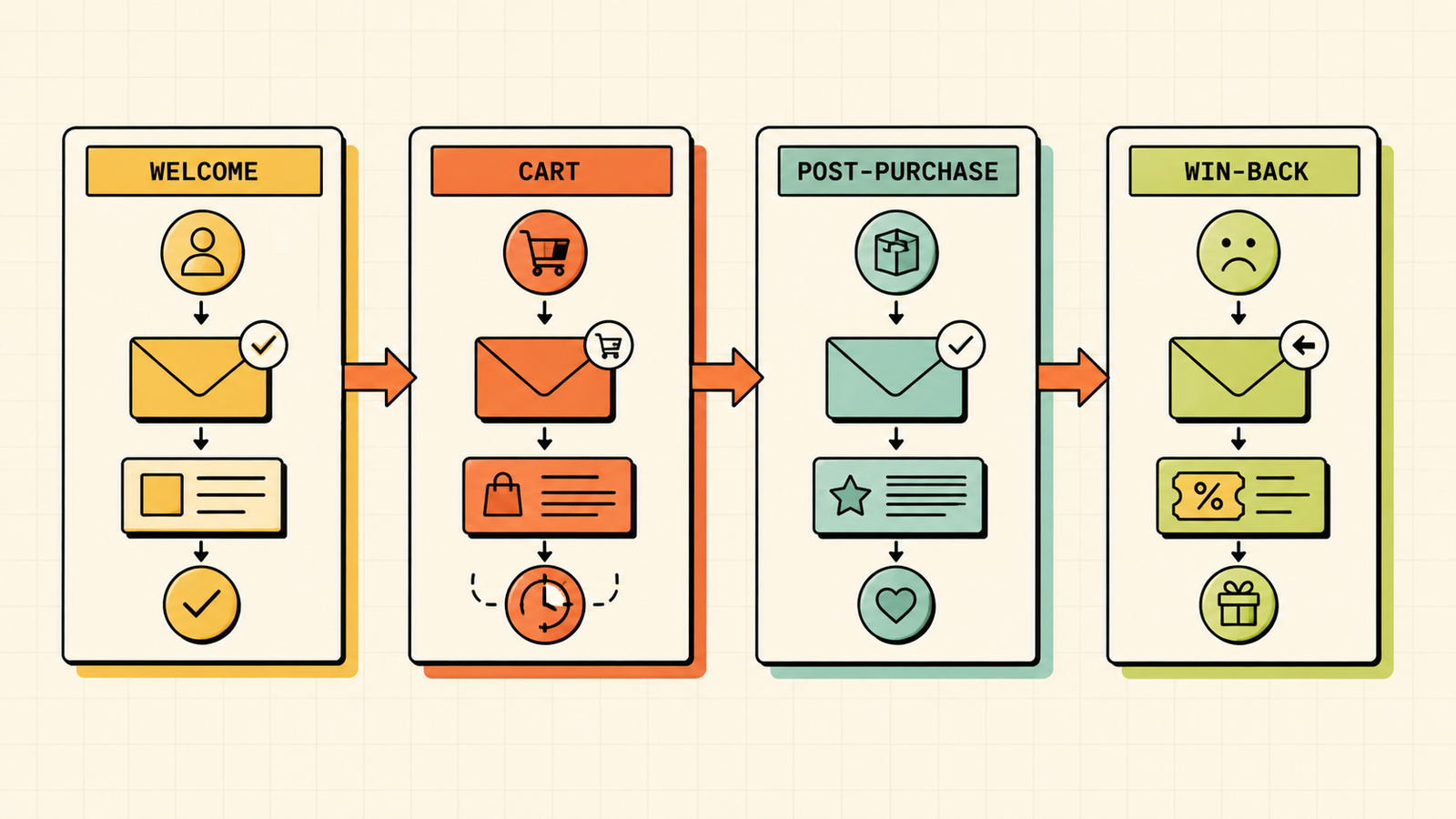
Automated flows do the heavy lifting in email marketing because they run without you touching them. The essential ones are a welcome sequence (what new subscribers get immediately, sets the tone and delivers the value you promised), an abandoned cart flow (reminds shoppers who left without buying, recovers a significant share of lost sales), a post-purchase flow (thanks the buyer, suggests related products, asks for a review), and a win-back flow (re-engages subscribers who have gone quiet). Setting up these four covers the biggest revenue opportunities and runs on autopilot.
5. Plan your campaigns (what to send, how often)
Beyond automated flows, send regular campaigns: newsletters, promotions, new products, content, and seasonal offers. Consistency matters more than frequency. Sending one genuinely useful email a week beats sending five mediocre ones. Plan a simple calendar, mix value-driven content with promotional offers (a good ratio is roughly three value emails to one promotional), and always give the reader a reason to open.
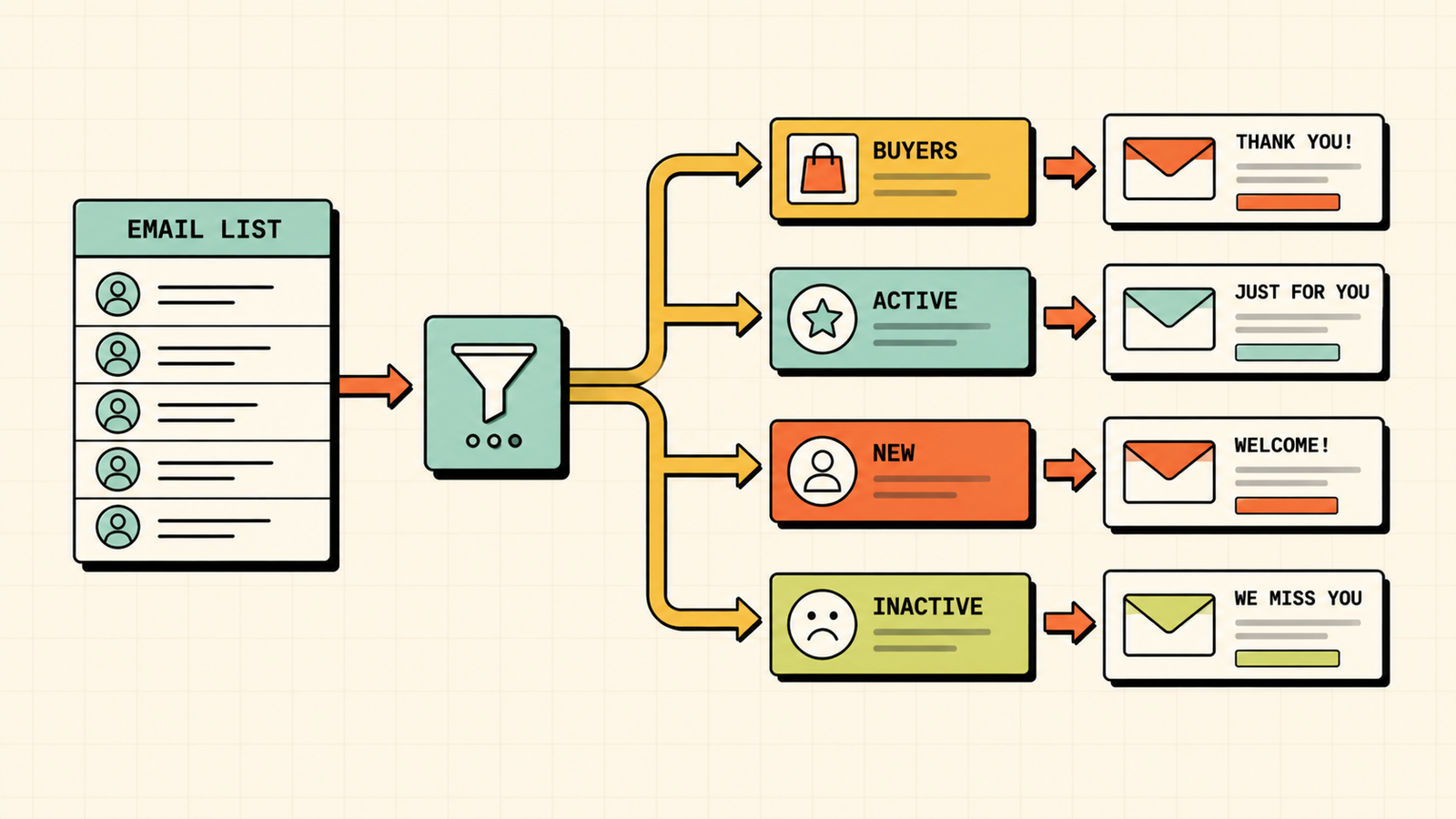
6. Segment your list
Not every subscriber is the same, and sending the same email to everyone wastes the channel's biggest advantage: relevance. Segment by purchase history, engagement level, signup source, or interest. Even basic segmentation (active vs inactive, buyer vs non-buyer) dramatically improves open rates, click rates, and sales because people get emails that actually matter to them.
7. Write emails people want to open
The subject line decides whether your email gets opened. Keep it specific, curiosity-driven, and honest. Inside, write like a person, not a brand: clear, direct, and useful. Every email should have one clear purpose and one call to action, not five competing links. And make sure it looks good on mobile, since most emails are read on phones.
8. Track, test, and improve
Measure open rates, click rates, conversion rates, and revenue per email. A/B test subject lines, send times, and content formats. Watch your unsubscribe rate, since a rising one signals you are sending too much or too little value. Email marketing improves the more data you have, so treat it as a system that gets better over time.
Email marketing for D2C and ecommerce
D2C and ecommerce brands have the most to gain from email because of repeat-purchase dynamics. Your best customers buy more than once, and email is the cheapest, most effective way to bring them back. The core stack for a D2C brand is Klaviyo or a similar ecommerce-focused platform, the four essential flows (welcome, cart, post-purchase, win-back), regular campaigns mixing content with promotions, and segmentation by purchase behaviour. For most D2C brands, email and SMS together generate 20 to 40 percent of total revenue when done well, and that share costs a fraction of what paid ads cost.
How to Use Google Search Console for SEO
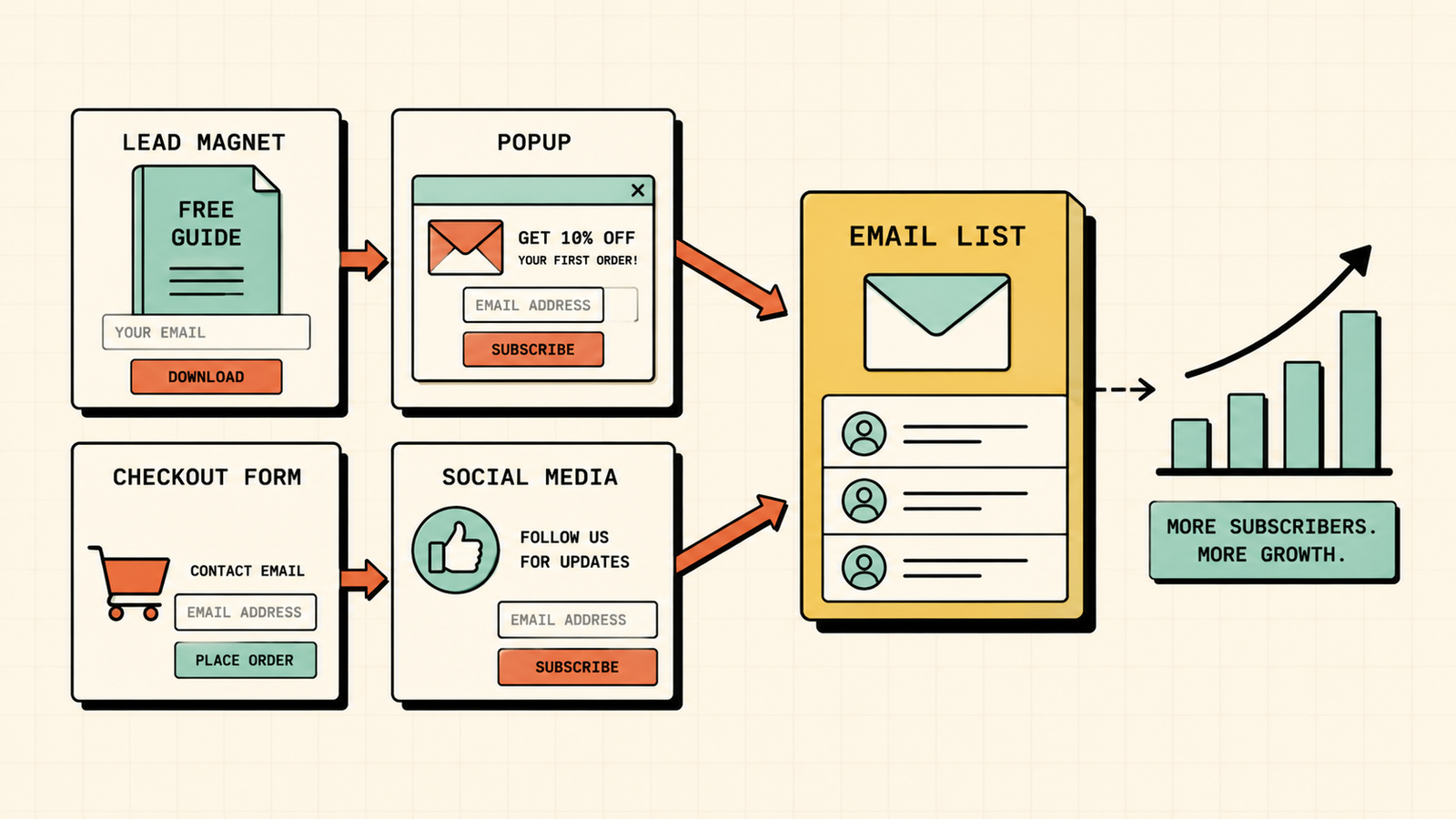
How to grow your email list faster
Growing a quality list is an ongoing effort, not a one-time setup. The most effective list-building tactics are lead magnets (offer something genuinely valuable in exchange for an email: a guide, a checklist, a discount, a free tool), exit-intent popups (catch visitors about to leave with a timely, relevant offer), content upgrades (offer a bonus resource inside your best blog posts), checkout and purchase flows (collect emails at every transaction point), and social-to-email bridges (drive your social audience to sign up with exclusive email-only content). Every tactic works better when the value exchange is clear: the subscriber gets something they actually want, and you get a subscriber who actually cares.
We'll show you exactly how to build an email list that drives sales and a strategy that compounds.
Get a clear, data-backed plan to turn your email channel into your highest-ROI marketing asset.
Email deliverability: making sure you land in the inbox
None of your strategy matters if your emails go to spam. Deliverability depends on your sender reputation, which is built by sending to engaged subscribers, keeping your bounce rate low, removing inactive addresses, authenticating your domain with SPF, DKIM, and DMARC, and never sending to purchased lists. If your open rates suddenly drop, deliverability is the first thing to check. A clean, engaged list that wants your emails lands in the inbox. A bloated, cold list that ignores your emails lands in spam. Quality of list directly drives quality of delivery.
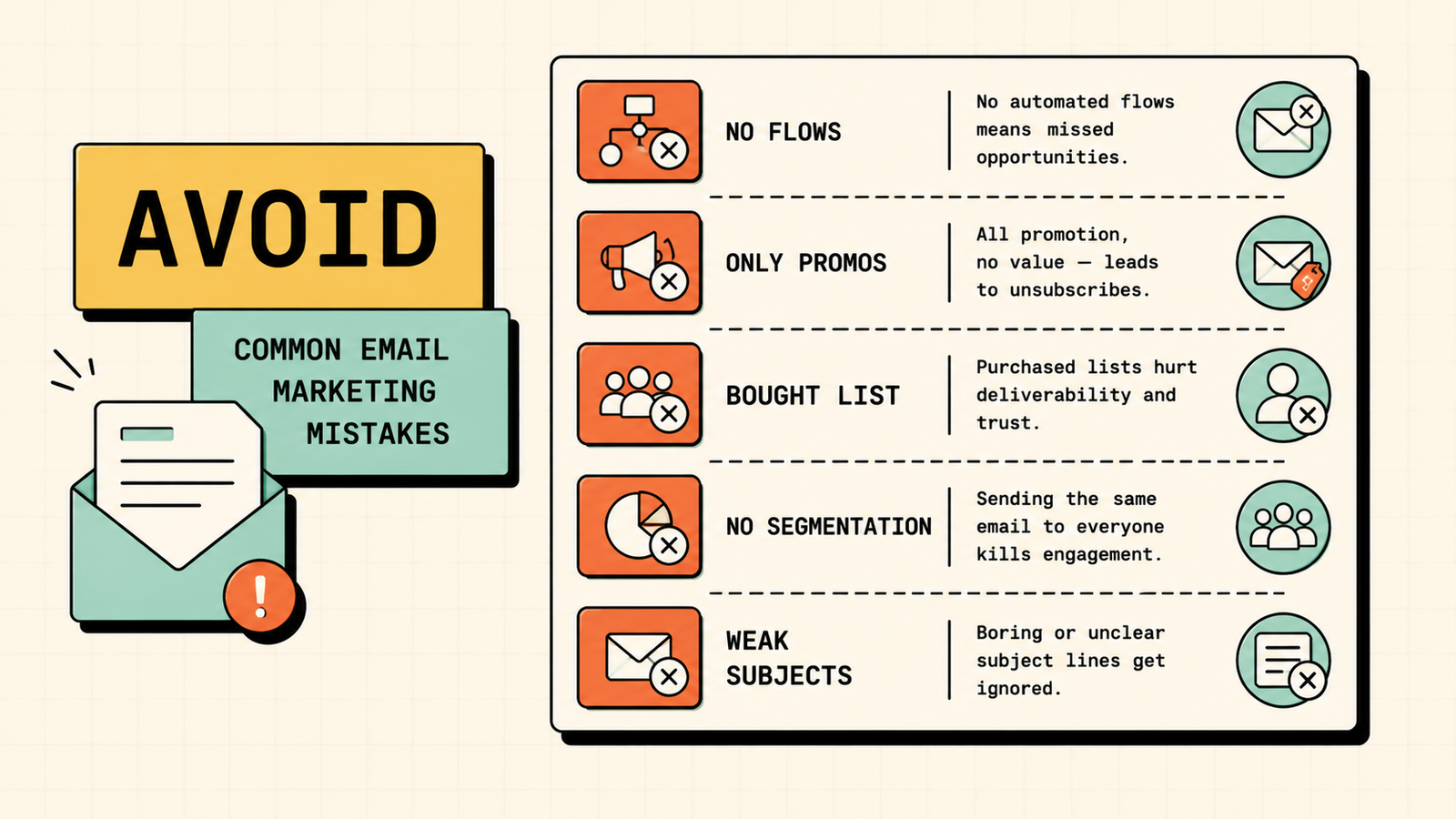
Common email marketing mistakes
A few patterns kill most email efforts. Not having automated flows means you miss the biggest, most hands-off revenue opportunities. Sending only promotions without value trains subscribers to ignore you. Emailing a purchased list destroys your sender reputation and may violate regulations. Not segmenting means everyone gets the same irrelevant email. Writing weak subject lines means your emails never get opened. Not tracking results means you never improve. And sending inconsistently, whether too much or too little, loses attention or trust. Fix these and email goes from a chore to your most profitable channel.
AI Tools for Marketing
How email marketing and SEO work together
Email and SEO are often treated as separate channels, but they reinforce each other in ways most businesses miss. When you publish a new blog post, emailing your list drives immediate traffic and engagement signals that help the page rank faster. When subscribers share your email content, it earns social signals and occasionally backlinks. Emails that drive repeat visits increase your site's overall engagement metrics, which indirectly benefits SEO. And the keyword research you do for SEO tells you exactly which topics to write emails about, since you already know what your audience searches for. The combination is powerful: SEO brings new people in, email keeps them engaged and buying, and each channel makes the other stronger. That is why the best-performing brands run both, not as separate efforts, but as parts of the same system.
The email metrics that actually matter
Tracking the right numbers keeps your strategy honest. Open rate tells you whether your subject lines work, aim for 20 to 30 percent as a healthy baseline, though this varies by industry and is less reliable since Apple's Mail Privacy Protection. Click rate tells you whether the content and call to action resonate, aim for 2 to 5 percent. Conversion rate (sales, signups, or whatever the email's goal was) is the number that matters most, since it connects email directly to revenue. Unsubscribe rate should stay below 0.5 percent per email, and a spike signals you are sending too much, too little value, or to the wrong segment. Revenue per email (total revenue divided by emails sent) is the ultimate metric for ecommerce brands, because it tells you the dollar value of every send. Track these monthly, compare over time, and use the trends to guide what to send more of and what to cut.
LetMeRank
The bottom line
Email marketing is the highest-ROI channel you have, and the one you fully own. Build a quality list with genuine value exchanges, set up the four essential automated flows, send consistent campaigns that mix value with promotion, segment so every email is relevant, and track everything. Do that and email becomes the channel that drives sales, builds loyalty, and costs less per customer than anything else in your marketing mix.
If you want experts to build and run your email and organic growth strategy, LetMeRank helps founders and brands grow through SEO, content, and retention channels, starting with a free audit.