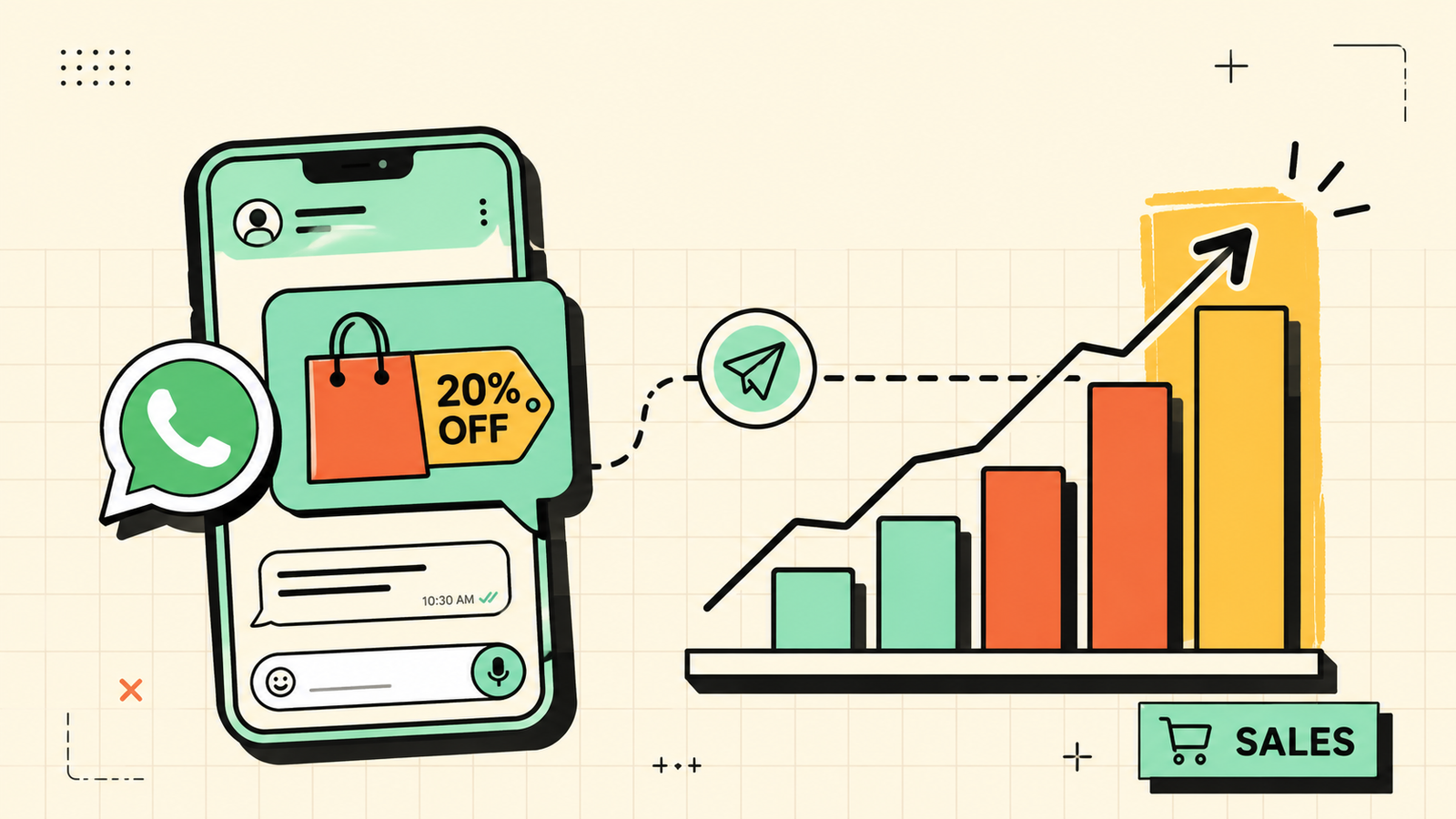
Your customers already live on WhatsApp. They check it more than email, more than social media, more than anything else on their phone. That gap is a genuine opportunity.
WhatsApp marketing lets you reach customers in the place they pay the most attention, with open rates that make email look broken and a personal, direct feel that no other channel matches. But there is a right way and a wrong way to do it. Spam people and you get blocked. Do it well and you build a channel that drives sales, retention, and loyalty at a cost that makes other channels jealous. This guide covers what WhatsApp marketing is, how to set it up, the strategy that works, which tools to use, and the mistakes that get businesses blocked.
What is WhatsApp marketing?
WhatsApp marketing is using WhatsApp, specifically the WhatsApp Business App or WhatsApp Business API, to communicate with customers for marketing purposes. It covers promotional messages, product launches, abandoned cart reminders, order updates, customer support, and any business communication sent through the platform.
What makes it different from other channels is the medium itself. WhatsApp messages feel personal and immediate. They sit in the same app where people talk to family and friends, which means they get opened and read at rates no other marketing channel comes close to matching. Typical WhatsApp marketing open rates sit around 90 to 98 percent, compared to 20 to 25 percent for email. That attention is the advantage.
WhatsApp Business App vs WhatsApp Business API
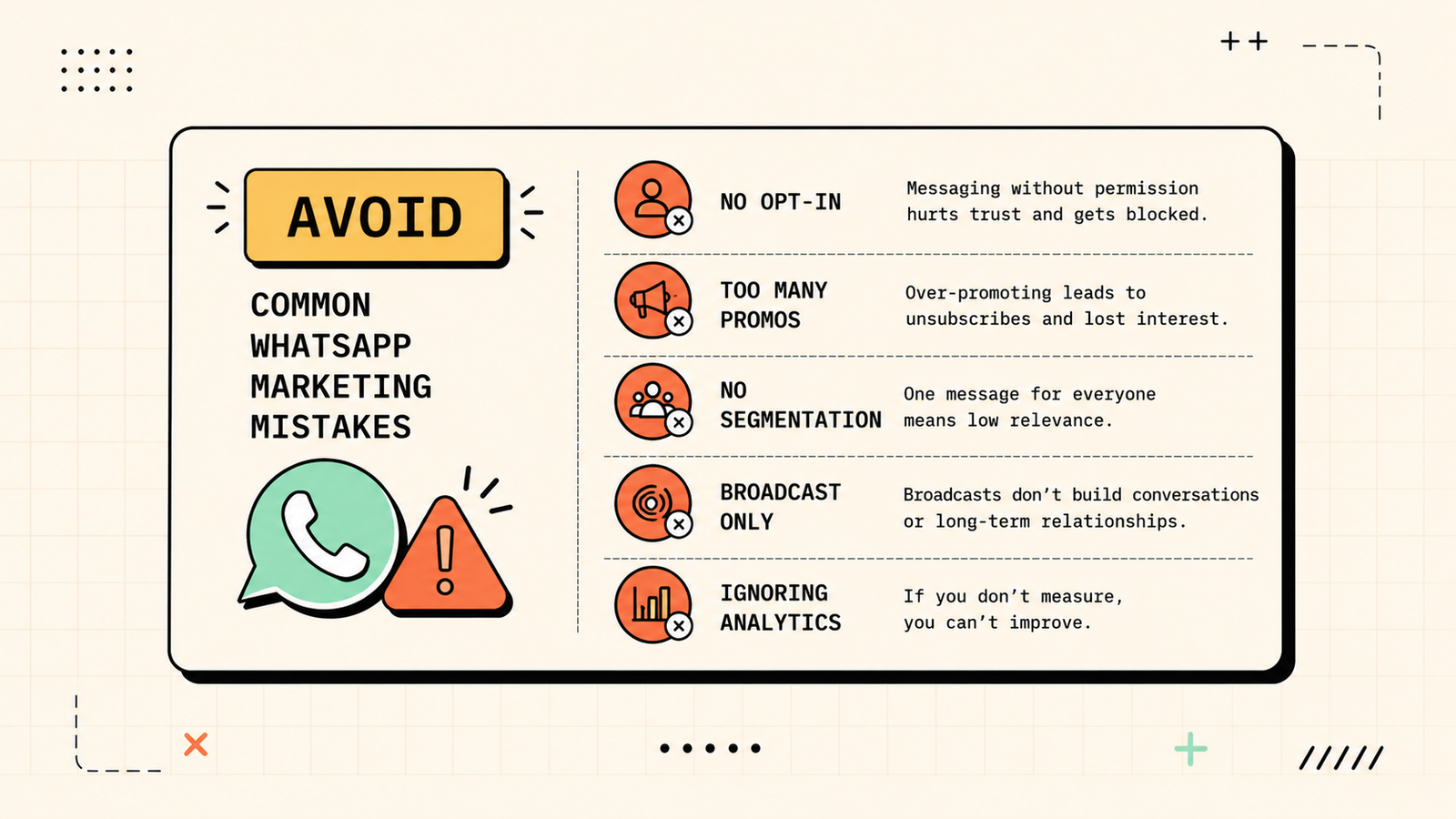
Before building a strategy, understand the two options.
| WhatsApp Business App | WhatsApp Business API | |
|---|---|---|
| Best for | Solo founders, very small businesses | Growing businesses, teams, automation |
| Cost | Free | Paid (through a provider) |
| Broadcast limit | 256 contacts per list | Unlimited with templates |
| Automation | Basic (quick replies, labels) | Full (flows, chatbots, integrations) |
| CRM integration | No | Yes |
| Multiple users | No | Yes |
Start with the free Business App if you have a small list and simple needs. Move to the API when you need automation, larger broadcasts, team access, and CRM integration.
How to build a WhatsApp marketing strategy
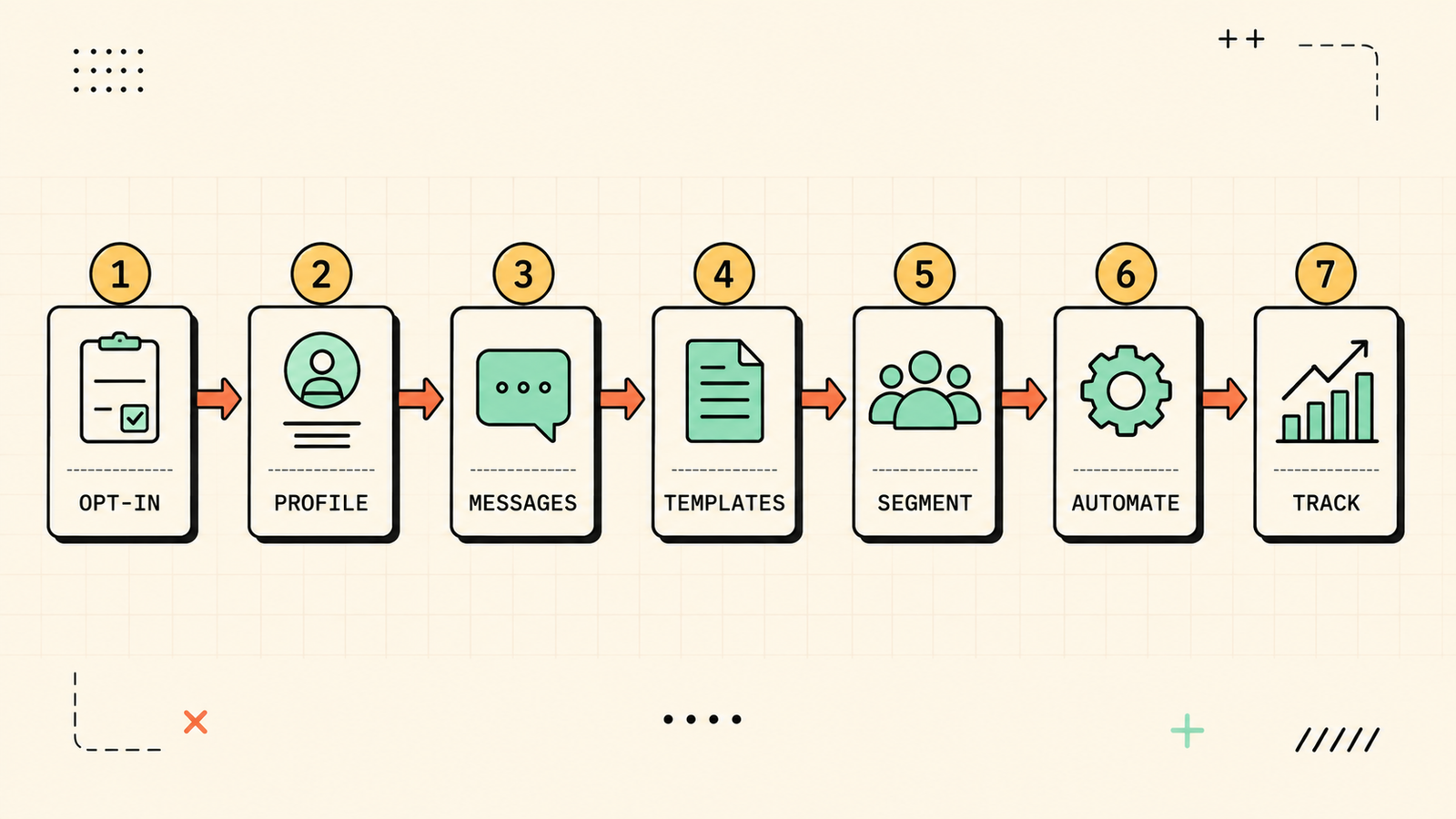
1. Get permission first
This is not optional, it is the foundation. WhatsApp is a consent-based platform, and sending messages to people who did not opt in gets you reported, blocked, and eventually banned. Collect opt-ins through your website, checkout flow, social media, and in-store signage. Make the value exchange clear: tell people what they will receive and how often. A smaller list of people who want your messages will always outperform a larger list of people who did not ask for them.
2. Set up your WhatsApp Business profile
Complete your business profile fully: business name, description, address, hours, website, and catalogue if applicable. A complete profile builds trust and looks professional. If using the API, set up through a provider like Interakt, WATI, AiSensy, or Zoko (popular in India).
3. Define your message types
Not every WhatsApp message is promotional. Plan a mix of transactional messages (order confirmations, shipping updates, appointment reminders), promotional messages (launches, sales, offers, new arrivals), conversational messages (support, FAQs, product recommendations), and content messages (tips, guides, behind-the-scenes). The mix matters because a channel that only sends promotions gets muted fast, while one that adds genuine value keeps people engaged and opening.
4. Create message templates
If you use the API, all outbound messages must use pre-approved templates. Write templates for your most common messages: welcome, abandoned cart, order update, promotional offer, feedback request. Keep them concise, personal, and clear. Include a call to action. Test different versions to see what gets the best response.
5. Segment your audience
Just like email, sending the same message to everyone wastes the channel's biggest advantage. Segment by purchase history, browse behaviour, location, or interest so each person gets messages relevant to them. A cart abandonment reminder to someone who left a specific product feels helpful. A random blast to your entire list feels like spam.
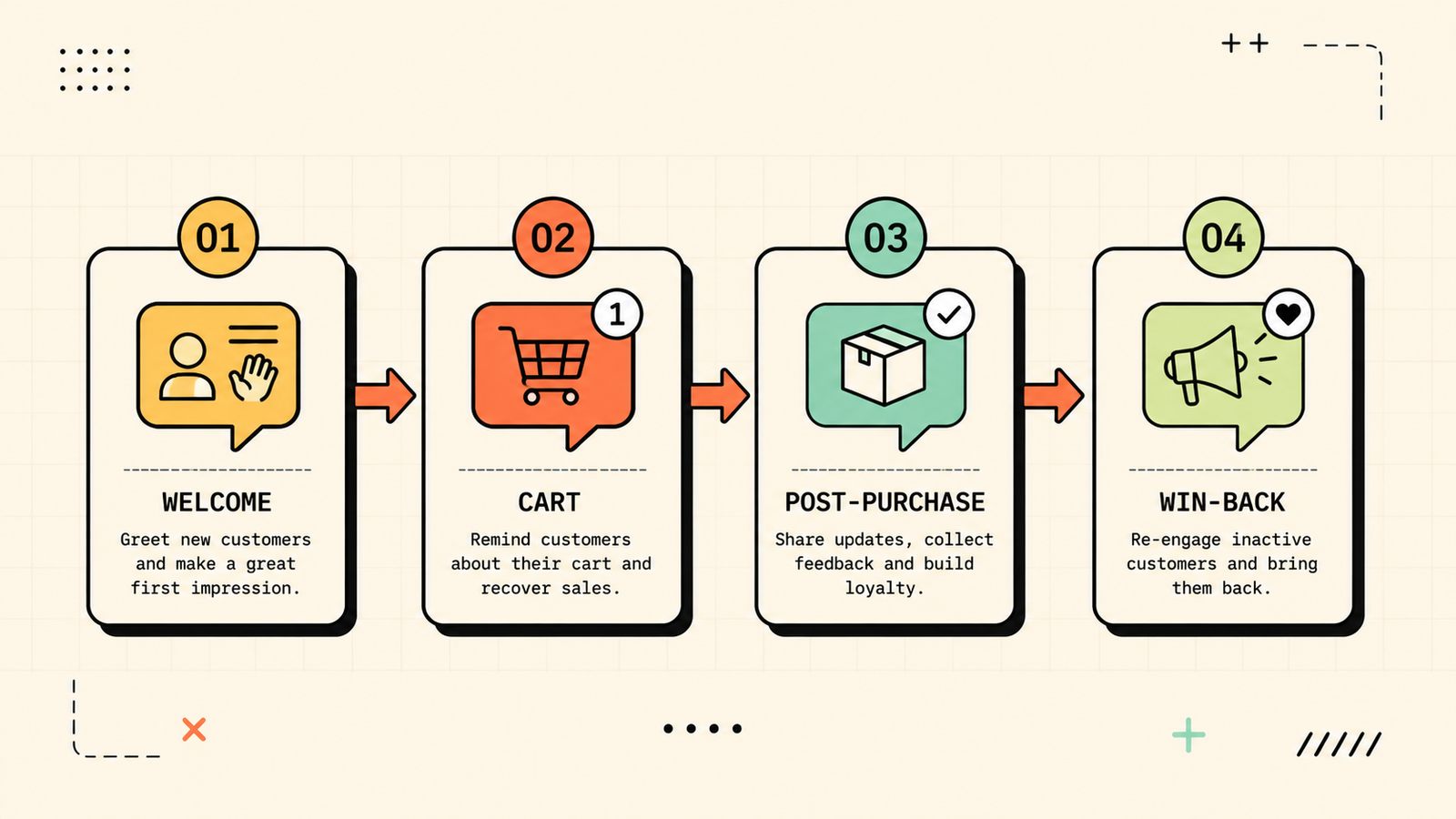
6. Automate the high-value flows
Set up automated flows for the messages that drive the most revenue with the least effort: a welcome message when someone opts in, an abandoned cart reminder (this alone recovers significant sales), a post-purchase thank you and review request, and a win-back message for lapsed customers. These run automatically and handle the biggest opportunities without manual work.
7. Track and optimise
Measure delivery rates, open rates, click rates, and conversions. WhatsApp's open rates are so high that the more meaningful metrics are clicks and conversions. Test message timing, copy, and offers. Watch your block and report rates, since a rising number signals you are sending too much or too little value.
We'll show you exactly how to turn WhatsApp into your highest-ROI channel.
Get a clear, data-backed plan to build a WhatsApp strategy that drives sales, retention, and loyalty at a cost that makes other channels jealous.
WhatsApp marketing tools
You need a tool to use the API, and several handle the marketing layer on top.
| Tool | Best for | Key features |
|---|---|---|
| Interakt | Indian D2C and ecommerce | Shopify integration, automated flows, catalogues |
| WATI | Small to mid-size businesses | Chatbot builder, broadcasts, team inbox |
| AiSensy | Affordable Indian businesses | Campaigns, automation, analytics |
| Zoko | Ecommerce with Shopify | Cart recovery, order notifications, support |
| Gallabox | Multi-agent support + marketing | Shared inbox, bots, WhatsApp commerce |
Most Indian D2C brands start with Interakt or AiSensy because of pricing, Shopify integration, and local support.
Social Media Marketing Strategy: How to Build One That Grows Your Brand (Not Just Followers)
WhatsApp marketing for D2C and ecommerce
D2C brands get the most value from WhatsApp because of repeat-purchase dynamics and the personal relationship the channel builds. The core D2C WhatsApp playbook is abandoned cart recovery (automated reminders recover 15 to 30 percent of carts in many cases), product launch announcements (new arrivals, drops, and restocks to your opted-in list), post-purchase flows (order confirmation, shipping updates, review requests), exclusive offers (WhatsApp-only discounts build loyalty and give people a reason to stay on the list), and conversational commerce (let customers browse, ask questions, and buy right inside the chat). For many D2C brands, WhatsApp is now the second or third highest revenue channel after the website and email, and it costs a fraction of paid ads per sale.
WhatsApp marketing message examples
Here are the types of messages that work, with the structure to follow.
A welcome message thanks the subscriber, tells them what to expect, and often includes a first-purchase discount. Keep it warm, short, and clear.
An abandoned cart reminder names the specific product left behind, shows the image, and includes a direct link to complete checkout. One or two reminders work; more than that annoys.
A product launch builds excitement with a short teaser, an image, and a clear "shop now" link. Send to your most engaged segment first for the best response.
A feedback request asks for a review or rating after delivery, with a direct link. Timing matters: send it a day or two after delivery, not immediately.
WhatsApp vs email marketing
Both are owned channels, and the smartest businesses use both rather than choosing one.
| Open rate | 90 to 98 percent | 20 to 25 percent |
| Feel | Personal, conversational | Professional, detailed |
| Best for | Urgency, reminders, quick offers | Newsletters, long content, nurture |
| Message length | Short, concise | Can be longer |
| Frequency tolerance | Lower (less is more) | Higher (weekly is fine) |
| Cost per message | Higher (API charges per message) | Lower (platform fee, unlimited sends) |
Use WhatsApp for high-urgency, high-attention messages (cart reminders, launches, time-sensitive offers) and email for longer content, newsletters, and nurture sequences. Together they cover the full spectrum of owned-channel communication.
Conversion Rate Optimization: How to Turn More Visitors Into Customers
Common WhatsApp marketing mistakes
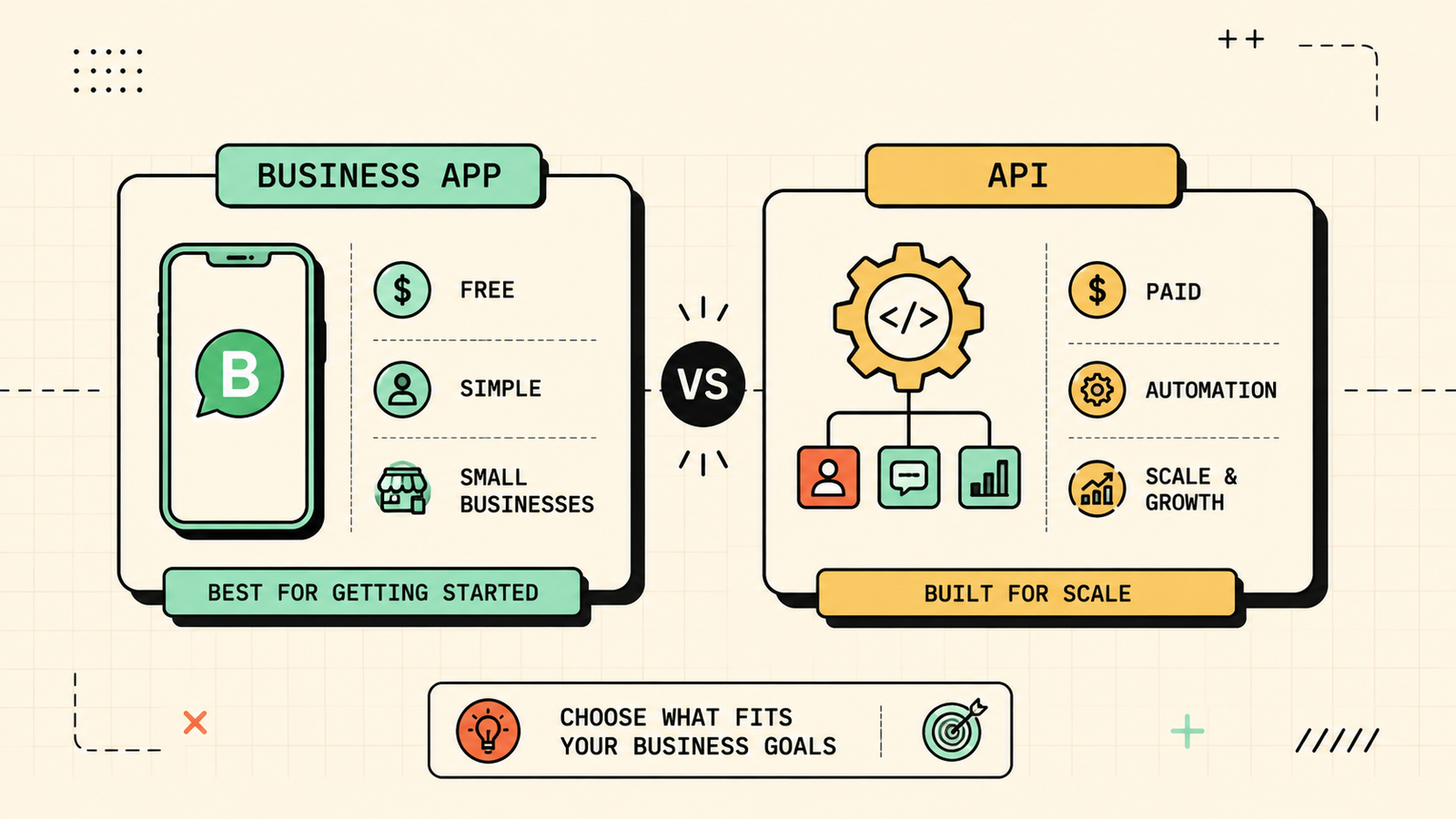
A few patterns get businesses blocked or ignored. Sending messages without proper opt-in is the fastest path to being reported and banned. Sending too many promotional messages mutes your number. Sending the same message to everyone instead of segmenting wastes the channel's personal advantage. Using WhatsApp as a broadcast-only tool instead of enabling two-way conversation misses the point. Ignoring analytics means you never learn what works. And treating WhatsApp like email (long, frequent, formal) mismatches the medium. Keep it personal, keep it valuable, keep it permission-based, and WhatsApp becomes one of your strongest channels.
WhatsApp commerce: selling inside the chat
WhatsApp is not just a messaging channel anymore. With catalogues, product cards, and in-chat payments rolling out, it is becoming a sales channel where customers browse, ask questions, and buy without ever leaving the app. For D2C brands, this means you can share your product catalogue inside a WhatsApp conversation, let customers ask about sizing, availability, or recommendations in real time, send a payment link or in-app checkout, and close the sale entirely within the chat. This conversational commerce flow converts at higher rates than sending someone to a website because the friction is near zero. The customer never has to leave the app they are already in, and the personal feel of a chat removes the hesitation that a cold product page can create.
WhatsApp marketing in India: why it works so well here
India is WhatsApp's largest market, with hundreds of millions of daily active users. That is not just a statistic. It means your customers are already spending hours a day in the app, making it the most natural place to reach them. Indian D2C and ecommerce brands have been early adopters of WhatsApp marketing, especially for cart recovery, festive-season promotions, and COD order confirmations. The cost per conversion on WhatsApp is often lower than Meta Ads for repeat purchases, because you are reaching warm, opted-in customers rather than cold audiences. And in tier-two and tier-three cities, where email adoption is lower and social media use is different, WhatsApp is often the most direct and trusted channel for business communication. If your customers are in India and you are not on WhatsApp, you are leaving the highest-attention channel untouched.
AI Tools for Marketing
The bottom line
WhatsApp marketing reaches customers where they pay the most attention, with open rates no other channel matches. Set it up properly with permission-based opt-ins, automate the high-value flows (welcome, cart, post-purchase, win-back), segment your audience, mix promotional with genuine value, and track what converts. For D2C and ecommerce brands, especially in India, WhatsApp is quickly becoming one of the highest-ROI marketing channels available, and most competitors have barely started.
If you want experts to build your WhatsApp, email, and organic growth strategy, LetMeRank helps D2C and ecommerce brands grow across every owned channel, starting with a free audit.