You post every day, you chase every trend, your follower count crawls up slowly, and none of it seems to turn into actual business. That is not a content problem. It is a strategy problem.
Most businesses treat social media as a to-do list: post something, anywhere, every day. A real strategy connects what you post to what you are trying to achieve, so your effort compounds into brand awareness, trust, and eventually customers, rather than evaporating into the feed. This guide covers how to build a social media marketing strategy that actually grows your brand and your business, even with a small team.
What is a social media marketing strategy?
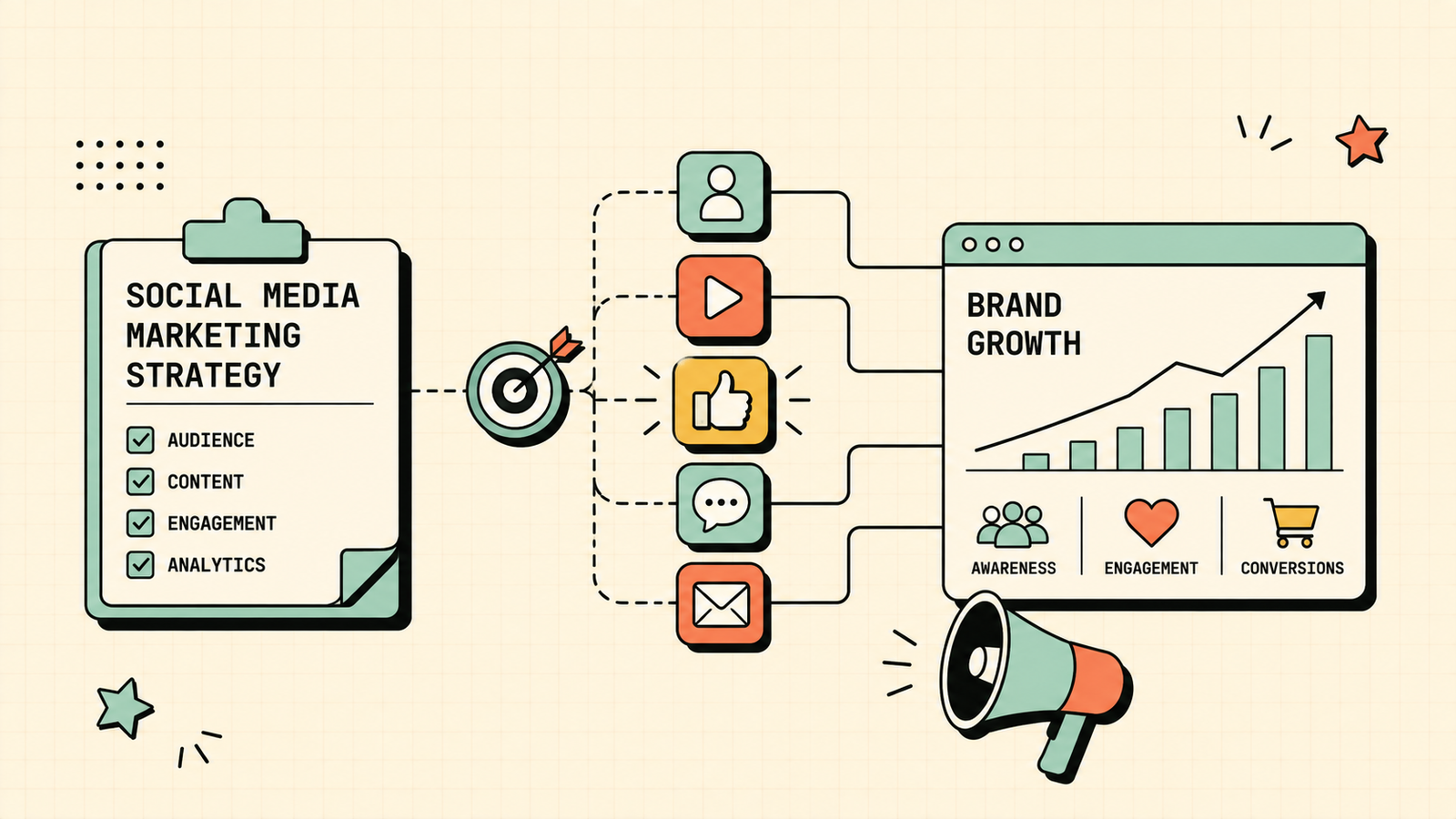
A social media marketing strategy is your plan for how you will use social platforms to reach your goals. It defines which platforms you will use, who you are trying to reach, what you will post, how often, and how you will measure whether it is working. Without one, social media becomes a time-consuming habit with no clear return. With one, every post has a purpose and feeds into a larger system.
Why social media marketing still matters
Social media is one of the few channels where you can build a real relationship with your audience before they ever visit your website. It builds brand awareness (people discover you scrolling), trust (they see your expertise and personality over time), and community (they engage, share, and advocate). It does not typically drive sales directly the way search or email does, and that is fine. Its job is to put your brand in front of people repeatedly so that when they are ready to buy, you are the name they remember. It also supports your other channels: social sharing drives traffic to your content, builds backlinks, and increases branded searches that help your SEO.
How to build a social media marketing strategy
Here is the process, step by step.
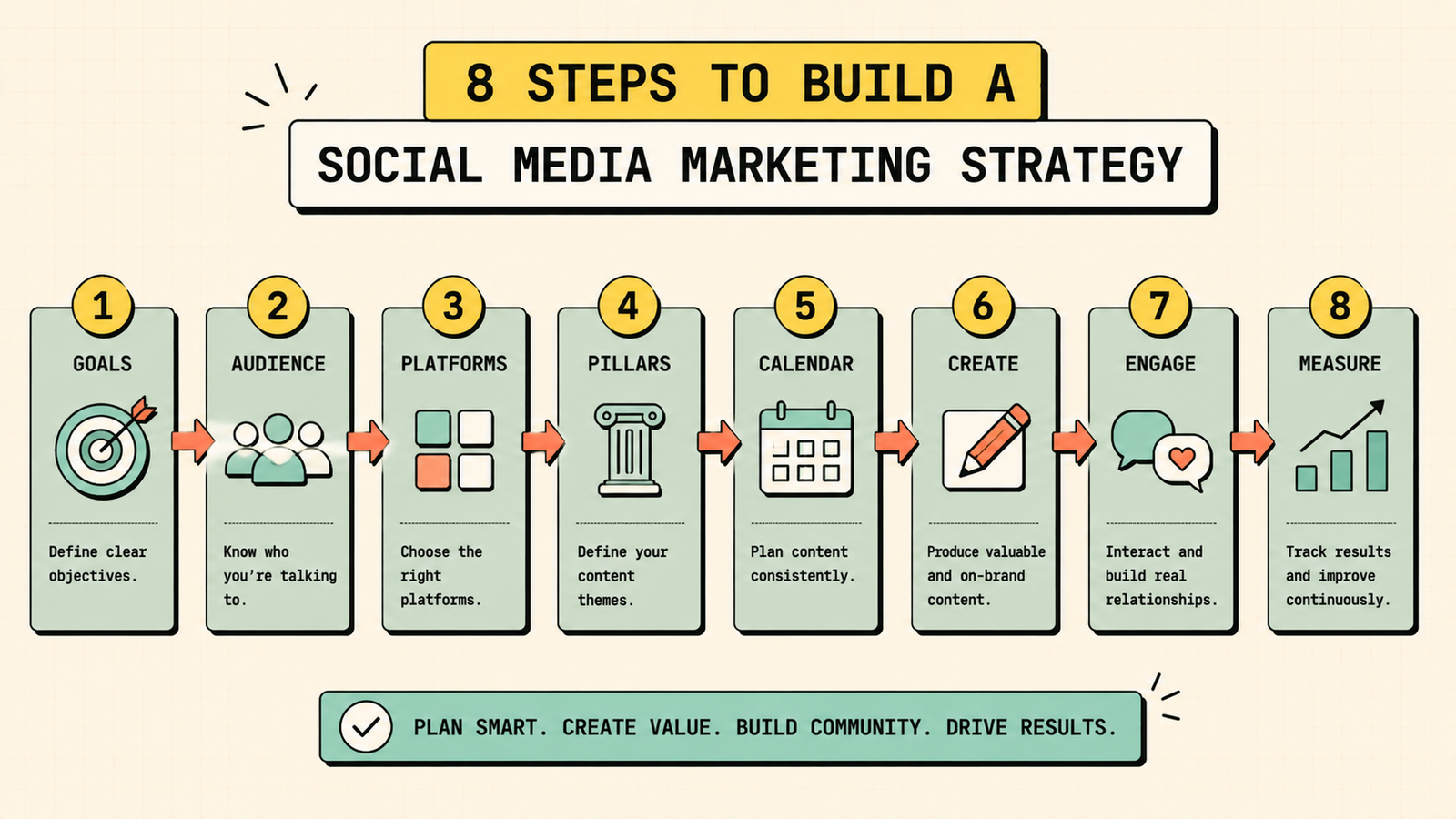
1. Set goals that connect to your business
Start with what you actually want social media to achieve. Common goals are brand awareness, website traffic, lead generation, community building, and customer retention. Make them specific and measurable. "Get more followers" is not a strategy goal. "Drive 500 visitors per month from Instagram to the blog" is.
2. Know your audience
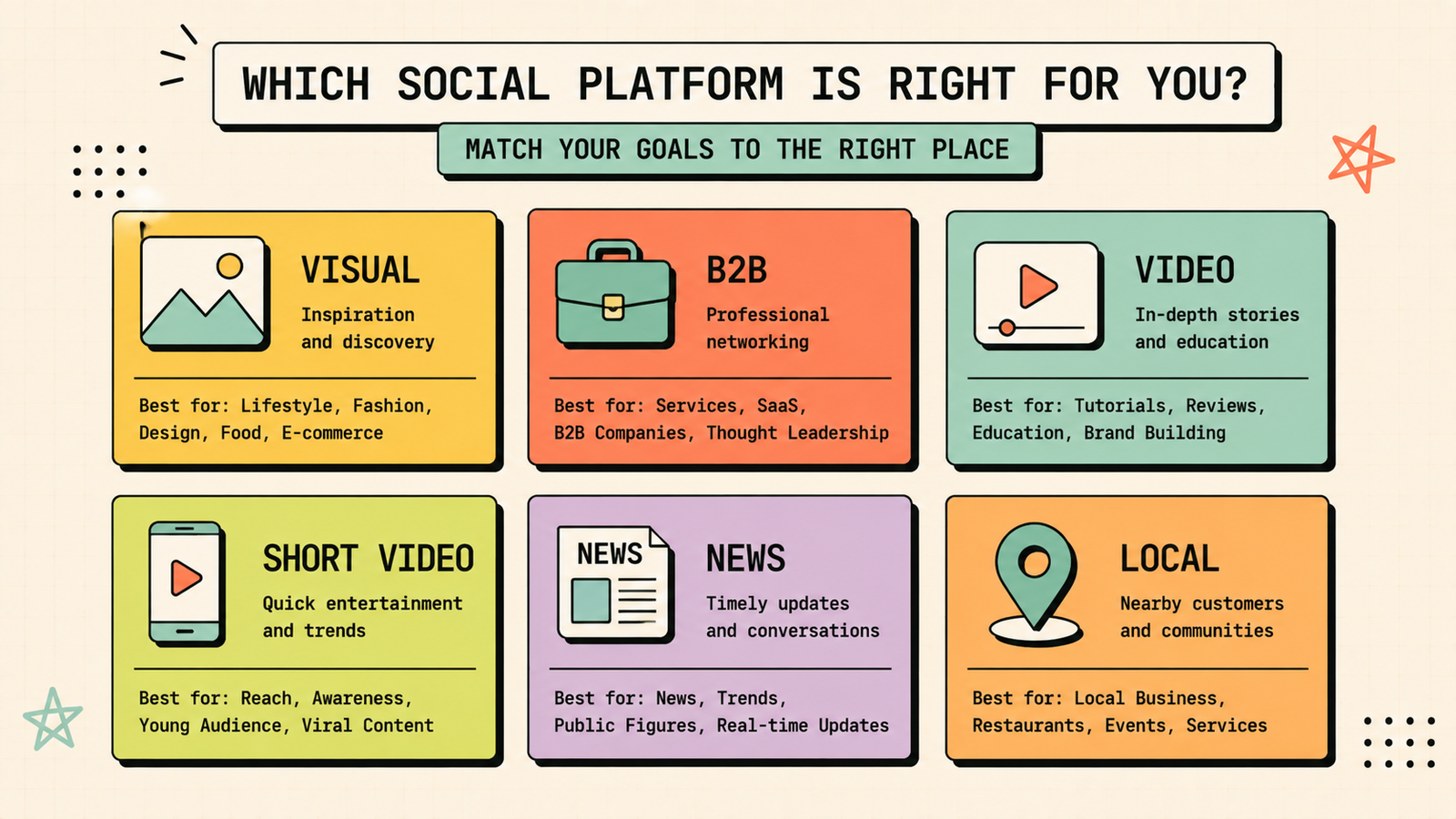
Figure out who you are trying to reach: their interests, their problems, and which platforms they spend time on. A B2B audience lives on LinkedIn. A young D2C audience lives on Instagram and TikTok. A knowledge-seeking audience engages on Twitter/X and YouTube. Go where your audience is, not where it is trendiest.
3. Pick your platforms (and do fewer better)
This is the most important decision. Choose one or two platforms to focus on rather than spreading across five. Master those before adding another. A small team doing Instagram and LinkedIn well will outperform one doing Instagram, TikTok, X, YouTube, Facebook, and Pinterest badly. Focus beats presence.
4. Define your content pillars
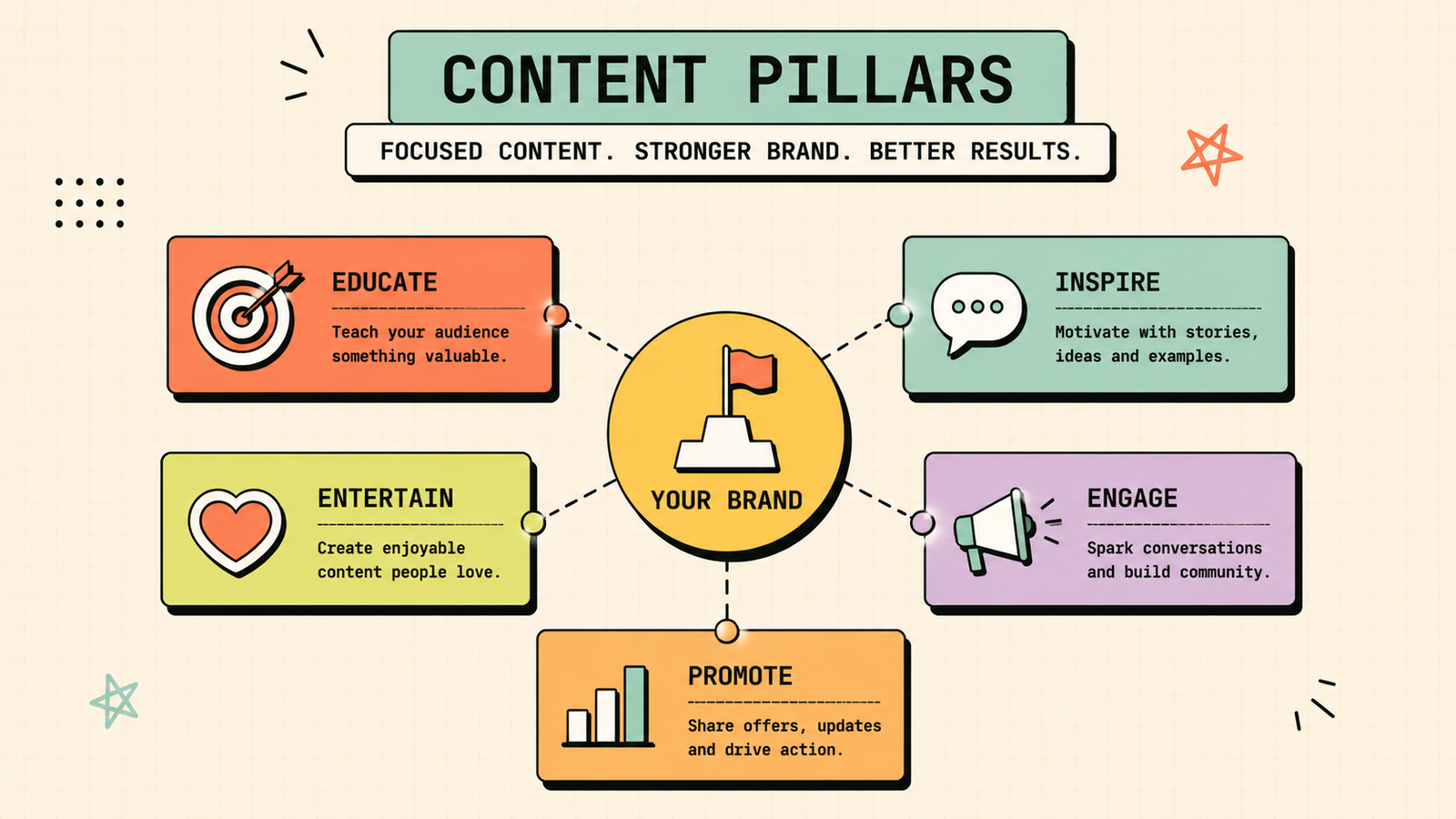
Content pillars are the three to five recurring themes you will post about. They keep your content focused and your audience knowing what to expect. For example, a D2C skincare brand might use: product education, customer stories, behind-the-scenes, skincare tips, and offers. Every post fits into a pillar, which prevents random, disconnected posting.
5. Create a content calendar
Plan what you will post and when, at least a week or two in advance. This removes the daily panic of "what should I post today" and lets you batch-create content efficiently. Consistency matters more than frequency: three strong posts a week beats seven mediocre ones.
6. Create content that fits the platform
Each platform has its own format and behaviour. Instagram rewards visual storytelling and carousels. LinkedIn rewards long-form thought leadership and industry takes. TikTok and Reels reward short, hook-driven video. X rewards sharp, concise opinions and threads. Adapt your content to the platform rather than posting the same thing everywhere, because what works on LinkedIn will not work on TikTok.
7. Engage, do not just broadcast
Social media is social. Reply to comments, respond to DMs, engage with your audience's content, and join conversations in your niche. Brands that only broadcast and never engage build followers but not community, and community is what turns followers into customers and advocates.
8. Measure what matters
Track the metrics that connect to your goals, not vanity numbers. If your goal is awareness, measure reach and impressions. If it is traffic, measure link clicks and website visits from social. If it is community, measure engagement rate (likes, comments, shares relative to followers). If it is leads, measure conversions. Check monthly, do more of what works, and cut what does not.
We'll find exactly why your social growth isn't turning into business.
Get a clear, data-backed plan to turn your social media into a genuine growth channel that builds awareness, trust, and customers.
Which social media platform to choose
Here is a quick guide to the major platforms and their strengths.
| Platform | Best for | Audience | Content format |
|---|---|---|---|
| Visual brands, D2C, lifestyle | Broad, skews younger | Photos, carousels, Reels, Stories | |
| B2B, professional services, thought leadership | Professionals, decision makers | Text posts, articles, documents | |
| TikTok | Reach, viral content, younger audience | Young, entertainment-first | Short video |
| YouTube | Long-form education, trust-building | Broad, intent-driven | Long and short video |
| X (Twitter) | News, opinions, quick engagement | Tech, media, niche communities | Short text, threads, images |
| Local business, communities, older demographics | Broad, skews older | Mixed, Groups |
Social media marketing for small businesses
Small businesses have an unfair advantage on social media that big brands cannot copy: authenticity. A founder showing the real behind-the-scenes, sharing genuine opinions, and replying personally to every comment builds trust faster than a polished corporate feed. The strategy for a small team is simple: pick one platform, post three to five times a week consistently, mix value content with personality, and engage with every comment and DM. That consistency and human touch, even at a small scale, builds a loyal audience that big brands spend millions trying to manufacture.
Social media marketing for D2C brands
D2C brands live or die on social media because it is often the first place potential customers discover them. The D2C social playbook is user-generated content (real customers using and reviewing your product), behind-the-scenes of making and shipping, educational content about your category, influencer and creator partnerships, and community building through comments, DMs, and stories. The goal is not just reach but trust: a potential customer who has seen your brand ten times in their feed, seen real people use it, and read genuine comments is far more likely to buy than one who sees a cold ad for the first time.
Organic vs paid social media
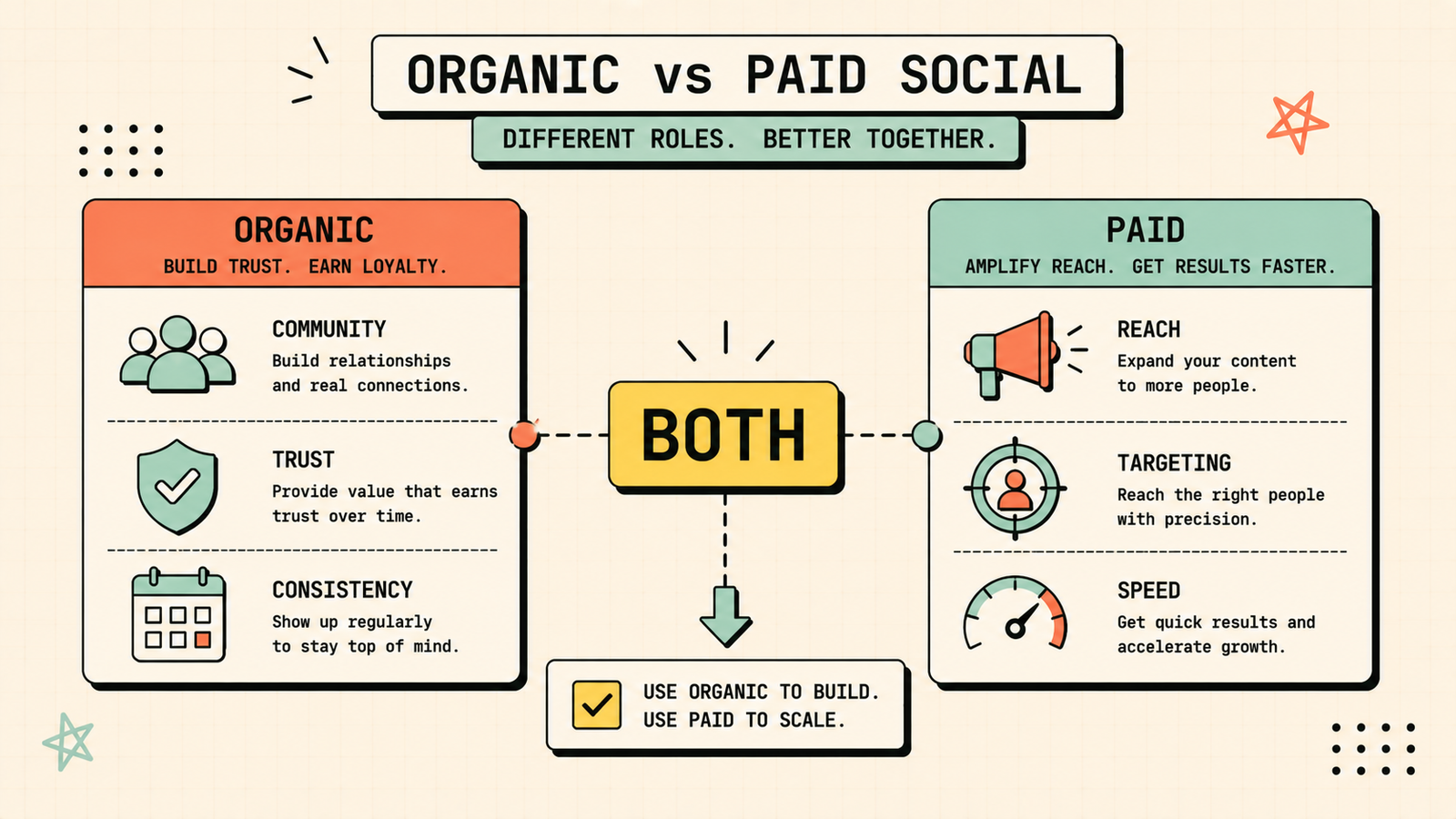
Organic social (posting without paying to promote) builds your audience and community over time. Paid social (running ads or boosting posts) accelerates reach and can drive targeted traffic and sales immediately. Most businesses need both: organic to build trust and community, paid to amplify what works and reach new audiences. The common mistake is doing only paid with no organic presence, which means people click an ad, visit your profile, see nothing, and leave. Or doing only organic and wondering why growth is slow when the algorithm limits how many followers see each post. A healthy balance is organic for consistency and trust, paid for speed and targeting.
How to repurpose content across platforms
Creating unique content for every platform is unsustainable for a small team. Instead, create one strong piece and adapt it. A blog post becomes a LinkedIn article summary, an Instagram carousel of key points, a short video of the main takeaway, and a thread on X. A long YouTube video becomes several short Reels and TikToks via a clipping tool. One customer testimonial becomes a quote graphic, a story post, and a case study paragraph. This multiplier approach lets you maintain presence on multiple platforms without multiplying your workload.
Common social media marketing mistakes
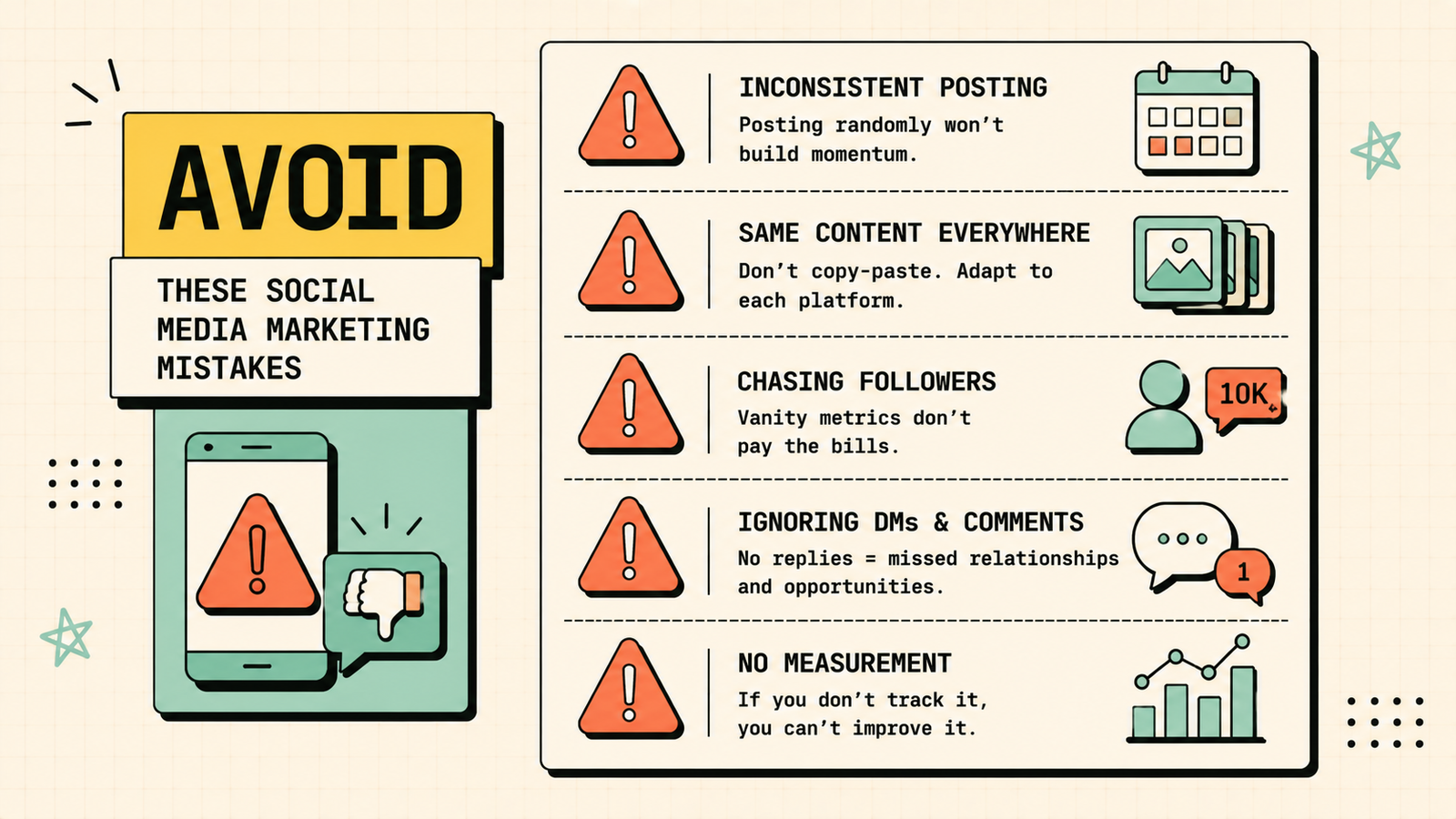
A few patterns waste the most time and goodwill. Posting inconsistently, going hot and cold, trains the algorithm and your audience to forget you. Posting the same content to every platform without adapting it looks lazy and underperforms. Chasing follower count instead of engagement builds a big, uninterested audience. Ignoring comments and DMs signals that you do not care. Following every trend instead of staying on-pillar makes your brand feel unfocused. And never measuring results means you never learn what works. Pick your platforms, stay consistent, engage genuinely, and measure what connects to your goals.
Conversion Rate Optimization: How to Turn More Visitors Into Customers
Social media content ideas that work for any business
If you are stuck on what to post, these formats work across nearly every platform and industry. Share a lesson you learned the hard way (personal, relatable, earns engagement). Post a before-and-after showing your work or your customer's result (visual proof). Answer a question your customers ask you all the time (helpful, searchable). Show behind-the-scenes of how your product is made, shipped, or designed (transparency builds trust). Share a customer testimonial or review as a graphic or story (social proof). Give a quick, actionable tip related to your expertise (establishes authority). Post a comparison or myth-busting take (drives comments and shares). And show your face or your team (people follow people, not logos). Rotate through these and you never run out of ideas, and each one serves a strategic purpose rather than filling space.
How to work with the algorithm, not against it
Every platform's algorithm prioritises content that keeps users on the platform. That means posts with high engagement (comments, shares, saves) get shown to more people, and posts that send users away (external links with no engagement) get suppressed. Work with this by making your posts engaging on their own, using carousels, questions, hooks, and stories that invite interaction, rather than simply posting a link and hoping people click. When you do want to drive traffic to your site, put the value in the post itself and the link in the comments or bio. The algorithm rewards content people interact with, so design your posts for interaction first and traffic second. The traffic follows the engagement, not the other way around.
AI Tools for Marketing
The bottom line
A social media marketing strategy is how you turn random posting into a channel that builds brand awareness, trust, and eventually customers. Set real goals, pick one or two platforms, define content pillars, create a calendar, adapt content to each platform, engage rather than broadcast, and measure what matters. Do that consistently and social media becomes a genuine growth channel, not just a time-consuming habit.
If you want experts to build your social, content, and organic growth strategy, LetMeRank helps founders and brands grow across search, content, and retention channels, starting with a free audit.