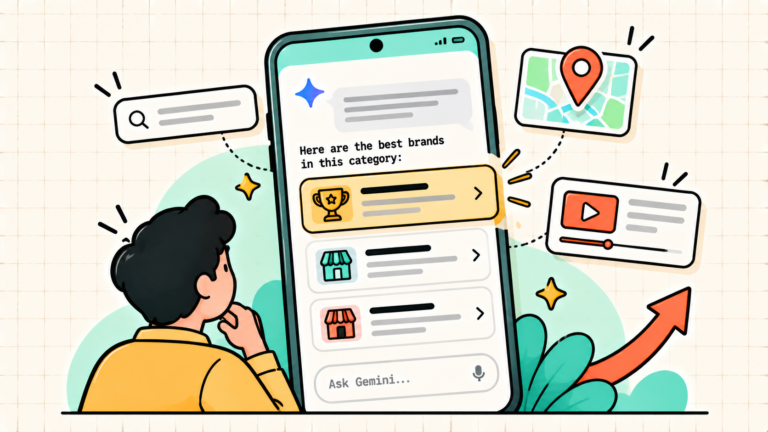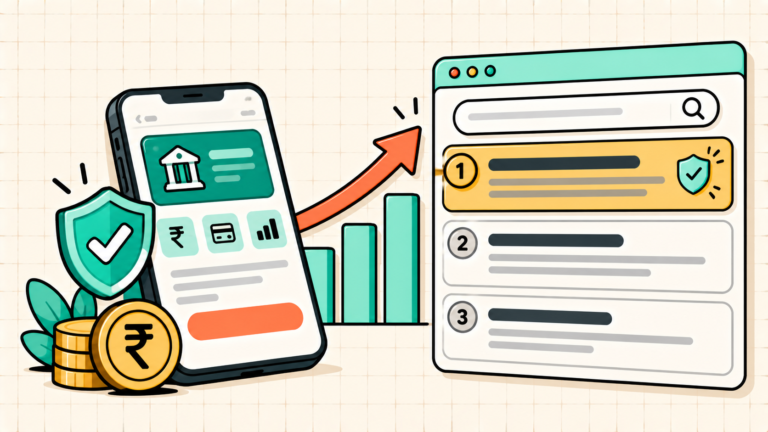
Every day, your future customers are typing exactly what you sell into Google, and one of two things happens: they find you, or they find a competitor. SEO is what decides which. For a founder, that makes SEO one of the highest-return skills to understand, even if you never do it yourself. It is how you earn free, steady traffic from people actively looking for what you offer. This beginner's guide explains what SEO is, how it actually works, the main types, and how to start, all in plain language with no jargon left unexplained.
What is SEO?
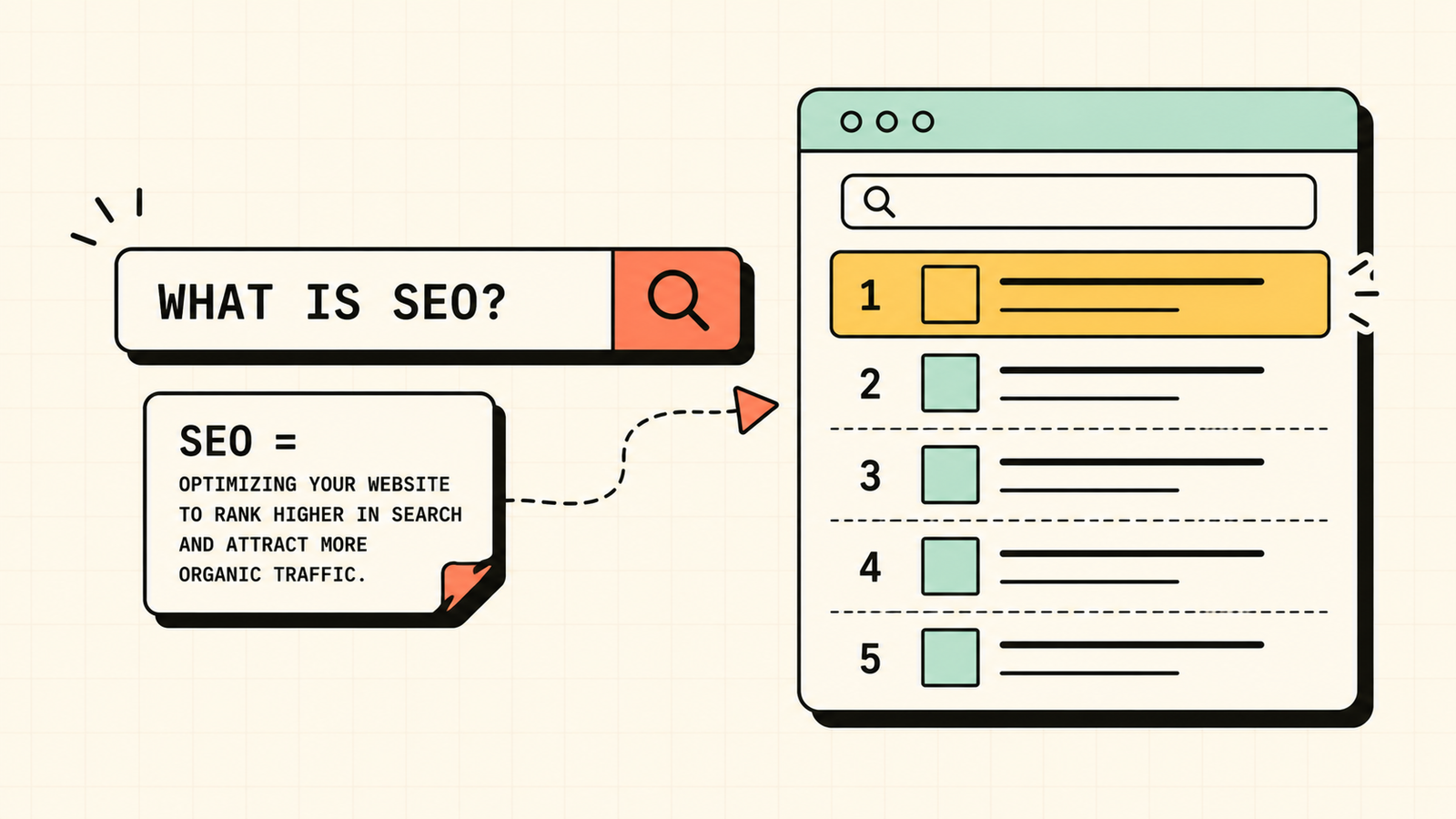
SEO stands for search engine optimization. It is the practice of improving your website so it ranks higher in search engine results, which brings more free, relevant visitors to your site.
When someone searches on Google, the results they see are ranked in an order Google decides. SEO is the work of earning a higher spot in those unpaid, organic results, so more people find and click through to your site. Unlike ads, you do not pay for each visitor, which is what makes SEO so valuable over time.
How to Increase Website Traffic
Why does SEO matter?
SEO matters because search is how most people find businesses, products, and answers today. Ranking well brings three big benefits. It drives free traffic, since you do not pay per click the way you do with ads. It brings high-intent visitors, because these are people actively searching for what you offer. And it builds trust and compounds, as ranking well signals credibility and a single good page can bring visitors for years. For a founder, SEO is how you build an owned, durable source of customers that gets cheaper over time, rather than renting attention through ads that stop the moment you stop paying.
How does SEO work?
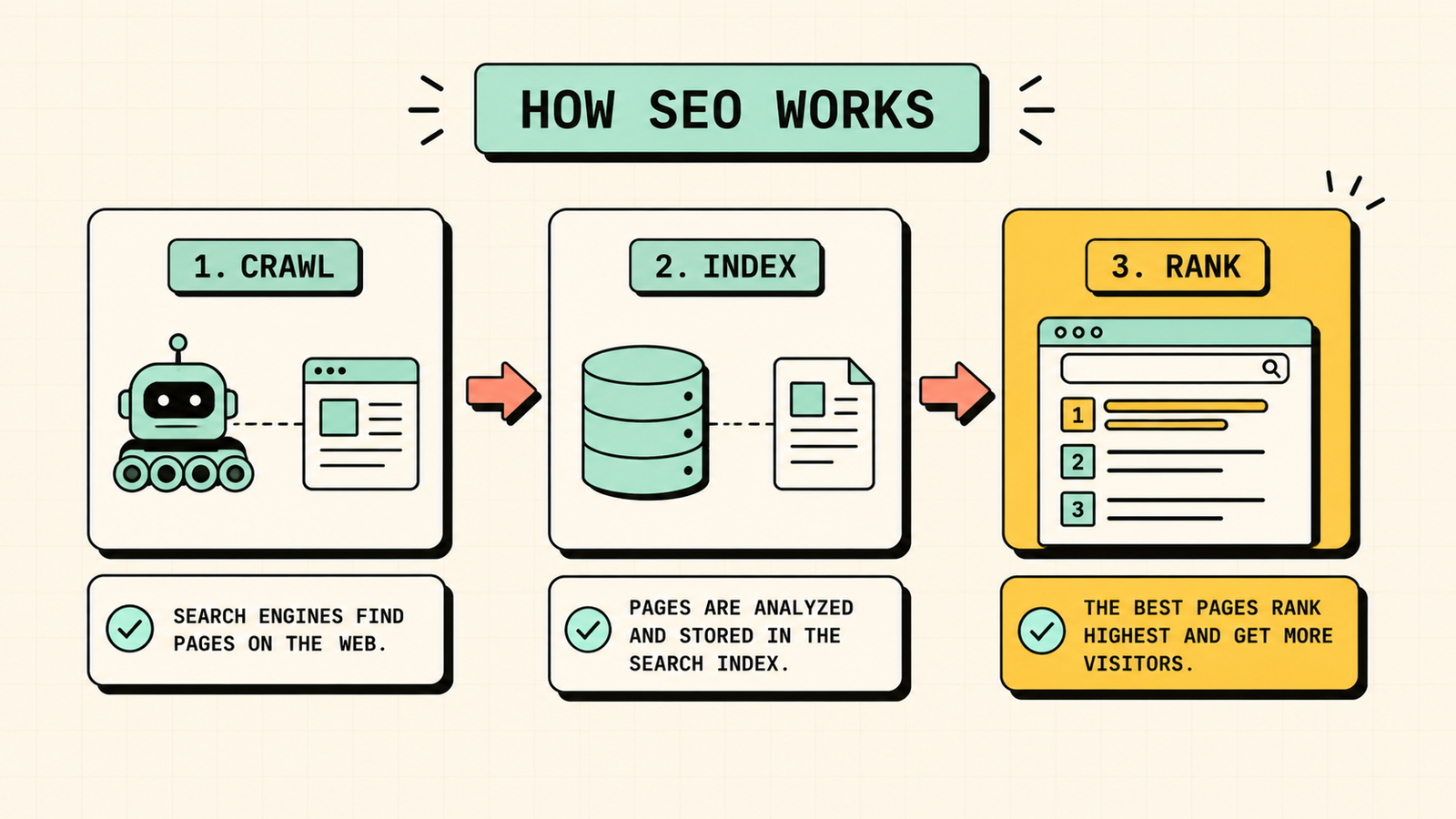
Search engines follow three basic steps, and SEO influences each one.
First, they crawl. Search engines send out bots to discover and read pages across the web, following links from page to page. Your pages need to be crawlable for this to happen.
Second, they index. The pages they find get stored in a giant database called the index. A page has to be indexed to have any chance of appearing in search.
Third, they rank. When someone searches, the engine sorts through its index and orders the results by which pages best answer that search. This ranking is what SEO is ultimately trying to improve.
To decide rankings, Google looks at hundreds of signals, but they come down to a few big ideas: how relevant your page is to the search, how authoritative and trustworthy your site is, and how good the experience is for the user. SEO is the work of strengthening all three so your pages rank higher.
The main types of SEO
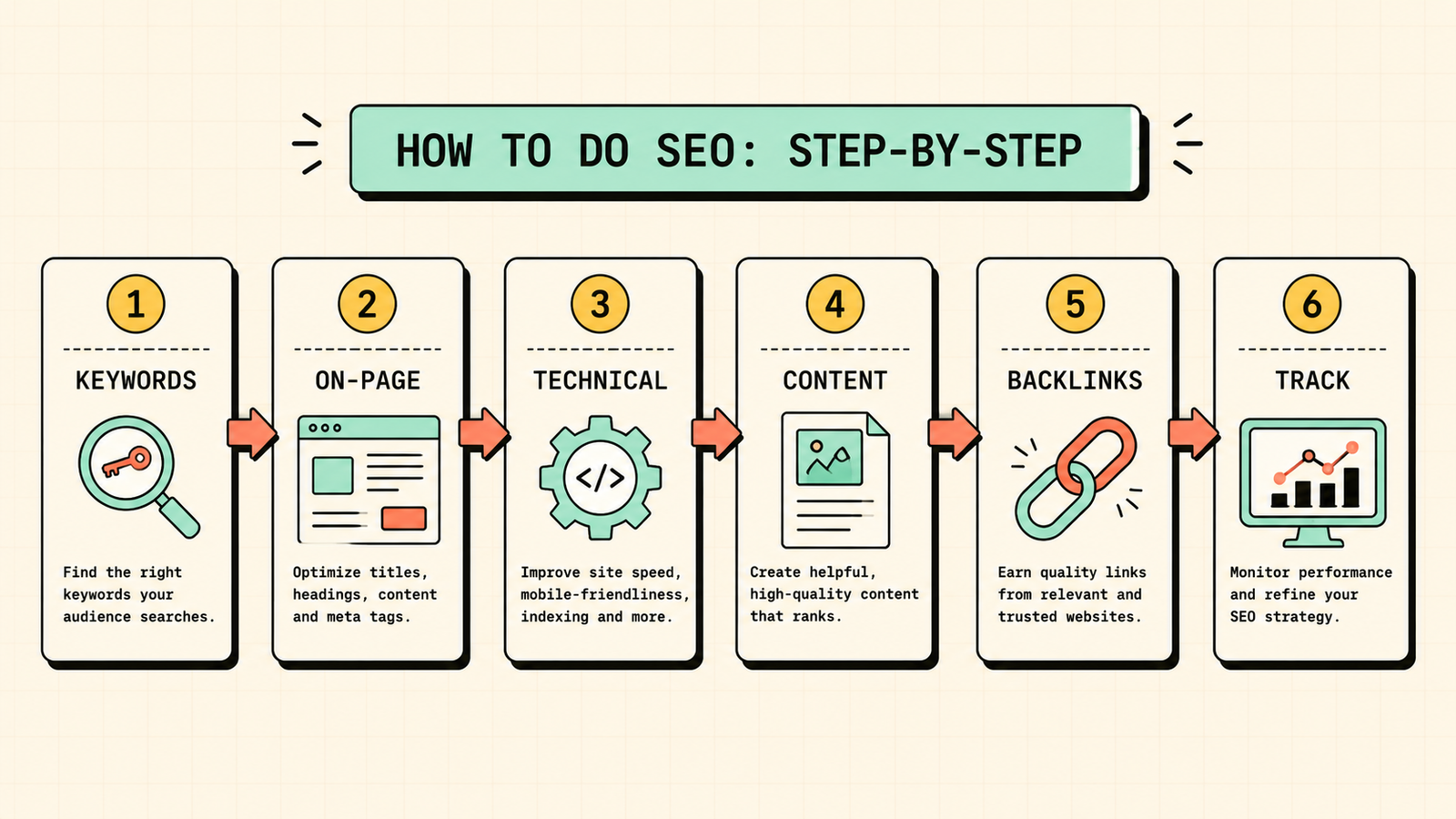
SEO is usually broken into a few areas that work together.
| Type | What it covers |
|---|---|
| On-page SEO | Optimizing individual pages: titles, headings, content, keywords |
| Off-page SEO | Building authority from outside your site, mainly backlinks |
| Technical SEO | Making sure search engines can crawl, index, and load your site |
| Local SEO | Ranking for location-based searches and on Google Maps |
You do not have to master all of these at once, but a healthy SEO strategy touches each. On-page makes your pages relevant, technical makes them accessible, off-page makes them authoritative, and local helps if you serve a specific area.
The key SEO ranking factors
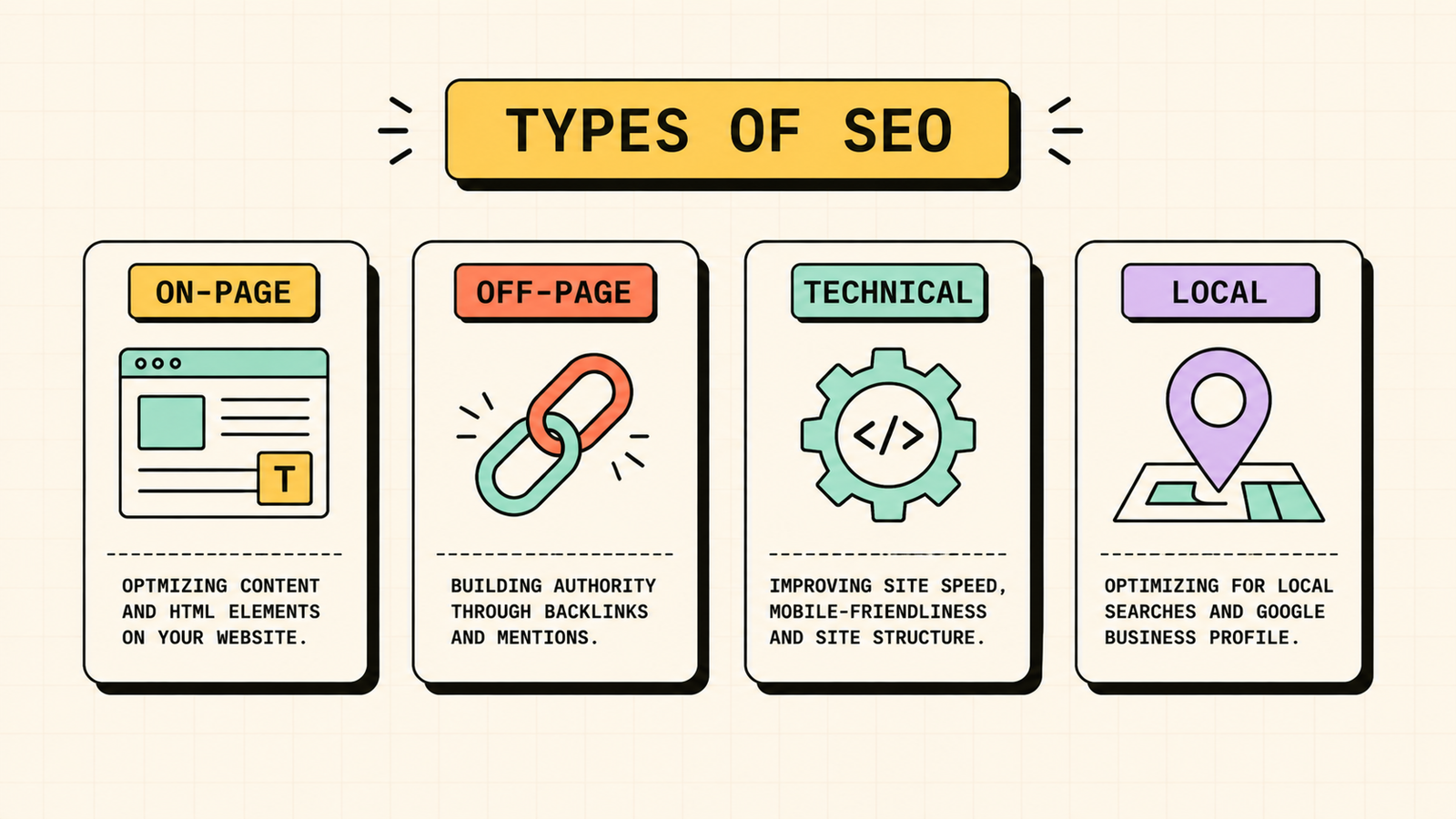
While Google uses many signals, a handful matter most for beginners to focus on. High-quality, helpful content that fully answers the search is the foundation, because Google wants to show users the best answer. Relevant keywords used naturally help Google match your page to searches. Backlinks from reputable sites build authority and trust. A technically healthy, fast, mobile-friendly site keeps you eligible to rank. And matching search intent, giving searchers the type of content they actually want, is often the difference between ranking and not. Get these right and you are doing most of what matters.
Content Marketing Strategy Guide
How to do SEO, step by step
Here is a simple beginner path to follow.
1. Do keyword research
Find the words and phrases your audience searches for, so you know what to create content around. Target terms with real demand that you can realistically rank for, favoring more specific, lower-competition keywords when you are starting out.
2. Optimize your pages (on-page SEO)
For each page, use your target keyword in the title, headings, and content naturally, write a compelling meta description, keep your URL clean, and make the content genuinely helpful. This tells Google what the page is about and why it deserves to rank.
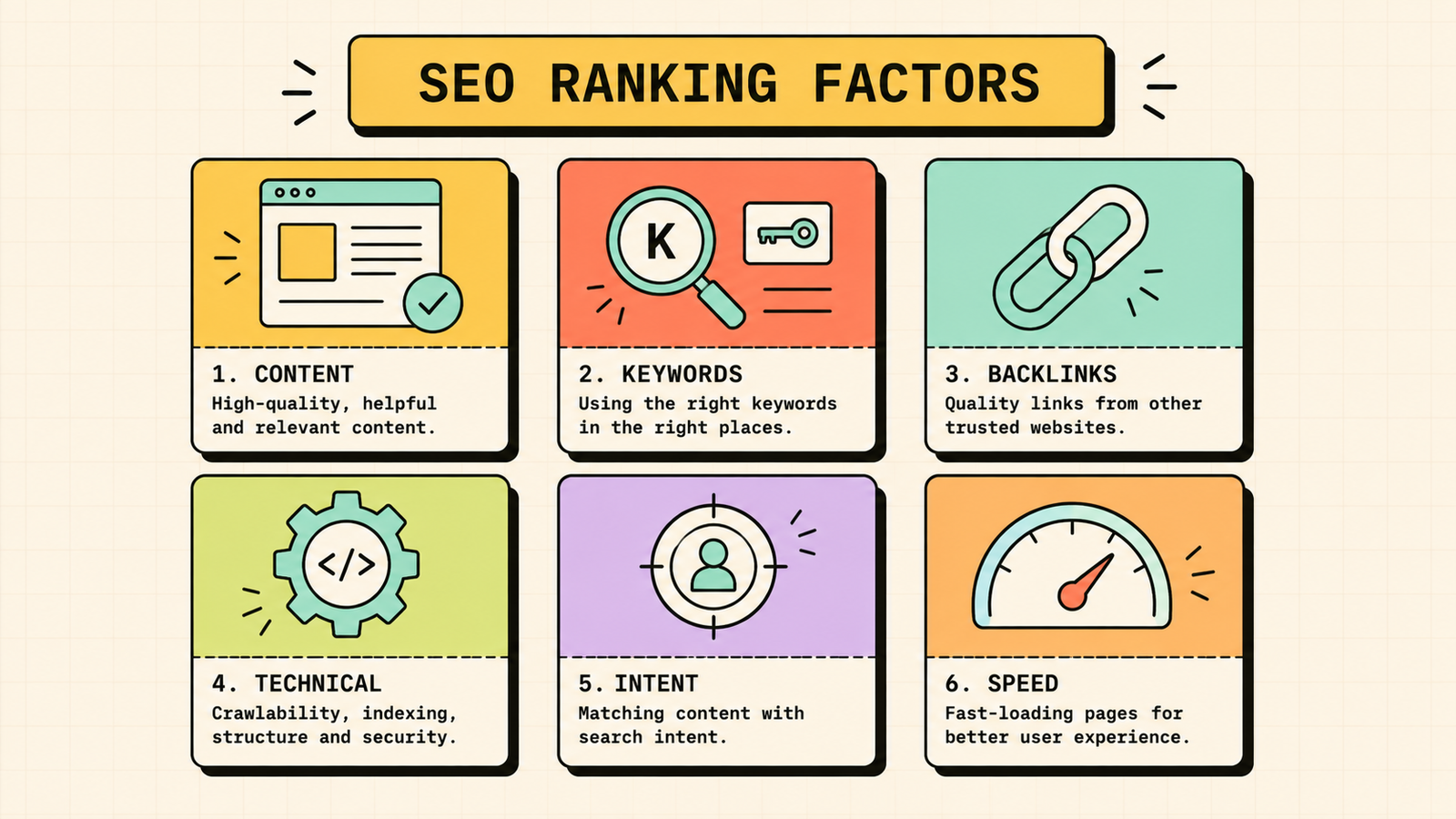
3. Sort out the technical basics
Make sure search engines can crawl and index your site, your pages load fast, your site works well on mobile, and you use HTTPS. These technical foundations make everything else possible.
4. Create helpful content
Publish content that genuinely answers your audience's questions and is better than what already ranks. Quality content is what earns rankings, trust, and links, and it gives you more pages to rank over time.
5. Build backlinks (off-page SEO)
Earn links from other reputable sites by creating link-worthy content and doing genuine outreach. Backlinks build the authority that helps your pages climb, especially in competitive spaces.
6. Track and improve
Use free tools like Google Search Console and Google Analytics to see how your pages perform, then do more of what works and fix what does not. SEO is an ongoing process that improves as you learn.
We'll show you exactly where your biggest SEO opportunities are and how to start winning traffic.
Get a clear, data-backed plan to build your organic visibility and start earning free, high-intent visitors.
SEO and AI search
Search is evolving. People now get answers from AI systems like ChatGPT, Perplexity, and Google's AI overviews, not just the classic list of links. The good news is that the same fundamentals still apply: helpful, well-structured content that demonstrates real expertise is what gets ranked and cited in AI answers too. Optimizing for AI search, sometimes called GEO, mostly means doing good SEO and structuring your content clearly around the questions people ask. Getting the basics right sets you up for both traditional and AI search.
How long does SEO take?
SEO is a long-term investment, not an instant fix. For a newer site, expect little visible movement in the first few months while Google crawls, indexes, and begins to trust your site, meaningful ranking gains around four to six months, and compounding results by nine to twelve months with consistent effort. It takes patience, but once it builds, it becomes the cheapest and most durable source of traffic you have.
Do SEO the right way
There is a right way and a risky way to do SEO. White hat SEO means following search engine guidelines and focusing on genuinely helping users, which builds lasting results. Black hat SEO means using manipulative shortcuts like buying links or stuffing keywords to trick search engines, which can bring short-term gains but risks penalties that are hard to recover from. Always choose the sustainable path. Google has spent years getting better at rewarding genuine quality and catching manipulation, so doing it right is also doing it safely.
LetMeRank
Common SEO myths and beginner mistakes
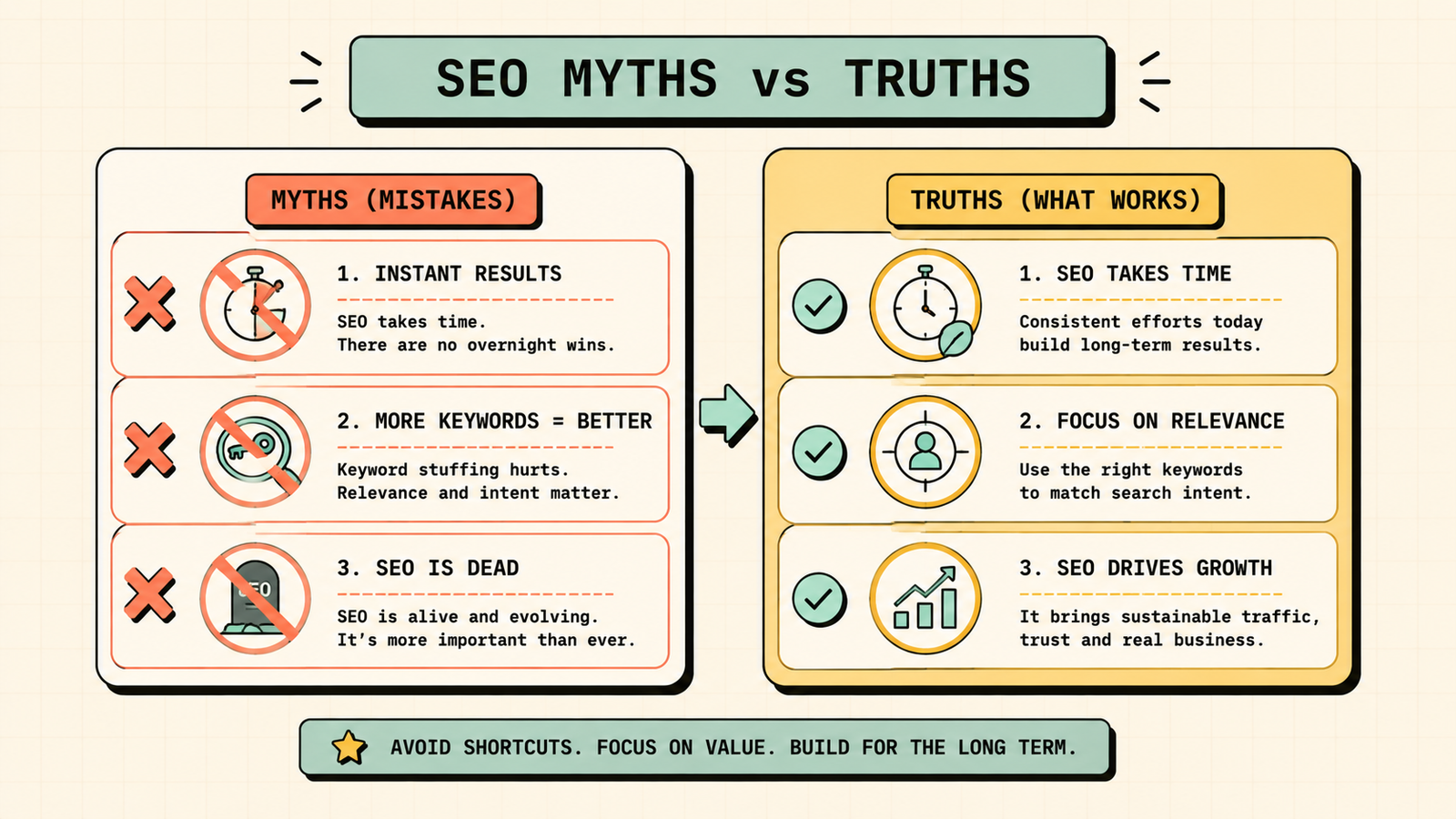
A few misconceptions trip up beginners. SEO is not a one-time task, it needs ongoing effort. More keywords stuffed into a page do not help, they hurt. SEO results are not instant, they take months to build. You do not need thousands of backlinks, a few quality ones beat many weak ones. And SEO is not dead in the age of AI, it is evolving and matters as much as ever. Avoid chasing shortcuts, ignoring search intent, or giving up too early, and you will be ahead of most.
SEO tools for beginners
A few free and affordable tools cover most of what you need to start.
| Tool | What it does |
|---|---|
| Google Search Console | Free data on how your site performs in search |
| Google Analytics | Free insight into your traffic and visitors |
| Keyword tools (Ubersuggest, Semrush, Ahrefs) | Keyword research, competition, and site audits |
| PageSpeed Insights | Free check of your site speed and mobile-friendliness |
SEO vs paid ads: what's the difference?
Beginners often ask whether to do SEO or run ads, so it helps to see how they differ. Paid ads put you at the top of results instantly, but you pay for every click and the traffic stops the moment your budget runs out. SEO takes months to build, but then brings visitors without paying per click, at a cost that falls over time. Ads are like renting your spot, while SEO is like owning it. Neither is simply better. Ads win on speed and are great for launches and testing, while SEO wins on long-term cost and durability. Most businesses use ads for quick results while building SEO as the foundation that lowers their cost of growth over time.
Should you do SEO yourself or hire help?
Both paths work, and the right one depends on your time and stage. Doing SEO yourself is very achievable for the fundamentals, and it is worth learning the basics even if you later hire out, because it helps you judge the work. It costs time rather than money, which suits early-stage founders. Hiring an agency or specialist makes sense when you want faster results, lack the time to do it consistently, or are competing in a tough space where expertise pays off. Many founders start by learning and applying the basics themselves, then bring in experts once SEO becomes a priority worth investing in properly. Whichever you choose, understanding how SEO works, as this guide covers, makes you a far better judge of whether it is being done well.
The bottom line for founders
SEO is how you earn free, high-intent traffic from people already searching for what you offer. It works by helping search engines crawl, index, and rank your pages, and you improve it through keyword research, on-page and technical optimization, helpful content, and backlinks. It takes months to build but compounds into a durable growth channel. Understand the basics, do it the right way, and it becomes one of the best investments your business can make.
If you would rather have experts handle your SEO and get there faster, LetMeRank helps founders grow through search and AI search, starting with a free audit of where your biggest opportunities are.