Most brands do not have a content marketing problem. They have a content marketing strategy problem, publishing busily and consistently while quietly wondering why none of it turns into traffic or sales. The difference between content that works and content that just fills a calendar is strategy. A real strategy connects every piece you create to a goal, an audience, and a next step, so your content compounds into a genuine growth channel instead of a hamster wheel. This guide explains what content marketing is, and walks you through building a strategy that actually drives traffic and sales.
What is content marketing?
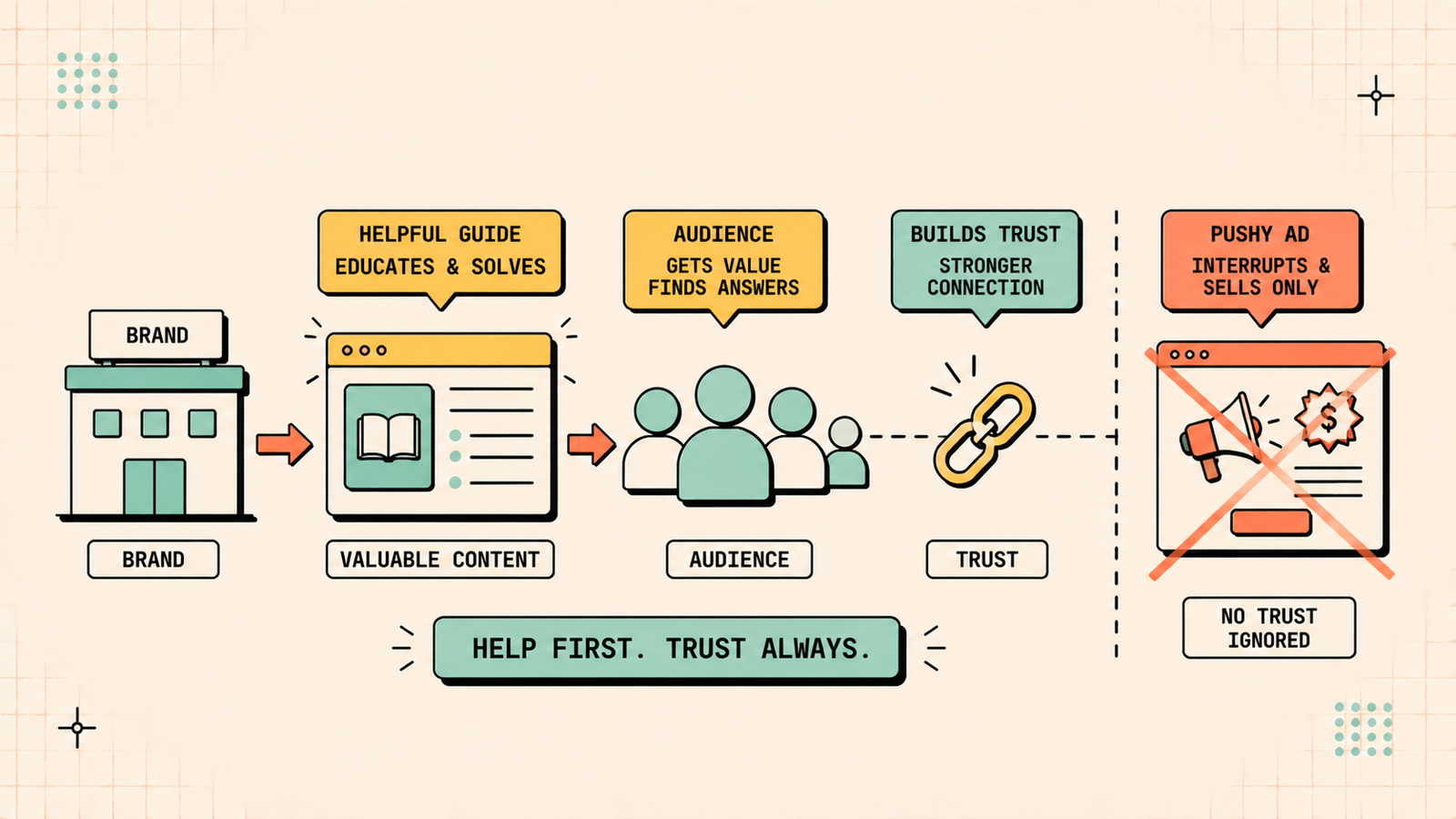
Content marketing is the practice of attracting and keeping customers by creating and sharing valuable, relevant content, rather than directly pitching your product. Instead of interrupting people with ads, you earn their attention by helping them, answering their questions, solving their problems, and building trust over time.
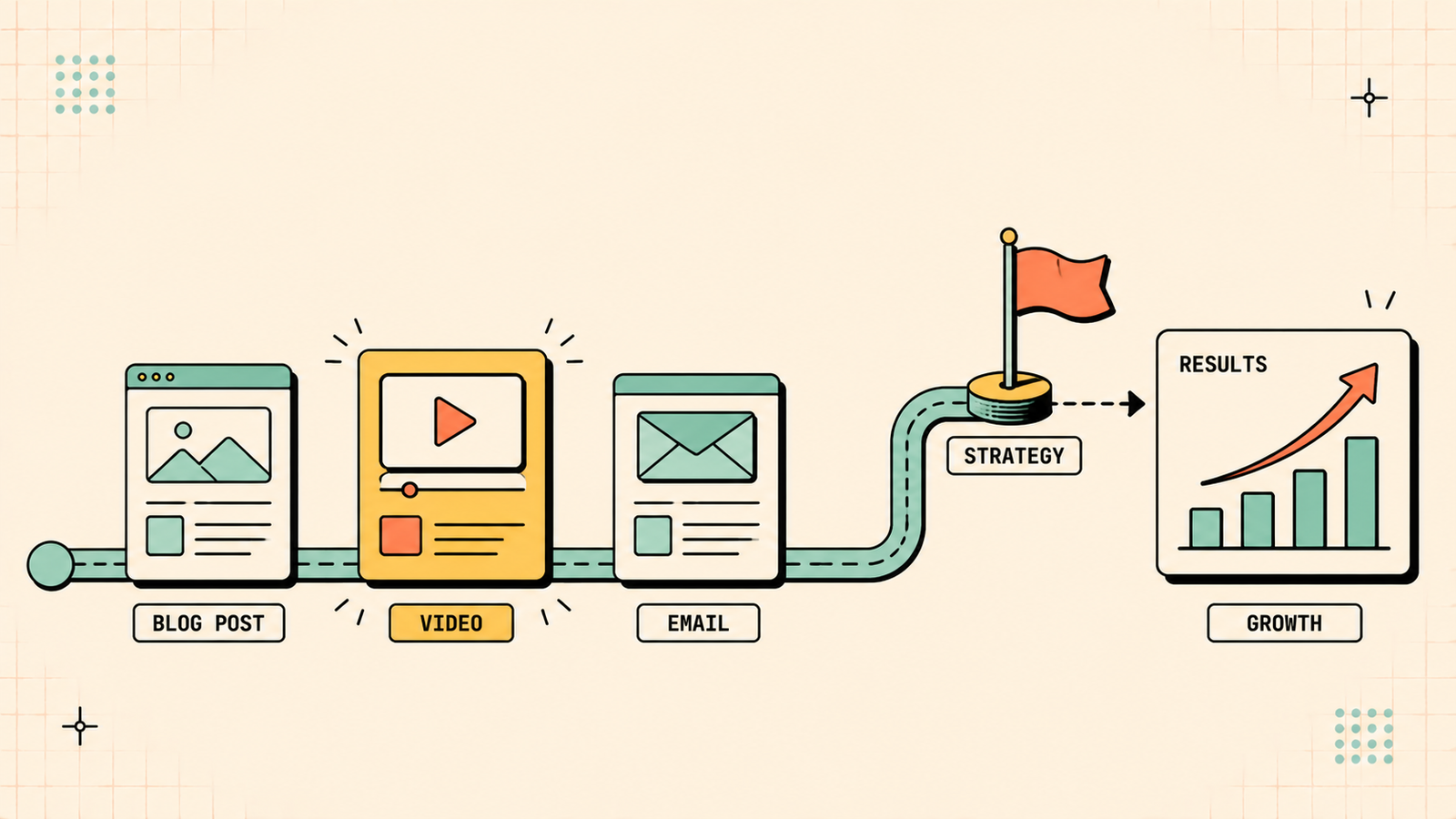
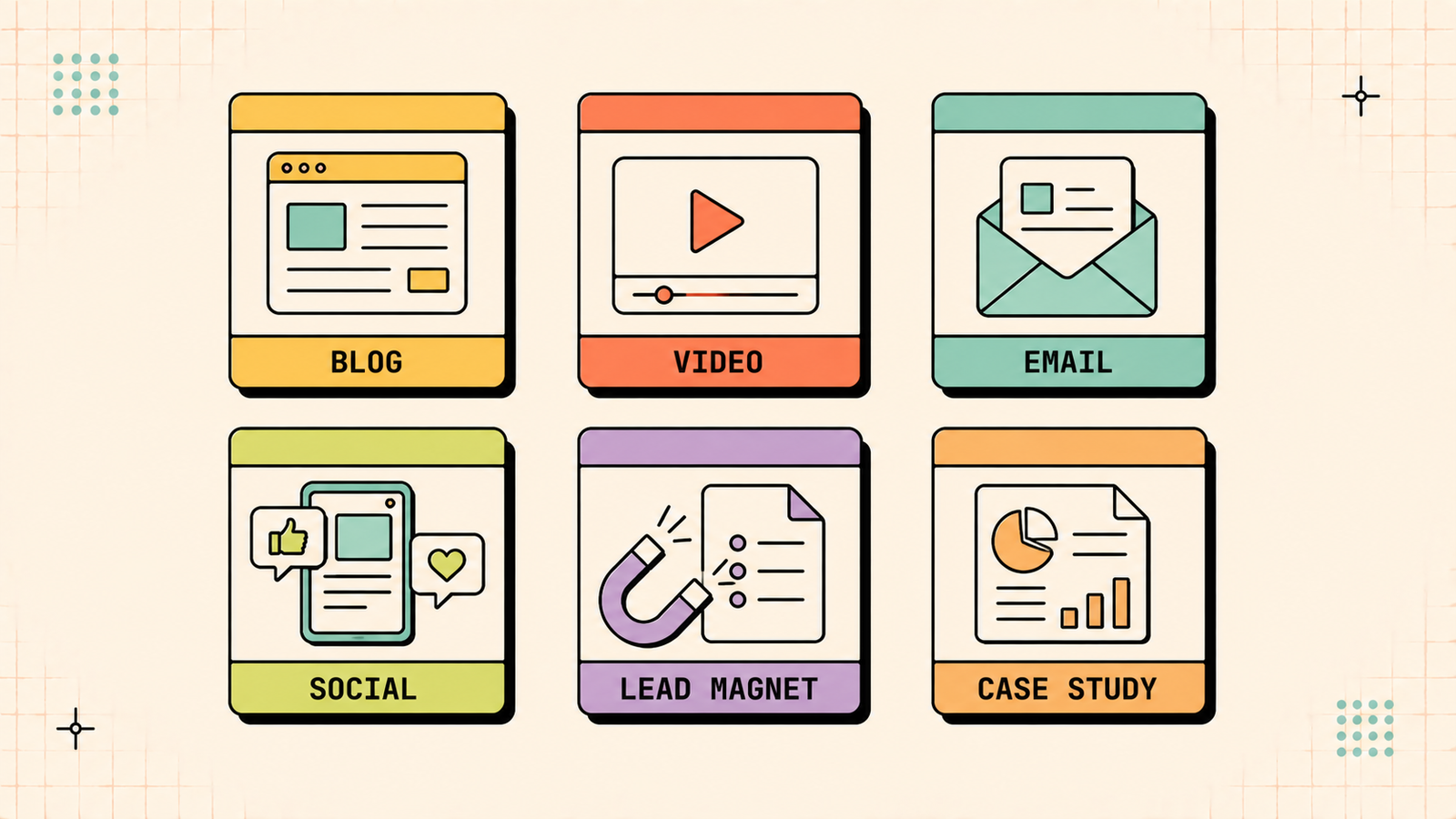
That content can be blog posts, videos, guides, emails, social posts, and more. The goal is not to sell in every piece, but to become the helpful, trusted source your audience turns to, so that when they are ready to buy, you are the obvious choice.
Technical SEO Checklist 2026
What is a content marketing strategy?
A content marketing strategy is your plan for how content will help you reach specific business goals. It defines who you are creating content for, what topics you will cover, which formats and channels you will use, and how you will measure success. Without a strategy, content marketing becomes random acts of publishing that rarely add up to anything. With one, every piece has a purpose and builds toward a result.
Why content marketing works
Content marketing works because it does something ads cannot: it builds trust and compounds over time. A helpful article you publish today can bring in visitors and leads for years, at no extra cost per visit, while an ad stops the moment you stop paying. It attracts people early in their journey, when they are researching rather than buying, and earns their trust so you are the brand they remember when they are ready. It also feeds your SEO, since quality content is what ranks and gets cited in AI search. For a founder, it is how you build an owned, durable growth channel that gets cheaper and stronger the longer you invest in it.
How to build a content marketing strategy
Here is the step-by-step process.
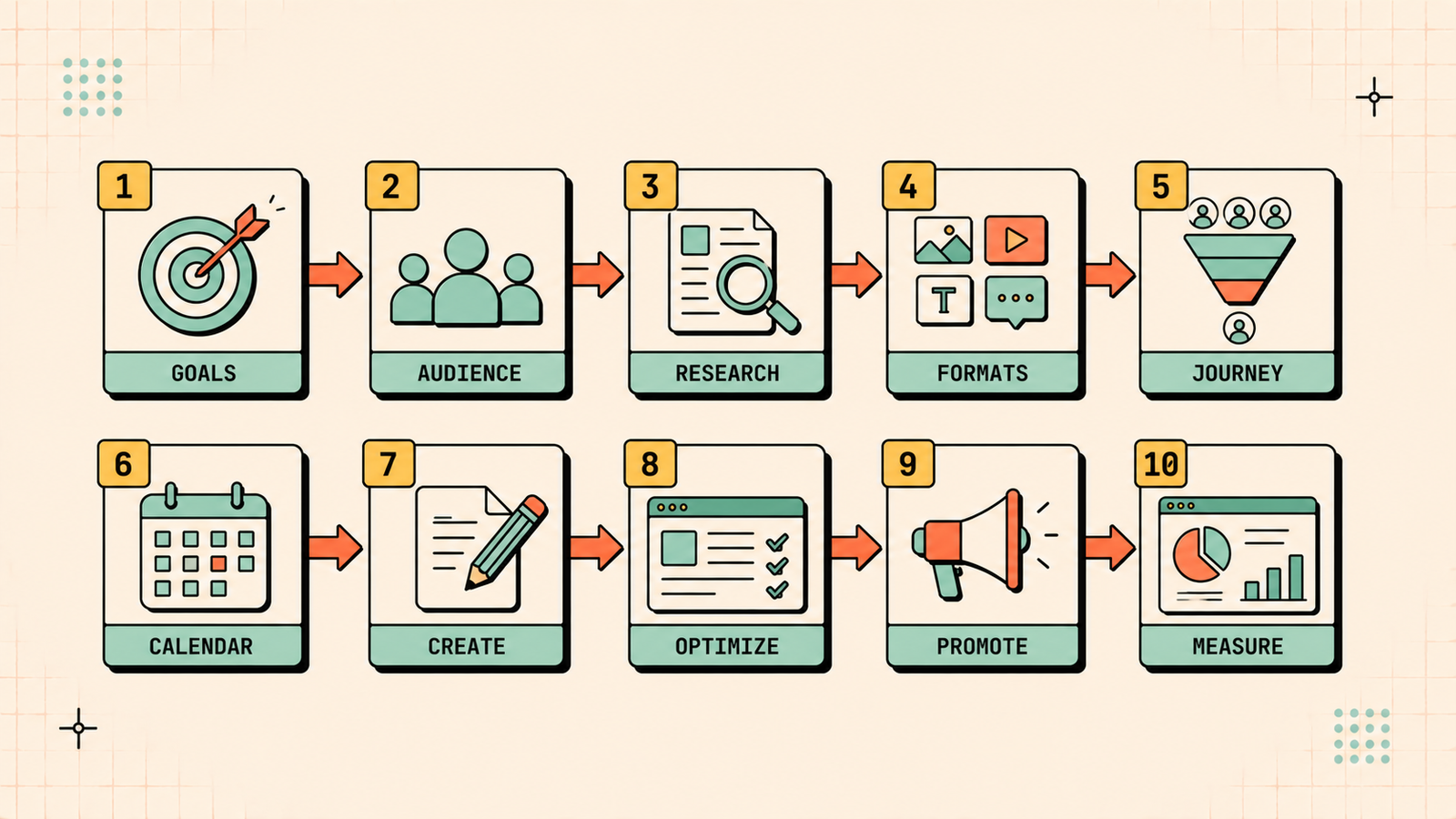
1. Set clear goals
Start with what you actually want content to achieve, whether that is traffic, leads, sales, or brand awareness. Clear goals shape everything else and give you something to measure against. Vague goals like "post more" lead nowhere.
2. Understand your audience
Know exactly who you are creating content for: their problems, questions, and what they search for at each stage. The more clearly you understand your audience, the more useful and relevant your content becomes, and the better it performs.
3. Do keyword and topic research
Find the topics and search terms your audience actually looks for, so your content targets real demand you can capture. This connects your content directly to search traffic and makes sure you are writing about things people want, not just things you find interesting.
4. Choose your content types and channels
Decide which formats fit your audience and goals, such as blog posts, videos, guides, or email, and which channels you will focus on. It is better to do a few formats and channels well than to spread yourself thin across everything.
On-Page SEO Checklist 2026
5. Map content to the buyer journey
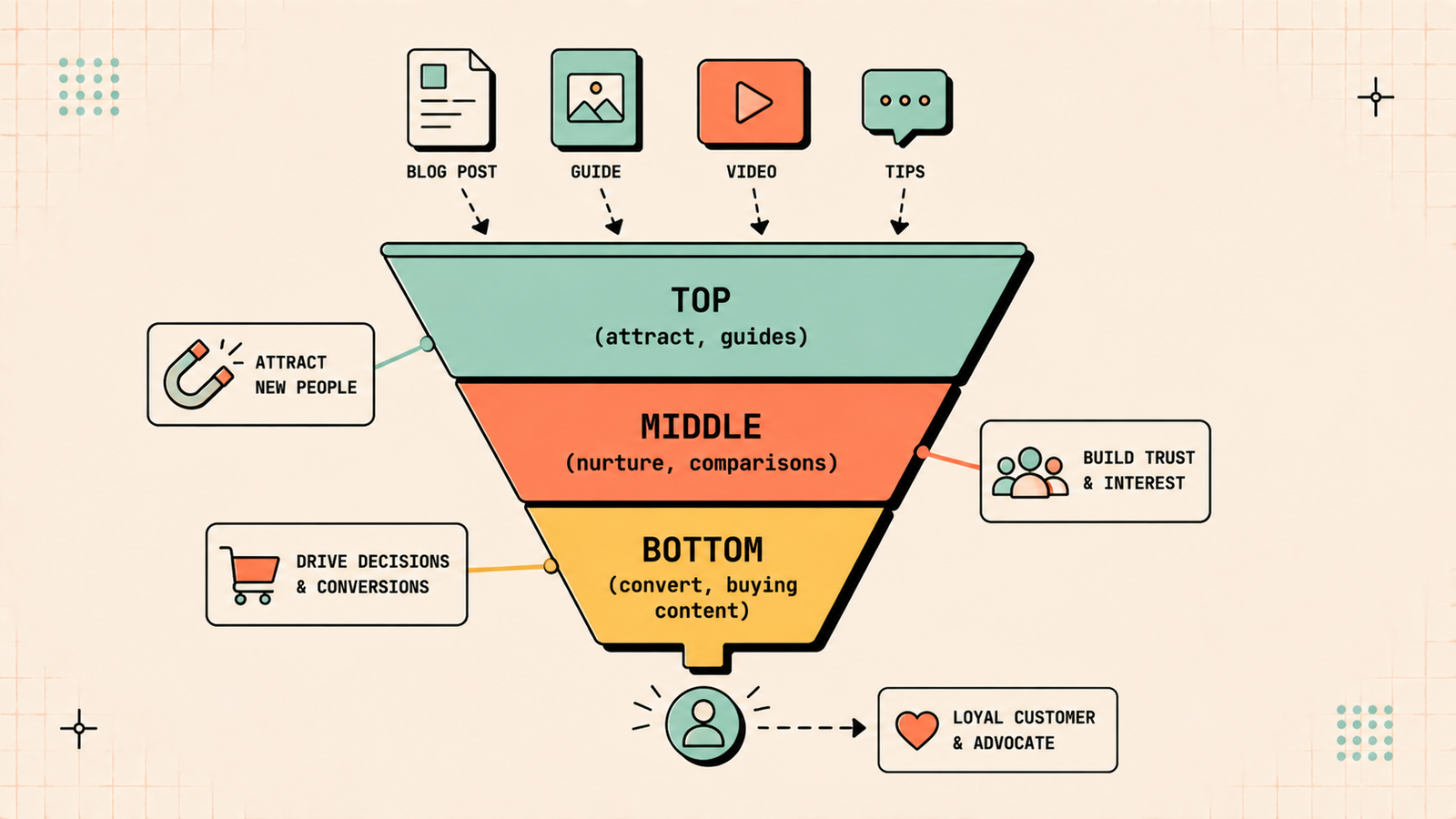
Create content for each stage of the journey. Top-of-funnel content attracts people early with helpful, educational pieces. Middle-of-funnel content nurtures them with comparisons and deeper guides. Bottom-of-funnel content converts them with content close to a buying decision. Covering all three stages turns strangers into customers.
6. Build a content calendar
Plan what you will publish and when, so content becomes a consistent habit rather than a scramble. Consistency is one of the biggest factors in content marketing success, and a calendar keeps you on track and accountable.
7. Create genuinely helpful content
This is the heart of it. Create content that truly helps your audience, answers their questions thoroughly, and is better than what already exists. Quality beats quantity every time, because helpful content is what earns rankings, trust, and shares.
8. Optimize for SEO and AI search
Optimize your content so it can be found. Use your target keywords naturally, structure content with clear headings, match search intent, and format it so both Google and AI search can understand and surface it. Content nobody can find helps no one.
9. Promote and distribute
Publishing is not enough. Actively share your content across your channels, email list, and communities, and repurpose it into different formats to reach more people. Great content with no distribution gets no results.
10. Measure and improve
Track how your content performs against your goals, see what works, and do more of it. Content marketing is a long game that gets better as you learn what resonates with your audience and refine your approach over time.
We'll show you exactly where your content strategy is falling short and how to build one that drives traffic and sales.
Get a clear, data-backed plan to connect your content to real business goals and start compounding results.
The strategy at a glance
| Step | What it does |
|---|---|
| Set goals | Gives content a purpose to work toward |
| Understand audience | Makes content relevant and useful |
| Keyword and topic research | Targets real, searchable demand |
| Choose types and channels | Focuses effort where it counts |
| Map to the journey | Turns strangers into customers |
| Content calendar | Builds consistency |
| Create helpful content | Earns rankings, trust, and shares |
| Optimize for search | Makes content findable |
| Promote and distribute | Gets content in front of people |
| Measure and improve | Compounds results over time |
Types of content marketing
You do not need to do all of these, just the ones that fit your audience and goals.
| Type | Best for |
|---|---|
| Blog posts and guides | SEO traffic and building authority |
| Videos | Engagement and explaining visually |
| Email newsletters | Nurturing and retaining your audience |
| Social media content | Reach, awareness, and community |
| Lead magnets and tools | Capturing leads with real value |
| Case studies | Proving results and converting buyers |
Content marketing for small businesses and D2C brands
You do not need a big team or budget to win with content. For a small brand, the smart approach is to focus, not to do everything. Pick one or two formats you can do consistently, target the specific questions your customers ask, and be genuinely more helpful than bigger competitors on the topics that matter most to your niche. Consistency and genuine usefulness beat volume and budget. A small brand publishing one excellent, well-targeted piece a week will outperform a big one pumping out forgettable content, because in content marketing, relevance and trust win.
Content marketing and SEO
Content marketing and SEO work best together. SEO tells you what your audience searches for and how to make your content rank, while content marketing creates the valuable content that earns those rankings. Content without SEO struggles to get found, and SEO without quality content has nothing worth ranking. Combined, they create a compounding engine: you research demand, create genuinely helpful content around it, optimize it to rank, and earn traffic that grows over time. This is why the strongest content strategies are built on solid keyword research and on-page optimization.
Content marketing and AI search
AI search rewards exactly what good content marketing produces: helpful, well-structured, trustworthy content that answers real questions. To get cited in AI answers, create thorough content that fully answers what people ask, structure it with clear questions and direct answers, demonstrate genuine expertise, and keep it current. The brands building genuinely helpful content now are the ones AI search will surface, which makes quality content marketing more valuable, not less, as search evolves.
LetMeRank
Common content marketing mistakes
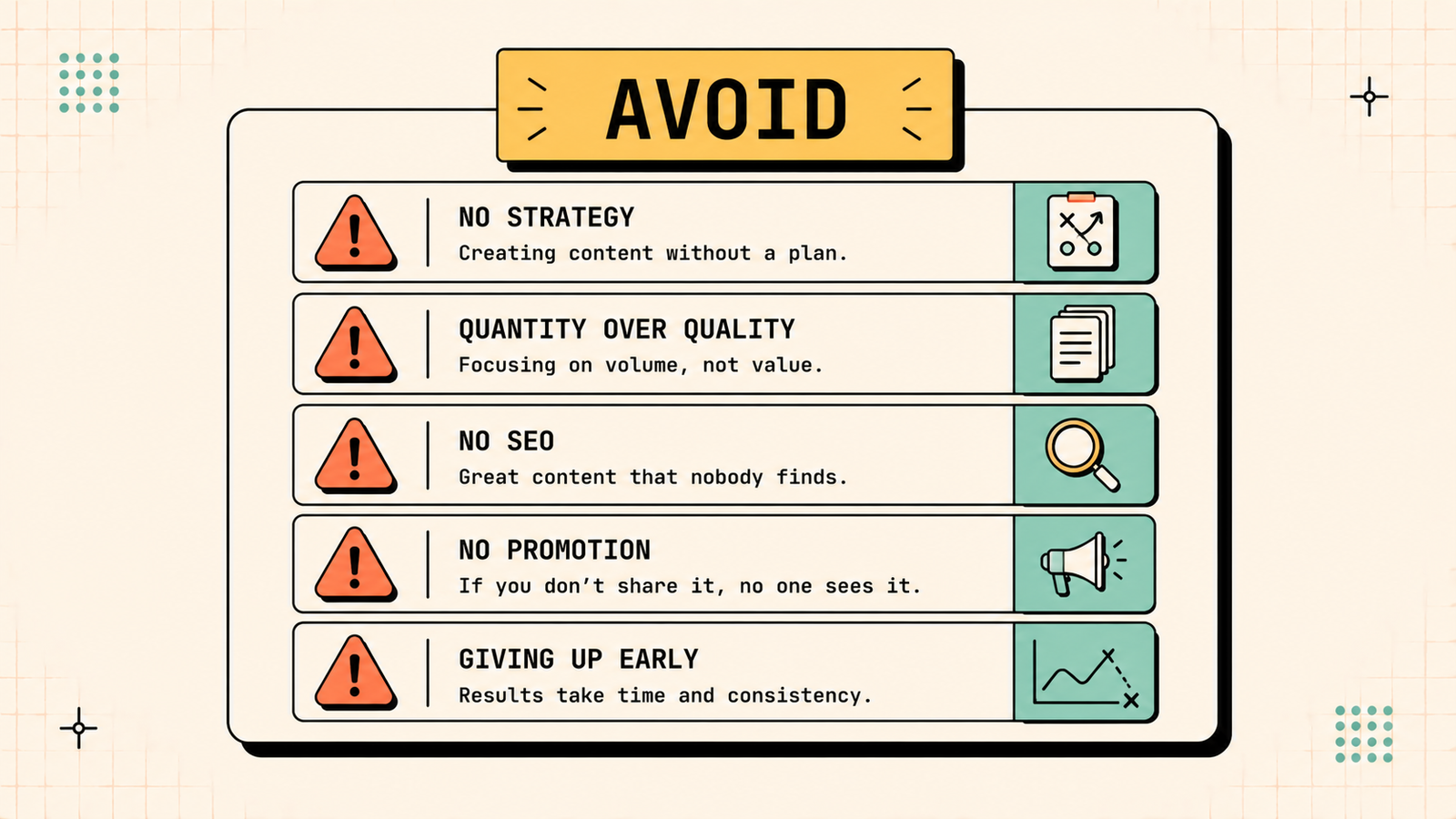
A few patterns waste the most effort. Publishing without a strategy or clear goals leads to busy work that goes nowhere. Creating content about what interests you rather than what your audience searches for misses the demand. Focusing on quantity over quality floods your channels with forgettable pieces. Ignoring SEO means your content never gets found. Never promoting or distributing content leaves it unseen. And giving up too soon, before content marketing has had time to compound, is the most common mistake of all. Avoid these and your content becomes a real growth channel.
How to promote content without a big budget
Creating content is only half the job, and distribution is where most small brands fall short. You do not need a big budget, just consistency across the channels you already have. Share every piece with your email list, since those are people who already want to hear from you. Post it natively on the social platforms where your audience actually spends time, adapting the format to each. Repurpose one strong article into several smaller pieces, a short video, a carousel, an email, so one effort reaches people in different ways. Answer relevant questions in communities and link back where it genuinely helps. And revisit and reshare your best older content, since evergreen pieces deserve more than one moment. A modest amount of consistent promotion often does more than a big one-time push.
How to measure content marketing success
Measuring the right things keeps your strategy honest and improving. Tie your metrics to your goals rather than to vanity numbers. If the goal is traffic, watch organic visits and rankings. If it is leads, watch signups and conversions from content. If it is authority, watch shares, mentions, and returning visitors. Look at which specific pieces drive the most valuable results, then create more like them and improve or retire the ones that do not perform. Content marketing compounds precisely because you learn what resonates and double down on it, so treating measurement as a regular habit rather than an afterthought is what turns a good strategy into a great one over time.
The bottom line for founders
Content marketing works, but only with a real strategy behind it. Set clear goals, understand your audience, research what they search for, create genuinely helpful content across their journey, optimize it for search, promote it, and keep improving. Do that consistently and your content compounds into an owned channel that drives traffic and sales for years.
If you want experts to build and run a content strategy that actually grows your traffic and leads, LetMeRank does exactly that, starting with a free audit of the content opportunities your brand should be capturing.