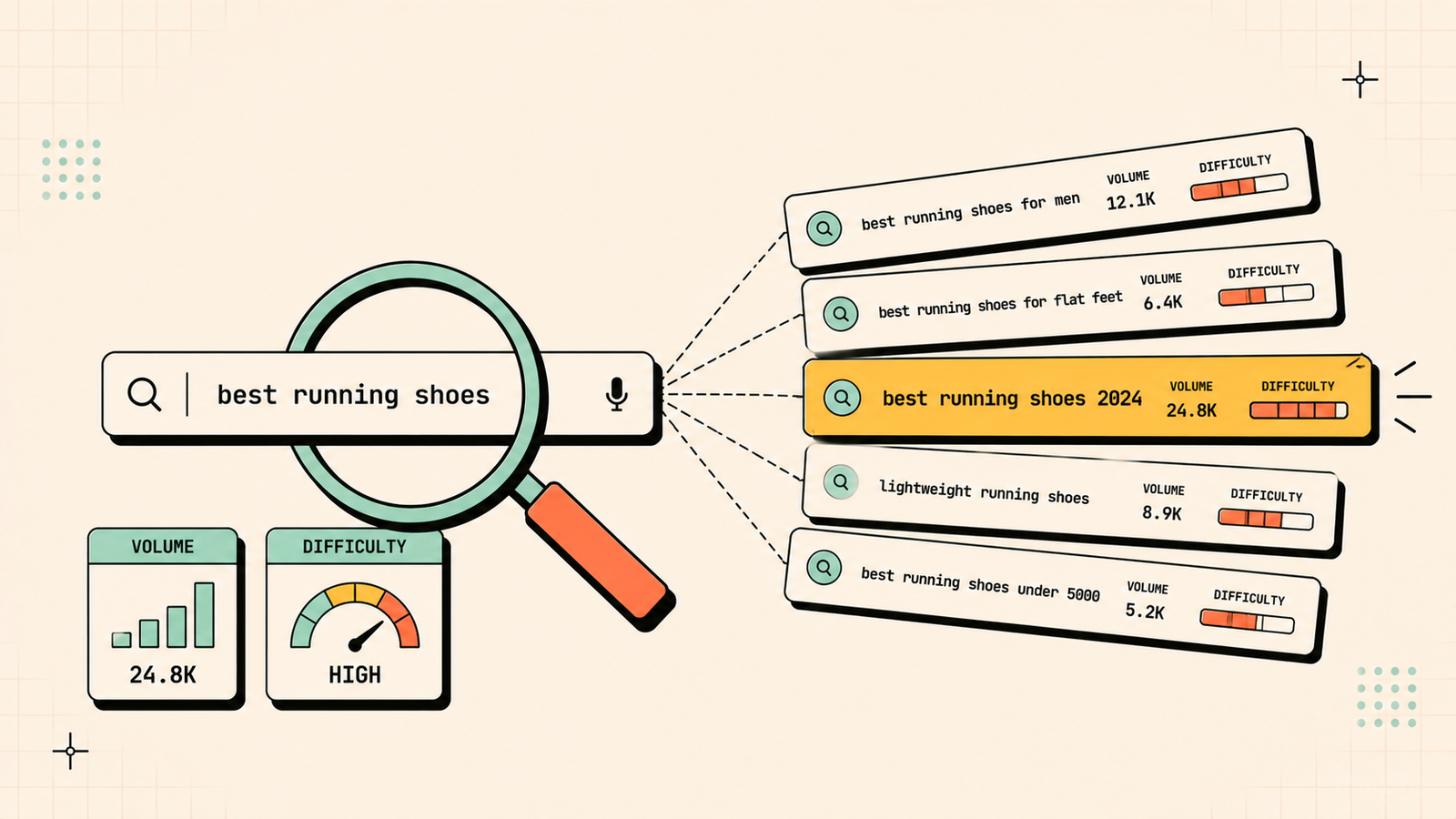
Most content that fails does not fail because it was badly written. It fails because it was written about something almost nobody was searching for. That is what keyword research prevents. It is the difference between guessing what your audience wants and knowing it, and it is the foundation every other part of SEO is built on. Get it right and your content targets real demand you can actually win. Get it wrong and you can write brilliant articles that never get seen. This guide walks you through keyword research from scratch, step by step, in plain language.
What is keyword research?
Keyword research is the process of finding the words and phrases people type into search engines, so you can create content that matches what they are actually looking for. It tells you three crucial things: what your audience wants, how many people want it, and how hard it will be to rank for it.
Think of it as market research for search. Instead of guessing what to write, you look at real search data and build your content around proven demand. Every strong SEO strategy starts here, because targeting the right keywords is what turns effort into traffic.
Ecommerce SEO Strategy for 2026
Why keyword research matters
Without it, you are flying blind. You might pour weeks into content nobody searches for, or waste time chasing keywords so competitive you have no chance of ranking. Good keyword research fixes both problems. It points you toward topics with real search demand, helps you find terms you can realistically rank for, reveals what your buyers care about at each stage, and shows you where your competitors are winning traffic you could take. For a founder with limited time, it is how you make sure every piece of content you create has a job and a chance of paying off.
Types of keywords to know
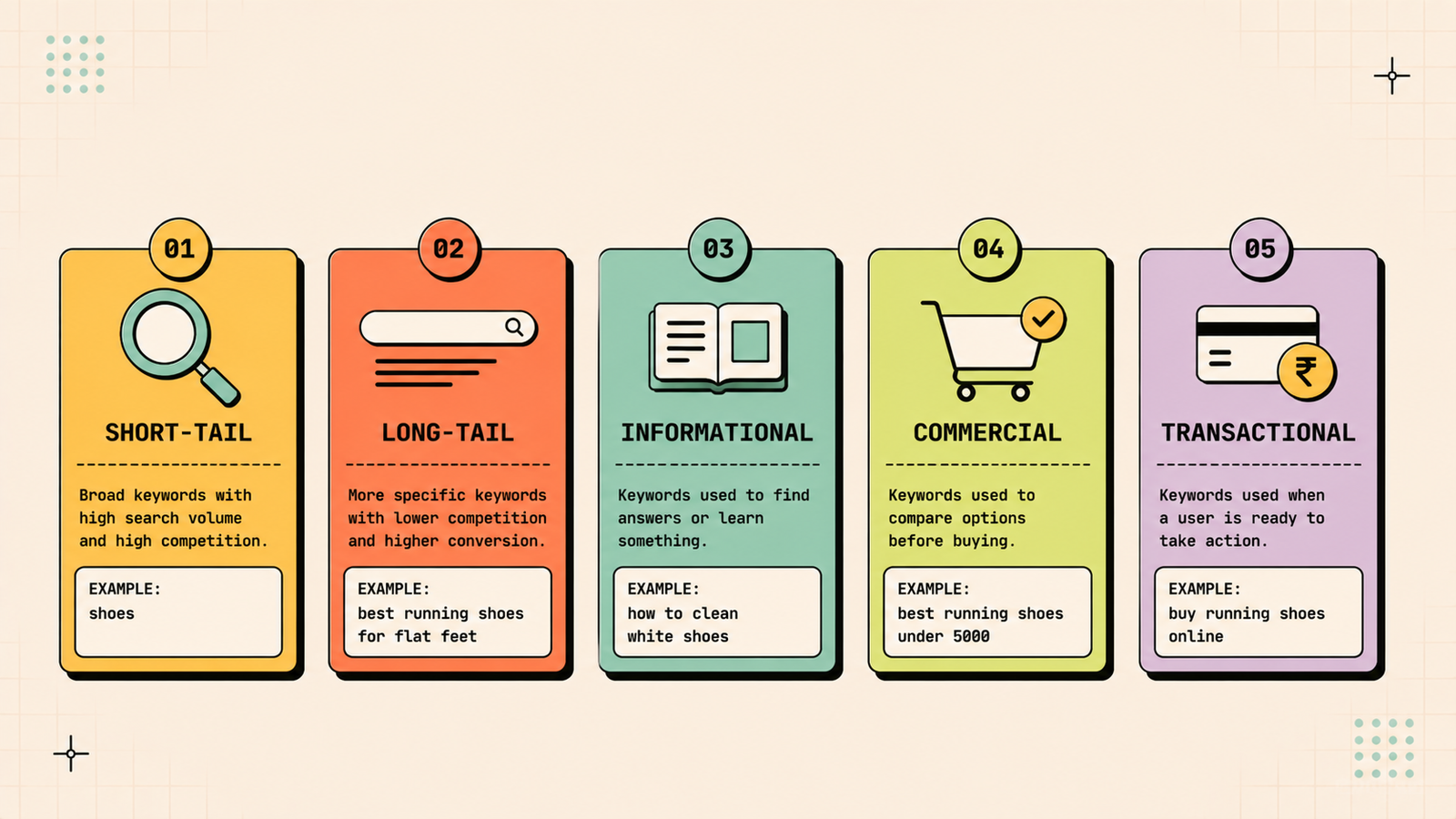
Before you research, understand the kinds of keywords you will find, because each plays a different role.
| Type | What it is | Example | Best for |
|---|---|---|---|
| Short-tail | Broad, one or two words, high volume, hard to rank | "shoes" | Long-term brand goals |
| Long-tail | Specific, longer phrases, lower volume, easier to rank | "best running shoes for flat feet" | Winning traffic quickly |
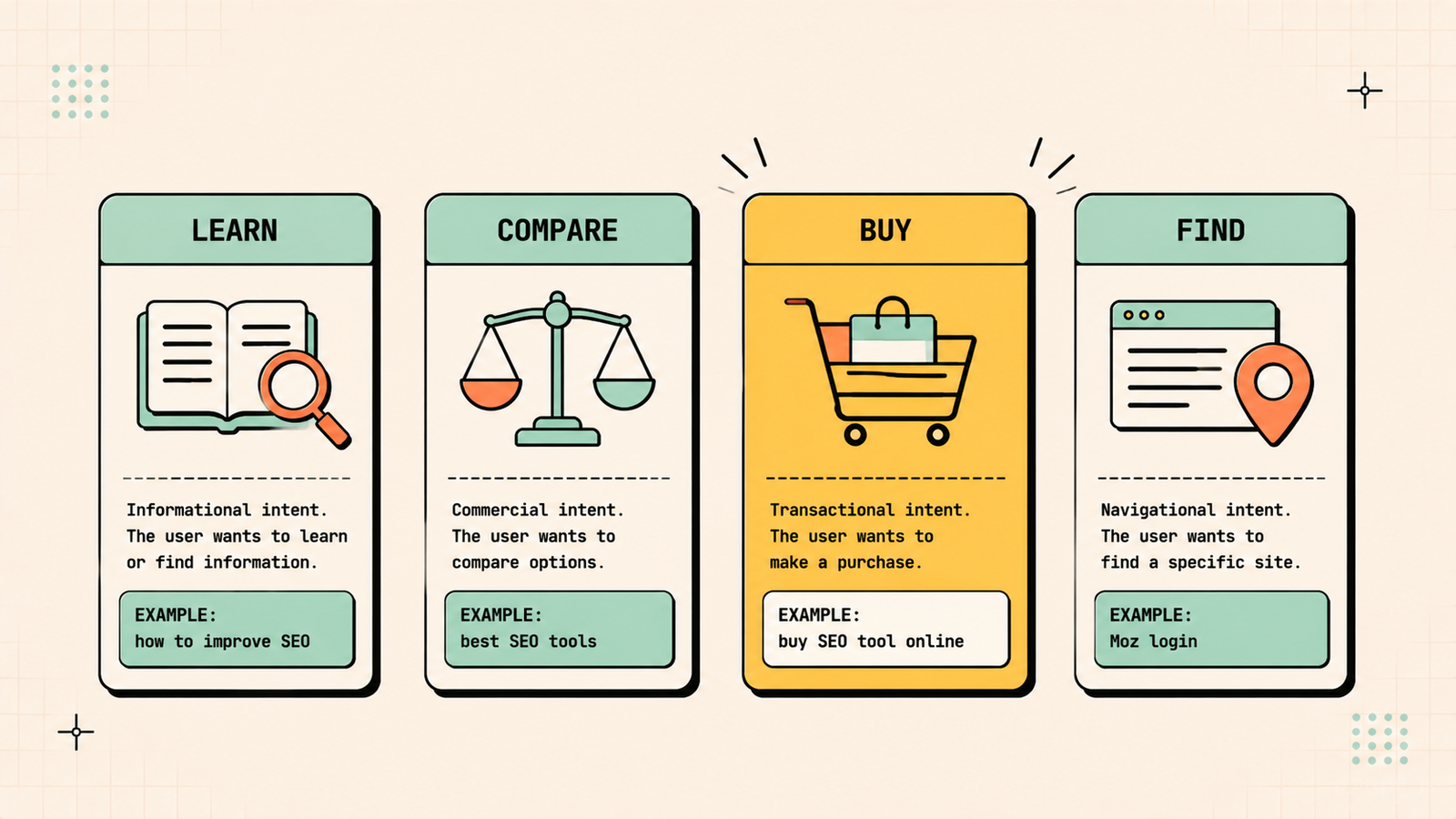
| Informational | Someone wants to learn | "how to clean running shoes" | Blog content, building trust |
| Commercial | Someone is comparing options | "best running shoe brands" | Comparison and review content |
| Transactional | Someone is ready to buy | "buy running shoes online" | Product and service pages |
For most founders starting out, long-tail keywords are the smartest bet. They have less competition, clearer intent, and often convert better because they are so specific.
How to do keyword research, step by step
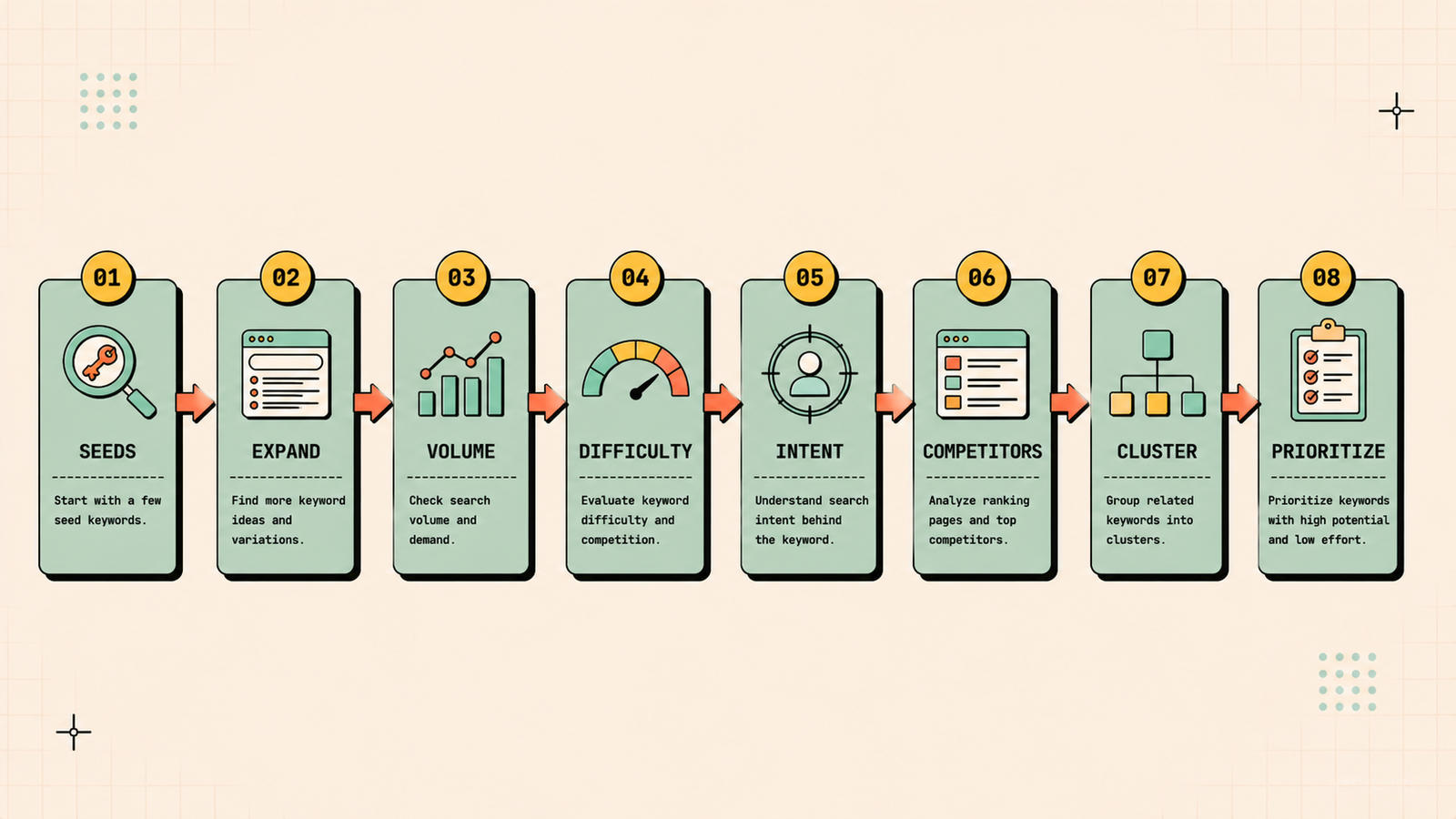
Here is the full process, in order.
1. Brainstorm your seed topics
Start with the broad topics your business is about. If you sell coffee equipment, your seeds might be espresso, coffee brewing, and coffee beans. Think about what your customers care about and the problems they are trying to solve. These seed topics are the starting point you will expand from, so do not worry about search volume yet. Just get the core themes down.
2. Expand your seeds with tools
Feed your seed topics into a keyword research tool to generate hundreds of related keyword ideas. Tools pull real search terms people use, including variations and questions you would never have thought of yourself. Also mine Google itself: the autocomplete suggestions, the "People also ask" box, and the "related searches" at the bottom of results are all free sources of real keyword ideas straight from Google.
3. Check search volume
Search volume tells you roughly how many people search a keyword each month. It helps you gauge the size of the opportunity. But do not chase volume blindly. A high-volume keyword you cannot rank for is worthless, while a lower-volume keyword with strong buyer intent can be far more valuable. Use volume as one input, not the only one.
4. Assess keyword difficulty
Keyword difficulty estimates how hard it will be to rank for a term, based on how strong the competing pages are. As a newer or smaller site, you want keywords where the difficulty is within reach. Chasing the hardest, highest-volume terms first is the most common way founders waste months with nothing to show. Start with keywords you can realistically win, build authority, then work up to the harder ones.
5. Understand search intent
Search intent is the reason behind a search, and matching it is essential. Before targeting a keyword, look at what already ranks for it. If the top results are how-to guides, searchers want to learn, so a sales page will not rank. If they are product pages, searchers want to buy. Always create the type of content that matches what searchers, and therefore Google, clearly expect for that keyword.
6. Analyze your competitors
Your competitors have done a lot of keyword research for you. Look at which keywords they rank for, especially the ones bringing them real traffic, and find the gaps where you could compete or where they are weak. Competitor analysis quickly surfaces proven, valuable keywords in your space and shows you where the winnable opportunities are.

7. Group keywords into clusters
Rather than targeting one keyword per page in isolation, group related keywords that share the same intent into clusters, and build one strong page around each cluster. A single well-made page can rank for dozens of related terms at once. This clustering approach also builds topical authority, which both Google and AI search reward heavily.
8. Prioritize what to target first
You cannot do everything at once, so prioritize. Favor keywords that balance real search demand, achievable difficulty, and strong relevance to your business, leaning toward those closest to a buying decision. A simple approach is to start with lower-difficulty, high-intent keywords for quick wins, then pursue the bigger, harder terms as your site gains strength.
We'll show you exactly which keywords your business should be winning and build a plan to rank for them.
Get a clear, data-backed keyword roadmap that targets real demand you can actually capture, with the right content to match.
The best keyword research tools
You do not need many. Here are the types worth using.
| Tool type | What it does |
|---|---|
| All-in-one suites (Semrush, Ahrefs, Ubersuggest) | Keyword ideas, volume, difficulty, and competitor data |
| Google Keyword Planner | Free volume ranges, best paired with another tool |
| Google itself | Autocomplete, People also ask, and related searches, all free |
| Answer and question tools | Surface the real questions people ask around a topic |
A common approach is one paid suite for depth plus Google's free sources for real, current search language.
How to find low-competition keywords you can actually win
For a smaller site, this is the whole game. Look for long-tail keywords, which are longer and more specific with less competition. Target question-based searches, since these are often easier and match how people really search. Find niche angles within broader topics where big sites have not gone deep. And check the actual difficulty rather than assuming, because plenty of decent-volume keywords are surprisingly winnable. A handful of low-competition, high-intent keywords will do more for a new site than one impossible head term ever could.
SEO and Marketing for Edtech Brands
Keyword research for AI search
Search is shifting toward conversational AI, which changes what to target. People ask AI assistants longer, more natural questions, so question-based and conversational keywords matter more than ever. Focus on the real questions your audience asks, cover topics thoroughly enough to answer follow-ups, and structure content around clear questions and answers. The keyword research habit of understanding intent deeply is exactly what wins in AI search too, because both reward genuinely answering what people want to know.
Common keyword research mistakes
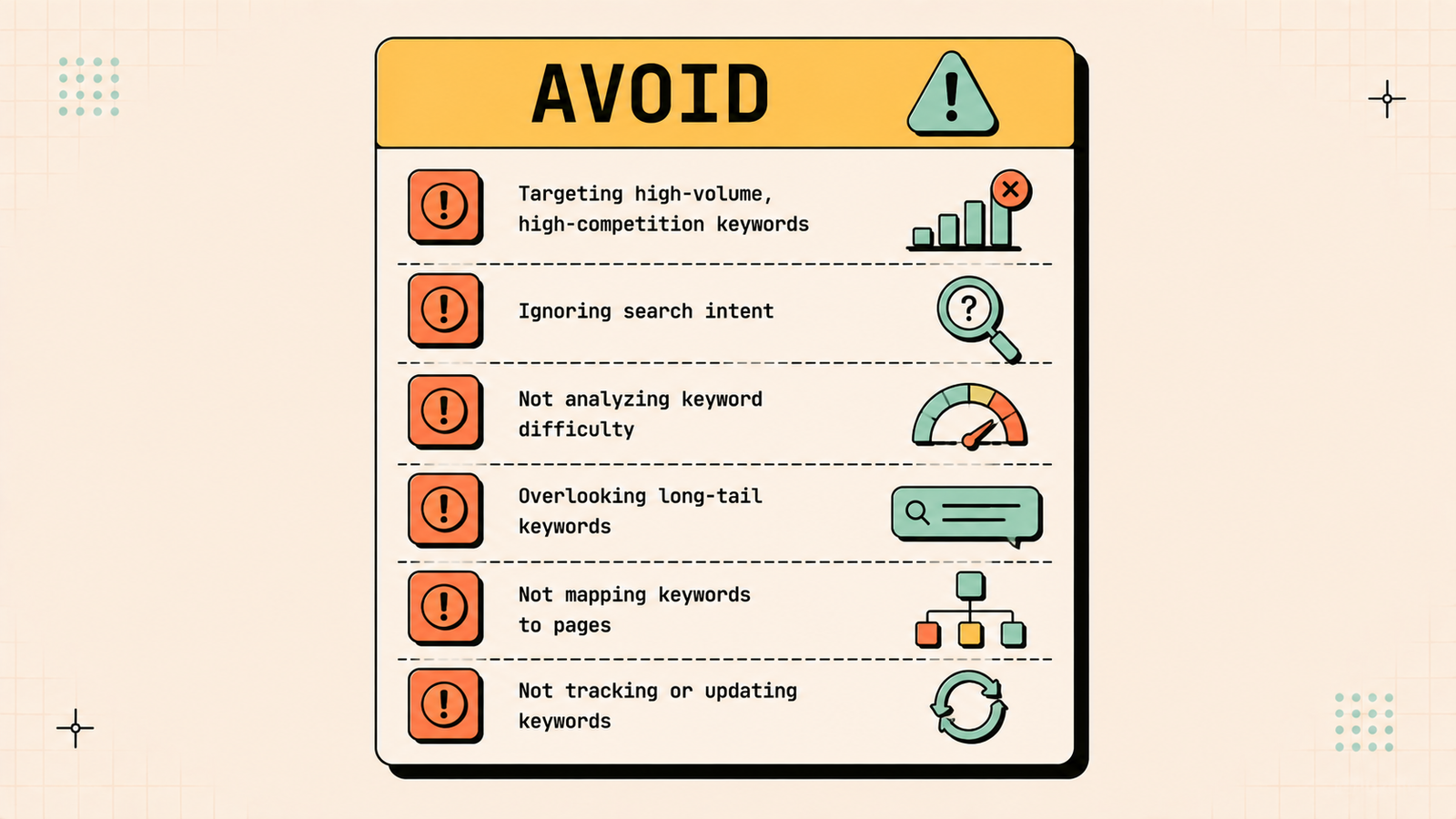
A few errors trip up most beginners. Chasing only high-volume keywords while ignoring difficulty leads to months of effort with no rankings. Ignoring search intent produces content that never ranks because it answers the wrong need. Targeting keywords with no buyer relevance brings traffic that never converts. Obsessing over one exact phrase instead of a cluster limits how much a page can rank for. And forgetting long-tail keywords means missing the easiest, most convertible wins. Avoid these and your research turns into real traffic.
A quick worked example
Say you run a store selling standing desks. Your seed topic is "standing desk." Expanding it in a tool surfaces terms like "standing desk benefits," "best standing desk for small spaces," "standing desk vs regular desk," and "how high should a standing desk be." Checking the data, the broad term "standing desk" is high volume but very hard to rank for as a newer store, so you park it as a long-term goal. Instead you notice "best standing desk for small spaces" has decent volume, lower difficulty, and clear buying intent, so it becomes a product or comparison page. "Standing desk benefits" is informational, so it becomes a blog post that attracts researchers early and links to your product pages. In one seed topic, you have found a page for now, a page for later, and content to feed both. That is keyword research doing its job.
LetMeRank
How often should you do keyword research?
Keyword research is not a one-time task. Search behavior shifts, new terms appear, and competitors move, so revisit it regularly. Do a deeper round when planning a new content push or launching a product, and lighter ongoing checks every month or quarter to catch new opportunities and questions your audience has started asking. Also revisit your existing pages: as they gain authority, keywords that were once too competitive may become winnable, which is a signal to update and strengthen those pages. Treating keyword research as an ongoing habit rather than a single project is what keeps your content aligned with real, current demand.
The bottom line for founders
Keyword research is the foundation that makes all your other SEO effort worthwhile. Start with seed topics, expand them with tools and Google itself, weigh volume against difficulty and intent, study your competitors, group keywords into clusters, and prioritize the winnable, high-intent terms first. Do that and every piece of content you create is aimed at real demand you can actually capture.
If you would rather have experts build your keyword strategy and turn it into rankings, LetMeRank does exactly that, starting with a free audit of the keywords your business should be winning.