You know backlinks matter. You have read that they are one of the top ranking factors. And then you tried to get some and realised that nobody is lining up to link to your website for no reason. Getting quality backlinks is one of the hardest parts of SEO, but it is also one of the most impactful. The difference between a site stuck on page three and one ranking on page one is often just a handful of strong, relevant links.
This guide covers 12 specific strategies for earning backlinks, starting with the easiest and moving to the more advanced, with step-by-step instructions for each so you can actually do them rather than just read about them.
Why backlinks matter
A backlink is when another website links to yours. Google treats each quality backlink as a signal that your content is trustworthy and worth recommending. More quality backlinks from unique domains means stronger authority, which means better rankings. It is one of the most heavily weighted ranking factors and has been for over two decades.
What matters is quality over quantity. One link from a relevant, authoritative site is worth more than fifty links from random, low-quality directories. Google evaluates who links to you, not just how many links you have.
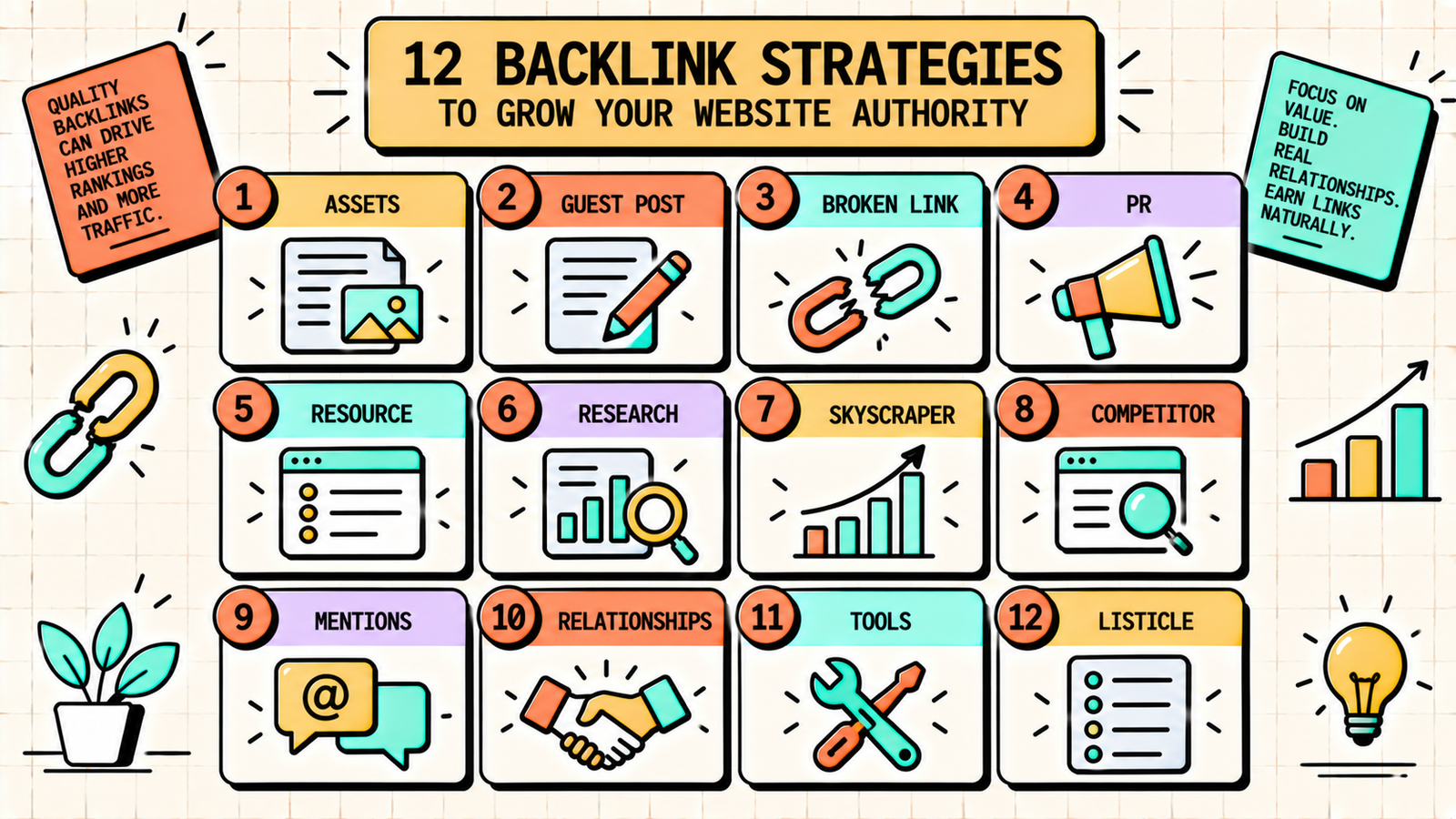
The 12 backlink strategies
1. Create linkable assets
The foundation of every backlink strategy is having content worth linking to. Create resources that other people in your industry would naturally reference: original research with data, comprehensive guides that become the go-to reference, free tools and calculators, infographics that visualise complex data, and templates or frameworks people can use. A linkable asset earns links passively over time because it is genuinely useful enough that writers cite it when covering the topic.
2. Guest posting on relevant sites
Write articles for other websites in your industry. Each guest post typically includes an author bio with a link back to your site, and some allow contextual links within the content. Find sites by searching "your niche + write for us" or "your niche + guest post" or "your niche + contribute." Pitch a specific topic idea rather than asking generically. Focus on sites that are relevant to your niche and have real traffic and authority, not sites that exist solely to sell guest post placements.
3. Broken link building
Find broken links on other websites and offer your content as a replacement. Use a tool like Ahrefs or Check My Links (a free Chrome extension) to find 404 pages on sites in your niche. If you have content that covers the same topic as the dead page, email the site owner, point out the broken link, and suggest your page as a replacement. This works because you are helping them fix a problem while earning a link.
4. Digital PR and journalist outreach
Get your brand mentioned and linked in news articles, industry publications, and media coverage. Monitor journalist requests through platforms like HARO (Help a Reporter Out), Connectively, or Source of Sources. When a journalist needs an expert in your field, respond with a helpful, quotable comment. Getting quoted earns a backlink from a high-authority news site, which is one of the most powerful links you can get.
5. Resource page link building
Many websites maintain resource pages, lists of useful links on a specific topic. Find them by searching "your topic + resources" or "your topic + useful links" and filter for ones that are genuinely curated (not spam). If your content fits, email the page owner and suggest adding your resource. Include a brief reason why it would be valuable to their readers.
6. Create original data and research
Original data is a backlink magnet because other writers need sources to cite. Run a survey in your industry, analyse your own data for trends, compile public data into a useful format, or create a benchmark report. When you publish original findings, other content creators in your space will link to you as a source. This strategy takes more effort upfront but produces links passively for years.
7. The skyscraper technique
Find content in your niche that has earned lots of backlinks, create something significantly better (more thorough, more current, better designed), and reach out to the people who linked to the original suggesting they link to yours instead. This works when your improved version is genuinely and obviously better, not just slightly longer. The outreach is: "You linked to [original]. I noticed it is [outdated/incomplete]. I created [your version] which covers [what is better]. Thought you might find it useful."
8. Competitor backlink analysis
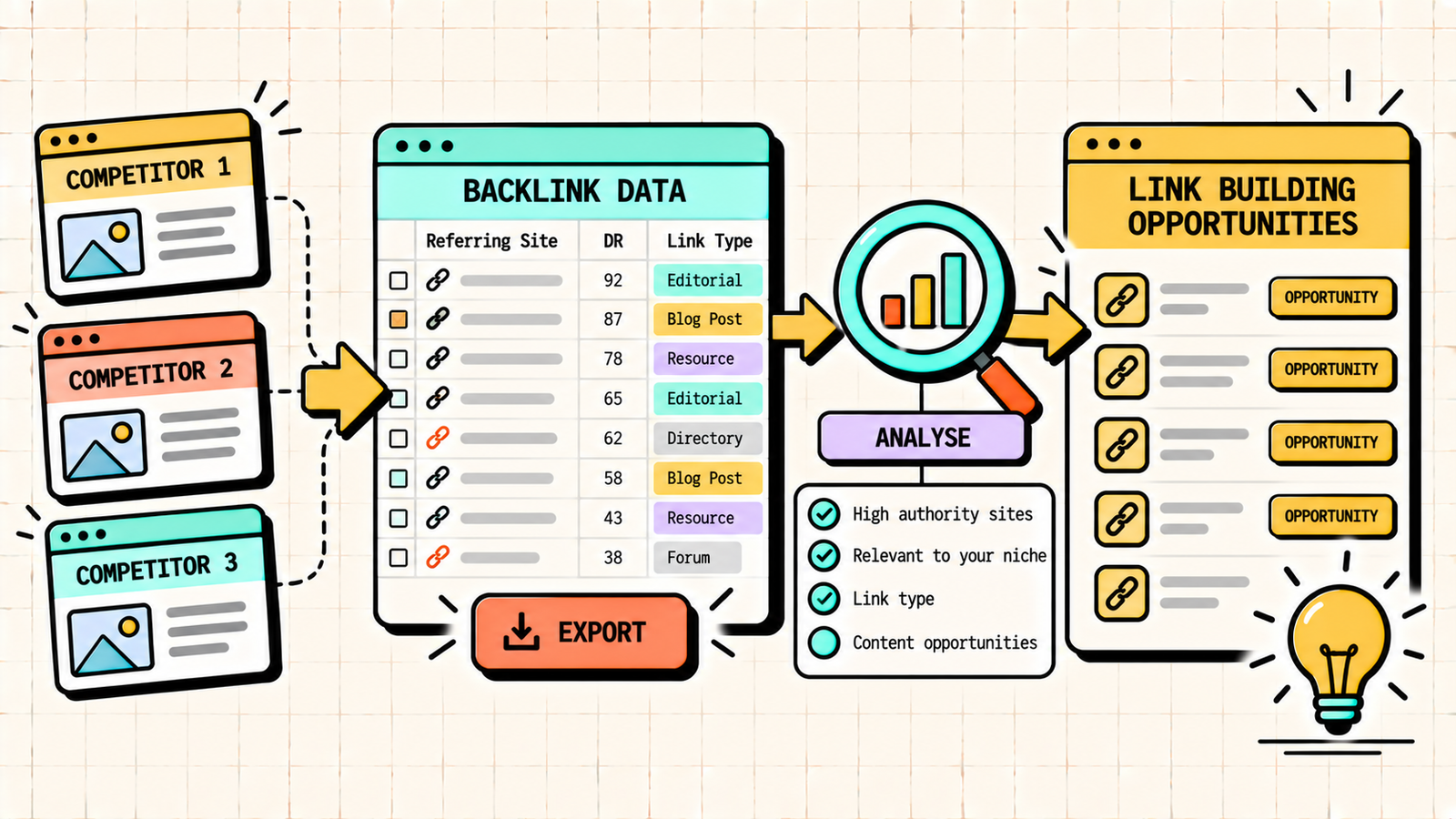
Use an SEO tool (Ahrefs, Semrush, Ubersuggest) to see who links to your competitors. Export their backlink profiles and look for opportunities: sites that link to competitors but not to you, sites that link to multiple competitors (indicating they actively link in your space), and content types that earn the most links. Then pursue those same sites with your content. This is essentially a roadmap of proven link opportunities.
9. Reclaim unlinked brand mentions
Search for your brand name, founder name, or product name on Google (minus your own site) to find pages that mention you but do not link. Email the author and ask them to add a link. Since they already mentioned you, the conversion rate on this outreach is high. Tools like Google Alerts, Mention, and Ahrefs Content Explorer can automate the monitoring.
10. Build relationships in your industry
Genuine relationships with bloggers, journalists, other founders, and creators lead to natural link opportunities: interviews, collaborations, round-up inclusions, podcast features, and "recommended tools" mentions. This is not a scalable hack. It is a long-term approach that produces the most authentic, lasting links. Engage with people's content, be helpful, and the links follow the relationship.
11. Create free tools and calculators
A free tool that solves a problem gets linked to repeatedly. An ROI calculator, a keyword density checker, a headline analyser, or a cost estimator for your industry earns links from every article that recommends tools on your topic. Building a simple tool costs time upfront but creates a permanently linkable asset that no amount of outreach could replicate.
12. Listicle and roundup inclusions
Many blogs publish listicles ("10 best tools for X") and expert roundups. Find these by searching your topic plus "best tools" or "expert roundup" and pitch yourself or your product for inclusion. For existing listicles, email the author with a short pitch on why you belong on the list. For upcoming roundups, respond when bloggers put out calls for contributions. Each inclusion is a contextual link from a relevant page.
We'll show you exactly how to build authority that moves rankings.
Get a clear, data-backed plan to earn quality backlinks, strengthen your link profile, and turn authority into rankings and traffic.
How many backlinks do you need?
There is no magic number. It depends on your competition. For low-competition keywords, five to ten quality backlinks from relevant sites can be enough to reach page one. For competitive terms, you might need dozens from authoritative sources. Check how many backlinks the pages ranking in the top three for your target keyword have, and use that as a benchmark. Focus on closing the gap with the top results rather than hitting an arbitrary number.
Quality vs quantity: what makes a good backlink?
Not all backlinks are equal. A good backlink comes from a relevant website in your industry or niche, from a site with genuine authority and traffic, from editorial content (not paid placements or comment spam), uses natural anchor text (not keyword-stuffed), and is on a page that is indexed and gets traffic. A bad backlink comes from irrelevant or spammy sites, paid link farms, blog comment sections, or private blog networks. One strong link from a relevant, authoritative site moves your rankings more than a hundred weak ones.
Backlink strategies compared
| Strategy | Effort | Speed | Link quality | Scalability |
|---|---|---|---|---|
| Linkable assets | High (upfront) | Slow (passive) | Very high | High (earns over time) |
| Guest posting | Medium | Moderate | High | Medium |
| Broken link building | Medium | Moderate | High | Medium |
| Digital PR / HARO | Medium | Variable | Very high | Medium |
| Resource pages | Low | Moderate | Medium to high | Medium |
| Original research | High | Slow | Very high | High |
| Skyscraper | High | Moderate | High | Low |
| Competitor analysis | Low (research) | Moderate | Varies | High |
| Unlinked mentions | Low | Fast | High | Low (finite) |
| Relationships | Low (ongoing) | Slow | Very high | Low |
| Free tools | Very high | Slow | Very high | Very high |
| Listicle inclusions | Low | Moderate | Medium | Medium |
How to do backlink outreach that gets replies
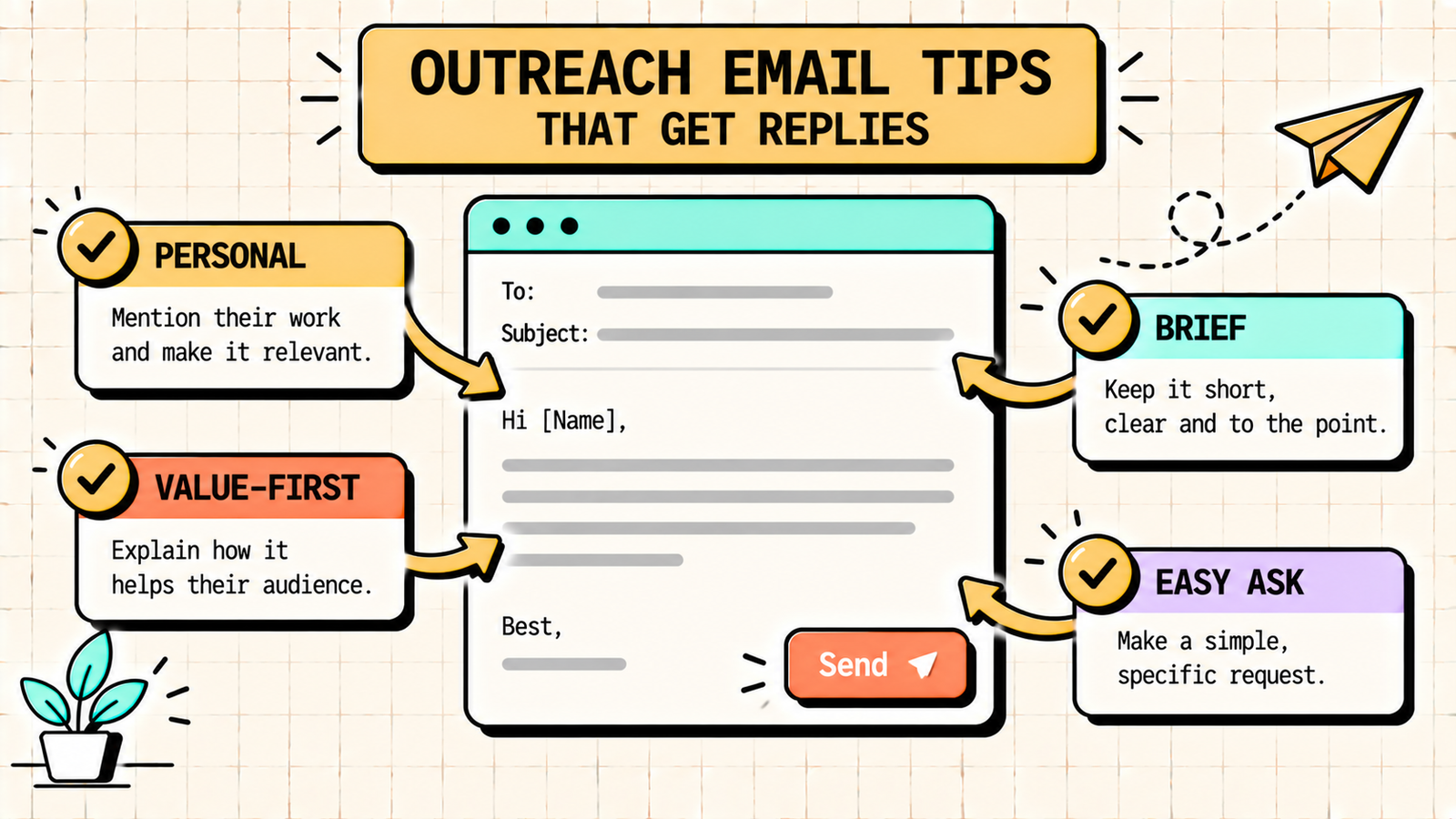
Most outreach emails get ignored because they are generic, self-serving, and clearly templated. Outreach that works is personalised (mention something specific about their site or content), brief (five sentences, not five paragraphs), value-first (explain what they get, not what you want), and easy to act on (include the exact URL you suggest they link to). Open with a genuine compliment or observation, state why your content is relevant to their audience, and close with a simple ask. Do not send the same email to 500 people. Send a genuinely personal email to 50 and your response rate will be ten times higher.
How to Improve Website Speed: The Complete Guide to a Faster Site
Common backlink mistakes
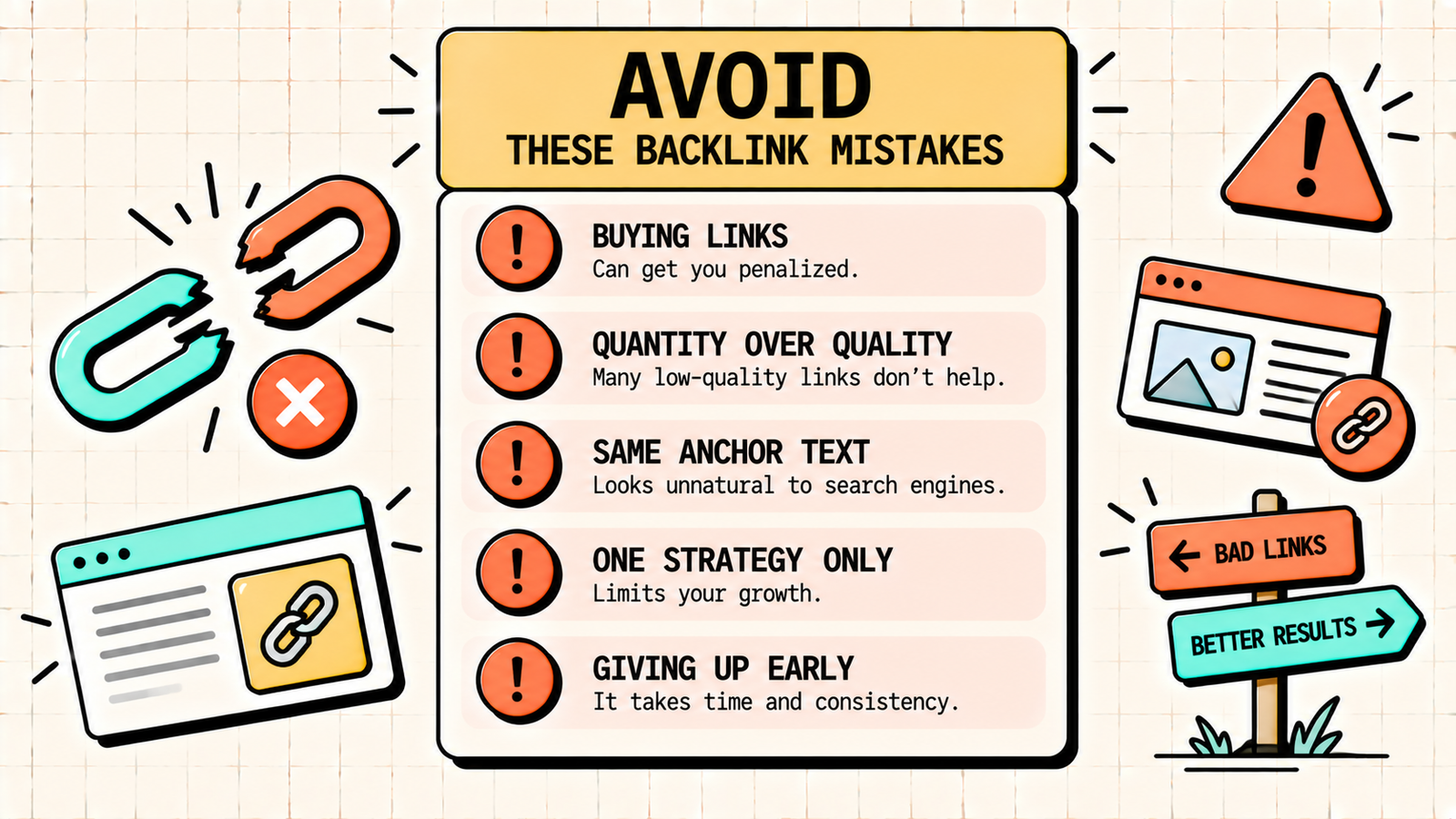
A few patterns waste time or cause harm. Buying links from link sellers or private blog networks risks a Google penalty and the links rarely stick. Focusing on quantity over quality accumulates weak links that do not move rankings. Using the same keyword-heavy anchor text on every link looks manipulative and triggers filters. Not diversifying strategies means relying on one method that might stop working. And giving up after a few outreach emails get no response misses that even a 5 to 10 percent reply rate is normal and successful. Link building is a long game. Stay consistent, focus on quality, and the authority builds.
Google Ranking Factors: What Actually Matters for SEO
The bottom line
Backlinks remain one of the strongest ranking factors in SEO. Earn them by creating content worth linking to, doing targeted outreach, building industry relationships, and pursuing the specific opportunities your competitors have already proven work. Focus on quality over quantity, diversify your strategies, and be patient. A handful of strong, relevant links will move your rankings more than any amount of on-page optimisation alone.
If you want experts to build your backlink profile alongside your content and SEO strategy, LetMeRank handles link building as part of every SEO engagement, starting with a free audit.