You are getting traffic. People visit your site, look around, and leave. A few come back. Even fewer buy. And you have no idea where in that process you are losing them or why. That is a funnel problem. A sales funnel is the path your customers take from "I have never heard of you" to "I just bought from you," and understanding it is how you stop guessing about where you are losing people and start fixing the specific leaks.
This guide covers what a sales funnel is, how to build one, the stages that matter, and the mistakes that quietly kill most funnels before they produce results.
What is a sales funnel?
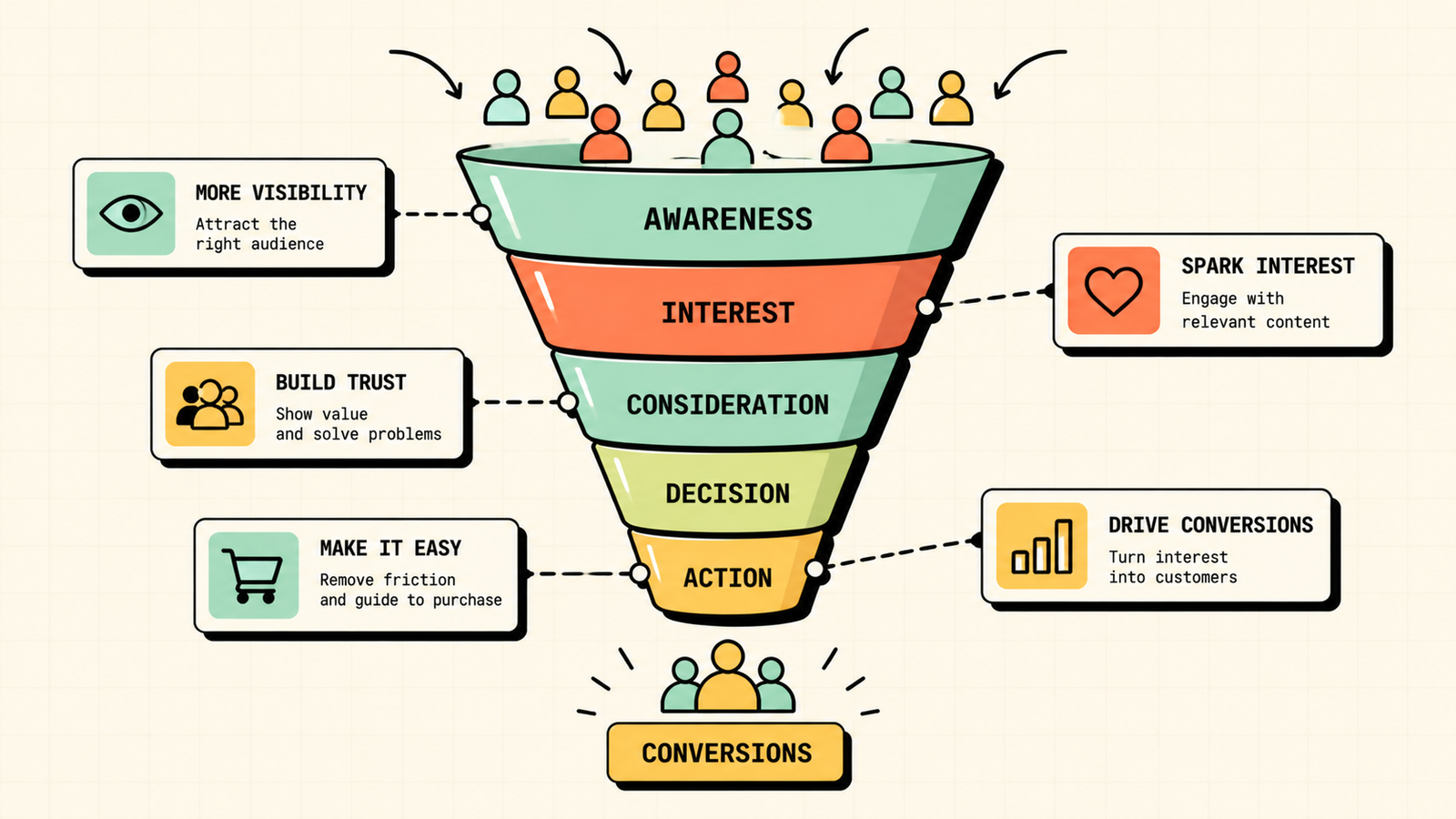
A sales funnel is a model of the journey your customers go through from first discovering your business to making a purchase. It is called a funnel because it narrows at each stage: many people enter at the top (they become aware of you), fewer move to the middle (they consider your offering), and fewer still reach the bottom (they buy).
Every business has a funnel, whether they have designed one or not. The question is whether yours is intentional and optimised, or accidental and leaking customers at every stage. An intentional funnel has specific content, messaging, and actions designed for each stage, guiding visitors toward a purchase rather than hoping they figure it out on their own.
The stages of a sales funnel
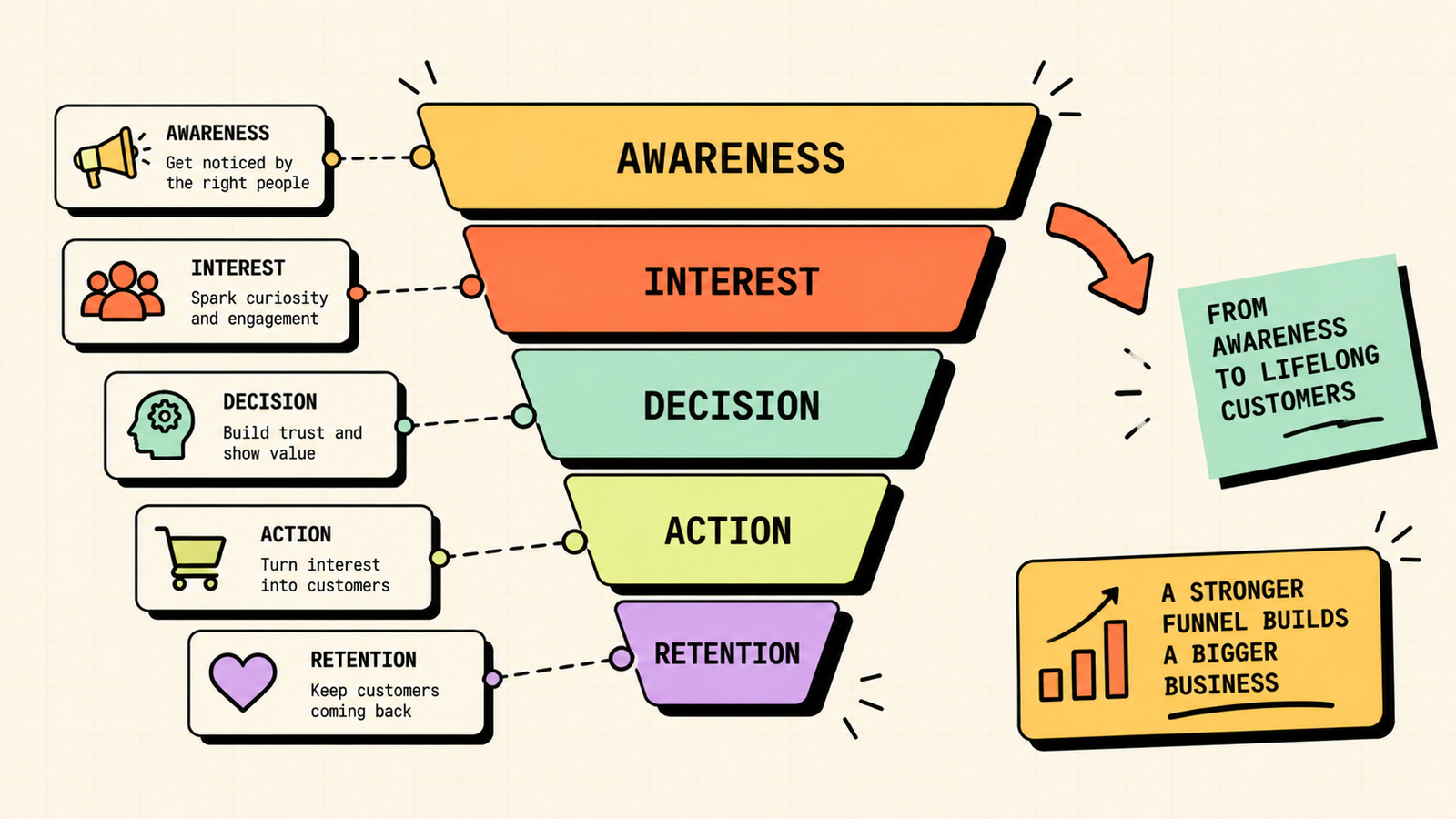
While different frameworks use different names, most sales funnels break into four core stages.
Awareness (top of funnel)
This is where people first discover you. They might find you through a Google search, a social media post, an ad, a referral, or content you published. At this stage, they have a problem or a question and they do not know you yet. Your job is to be visible and helpful, not to sell. Content that works here includes blog posts, social content, videos, and guides that answer their questions and establish your expertise.
Interest (middle of funnel)
Now they know you exist and they are paying attention. They might follow you on social media, subscribe to your email list, read more of your content, or browse your product pages. Your job is to deepen the relationship, build trust, and show them why your offering is relevant to their problem. Content that works here includes email sequences, case studies, webinars, comparison guides, and more detailed educational content.
Decision (lower-middle of funnel)
They are considering buying but have not committed. They are comparing options, reading reviews, looking at pricing, and evaluating whether your product or service is the right fit. Your job is to remove friction and objections. Content that works here includes testimonials, reviews, product demos, free trials, pricing pages, and direct comparisons with alternatives.
Action (bottom of funnel)
They buy. This is the conversion point, and your job is to make it as easy and frictionless as possible: clear calls to action, simple checkout, obvious next steps. But the funnel does not end here. After the purchase, you want to retain the customer, encourage repeat buying, and turn them into advocates who refer others. Post-purchase emails, onboarding, and loyalty programs extend the funnel beyond the first sale.
Sales funnel stages at a glance
| Stage | Customer mindset | Your goal | Content and tactics |
|---|---|---|---|
| Awareness | "I have a problem" | Be visible and helpful | Blog, social, SEO, ads, video |
| Interest | "This brand might help" | Build trust and relevance | Email, case studies, guides |
| Decision | "Should I buy this?" | Remove friction and objections | Reviews, demos, pricing, comparisons |
| Action | "I am buying" | Make it easy to convert | Clear CTA, simple checkout, fast UX |
| Retention | "I already bought" | Keep them coming back | Post-purchase email, loyalty, support |
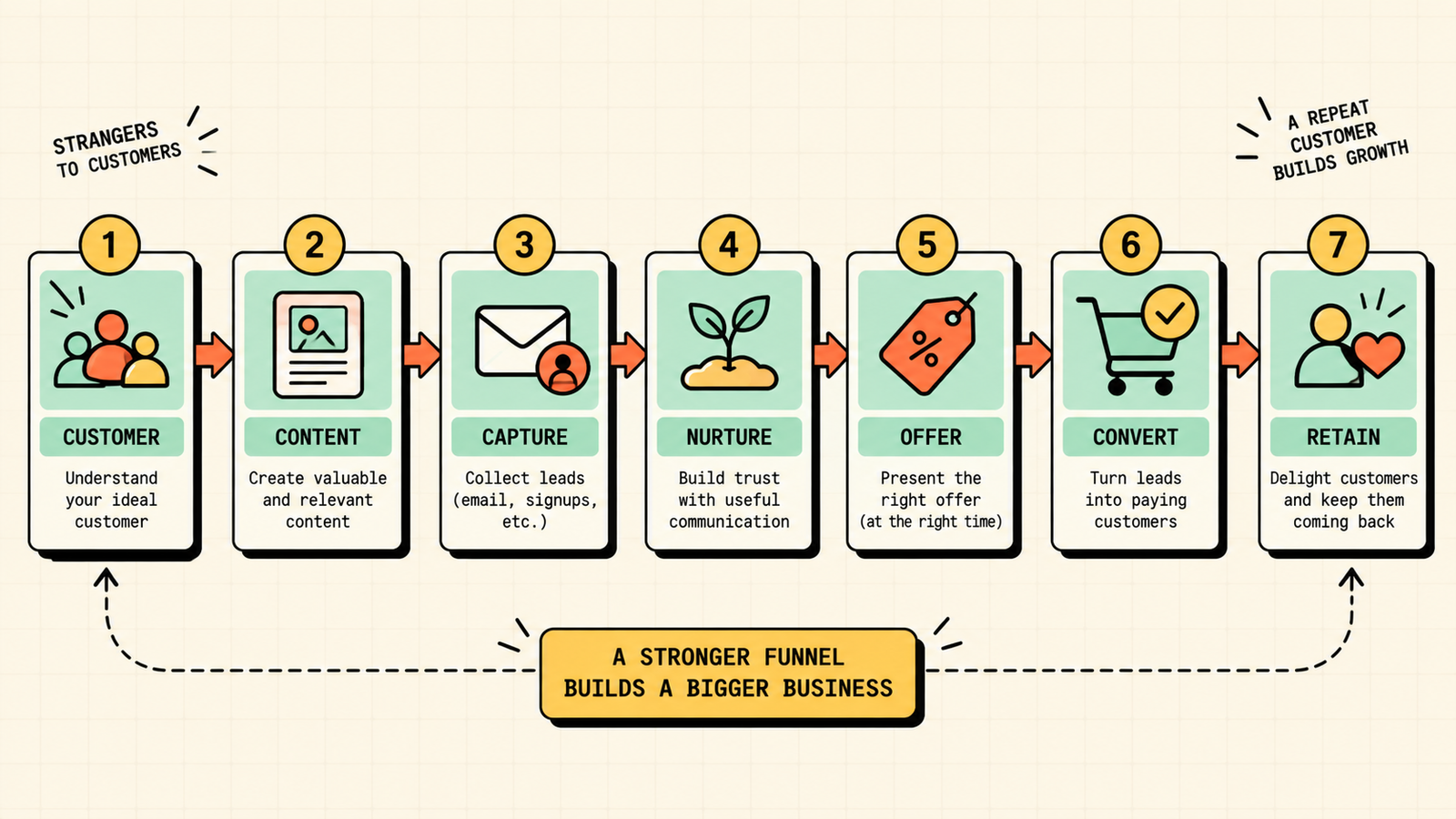
How to build a sales funnel, step by step
1. Define your ideal customer
Before building anything, get clear on who you are trying to attract. The more specific your understanding of your ideal customer, their problem, their decision process, and where they spend time, the more effective every stage of your funnel becomes.
2. Create awareness-stage content
Build the content that brings people in at the top of the funnel. This is typically SEO-driven blog content targeting the questions your audience searches for, social content that builds visibility, and paid ads that put you in front of new audiences. The goal is traffic from the right people.
3. Capture leads at the interest stage
Give visitors a reason to stay connected. Offer something valuable in exchange for their email: a guide, a checklist, a discount, a free tool, or exclusive content. This is where your email list grows, and email is the channel that moves people through the rest of the funnel most effectively.
4. Nurture with email and content
Once someone is on your list, send a sequence of emails that builds trust, educates, and moves them toward a decision. Share helpful content, social proof, customer stories, and relevant offers. The nurture sequence is the bridge between "I know this brand" and "I am ready to buy."
5. Present your offer clearly
At the decision stage, make it easy for people to evaluate and buy. Your product or service pages should be clear, compelling, and designed to convert: strong headlines, benefit-focused copy, social proof, clear pricing, and an obvious call to action. Remove anything that creates confusion or hesitation.
6. Optimise the conversion point
The checkout, signup, or booking process should be as frictionless as possible. Every extra step, extra field, and extra click is a chance to lose someone who was ready to buy. Test and simplify this stage ruthlessly.
7. Build retention into the funnel
The cheapest customer to acquire is the one who already bought from you. Set up post-purchase emails that thank the customer, suggest related products, ask for feedback, and invite referrals. A funnel that ends at the sale leaves the most profitable stage untouched.
We'll find exactly where your funnel is leaking and fix it.
Get a clear, data-backed plan to turn strangers into customers by identifying the leaks in your funnel and building a system that converts.
Sales funnel for D2C and ecommerce
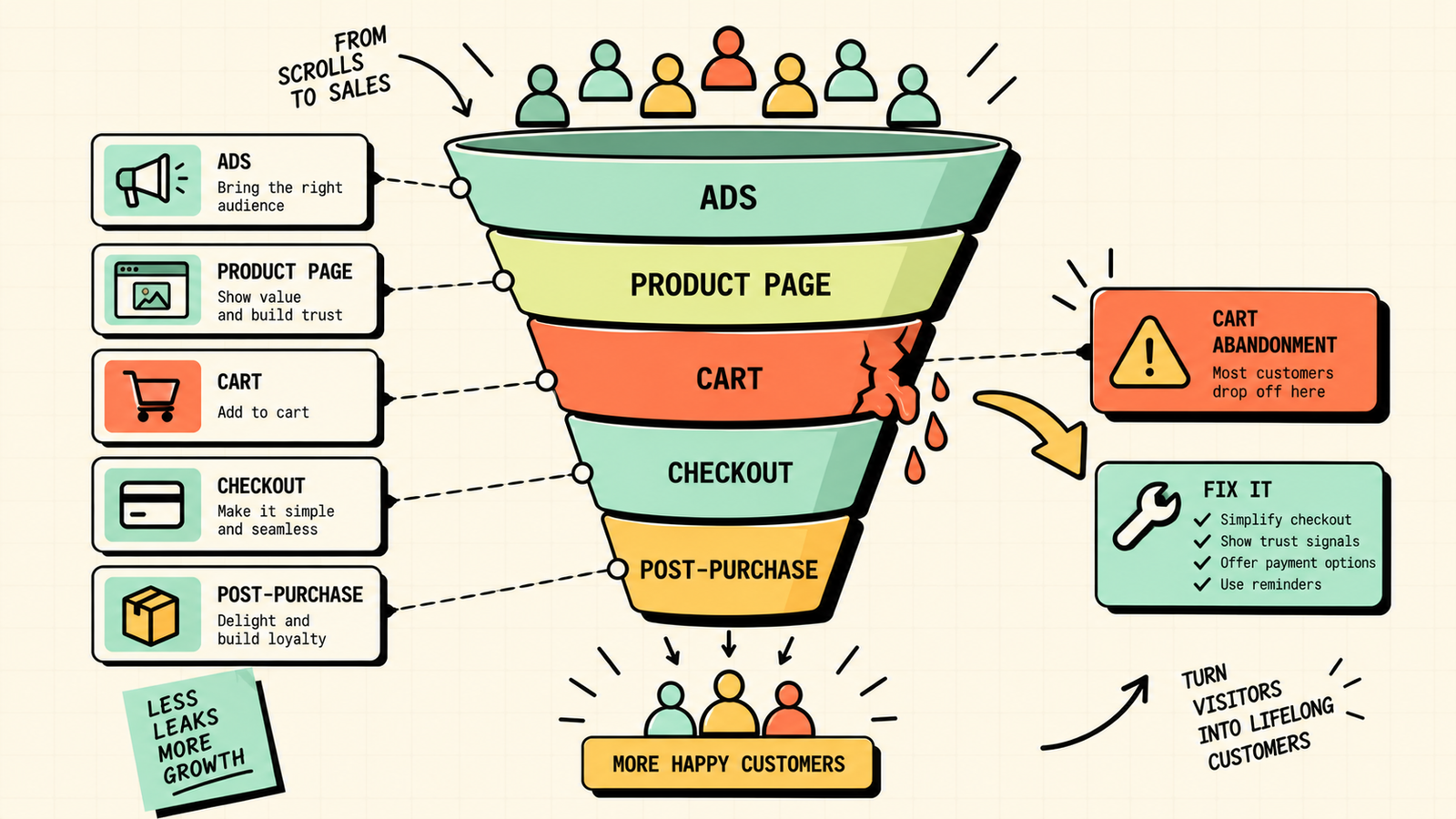
D2C and ecommerce funnels have specific characteristics. The awareness stage is often driven by Meta Ads and social content that introduce the brand visually. The interest stage is captured through email popups and lead magnets (discount codes work well). The decision stage happens on the product page and is influenced heavily by reviews, images, and pricing. The action stage is the checkout, where abandoned cart emails recover a significant share of lost sales. And the retention stage is driven by post-purchase email, WhatsApp, and loyalty programs. For most D2C brands, the biggest funnel leaks are at the product page (not enough trust signals) and the checkout (surprising shipping costs or a complicated process). Fixing those two stages often lifts revenue more than any amount of additional traffic.
How to Do a Competitor Analysis: Find Their Strengths, Exploit Their Gaps
Sales funnel for service businesses
Service businesses have a different funnel shape. Awareness comes through SEO, content, and referrals. Interest is built through educational content and social proof (case studies, testimonials). The decision stage often involves a consultation, proposal, or discovery call. And the action stage is closing the deal. The biggest leak in most service funnels is between interest and decision: people trust the brand but never take the step of reaching out. Making the call to action obvious, offering a low-commitment first step (free audit, free consultation, no-obligation quote), and following up with email nurture is what bridges that gap.
How to find where your funnel leaks
Every funnel leaks somewhere, and finding where is more valuable than adding more traffic at the top. Use Google Analytics to track where visitors drop off: which pages have high exits, where in the checkout process people abandon, and which channels bring traffic that does not convert. Check your email open and click rates to see where the nurture sequence loses attention. Look at your product or service pages' conversion rates to see if interest is turning into action. The stage with the biggest drop-off is the one to fix first, because improving it lifts everything below it in the funnel.
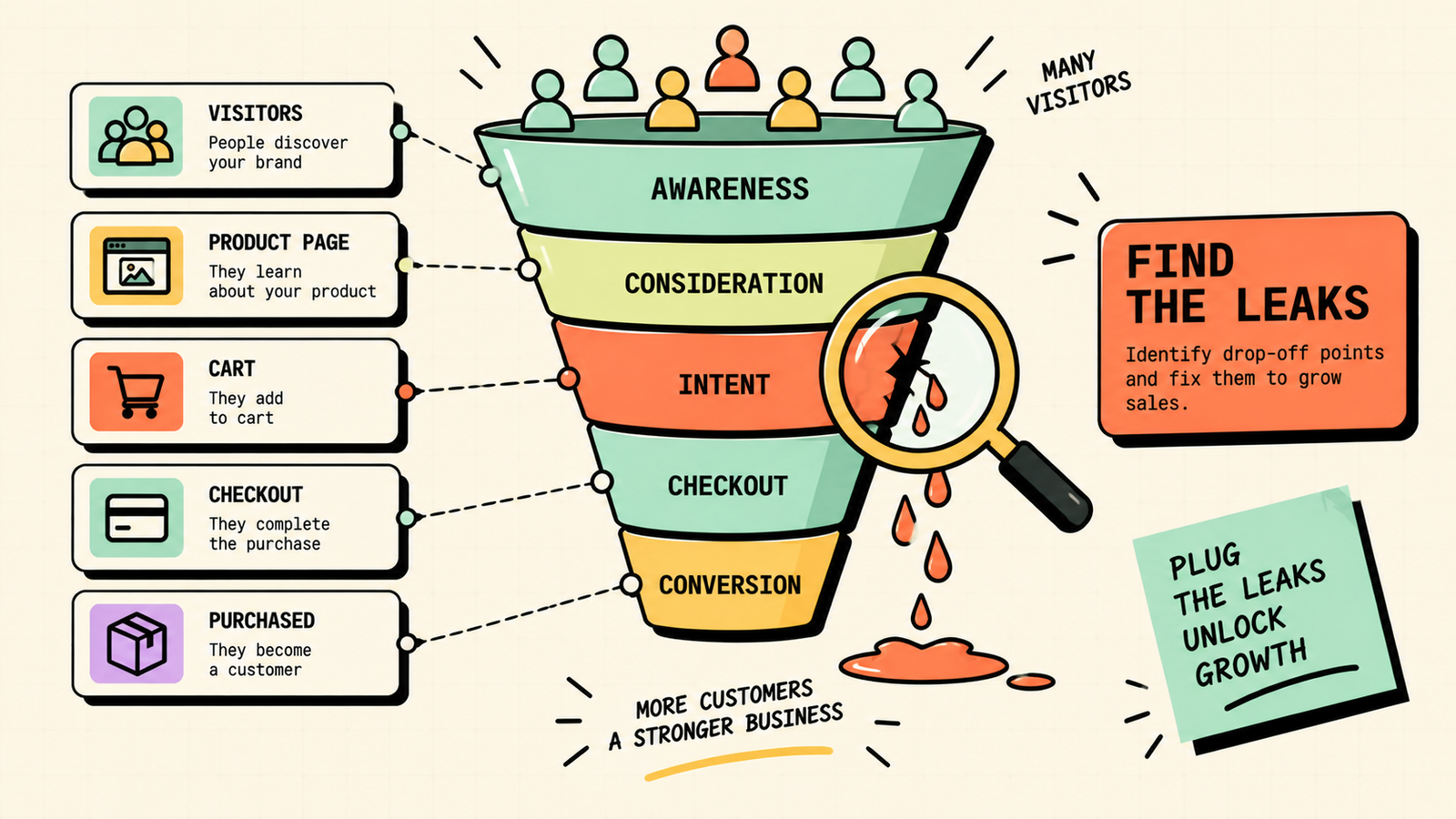
Sales funnel metrics to track
| Metric | What it measures | Where in the funnel |
|---|---|---|
| Traffic | How many people enter the funnel | Awareness |
| Email signups | How many visitors become leads | Interest |
| Open and click rates | How engaged your leads are | Nurture |
| Conversion rate | How many leads become customers | Decision and action |
| Cart abandonment rate | How many drop off at checkout | Action (ecommerce) |
| Customer lifetime value | How much a customer is worth over time | Retention |
| Cost per acquisition | How much you spend to get one customer | Entire funnel |
Common sales funnel mistakes
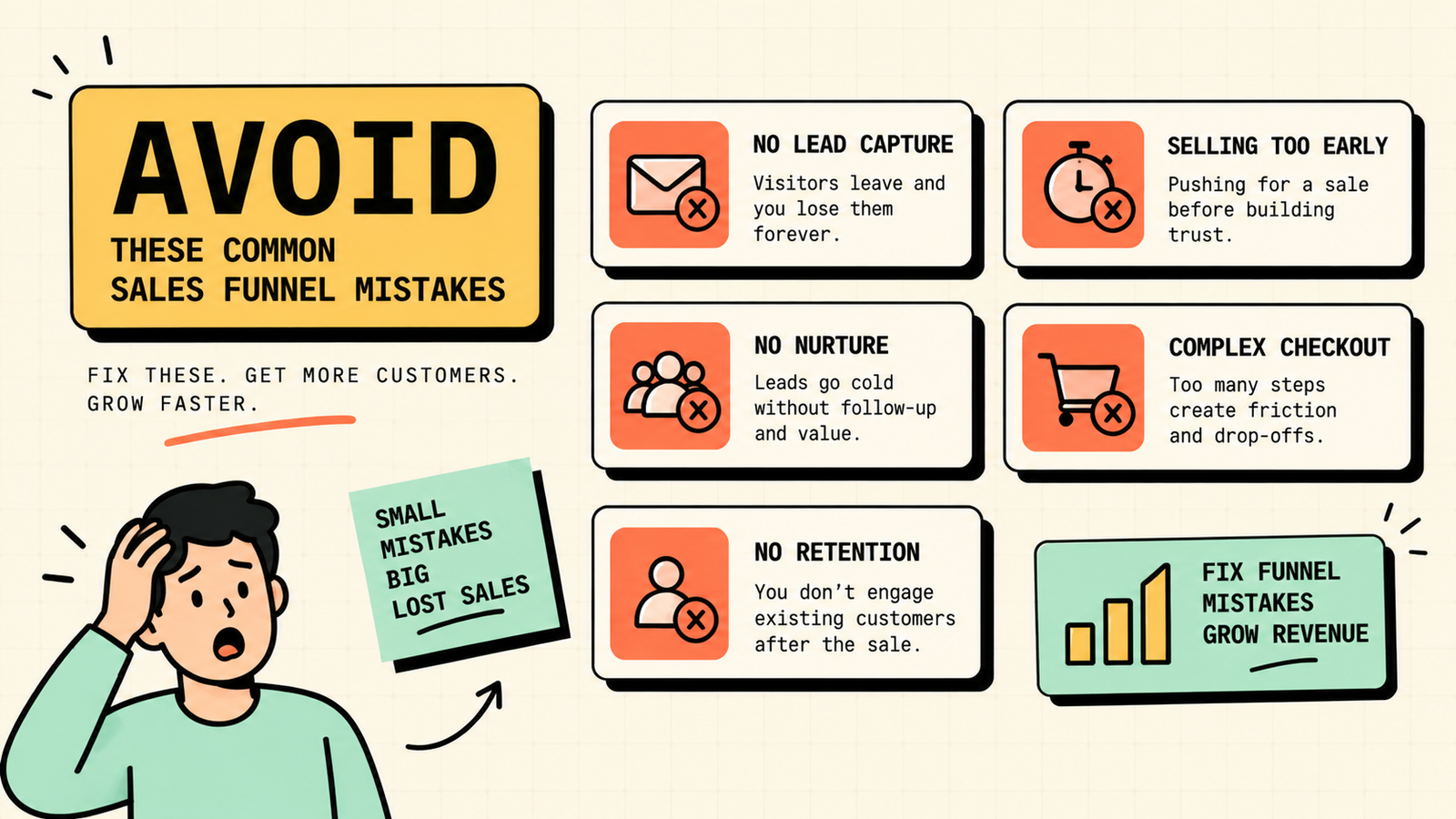
A few patterns quietly kill most funnels. Having no lead capture means everyone who visits and leaves is lost forever. Trying to sell at the awareness stage pushes people away before they trust you. Not nurturing leads with email means interested people forget about you before they are ready to buy. Having a confusing or long checkout process loses people who were ready to convert. Ignoring post-purchase retention means you pay full acquisition cost for every single sale. And not measuring where the funnel leaks means you keep adding traffic at the top while the bottom drains it all away. Fix the leaks before you pour more water in.
How to Do a Marketing Audit: Find What Works, Cut What Does Not
The bottom line
A sales funnel is how you turn strangers into visitors, visitors into leads, leads into customers, and customers into repeat buyers. Map the stages, create content and tactics for each, capture leads with a genuine value exchange, nurture with email, present your offer clearly, make conversion frictionless, and build retention after the sale. Find where the funnel leaks, fix those stages first, and you grow revenue without necessarily needing more traffic. That is the power of a well-built funnel.
If you want experts to build and optimise your funnel through SEO, content, and retention channels, LetMeRank helps founders and brands grow from awareness through conversion, starting with a free audit.