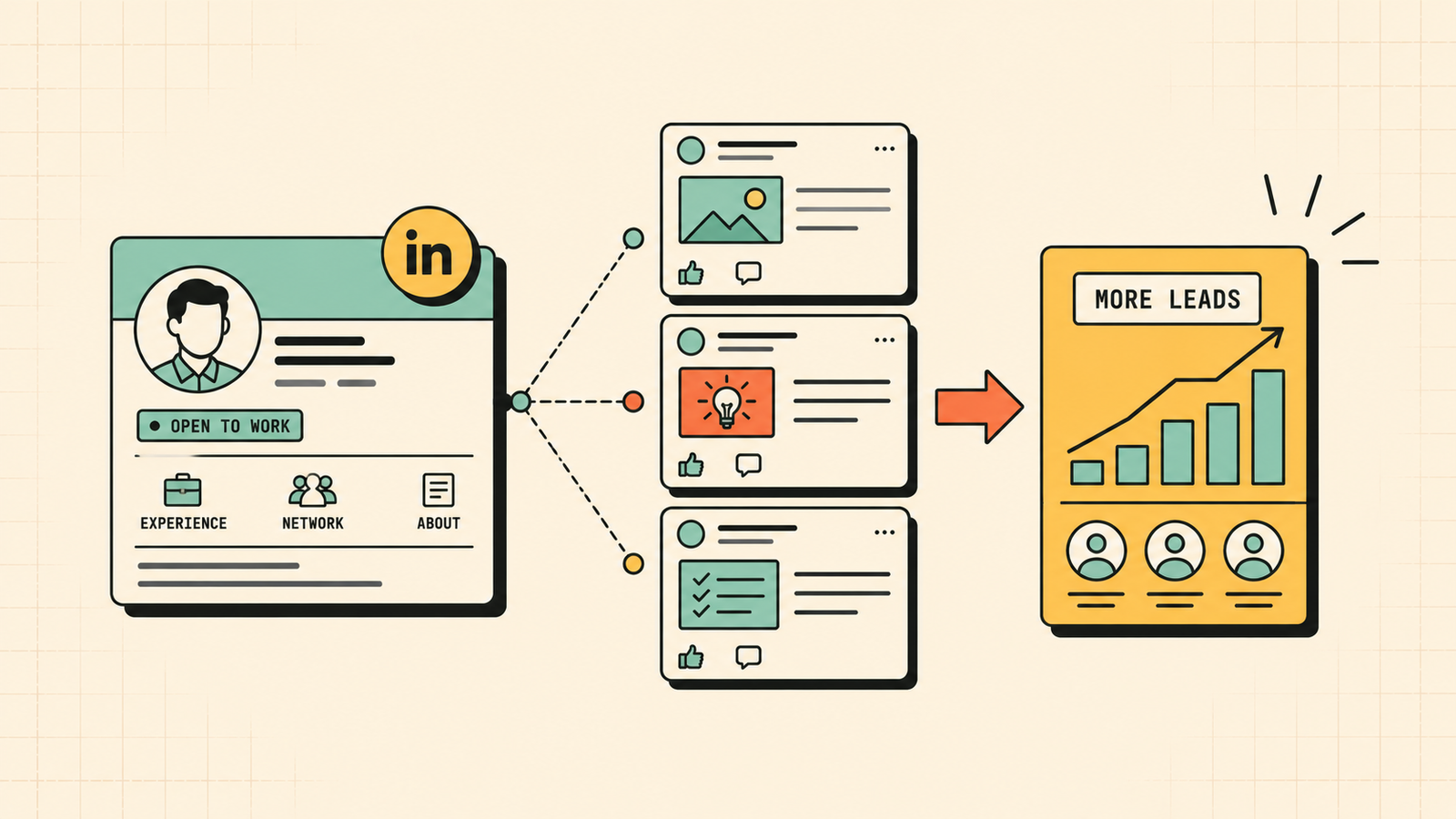
You have a LinkedIn profile. You post sometimes. You get a few likes from your colleagues. And you are starting to wonder whether LinkedIn is just a place people go to congratulate each other on job changes. It is not. LinkedIn is the most underrated marketing channel for founders, service businesses, and anyone selling to other businesses. The organic reach is still generous compared to Instagram and Facebook, the audience is there to do business, and a consistent presence builds the kind of professional trust that no amount of advertising can buy.
This guide covers how to use LinkedIn for marketing, how to grow your audience, what to post, how to generate leads, and the strategy that works for founders and small teams.
Why LinkedIn marketing matters
LinkedIn has over a billion members, and unlike other social platforms, the audience is there in a professional mindset. They are looking for solutions, hiring, learning, and making business decisions. That context makes every interaction more valuable: a connection on LinkedIn is closer to a business relationship than a follower on Instagram.
For founders and B2B brands, LinkedIn offers three things other platforms do not. Organic reach that still rewards good content, meaning you do not need to pay to be seen. A professional audience that is predisposed to doing business. And compound credibility, where every post, comment, and interaction builds a professional reputation that makes sales, hiring, and partnerships easier over time.
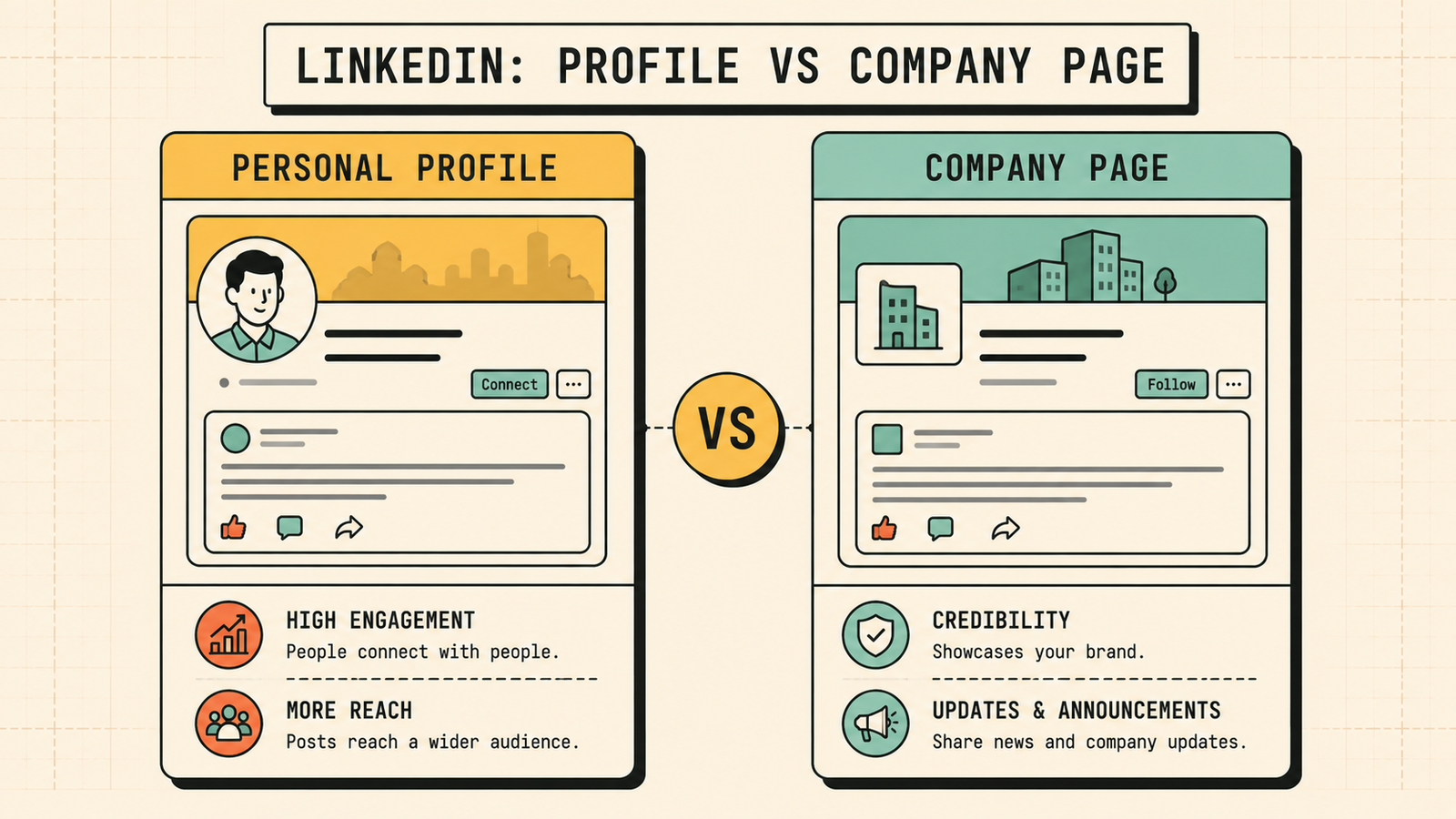
LinkedIn personal brand vs company page
This is the first decision, and the answer is both, but your personal profile matters more. Company pages on LinkedIn have limited organic reach. Personal profiles get dramatically more engagement, because people follow people, not logos. The strategy that works is to build your personal profile as the primary content channel and use the company page for credibility, job postings, and sharing key updates. A founder posting consistently from their personal profile will outperform a company page with ten times the budget.
How to optimise your LinkedIn profile for marketing
Your profile is your landing page. Before posting anything, make sure it works.
Write a headline that says what you do and who you help, not just your job title. "Helping D2C brands grow organic traffic" works better than "Founder at XYZ." Use the About section to tell your story, explain what you do, and include a clear call to action. Add a professional, approachable profile photo and a banner image that reinforces your positioning. Feature your best content, case studies, or links in the Featured section. And make sure your experience section clearly communicates your expertise rather than just listing past roles.
What to post on LinkedIn
Content is what builds your audience and generates leads. Here are the formats that consistently work.
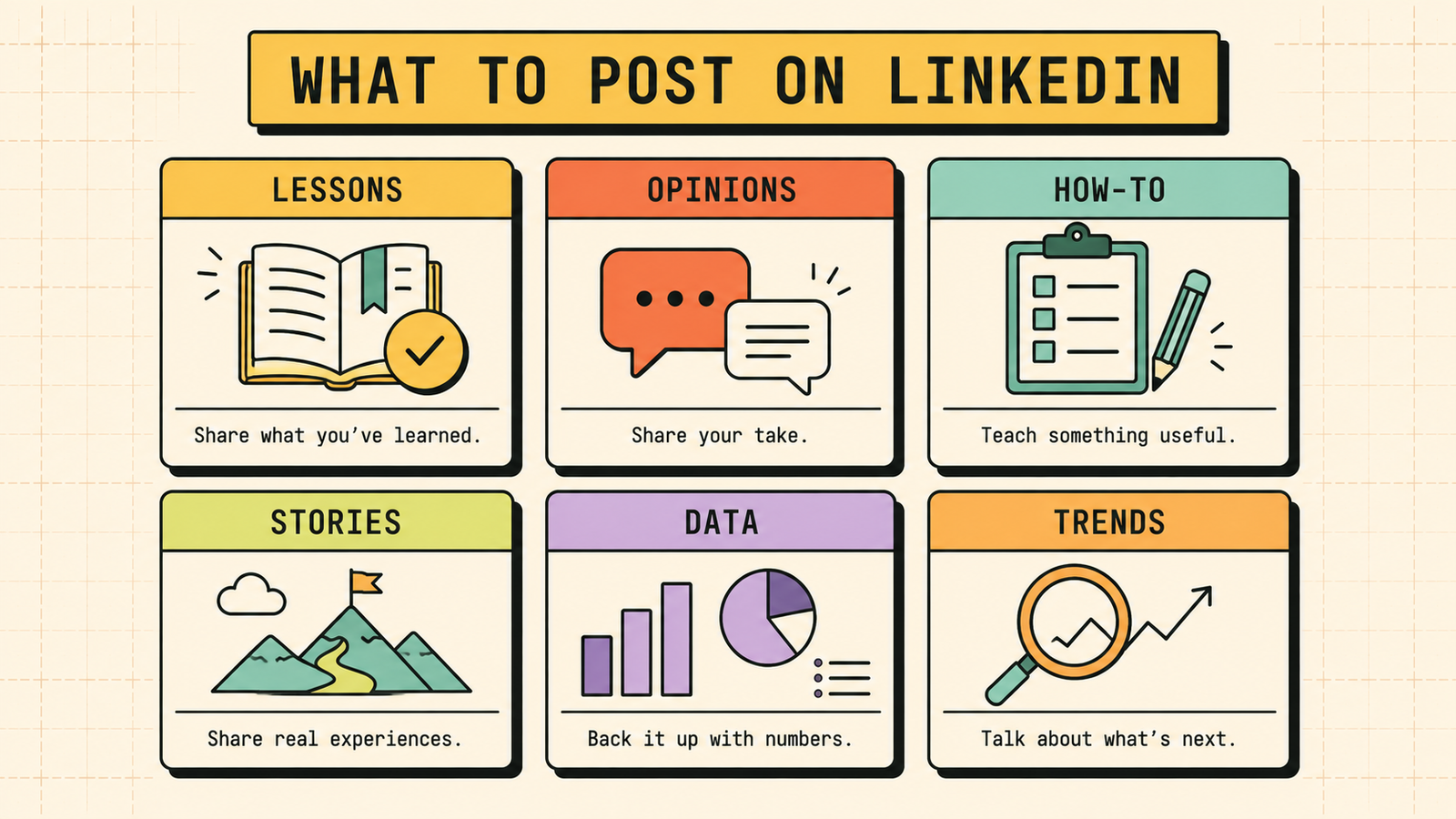
Write about lessons from your work: something you learned, a mistake you made, a process that worked. These are relatable, valuable, and build trust. Share your opinions and takes on your industry: what you agree with, what you think is wrong, and where things are heading. Give tactical advice and how-to content that your audience can apply immediately. Tell stories from your business: wins, challenges, behind-the-scenes decisions. Share data, frameworks, and original thinking that positions you as a genuine expert. And comment thoughtfully on trending topics in your field.
The format that matters most on LinkedIn is text posts. Carousels (document posts) work well for structured, visual content. Videos work for building personal connection. But plain, well-written text posts consistently get the best reach and engagement for the least production effort.
How often to post on LinkedIn
Consistency matters more than frequency. Three to five posts per week is the sweet spot for building momentum without burning out. Posting daily can work if you have enough to say and can maintain quality. Posting once a week is too infrequent to build traction. The key is showing up regularly so the algorithm and your audience learn to expect you. Batching content creation (writing several posts at once and scheduling them) makes consistency sustainable for a busy founder.
We'll find exactly how to turn your LinkedIn presence into a lead-generating machine.
Get a clear, data-backed plan to optimise your profile, build your audience, and generate inbound business on LinkedIn.
How to grow your LinkedIn audience
Growing on LinkedIn follows the same logic as any platform: provide value, be consistent, and engage. Post consistently with content your target audience finds useful or interesting. Comment thoughtfully on other people's posts, especially people with larger audiences in your niche, because your comments are visible to their audience. Connect intentionally with people in your target market, not randomly. Engage with every comment on your posts, since the algorithm rewards conversations. And repurpose your best content from other channels into LinkedIn-native formats. Growth on LinkedIn is slower but more valuable per follower than on other platforms, because each connection is a potential business relationship.
How to generate leads from LinkedIn
LinkedIn is one of the strongest lead-generation channels for B2B and service businesses. The organic approach is to build trust through consistent content, then make it easy for people to reach out. Include a clear call to action in your profile and in some of your posts (not every one). Use the DMs, but only after building rapport through content and comments, never cold-pitch strangers. Share case studies and results that demonstrate what you do. And let your content do the selling by consistently showing expertise, so when someone needs your service, you are the name they think of.
For a more direct approach, LinkedIn's Sales Navigator lets you find and reach specific decision makers with targeted outreach. Use it alongside your content, not instead of it, because outreach from a profile with no content and no engagement looks like spam.
Influencer Marketing: How to Find the Right Creators and Get Real Results
LinkedIn marketing for founders
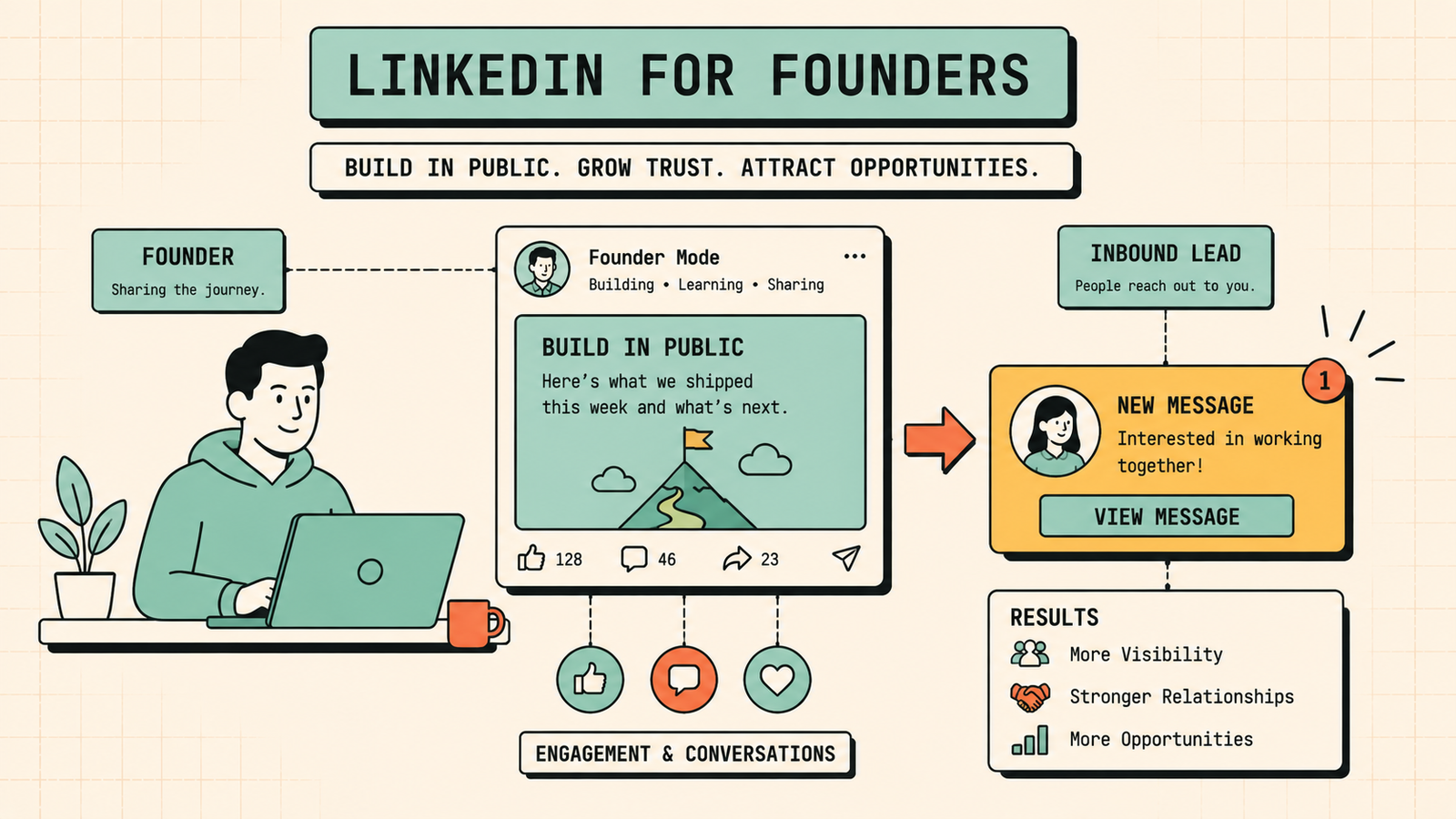
Founders have an unfair advantage on LinkedIn: people are genuinely interested in the founder journey. Sharing your building process, your decisions, your challenges, and your thinking out loud attracts an audience that root for you and naturally want to work with you or buy from you. This "build in public" approach turns LinkedIn from a job board into a trust-building machine that generates inbound leads, partnerships opportunities, and brand awareness, all from the same activity. The founders winning on LinkedIn are not polished marketers. They are real people sharing real work, and that authenticity is what earns attention.
LinkedIn content strategy for B2B
B2B marketing on LinkedIn works because the platform is where your buyers spend professional time. The B2B content strategy is thought leadership (share your perspective on your industry, backed by experience), educational content (teach something your audience needs to know), social proof (share results, testimonials, and wins), and engagement (comment on and share content from potential clients and partners). The goal is not to sell in every post. It is to be so consistently helpful and visible that when a prospect needs what you offer, you are the first name that comes to mind. LinkedIn content for B2B is a long game that compounds: each post adds to a body of work that builds trust over months.
LinkedIn Ads: when to add paid
LinkedIn Ads are expensive compared to Meta or Google, but they offer the most precise B2B targeting available: by job title, company size, industry, seniority, and more. Use them when organic content has built your foundation and you want to accelerate reach to a specific audience, when you are promoting a high-value offer (webinar, whitepaper, demo) to decision makers, or when your deal size justifies the higher cost per click. For most small businesses, start with organic and add paid only when the organic engine is running and you have a specific, high-value campaign to promote.
LinkedIn algorithm: how it decides what to show
The LinkedIn algorithm prioritises content that keeps people on the platform and generates genuine engagement. Posts that get early comments and reactions in the first hour get shown to more people. Posts from connections are favoured over posts from pages. Conversations in the comments boost reach more than likes alone. And the algorithm penalises external links in the post body, because they send people off LinkedIn. Put your link in the comments instead of the post, and you protect your reach while still driving traffic.
Google Ads for Beginners: How to Run Your First Campaign Without Wasting Money
Common LinkedIn marketing mistakes
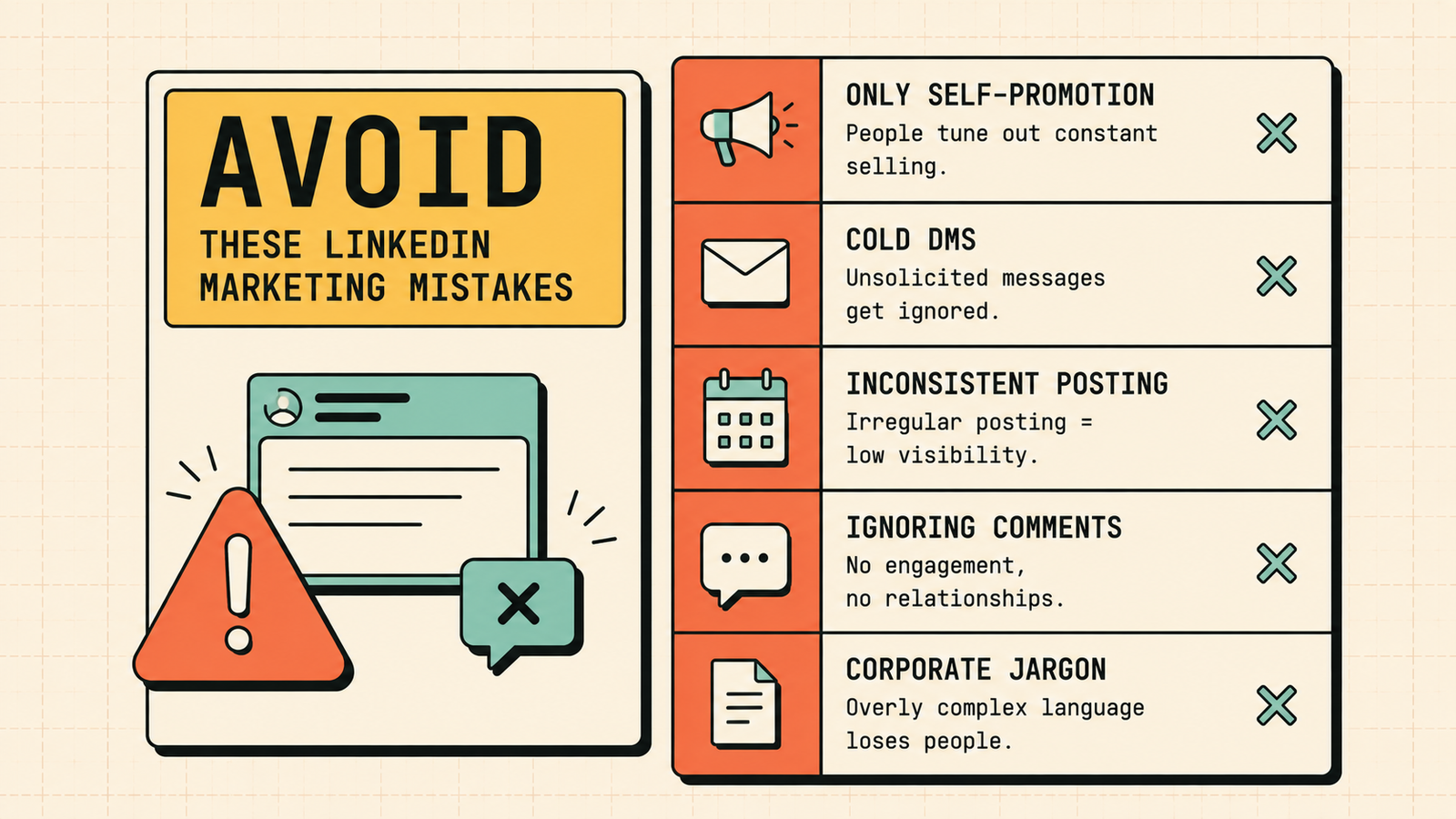
A few patterns kill your results. Posting only about yourself and your company turns your profile into an ad nobody follows. Cold-pitching strangers in DMs without any prior engagement gets you blocked. Posting inconsistently means the algorithm forgets you. Ignoring comments on your own posts kills the conversation signal the algorithm needs. Writing in corporate jargon instead of human language makes your posts invisible. And treating LinkedIn like every other platform (same content, same format) misses the professional context that makes it unique. Show up as a person, provide real value, engage genuinely, and LinkedIn rewards you with reach, trust, and business.
How to track your LinkedIn marketing results
LinkedIn gives you analytics on your profile and posts, and checking them regularly tells you what is working. For your profile, track profile views and search appearances, which show whether your optimisation is attracting the right people. For your posts, track impressions (reach), engagement rate (reactions, comments, shares relative to impressions), and follower growth. Look for patterns: which topics get the most engagement, which formats perform best, and which posts drive profile visits and connection requests. Do more of what works and less of what does not. A monthly review takes fifteen minutes and keeps your strategy honest rather than assumption-driven.
How to repurpose content for LinkedIn
You do not need to create everything from scratch. Turn a blog post into a LinkedIn text post highlighting the key insight. Turn a podcast episode or video into a written story with the best takeaway. Turn a customer result into a short case study post. Turn a Twitter/X thread into a LinkedIn carousel. And turn a presentation into a series of individual slide posts. Every strong piece of content you create elsewhere can become two or three LinkedIn posts with minimal effort, which keeps your feed active without doubling your workload. The key is adapting the format and tone to LinkedIn's professional, conversational style rather than just copy-pasting from another platform.
AI Tools for Marketing
The bottom line
LinkedIn marketing is one of the highest-leverage channels for founders, B2B brands, and service businesses. Optimise your profile, post three to five times a week with genuinely useful content, engage in conversations, and let your expertise build trust over time. The organic reach is still generous, the audience is professional and ready to do business, and each connection is worth more than a hundred followers on other platforms.
If you want help building your LinkedIn, content, and organic growth strategy together, LetMeRank helps founders and brands grow across every channel, starting with a free audit.