You boosted a post, Meta took your money, you got some likes from people in a country you have never heard of, and not a single person bought anything. That is not Meta Ads failing. That is Meta Ads without a strategy.
Meta Ads (the platform that runs Facebook and Instagram advertising) is one of the most powerful customer acquisition tools available, especially for D2C, ecommerce, and service brands. But it rewards the people who understand its logic and punishes the ones who just hit "Boost Post" and hope. This guide covers how Meta Ads work, how to set up and run your first real campaign, the targeting and creative that matter, and the mistakes that waste the most money.
What are Meta Ads?
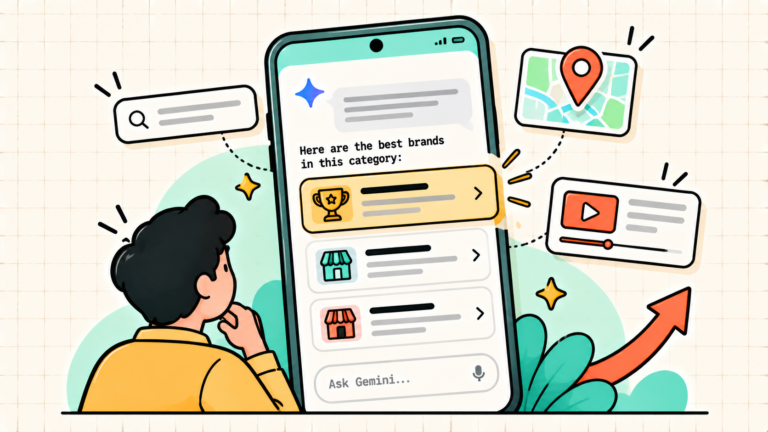
Meta Ads is the advertising platform that lets you show paid ads across Facebook, Instagram, Messenger, and Meta's partner network. Unlike Google Ads, where you target people actively searching, Meta Ads target people based on who they are, what they are interested in, and what they have done, even if they are not searching for your product right now.
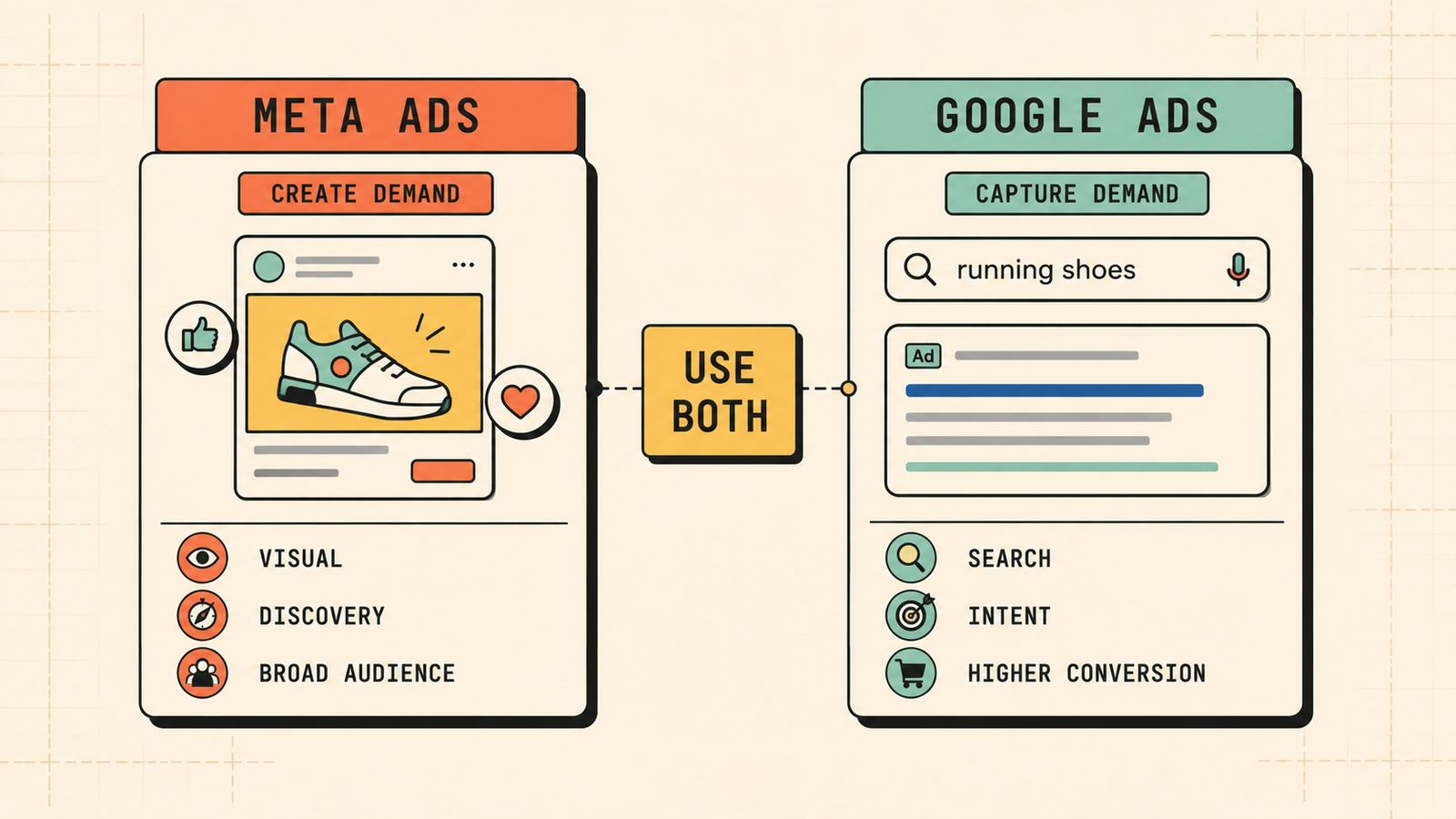
That distinction matters. Google Ads capture existing demand. Meta Ads create demand by putting your product in front of the right people at the right time, before they even knew they wanted it. That makes Meta Ads the engine behind most D2C brand growth, because they are how you reach people who have never heard of you and turn them into customers.
How Meta Ads work
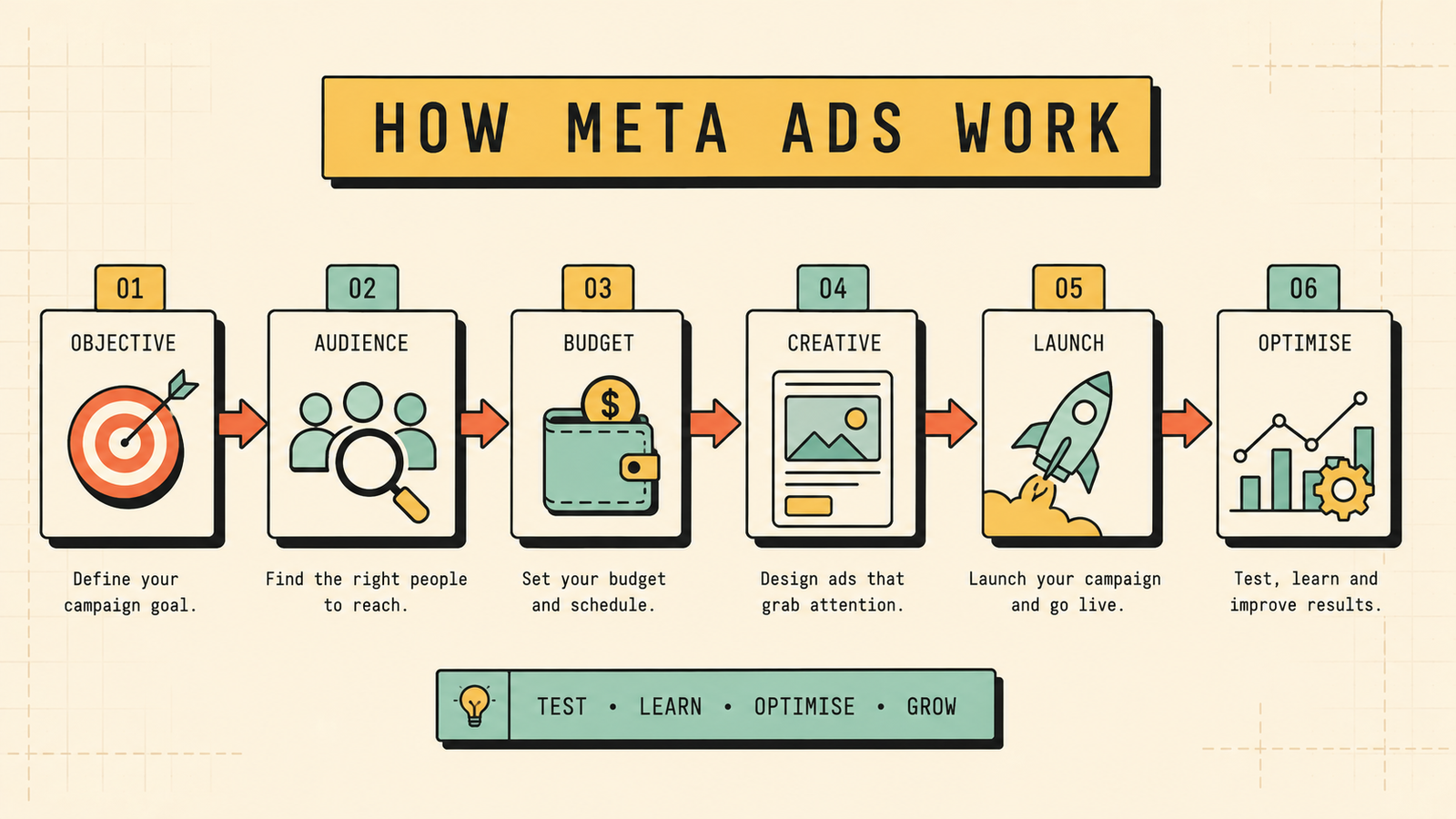
Meta runs an auction every time there is an opportunity to show someone an ad. Your ad competes based on three things: your bid (how much you are willing to pay), the estimated action rate (how likely Meta thinks the person is to take the action you want), and ad quality (how relevant and engaging your ad is). Better creative and targeting mean lower costs and better results, which is why strategy matters more than budget.
You choose a campaign objective (what you want to achieve), define an audience (who sees the ad), set a budget, create the ad (image or video plus text), and Meta's algorithm finds the people most likely to take the action you want.
Types of Meta Ads campaigns
| Campaign objective | What it does | Best for |
|---|---|---|
| Awareness | Shows your ad to as many relevant people as possible | Brand building, launches |
| Traffic | Sends people to your website or app | Blog visits, landing pages |
| Engagement | Gets likes, comments, shares, and follows | Growing social proof |
| Leads | Collects contact info through in-app forms | Service businesses, B2B |
| Sales (Conversions) | Drives purchases or signups on your site | Ecommerce, D2C |
| App installs | Drives downloads | Apps |
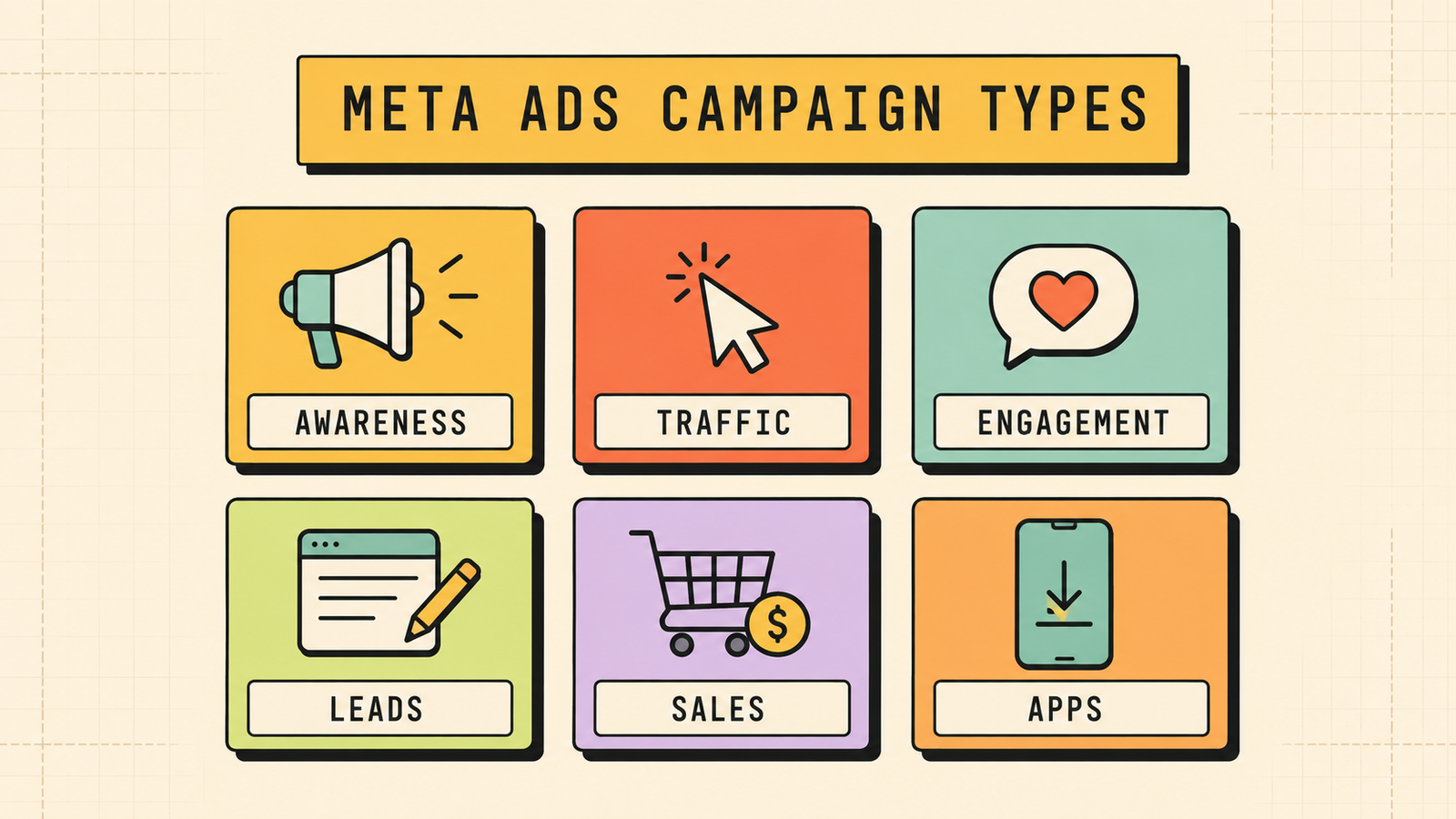
For most businesses, start with Sales (Conversions) if you sell online, or Leads if you collect inquiries. These tell Meta to find people who will actually buy or sign up, not just look.
How to set up your first Meta Ads campaign
1. Set up Meta Business Suite and Ads Manager
Create a Meta Business account, set up your ad account, and install the Meta Pixel on your website. The Pixel tracks what visitors do after clicking your ad (view a product, add to cart, purchase), which is essential for measuring results and letting Meta optimise for conversions.
2. Define your audience
Meta offers three audience types. Saved audiences let you target by location, age, gender, interests, and behaviours. Custom audiences let you target people who already interacted with your business (website visitors, email list, Instagram engagers). Lookalike audiences let Meta find new people similar to your best existing customers. For beginners, start with a saved audience of your most likely buyers, then build custom and lookalike audiences as you collect data.
3. Choose your placement
Placements are where your ad appears: Facebook feed, Instagram feed, Reels, Stories, Messenger, Audience Network. For beginners, use Advantage+ placements (formerly automatic), which lets Meta show your ad wherever it performs best. Manual placement selection is useful later once you have data on what works.
4. Set your budget
Start with a daily budget you can afford to spend while learning. For most small businesses in India, 500 to 2,000 rupees per day is a reasonable starting point. Meta needs about 50 conversion events per week to optimise effectively, so set your budget high enough for the algorithm to learn. If your cost per conversion is 200 rupees, you need at least 10,000 rupees per week to hit that 50-event threshold.
5. Create your ad
This is where most campaigns succeed or fail. Your ad creative (image or video) is the single biggest factor in performance. Use scroll-stopping visuals that stand out in the feed. Keep your primary text short and benefit-focused. Include a clear call to action. Test multiple creatives from day one, because even experienced advertisers cannot predict which creative will win. Video tends to outperform static images on cost per result, but test both.
6. Launch and monitor
Launch the campaign, then resist the urge to change everything after one day. Give Meta's algorithm at least three to five days to learn and optimise before making changes. Watch your cost per conversion, not your cost per click, because clicks without conversions are just expensive scrolling. After the learning phase, pause what is not working and scale what is.
We'll find exactly why your ad spend isn't turning into customers.
Get a clear, data-backed plan to optimise your campaigns for conversions and lower your cost per customer on Facebook and Instagram.
The Meta Ads metrics that matter
| Metric | What it tells you |
|---|---|
| CPM (cost per 1,000 impressions) | How much it costs to reach people |
| CTR (click-through rate) | How compelling your ad is |
| CPC (cost per click) | What you pay per click |
| Cost per conversion | What you pay per sale, lead, or signup |
| ROAS (return on ad spend) | Revenue generated per rupee spent |
| Frequency | How many times the same person sees your ad |
Cost per conversion and ROAS are the numbers that matter most. Everything else is diagnostic. A low CPM and high CTR mean nothing if nobody converts.
Influencer Marketing: How to Find the Right Creators and Get Real Results
Meta Ads creative that works
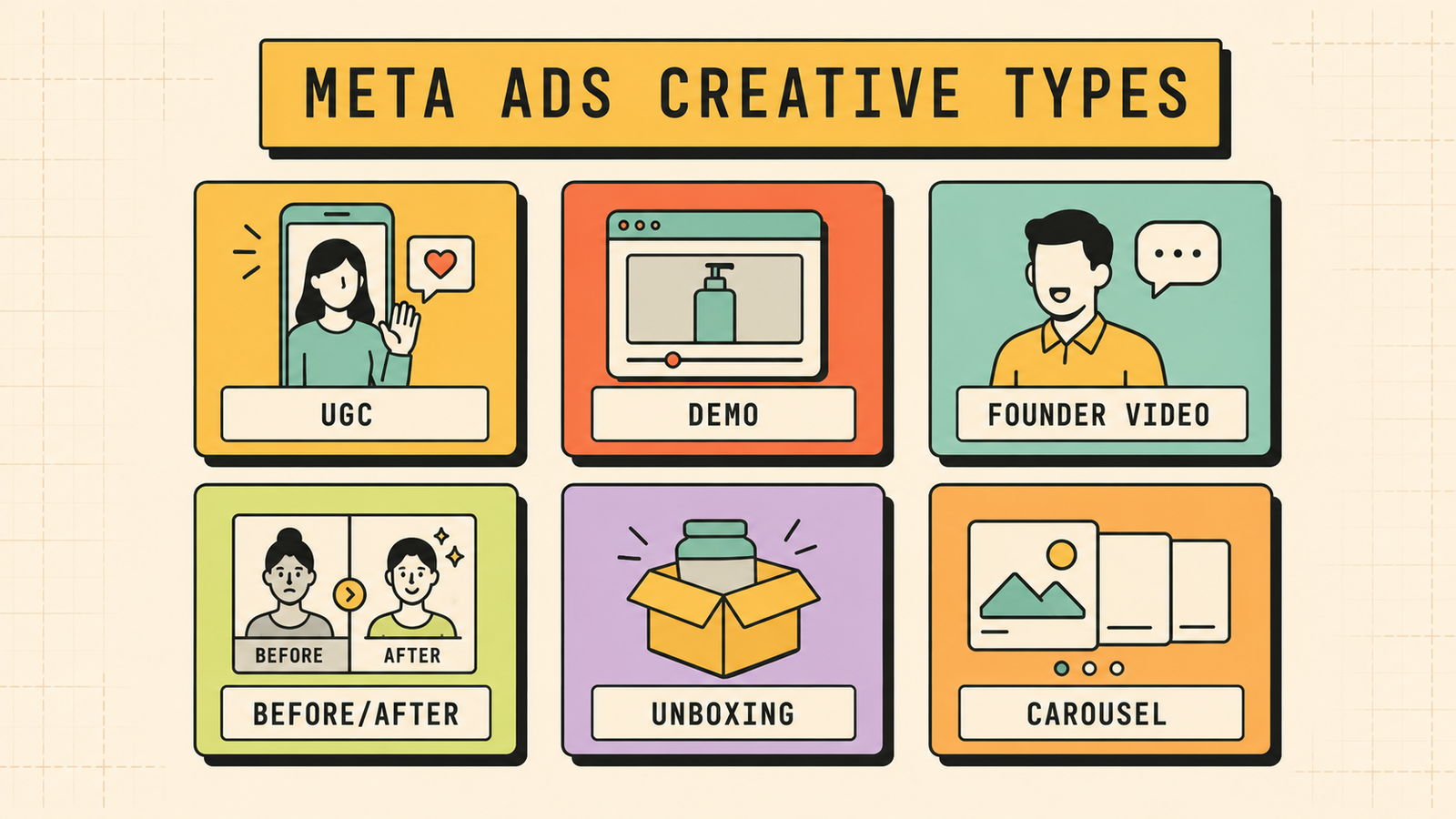
Creative is your biggest lever, and a few formats consistently outperform. User-generated content (real customers using or reviewing your product) builds trust and feels native to the feed. Before-and-after results show transformation. Product demos show what the product actually does. Founder-to-camera videos build personal connection and trust. Unboxing content creates excitement. And carousel ads that tell a story or show multiple products drive engagement. The common thread: authenticity beats polish. An iPhone video of a real customer outperforms a studio shoot more often than most brands expect.
Meta Ads for D2C and ecommerce
D2C brands built their growth on Meta Ads, and despite rising costs it remains one of the most effective acquisition channels when done right. The D2C playbook is running broad targeting with strong creative and letting Meta's algorithm find buyers, building and scaling lookalike audiences from your best customers, running dynamic product ads that show people the exact products they browsed, setting up retargeting campaigns for cart abandoners and site visitors, and testing creative constantly since creative fatigue is the biggest performance killer. The brands winning on Meta in a high-cost environment are the ones with the best creative, not the biggest budgets.
How much do Meta Ads cost?
Costs depend on your industry, audience, creative quality, and competition. In India, CPMs typically range from 50 to 500 rupees. Cost per click runs from 5 to 50 rupees in most categories. Cost per purchase varies widely but averages 200 to 1,500 rupees for most D2C brands. The actual question is not "how much does it cost" but "what is my cost per conversion and is it profitable." Track ROAS and cost per acquisition, and scale only when the numbers work.
Meta Ads vs Google Ads: which should you use?
They serve different roles. Google Ads capture existing demand (people already searching), while Meta Ads create demand (reaching people who do not know they want your product yet). Google is higher intent per click. Meta is better for discovery and visual products. Most D2C brands start on Meta because their product needs to be seen to be wanted, then add Google as branded and product searches grow. Most service businesses start on Google because their customers are actively searching for solutions. The best answer for most businesses is both, using each for what it does best.
Google Ads for Beginners: How to Run Your First Campaign Without Wasting Money
Common Meta Ads mistakes
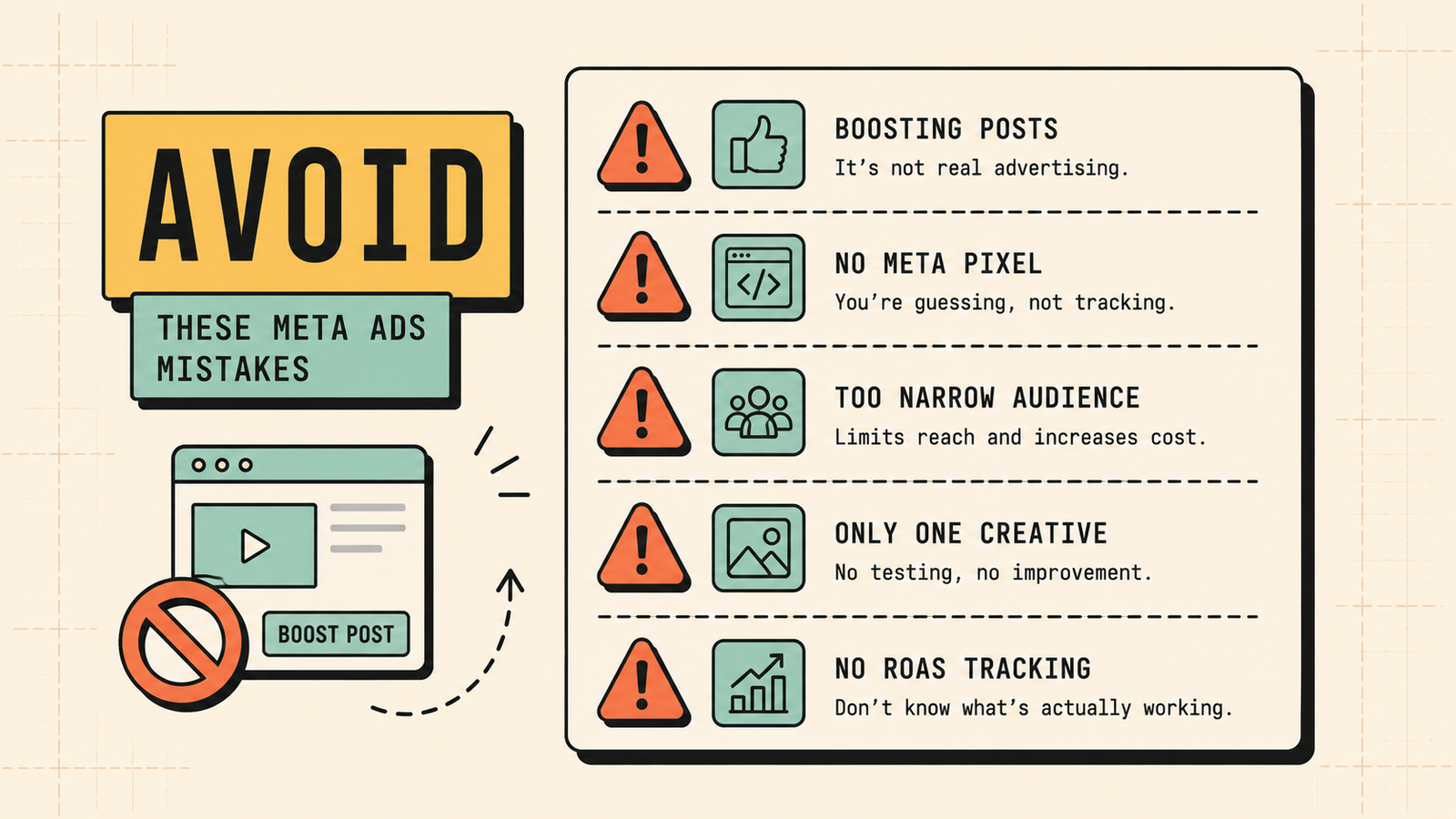
A few patterns waste the most money. Boosting posts instead of running proper campaigns from Ads Manager skips the targeting and optimisation that make Meta Ads work. Not installing the Pixel means Meta cannot track or optimise for conversions. Targeting too narrow an audience limits Meta's algorithm and raises costs. Changing campaigns during the learning phase resets the optimisation and wastes the data you paid for. Running one ad creative means you never discover what works and you fatigue your audience fast. And not tracking ROAS means you have no idea whether your spend is profitable. Set up properly, test creative, let the algorithm learn, and measure what matters.
AI Tools for Marketing
The bottom line
Meta Ads are one of the most powerful tools for reaching new customers, especially for D2C and ecommerce brands. Install the Pixel, start with a conversion or leads objective, define your audience, create multiple ad variations, set a learning-friendly budget, and measure cost per conversion and ROAS. Creative quality is your biggest lever, and testing is how you find what works. Start small, learn from the data, and scale what is profitable. The brands that win on Meta are not the ones with the biggest budgets. They are the ones with the best creative and the discipline to test.
If you want help building both your paid and organic growth strategy, LetMeRank helps founders and brands grow through SEO, ads, and AI search, starting with a free audit of your biggest growth opportunities across every channel.