You paid an influencer, they posted about your product, you got a spike in followers, and then nothing happened. That is what influencer marketing looks like without a strategy.
When done right, it is one of the most effective ways to build trust, reach new audiences, and drive sales through people your customers already listen to. This guide covers how influencer marketing works, how to find the right creators, how to structure a partnership that actually drives results, and the mistakes that waste the most money.
What is influencer marketing?
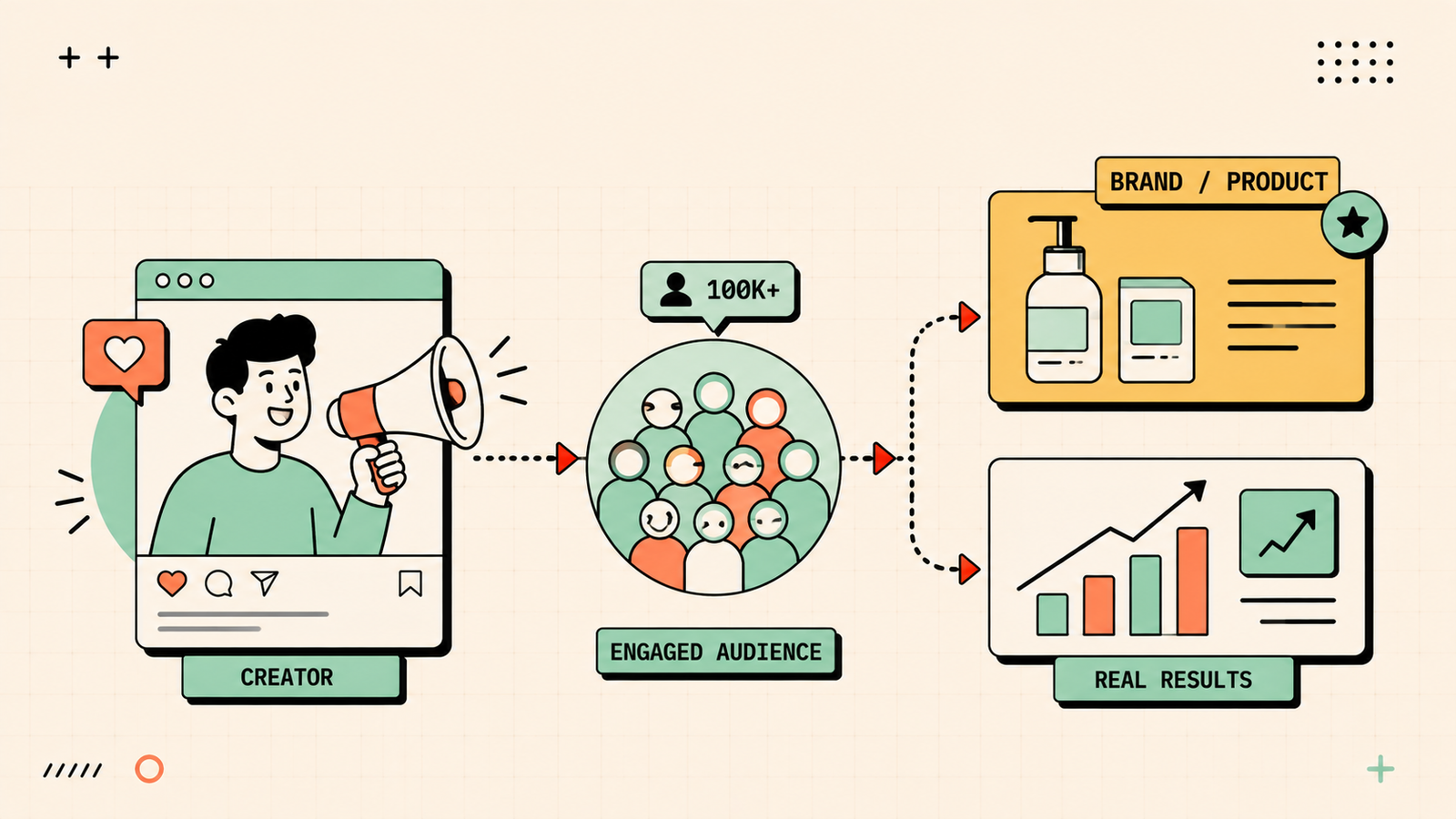
Influencer marketing is a form of marketing where you partner with people who have an engaged audience on social media or other platforms, and they promote your product or brand to that audience. The power of it is borrowed trust: when someone your target customer already follows and respects recommends your product, it carries more weight than your own ad ever could.
It works because people trust recommendations from people they follow more than they trust ads from brands. That trust gap is what makes influencer marketing effective when the partnership is genuine, and what makes it wasteful when the partnership is forced or fake.
Types of influencers
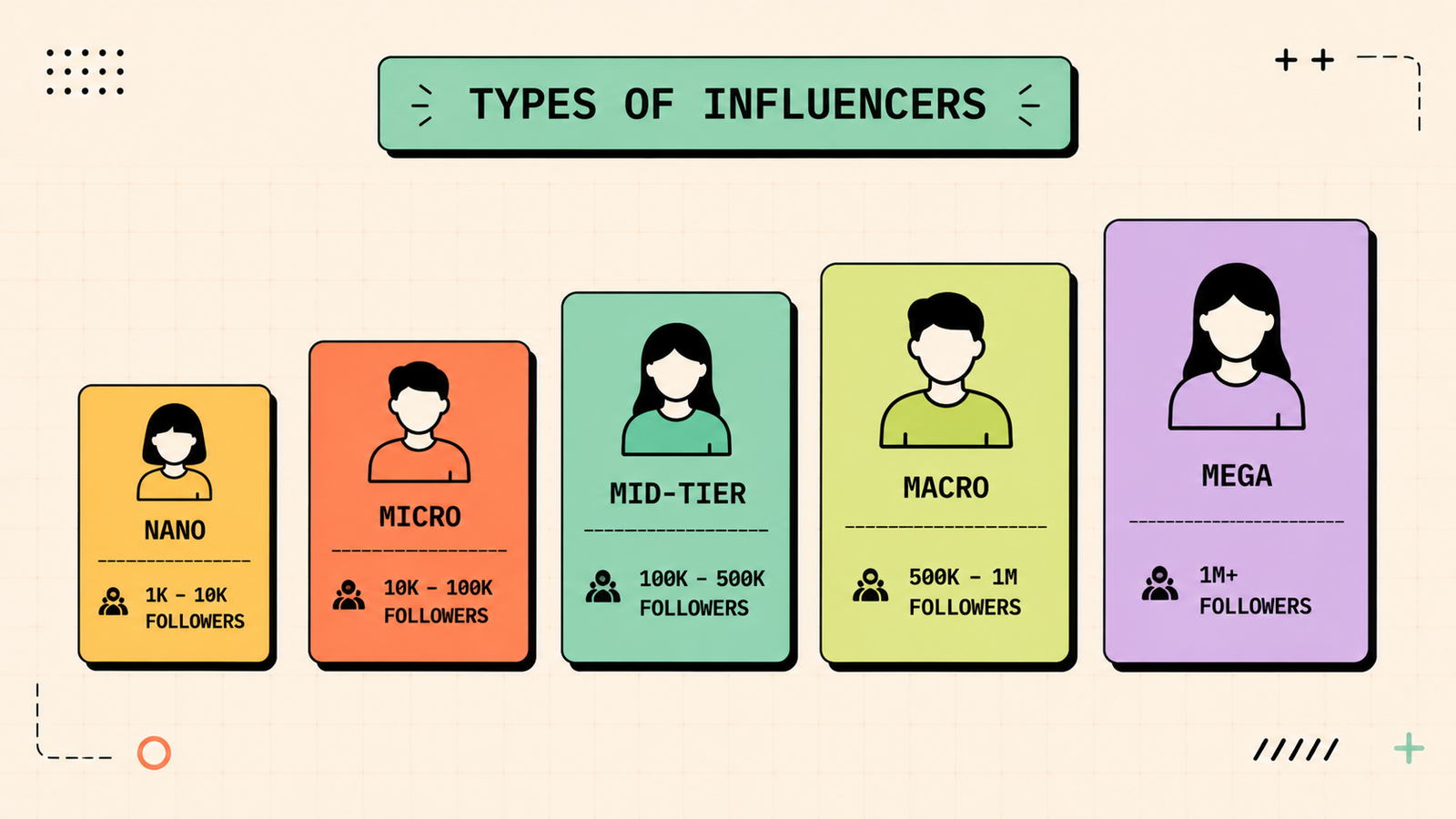
Not all influencers are the same, and the right type depends on your budget and goals.
| Type | Follower range | Typical cost | Best for |
|---|---|---|---|
| Nano | 1K to 10K | Free product or very low fee | Hyper-niche audiences, authentic feel |
| Micro | 10K to 100K | Low to moderate fee | Engaged communities, strong trust |
| Mid-tier | 100K to 500K | Moderate fee | Reach with some engagement |
| Macro | 500K to 1M | Higher fee | Wide reach, brand awareness |
| Mega / celebrity | 1M+ | High to very high | Mass awareness, launches |
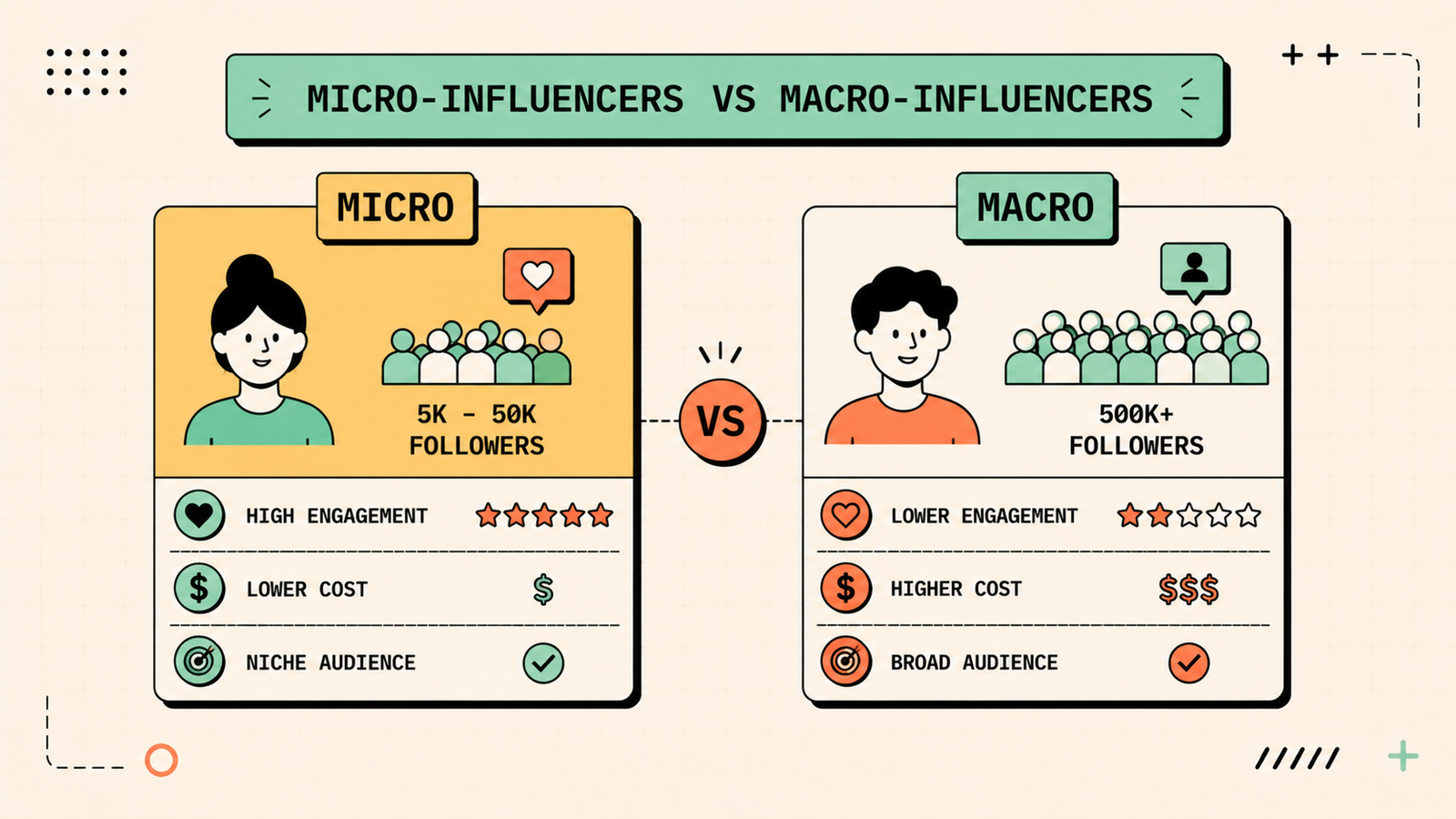
For most small and D2C brands, micro and nano influencers deliver the best return. Their audiences are smaller but more engaged and trusting, and the cost is a fraction of a macro or celebrity deal. Ten micro-influencers often outperform one macro influencer on both engagement and conversions.
How to find the right influencers
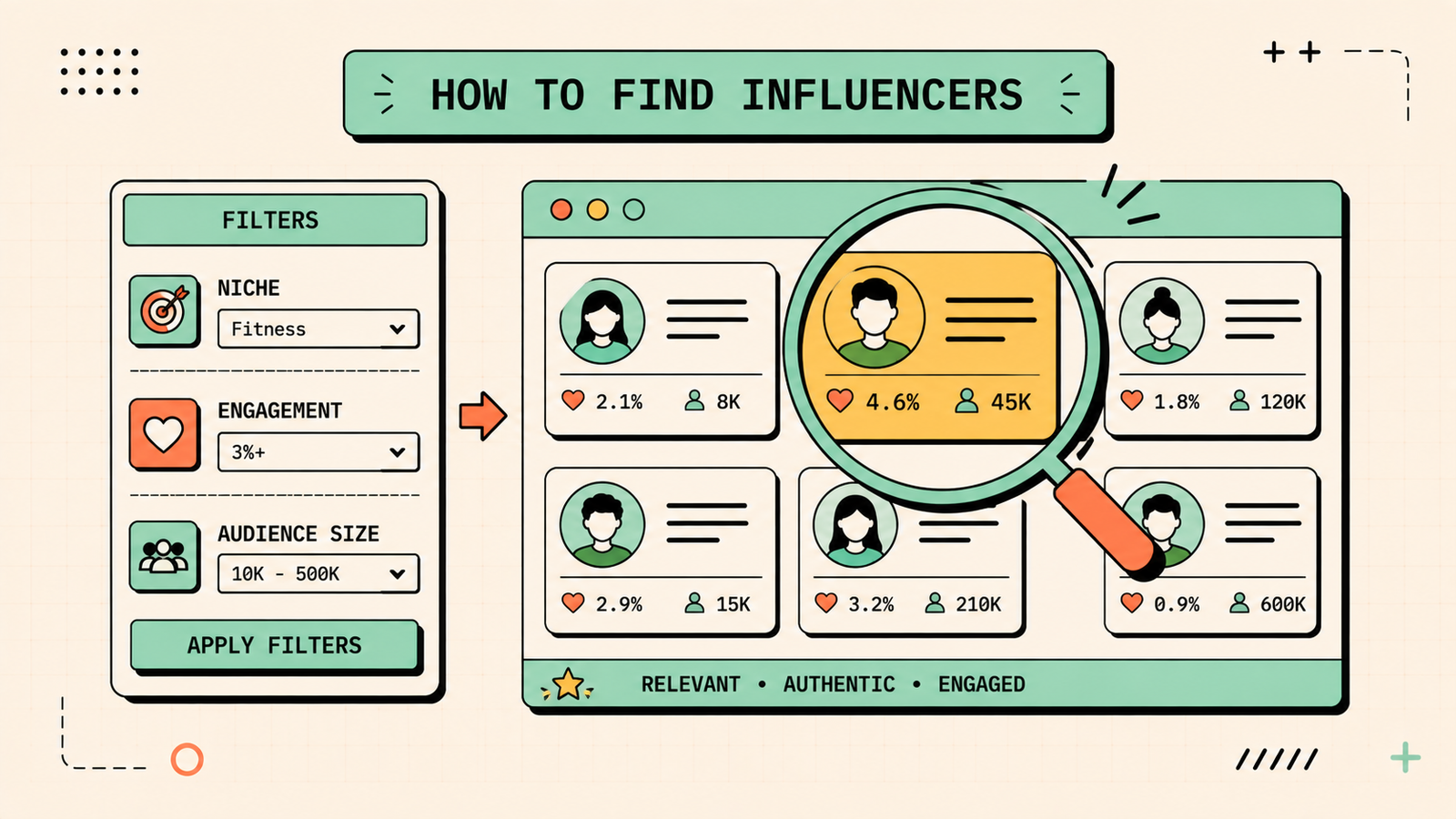
Finding creators who are a genuine fit is the hardest and most important part. Start with your own customers and followers, since people who already love your product are the most authentic partners. Search hashtags and keywords relevant to your niche on Instagram, TikTok, and YouTube. Use influencer discovery platforms (like Upfluence, Heepsy, or Collabstr) to filter by niche, location, audience size, and engagement rate. And check the influencer's engagement rate, not just followers, since a smaller, engaged audience converts better than a large, passive one.
The non-negotiable filter: does this person's audience overlap with your target customer? A fitness influencer with a million followers is worthless for a B2B SaaS product. Relevance beats reach every time.
How to evaluate an influencer before partnering
Before you reach out, check a few things that separate a genuine opportunity from a waste of money. Look at engagement rate (likes, comments, and saves relative to followers), not just follower count. Read the comments to see if they are genuine interactions or spam. Check whether the influencer has promoted too many brands in your category recently, since audiences notice and trust drops. Look at the quality of their content and whether it matches your brand's aesthetic. And ask for their audience demographics (age, location, gender) to confirm they actually reach your customers.
We'll find the right creators to turn your influencer budget into real sales.
Get a clear, data-backed plan to build a creator network that delivers trust, reach, and conversions at a cost that makes sense.
How to structure an influencer partnership
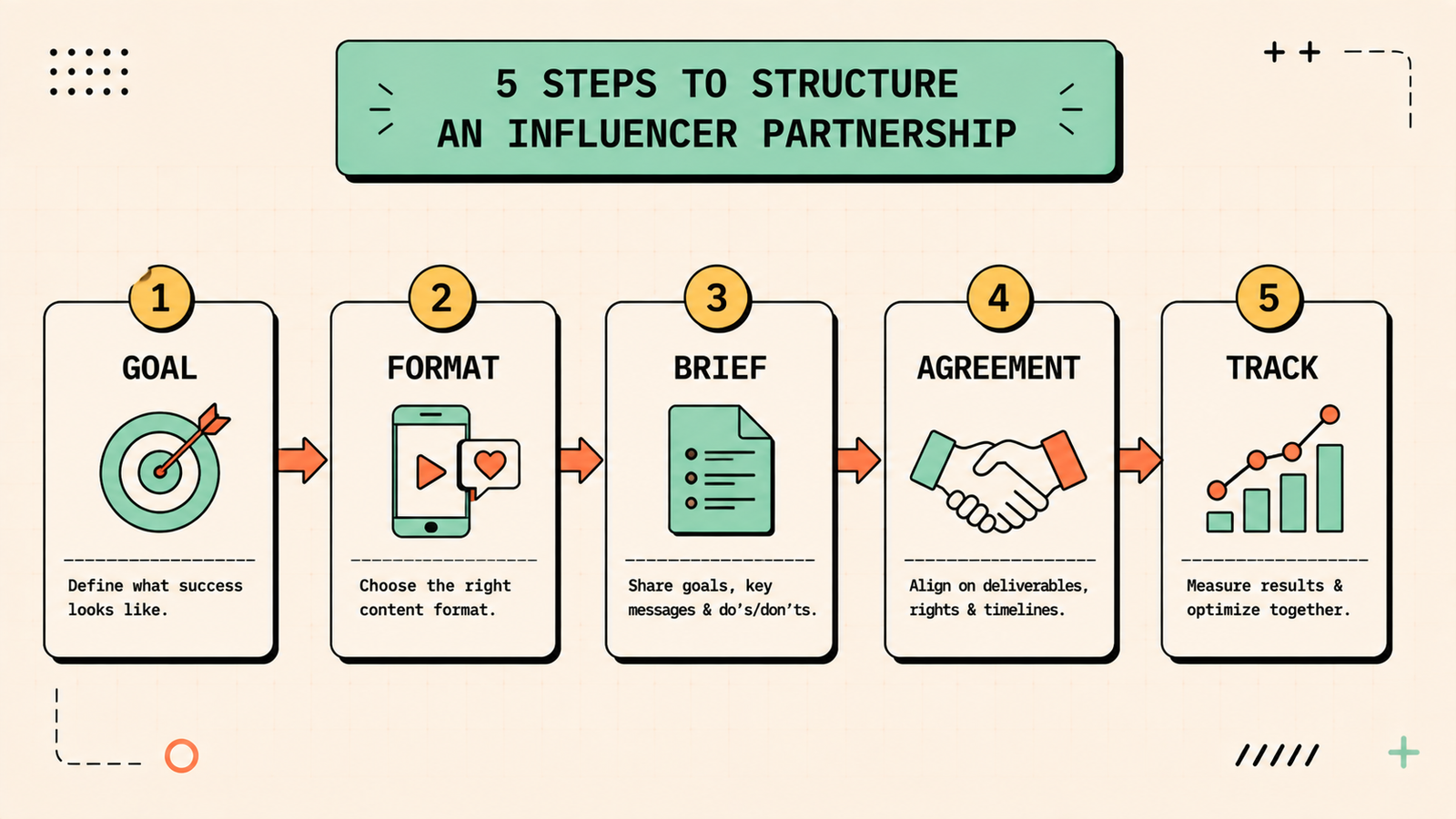
1. Define your goal
Are you trying to build awareness, drive traffic, generate sales, or get content you can reuse? Each goal shapes how you structure the deal and what you measure.
2. Choose the collaboration type
Common formats include sponsored posts (they create and post about your product), unboxing and reviews (authentic reaction content), affiliate partnerships (they earn a commission per sale, aligning incentives), gifting (send free product with no obligation, hoping for organic coverage), brand ambassadorships (long-term, ongoing partnerships), and content creation (they create content you license and use on your own channels). Affiliate and gifting work best for smaller budgets. Sponsored posts and ambassadorships work best when you have budget and want more control.
3. Set a clear brief
Tell the influencer what you need, but do not script every word. A brief should cover the key messages, required elements (link, discount code, product name), do's and don'ts, and the timeline. But leave creative freedom for how they present it, because their audience follows them for their voice, not yours. Over-controlling the content makes it feel like an ad and kills the authenticity that makes influencer marketing work.
4. Agree on deliverables, usage, and payment
Be specific: how many posts, which platforms, what format, whether you can reuse the content on your own channels, and the payment terms. Put it in writing. Ambiguity leads to disputes and disappointment.
5. Track results
Give each influencer a unique discount code, affiliate link, or UTM-tagged URL so you can track exactly what they drive. Measure reach, engagement, traffic, and conversions, not just views. A post that reaches 50,000 people and drives zero sales performed differently from one that reaches 10,000 and drives fifty.
Influencer marketing for D2C brands
D2C brands get the most from influencer marketing because the product is tangible, shareable, and easy to demonstrate. The D2C playbook is product seeding at scale (send free product to 50 to 100 micro and nano creators and let organic coverage happen), affiliate partnerships (give creators a commission so they are incentivised to sell, not just post), user-generated content harvesting (license the best influencer content for your own ads and social, which often outperforms studio content), and long-term ambassadorships with the creators whose content actually drives sales. The brands winning at influencer marketing in D2C are not doing one-off posts with big names. They are building a network of small, authentic creators who genuinely use the product and keep talking about it.
YouTube SEO: How to Rank Your Videos and Get More Views
Micro-influencer vs macro-influencer: which is better?
For most businesses, especially those with limited budgets, micro-influencers are the better investment. They cost less, have higher engagement rates, feel more authentic, and their recommendations carry more weight in niche communities. Macro-influencers are useful for broad awareness campaigns, product launches that need maximum reach, and brands with bigger budgets that can afford the higher cost alongside the lower engagement rate. The best strategy for a growing brand is to build a base of micro-influencer relationships first, then add macro partnerships for specific campaigns as budget allows.
How much does influencer marketing cost?
Costs vary enormously. Nano-influencers often work for free product only. Micro-influencers typically charge a few thousand to tens of thousands of rupees per post. Mid-tier and macro influencers charge significantly more, sometimes lakhs per campaign. Celebrity partnerships can run into crores. The better question is cost per result: what does each sale, lead, or piece of content actually cost you through the partnership? Track this with affiliate codes and UTMs, and you can compare influencer marketing ROI directly against your other channels. Start with low-cost partnerships, prove the ROI, then scale.
Influencer marketing and SEO
Influencer partnerships can support your SEO in ways most businesses overlook. When influencers mention your brand on blogs, YouTube, and social media, it creates brand mentions and sometimes backlinks that build your domain authority. Influencer-driven branded searches (people Googling your brand after seeing a post) increase your branded search volume, which is a positive signal. And influencer-created content can be repurposed on your site, adding fresh, authentic material. The connection is indirect but real: a strong influencer presence builds the brand signals that SEO rewards.
Google Ads for Beginners: How to Run Your First Campaign Without Wasting Money
Common influencer marketing mistakes
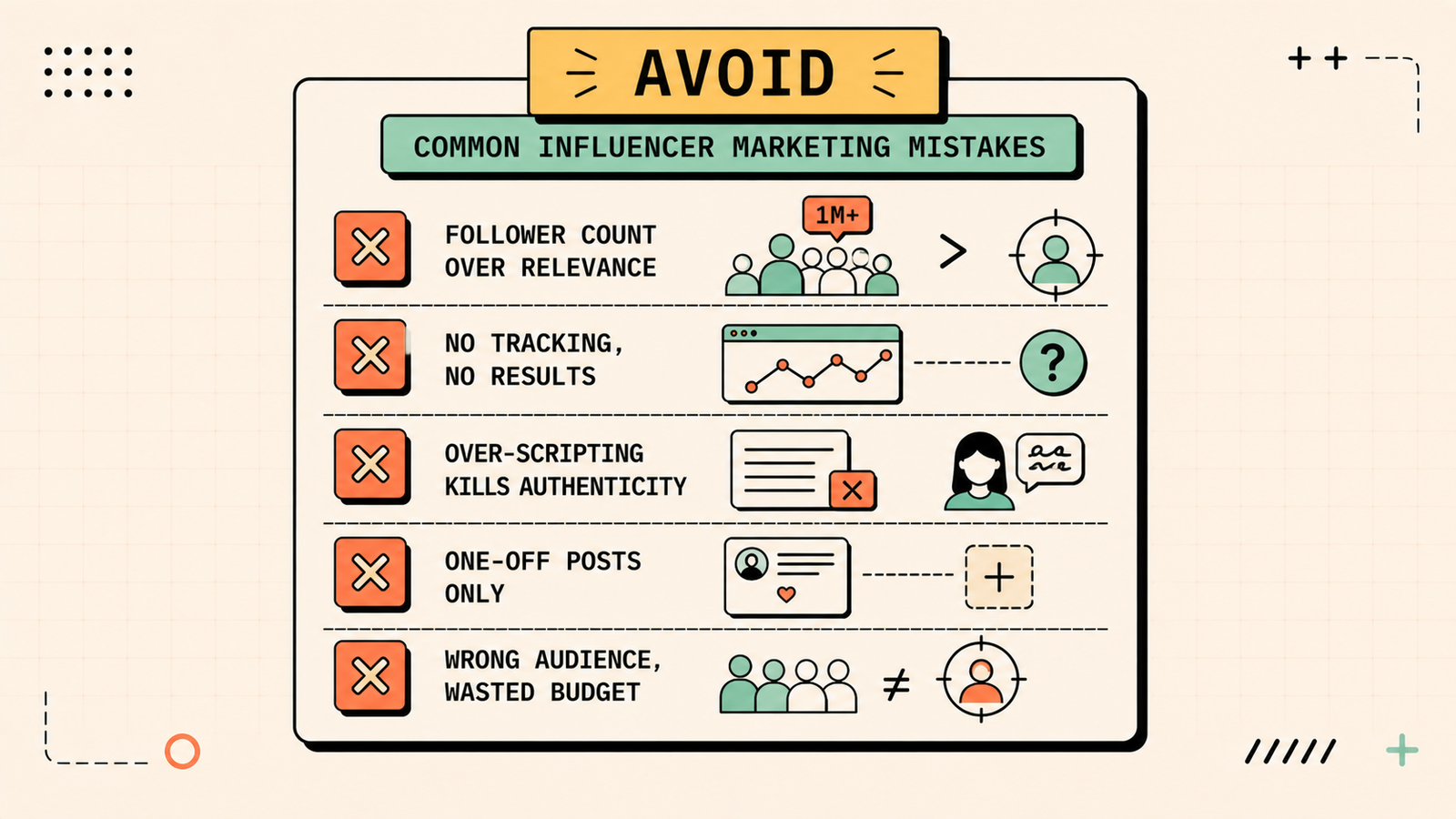
A few patterns waste the most money and goodwill. Choosing influencers based on follower count rather than relevance and engagement puts your product in front of the wrong audience. Not tracking results with unique codes or links means you have no idea what the spend delivered. Over-scripting the content kills authenticity and makes posts feel like ads. Doing one-off partnerships with no follow-up misses the compounding effect of ongoing relationships. Ignoring nano and micro-influencers in favour of expensive big names trades reach for results. And not vetting the influencer's audience demographics means you might be paying to reach a completely wrong audience. Match the creator to your customer, track the results, and let them be themselves.
User-generated content from influencer partnerships
One of the most valuable and often overlooked outputs of influencer marketing is not the post itself but the content it produces. Influencer-created photos, videos, and reels often outperform studio-produced brand content when used in your own ads and social feeds, because they feel authentic and native to the platform. Negotiate content usage rights as part of your deal so you can license the best pieces and run them as your own paid ads, feature them on your product pages, and repost them on your brand social accounts. This turns a single influencer partnership into a content library that keeps working long after the original post is forgotten. For D2C brands, influencer-sourced UGC used in Meta Ads frequently outperforms brand-shot creative on both click-through and conversion rate.
Influencer marketing in India
India's influencer landscape has exploded, with creators on Instagram, YouTube, and now short-video platforms reaching audiences across every tier and language. For Indian D2C brands, a few factors make the market unique. Regional-language creators are massively underpriced relative to their reach and engagement, which makes them a genuine arbitrage opportunity. Indian audiences respond strongly to authentic, relatable content over polished, aspirational posts, which favours nano and micro-influencers. Festive-season partnerships (Diwali, Navratri, wedding season) drive the highest conversion spikes. And platforms like Instagram and YouTube dominate, though WhatsApp and Telegram are emerging as distribution layers where creators share links and reviews directly. If your customers are in India, the combination of micro-influencers, regional creators, and festive timing is a high-ROI playbook most competitors have not fully exploited.
AI Tools for Marketing
The bottom line
Influencer marketing works when you partner with the right creators, give them creative freedom, and track real results. Focus on micro and nano influencers for the best ROI, use affiliate codes to measure performance, build ongoing relationships rather than one-off posts, and always start by asking whether the influencer's audience is genuinely your customer. Do that and influencer marketing becomes a scalable, trust-driven growth channel rather than an expensive gamble.
If you want help building your organic, content, and influencer strategy together, LetMeRank helps D2C and ecommerce brands grow across every channel, starting with a free audit.