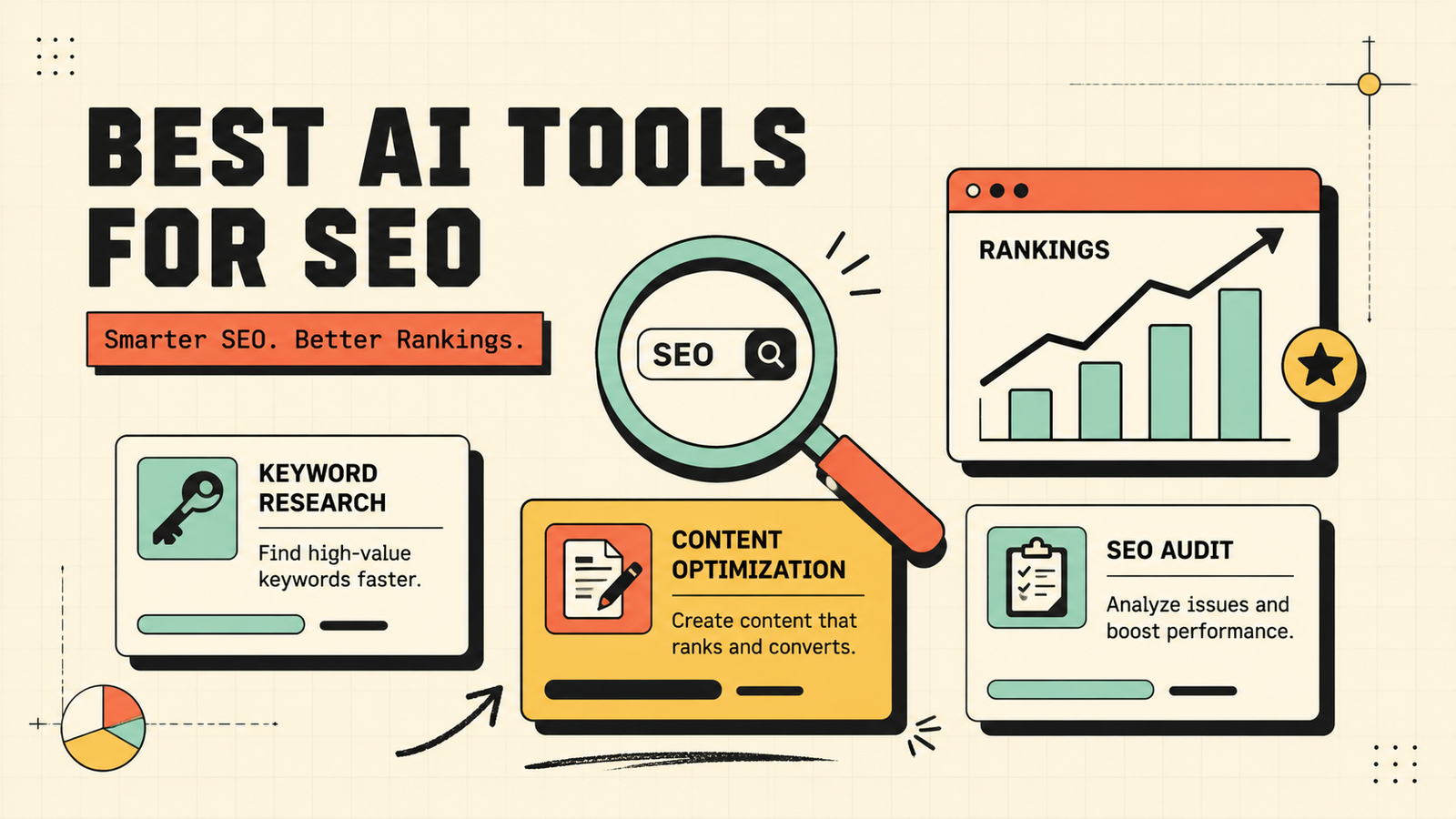
You can spend hours writing content, building links, and fixing technical issues, or you can let the right AI tool do half of that work in a fraction of the time while you focus on the decisions that actually move rankings. AI has not replaced SEO. It has made every part of it faster, from keyword research and content creation to technical audits and optimisation. This guide covers the best AI tools for SEO by the job they do, which ones are free, how they compare, and how to build a lean stack that actually improves your rankings.
What to look for in an AI SEO tool
Before adding anything to your stack, check a few things. Does the tool handle a specific SEO job better or faster than doing it manually? Does it use real search data rather than just guessing? Does it integrate with your existing workflow, or does it create a new chore? Is there a free plan that covers real usage? And does it produce output you can act on directly, or does it need heavy editing before it is useful? The best AI SEO tools save you hours on specific tasks. The worst ones produce impressive-looking outputs that do not actually help you rank.
Best AI Tools for Business
The best AI tools for SEO
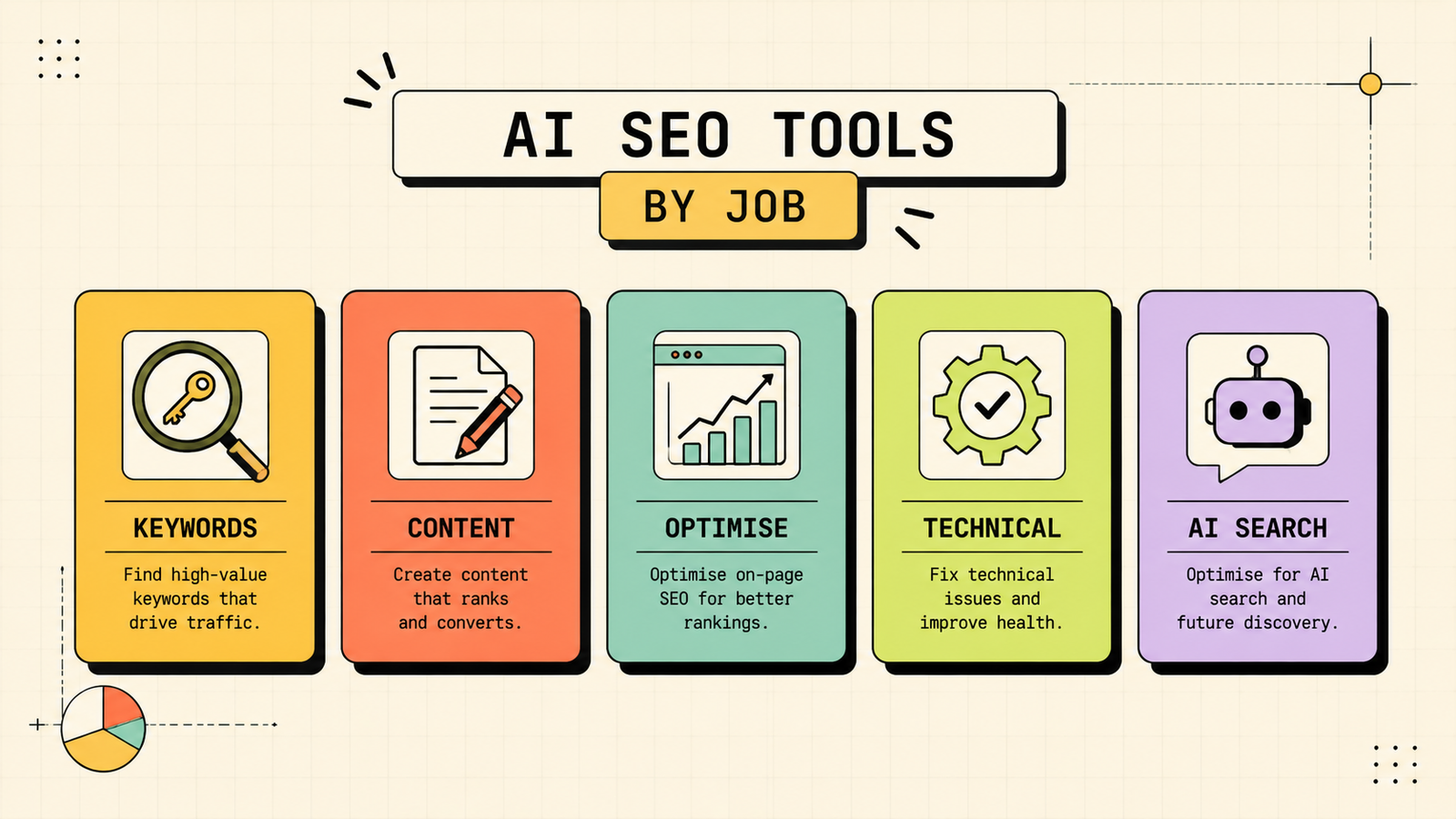
Here are the tools that matter, grouped by the SEO job they do best.
Keyword research and strategy
Semrush is the most complete SEO suite, with AI-powered keyword research, competitor analysis, content gap tools, and site audits. Its keyword magic tool and topic research features surface opportunities you would miss manually. Paid with a limited free tier.
Ahrefs is the strongest for backlink data and keyword research, with AI features that help you find keyword opportunities and analyse competitors. Its content explorer and keyword difficulty scores are among the most trusted in the industry. Paid with some free tools.
Ubersuggest is the most affordable all-in-one option for keyword research, content ideas, and site audits. It covers the essentials at a fraction of the price of Semrush or Ahrefs, making it the best pick for small businesses and solopreneurs. Free tier available, affordable paid plans.
Content creation and optimisation
ChatGPT drafts blog posts, outlines, meta descriptions, and content briefs faster than writing from scratch. It is the best general writing assistant for SEO content, though it needs real keyword data and human editing to rank.
Claude produces more polished, well-structured content at longer lengths, making it the better pick for in-depth guides and pillar pages where quality and readability matter most.
Surfer SEO analyses top-ranking pages for your keyword and gives you a content score, word count targets, keyword density guidelines, and NLP term suggestions as you write. It turns guesswork into a data-driven content brief. Paid only.
Clearscope does similar content optimisation with a cleaner interface and strong NLP analysis. It tells you exactly which terms to include and how your content compares to what already ranks. Paid only.
Frase combines content briefs, AI writing, and SERP analysis in one tool. It generates outlines from the top-ranking pages and helps you write content that covers the topic fully. Paid with a trial.
Technical SEO and audits
Screaming Frog crawls your site the way a search engine does and surfaces broken links, missing tags, duplicate content, redirect issues, and crawl problems. It is the industry standard for technical audits. Free for up to 500 URLs, paid for unlimited.
Google Search Console is free and gives you indexing data, crawl reports, Core Web Vitals, and performance metrics straight from Google. Every SEO should use it regardless of other tools.
Semrush and Ahrefs both include site audit tools that flag technical issues across your entire site with prioritised recommendations.
AI search and GEO
ChatGPT and Claude help you structure content for AI search citation: clear answers, question-based headings, FAQ blocks, and entity-rich writing.
Perplexity is useful for checking how AI search sees your topic and whether your brand or competitors appear in AI-generated answers.
There is no single "GEO tool" yet, but the combination of good SEO fundamentals, structured content, and monitoring AI answers covers the job.
Which AI Is Best for Studying?
AI SEO tools compared
| SEO job | Best tool | What it does | Free plan |
|---|---|---|---|
| Keyword research (full suite) | Semrush | Keywords, gaps, competitors, audits | Limited |
| Keyword research (backlinks) | Ahrefs | Keywords, backlinks, content explorer | Some free tools |
| Keyword research (affordable) | Ubersuggest | Keywords, content ideas, audits | Yes |
| Content writing | ChatGPT / Claude | Drafts, outlines, meta descriptions | Yes |
| Content optimisation | Surfer SEO | Content scores and keyword coverage | No (paid) |
| Content optimisation | Clearscope | NLP analysis and term suggestions | No (paid) |
| Content briefs | Frase | SERP analysis and AI writing | Trial |
| Technical audit | Screaming Frog | Full crawl and issue detection | Yes (500 URLs) |
| Indexing and performance | Google Search Console | Free data from Google | Yes (fully free) |
| AI search monitoring | Perplexity | Check AI answer coverage | Yes |
Surfer vs Clearscope vs Frase: which is best for SEO content?
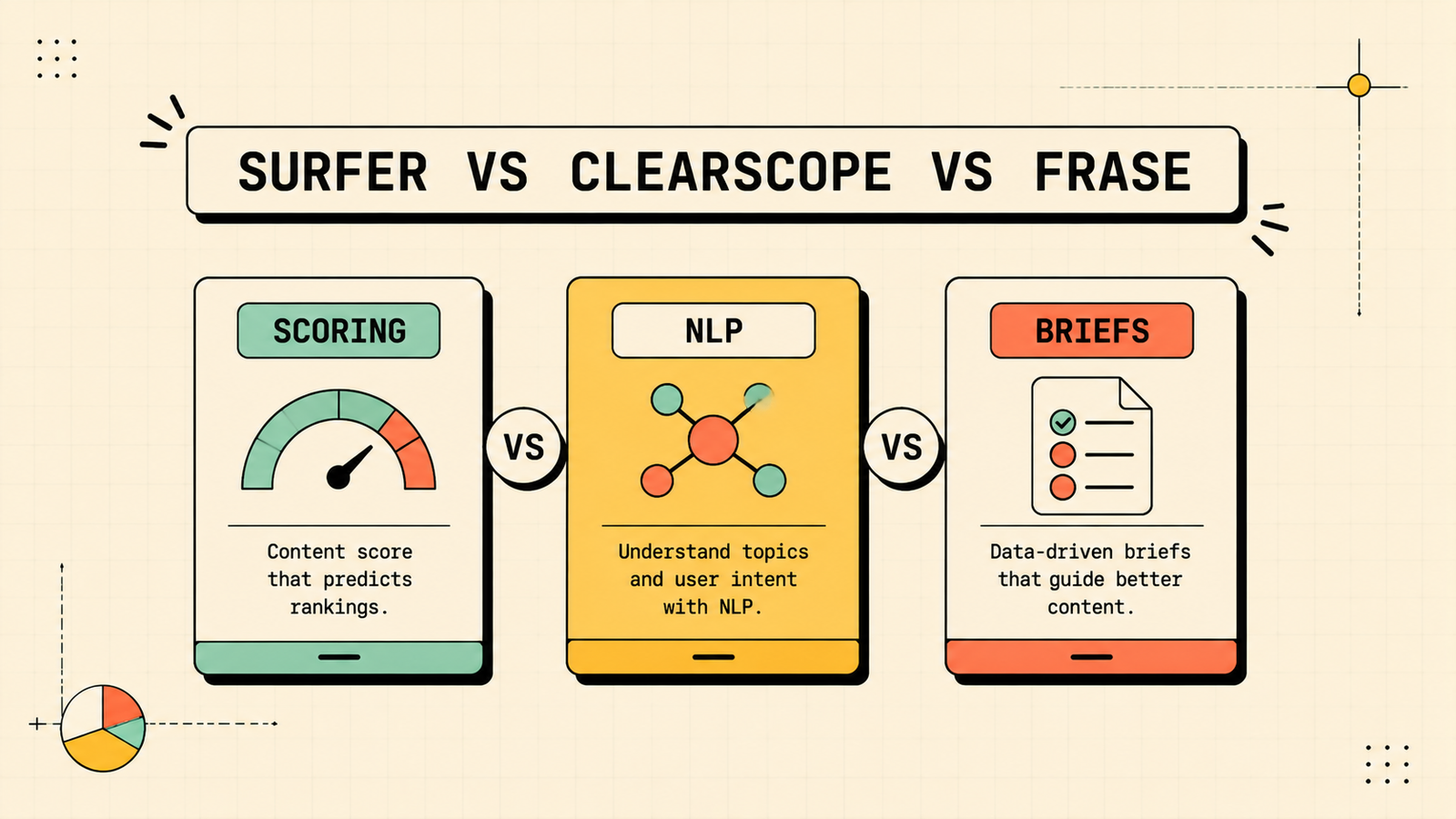
All three optimise content to rank, but each leans differently. Pick Surfer when you want real-time content scoring as you write, with clear keyword density and NLP targets, and you create a lot of content. Pick Clearscope when you want the cleanest NLP analysis and the simplest interface, especially for teams where non-SEO writers use the tool. Pick Frase when you want content briefs generated from SERP analysis plus AI writing in one tool, which suits smaller teams doing research and writing in the same workflow. For most small businesses, one of these is enough alongside a keyword tool and ChatGPT.
Best free AI tools for SEO
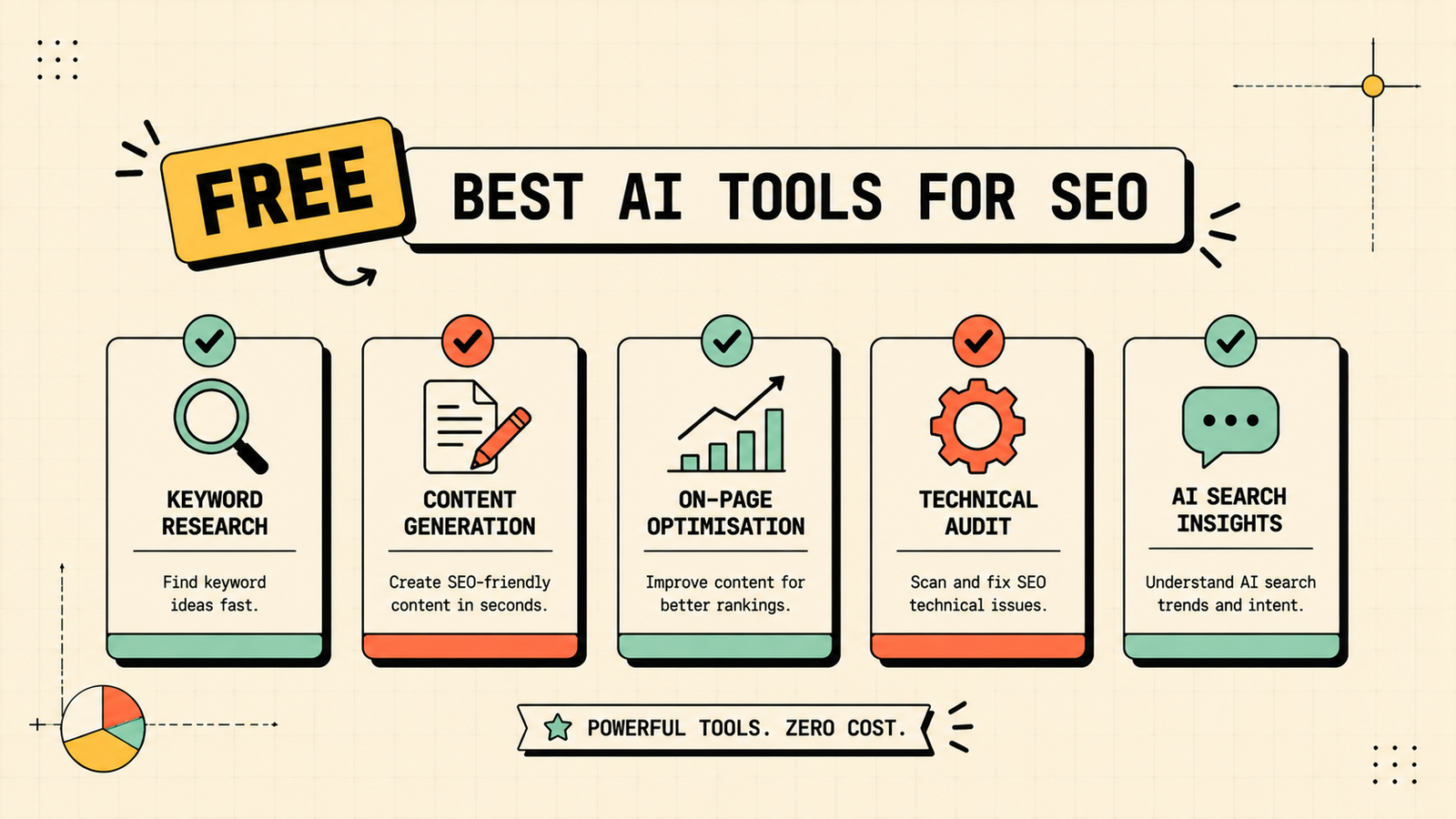
If you are spending nothing, the stack still works. Google Search Console gives you free performance, indexing, and crawl data directly from Google. Ubersuggest free covers basic keyword research and site audits. ChatGPT free handles content drafts, outlines, meta descriptions, and brainstorming. Screaming Frog free crawls up to 500 URLs and catches technical issues. Perplexity free lets you check how AI search covers your topics. Between these five, you can research keywords, write content, audit your site, and monitor AI search at zero cost. Paid tools add depth and scale, but the free stack covers a genuine SEO workflow.
We'll show you exactly which AI SEO tools fit your workflow and save you the most time.
Get a clear, practical plan to build a lean SEO toolkit that actually improves your rankings without wasting budget.
Can AI do keyword research?
Yes, but with a caveat. AI assistants like ChatGPT can brainstorm keyword ideas, suggest related terms, and help you think about search intent, but they do not have access to real search volume and difficulty data. For that, you need a keyword tool like Semrush, Ahrefs, or Ubersuggest that pulls actual search data. The best workflow is to use ChatGPT for brainstorming and expanding your seed topics, then validate those ideas with a keyword tool that shows real numbers. AI helps you think wider. Data tools help you choose smarter. Together they cover keyword research faster and more thoroughly than either alone.
Can AI help you rank in ChatGPT and AI search?
Yes. Structuring content with clear, direct answers to real questions, using question-based headings, adding FAQ schema, covering topics thoroughly, and demonstrating genuine expertise are all things that help your content get cited in AI-generated answers on ChatGPT, Perplexity, and Google AI Overviews. There is no single tool that guarantees AI-search rankings, but the same content quality and structure that wins traditional SEO is what gets you surfaced in AI search. The brands doing this now have an early advantage, since most competitors have not started.
How to build a lean AI SEO stack
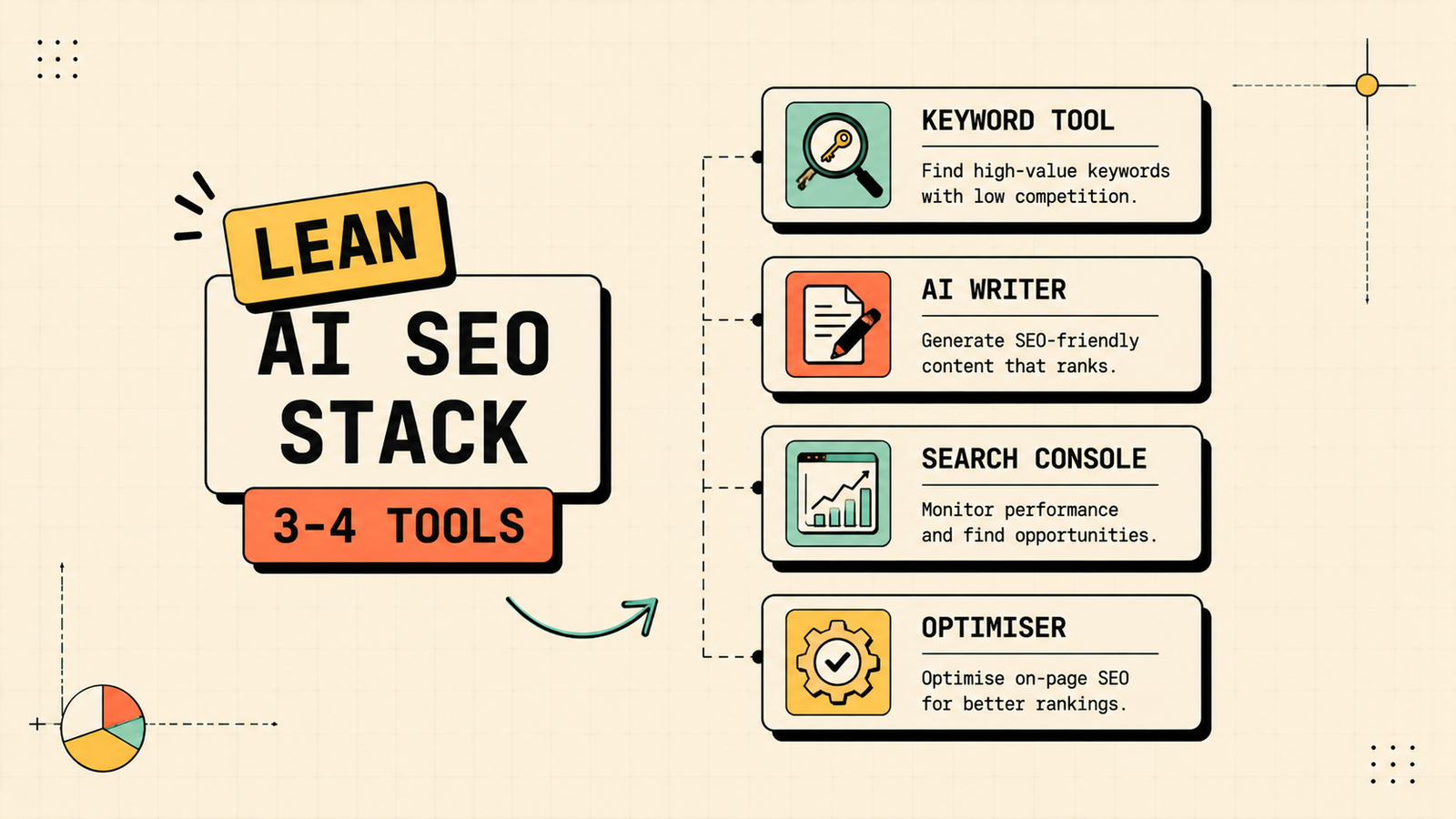
Most businesses need far fewer tools than they think. A lean stack that covers the full SEO workflow looks like this: one keyword and audit tool (Ubersuggest, Semrush, or Ahrefs), one AI writing assistant (ChatGPT or Claude), Google Search Console (free, always), and optionally one content optimisation tool (Surfer, Clearscope, or Frase) if you produce a lot of content. That is three to four tools covering research, writing, auditing, and optimisation. Add Screaming Frog for deeper technical crawls and Perplexity for AI-search checks when needed. Master this stack before adding anything else, and you will have a workflow that covers 90% of what enterprise teams do at a fraction of the cost.
AI Tools for Marketing
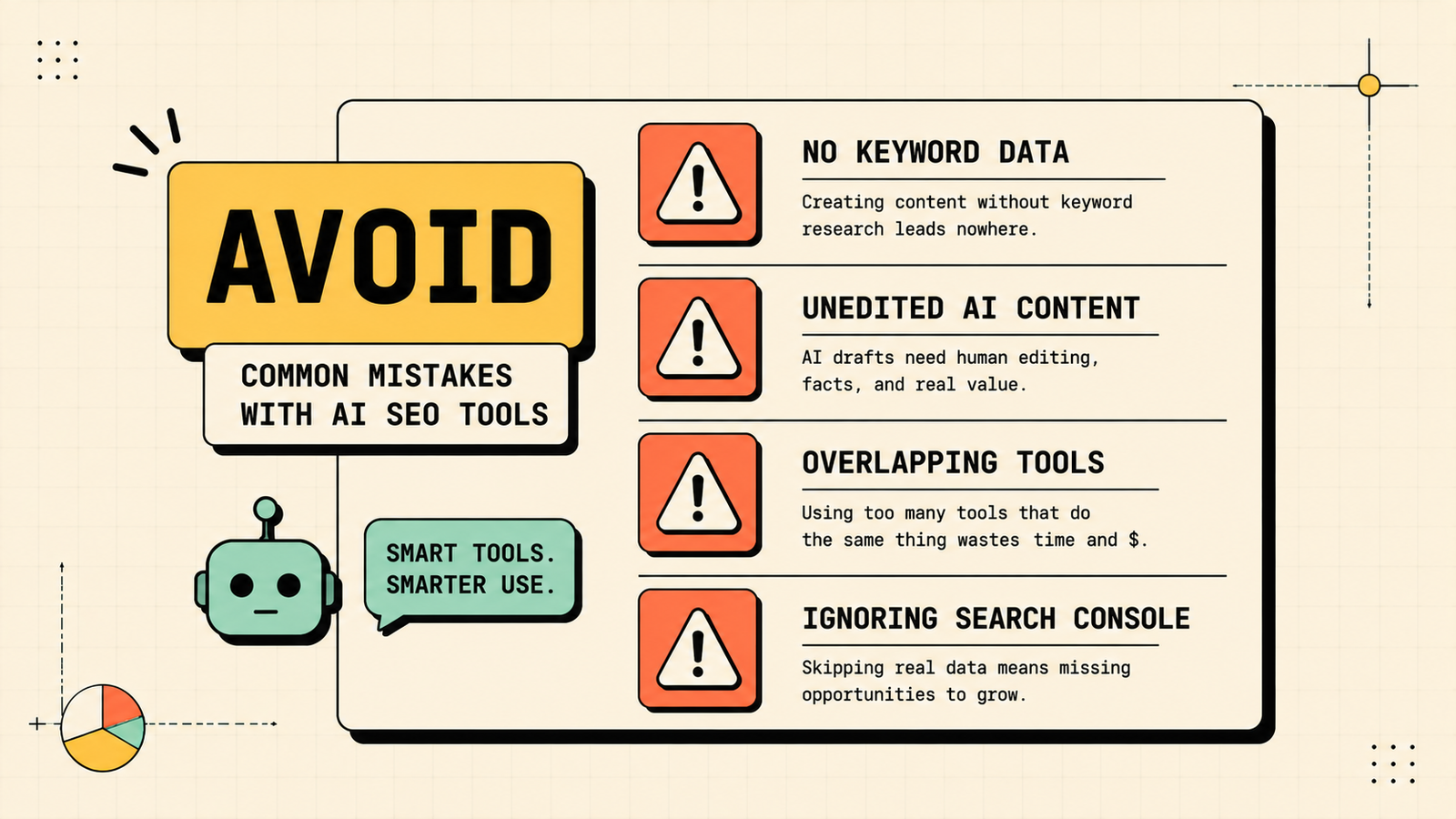
Common mistakes with AI SEO tools
A few patterns waste the most time. Using AI to generate content without real keyword data produces articles nobody searches for. Publishing AI drafts without editing or adding expertise results in generic content that does not rank. Relying on content optimisation scores without reading what already ranks can lead you to write for the tool rather than the reader. Paying for overlapping tools that do the same job wastes budget. And ignoring Google Search Console, which is free and gives you data straight from Google, is the most common missed opportunity. Use AI for speed, data tools for accuracy, and your own judgment for quality.
LetMeRank
The bottom line
The best AI tools for SEO save time on the work that eats the most hours: keyword research, content creation, technical audits, and optimisation. Use a keyword tool for real data, an AI assistant for writing and brainstorming, Search Console for performance, and a content optimisation tool if you produce at volume. Start free, stay lean, and let the tools handle the repetitive work while you handle the strategy and quality that actually move rankings.
If you want experts to run your SEO with the right tools and the right strategy behind them, LetMeRank helps founders and brands grow through search and AI search, starting with a free audit of where your biggest ranking opportunities are.