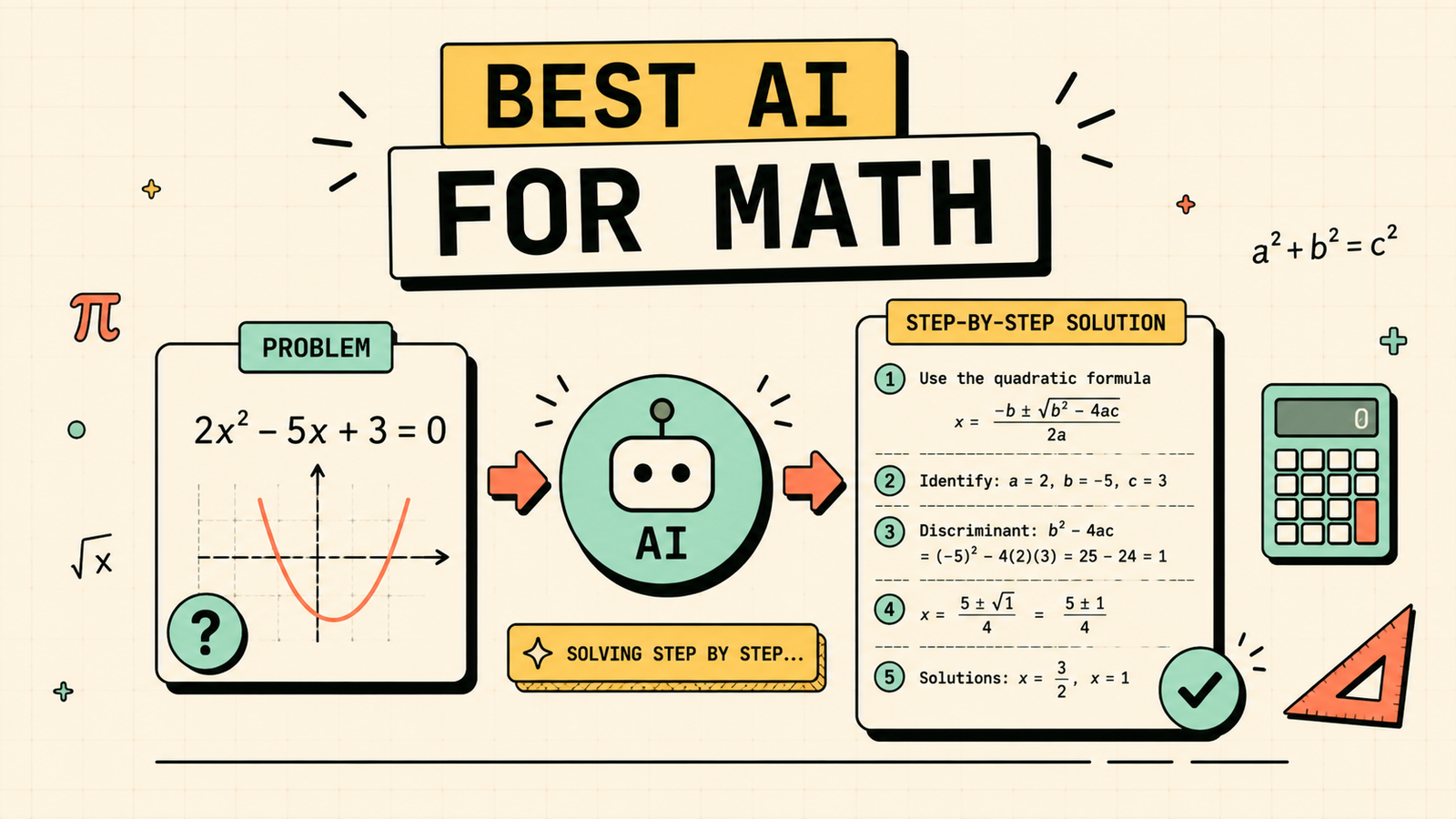
You are stuck on a problem, the textbook explanation makes no sense, and you just need something to walk you through it step by step without judging you. That is exactly what AI math tools do well when you pick the right one. But there is a catch: some are great at explaining but get the answer wrong, and some get the answer right but cannot explain how they got there. This guide covers which AI is actually best for math, what each tool does well and where it falls short, which ones are free, and how to use them to learn rather than just copy answers.
What to look for in an AI math tool
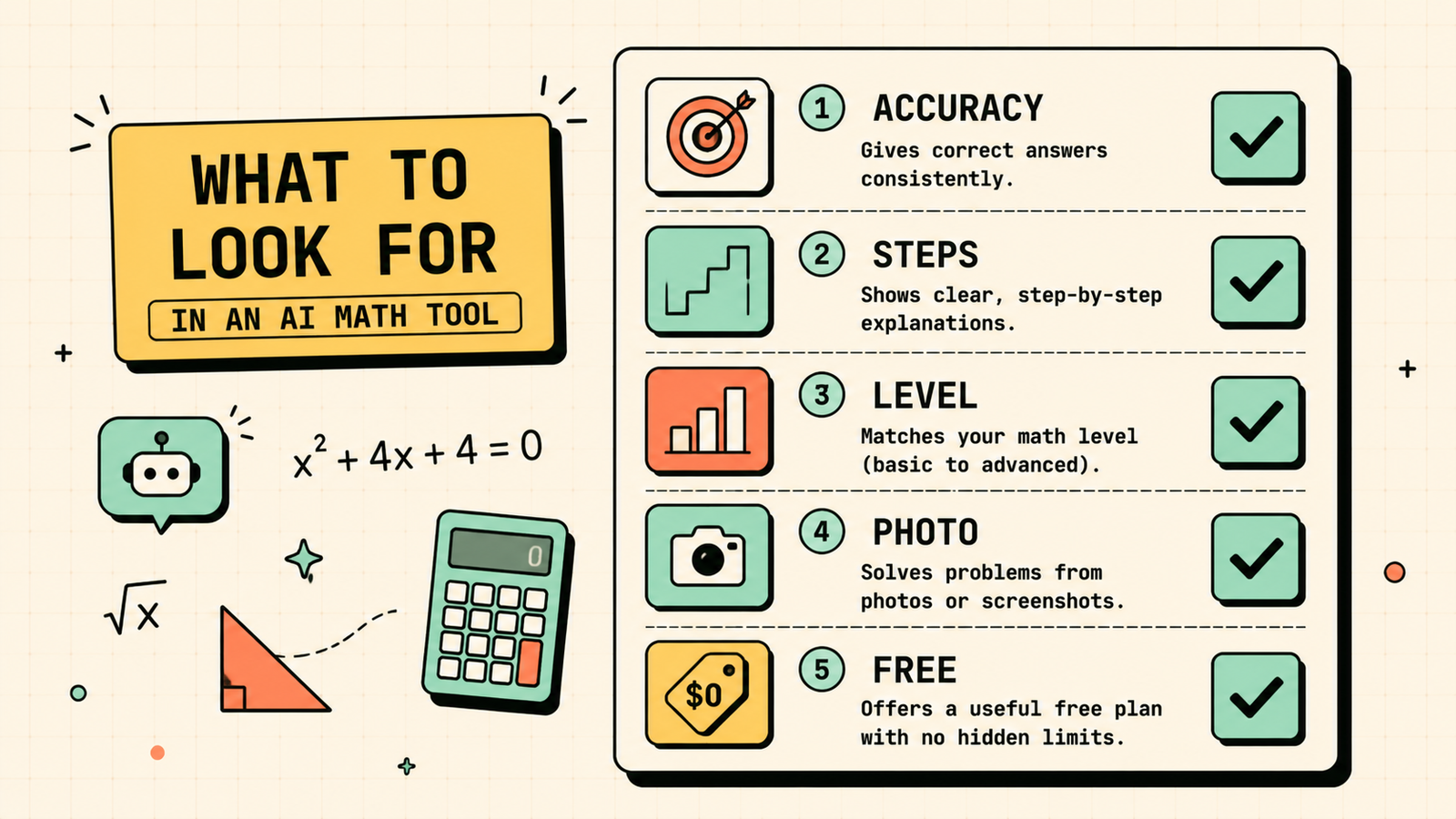
Not every AI handles math the same way, and the difference matters more here than in almost any other task. Look for accuracy first, because a tool that confidently gives you the wrong answer is worse than no tool at all. Look for step-by-step explanations, since the whole point is understanding the method, not just getting a number. Check what level it handles, from basic arithmetic to calculus, linear algebra, and beyond. See whether it can read problems from photos, which is useful for printed worksheets and textbook pages. And check whether it has a free plan that covers real usage, since most students are not paying for premium math tools.
Which AI Is Best for What?
The best AI tools for math
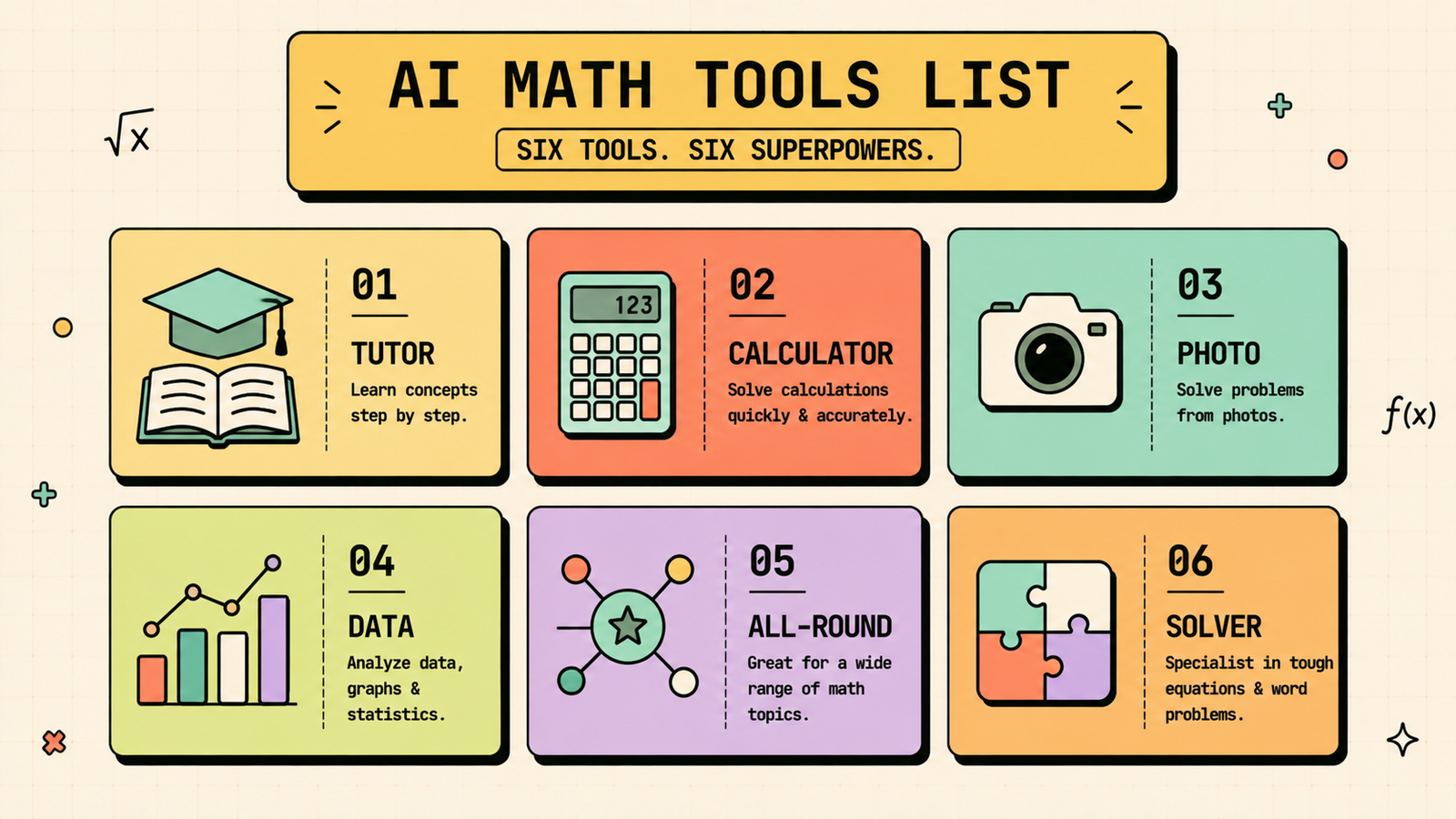
Here are the tools worth knowing, matched to what they actually do best.
ChatGPT
ChatGPT is the most versatile option for math. It explains concepts in plain language, walks through solutions step by step, handles a wide range of levels from basic algebra to calculus and statistics, and lets you ask follow-up questions when a step does not make sense. It is genuinely good at teaching you the method behind the answer, which is its biggest strength. The free plan (GPT-4o) handles most math well. Where it falls short: it occasionally makes calculation errors, especially on complex arithmetic, so always double-check the final numbers. Best for understanding how to solve a problem, not just getting the answer.
Wolfram Alpha
Wolfram Alpha is a computational engine, not a chatbot. You type in a math problem and it gives you the precise, correct answer along with a detailed solution breakdown. It does not hallucinate or guess. It computes. That makes it the most reliable tool for getting the right answer, especially for algebra, calculus, integrals, derivatives, statistics, and graphing. The free version handles basic queries, and Pro adds step-by-step solutions and more detail. Where it falls short: it is not conversational, so you cannot ask "explain that differently" the way you can with ChatGPT. Best for accuracy and computation.
Photomath
Photomath lets you point your phone camera at a printed or handwritten math problem and get a solution with step-by-step explanations. It is designed for students working through textbooks and worksheets, and it covers arithmetic through calculus. The core features are free, with a paid subscription (Photomath Plus) adding deeper explanations and animated steps. Where it falls short: it struggles with very complex or non-standard problems, and it is mobile only. Best for solving problems from a photo quickly.
Julius AI
Julius AI is built for data, math, and analysis. You can upload files, datasets, or type problems, and it handles calculations, visualisations, statistical analysis, and step-by-step math. It is stronger than general chatbots for anything involving data or applied math, and it can generate charts and graphs from your numbers. It has a free tier with paid plans for heavier use. Where it falls short: it is less conversational for concept explanations than ChatGPT. Best for applied math, statistics, and data problems.
Gemini
Google's Gemini handles math reasonably well across a broad range of levels and can work with images (you can upload a photo of a problem). It is a solid backup to ChatGPT, with similar strengths in explanation and conversation. The free plan is strong. Where it falls short: it is not as accurate as Wolfram Alpha for computation and not as strong as ChatGPT for step-by-step teaching. Best as an alternative all-rounder, especially if you are already in the Google ecosystem.
Symbolab
Symbolab is a dedicated math solver that covers algebra, calculus, trigonometry, matrices, and more. You type or paste a problem and it gives a step-by-step solution. It is more structured and reliable than general chatbots for standard math problems. The basic solver is free, with a subscription for full step-by-step access. Where it falls short: it is not conversational and does not explain concepts the way a tutor would. Best for structured, textbook-style problem solving.
Best AI Tools for Writing a Research Paper
AI math tools compared
| Tool | Best for | Accuracy | Step-by-step | Photo input | Free plan |
|---|---|---|---|---|---|
| ChatGPT | Explaining and teaching | Good (verify answers) | Yes, conversational | Yes (paid plans) | Yes (GPT-4o) |
| Wolfram Alpha | Precise computation | Very high | Yes (Pro) | No | Yes (basic) |
| Photomath | Solving from a photo | Good for standard problems | Yes | Yes (core feature) | Yes |
| Julius AI | Data, stats, applied math | High | Yes | File upload | Yes (limited) |
| Gemini | All-round alternative | Good (verify answers) | Yes | Yes | Yes |
| Symbolab | Structured textbook problems | High | Yes (subscription) | No | Yes (basic) |
ChatGPT vs Wolfram Alpha vs Julius AI: which is best for math?
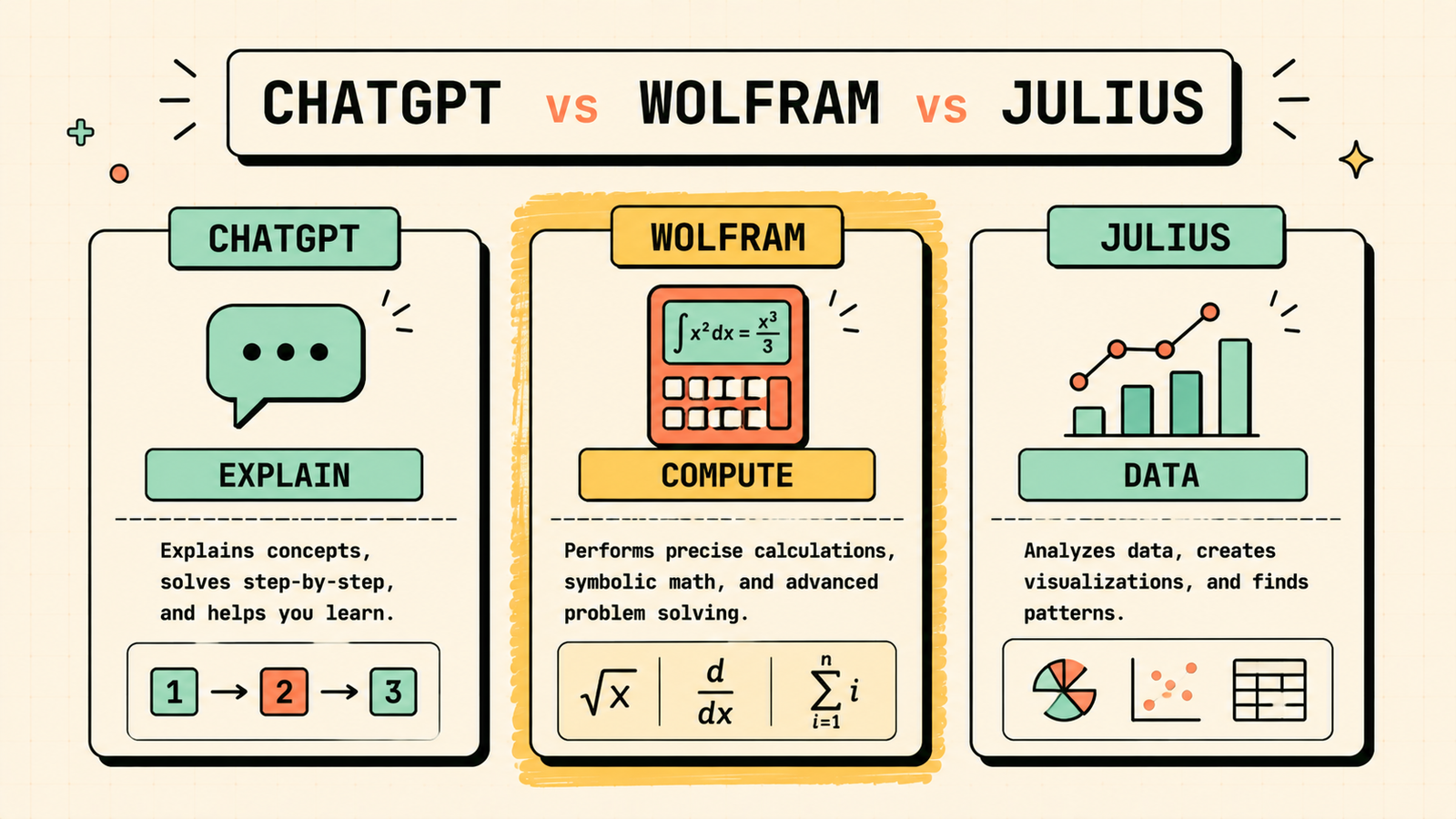
These three cover different needs, so the right pick depends on what you are doing. Pick ChatGPT when you need a concept explained in plain language, want to ask follow-up questions, or need help understanding the method behind a solution. It is the best math tutor. Pick Wolfram Alpha when you need the correct numerical answer and a precise solution breakdown, especially for calculus, integrals, and anything where a wrong digit matters. It is the most accurate calculator. Pick Julius AI when your problem involves data, statistics, or applied math where you need visualisations and analysis alongside the computation. In practice, using ChatGPT to understand the method and Wolfram Alpha to verify the answer is one of the strongest combinations.
We'll show you exactly which math AI tools fit your level and subjects.
Get a clear, practical plan to build your own math study stack that actually helps you learn.
Best free AI for math
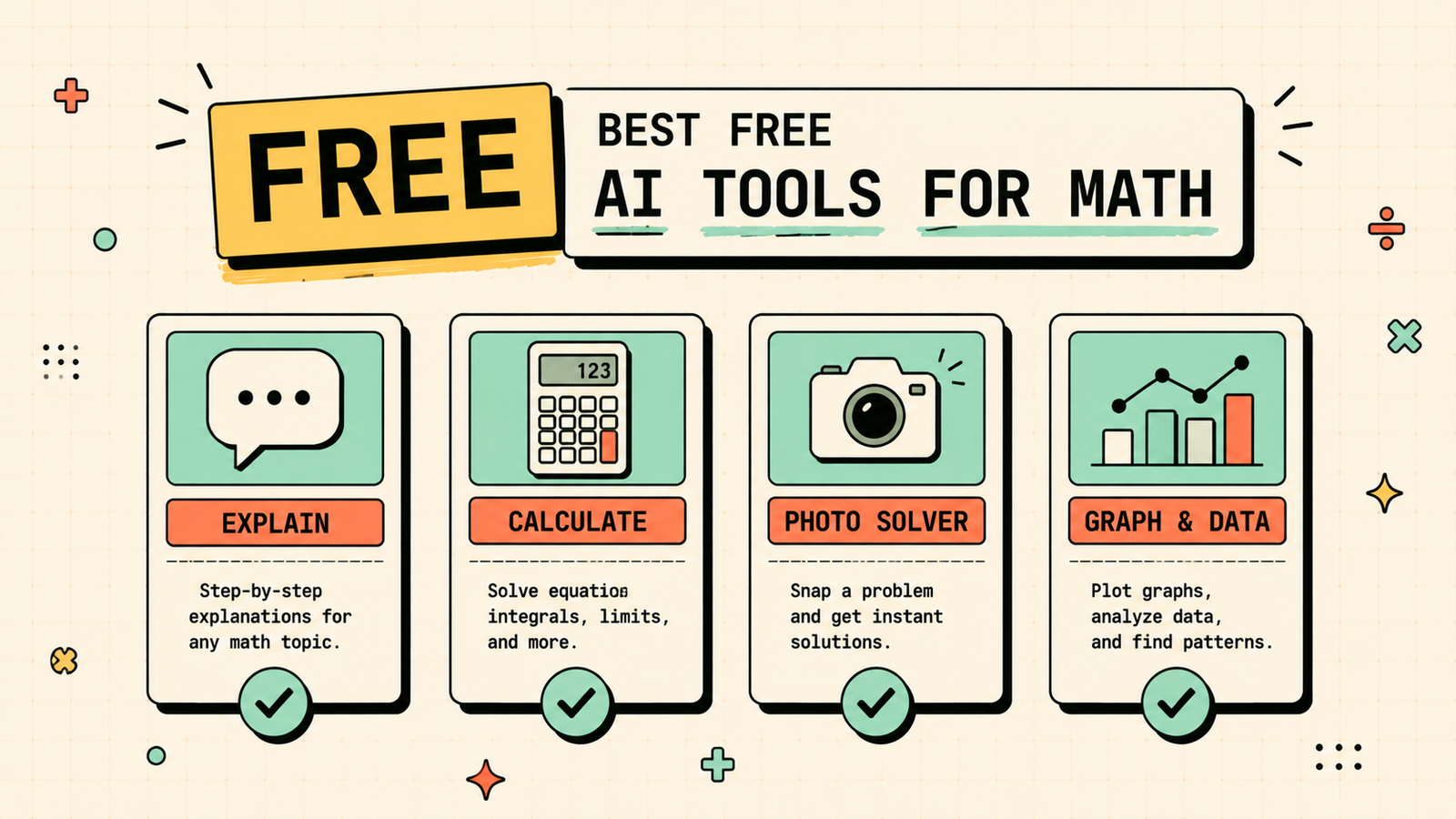
If you are paying for nothing, you still have strong options. ChatGPT free explains and walks through problems conversationally. Wolfram Alpha free gives precise answers for basic queries (though step-by-step is Pro). Photomath free solves problems from a photo with steps. Symbolab free handles structured problems. Between these four, most school and university math is covered at zero cost. The main thing you miss on free plans is full step-by-step breakdowns on Wolfram and Symbolab, which the paid versions unlock.
Best AI to solve math from a photo
If you want to point your camera at a problem and get a solution, Photomath is purpose-built for this and does it best. ChatGPT (paid plans) and Gemini can also accept image uploads of math problems and solve them, which is useful if you already use those tools. For handwritten problems, Photomath and Gemini handle handwriting recognition reasonably well, though very messy handwriting can cause errors. For printed textbook problems, all three work reliably.
How accurate is AI at math, really?
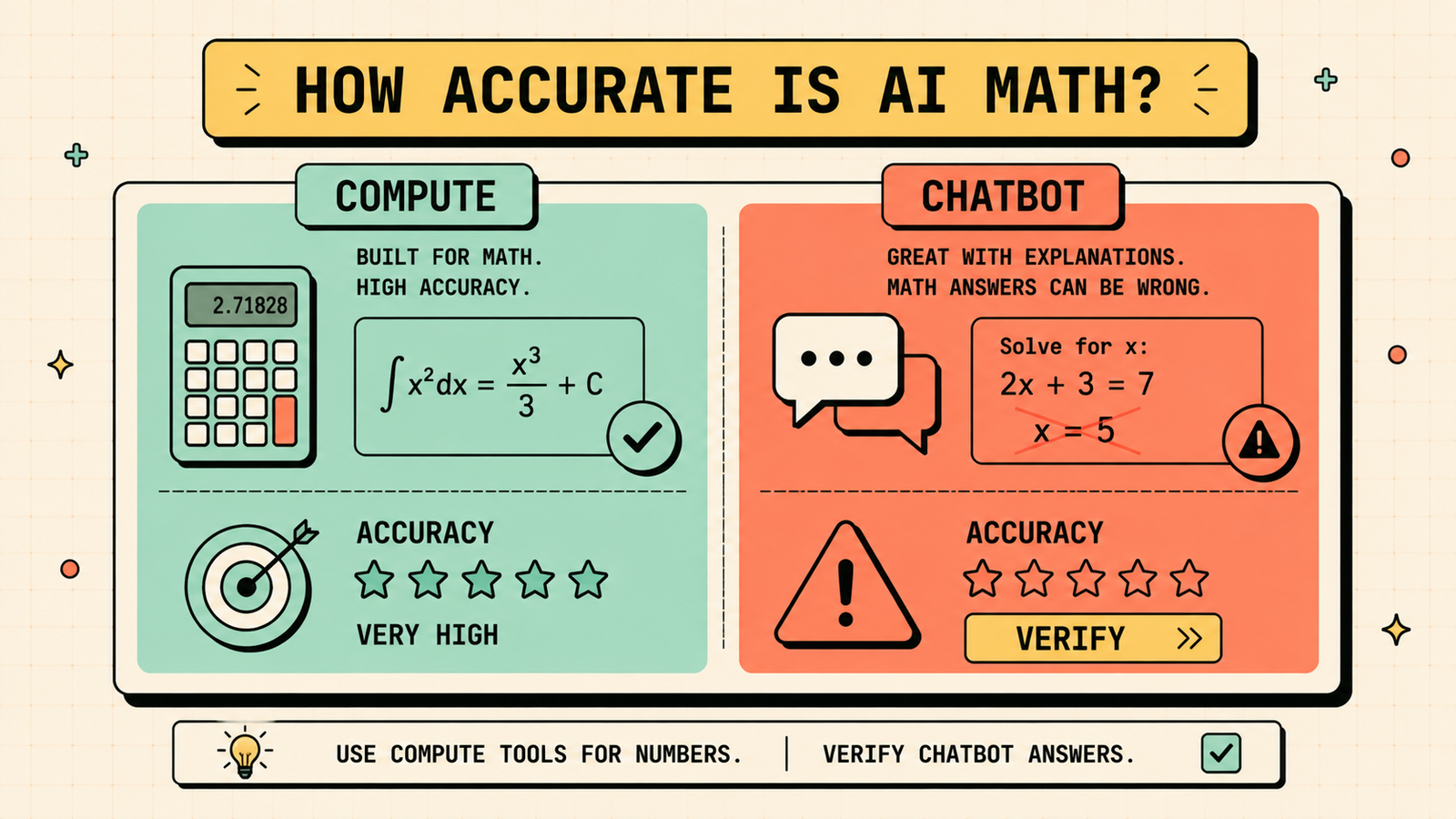
This is the question that matters most, and the honest answer is: it depends on the tool and the problem. Wolfram Alpha and Symbolab are computational engines that calculate rather than predict, so they are highly accurate for the problem types they support. ChatGPT and Gemini are language models that reason about math rather than computing it natively, which means they are good at explaining methods and handling most problems correctly, but they can make arithmetic mistakes, especially on multi-step calculations or unusual problems. The rule is simple: use a chatbot to understand the method, then verify the final answer with a computational tool or your own check. Never submit an AI answer without verifying it yourself.
Can AI do calculus, algebra and statistics?
Yes. ChatGPT handles explanations and step-by-step solutions across algebra, calculus, statistics, and linear algebra well, though you should check its arithmetic. Wolfram Alpha handles calculus (derivatives, integrals, limits, series), algebra, and statistics with high computational accuracy. Julius AI is strong for statistics and data-driven math. Symbolab covers algebra, calculus, and trigonometry in a structured solver format. For most university-level math, at least one of these tools will handle your problem, and using two together (one for explanation, one for verification) is the safest approach.
AI Tools for Marketing
Common mistakes when using AI for math
A few habits cause problems. Trusting a chatbot's arithmetic without checking is the biggest one, since language models do make calculation errors. Copying the answer without understanding the method defeats the purpose and leaves you stuck on the next problem. Using only one tool when a second could catch errors is a missed safety net. And relying on AI instead of practising yourself means you never build the skill. Use AI to learn how to solve problems, verify with a computational tool, and practice enough that you could do it without help.
LetMeRank
The bottom line
The best AI for math depends on what you need. ChatGPT is the best explainer and tutor. Wolfram Alpha is the most accurate calculator. Photomath is the fastest way to solve from a photo. Julius AI wins for data and statistics. Symbolab handles structured textbook problems reliably. Use the chatbot to understand, the computation engine to verify, and your own practice to make it stick. Start with the free plans and you have everything you need to handle math from basic algebra through university-level calculus and statistics. The tools are free, the understanding is what you are really building, and that is the part no AI can ever shortcut for you.
If you found this useful, LetMeRank publishes practical guides on AI tools and organic growth for students, founders, and teams.