Two pages can target the exact same keyword, and the one that wins is almost never the one with more effort behind it. It is the one that gave Google clearer signals about what it is and who it is for. That is on-page SEO in a sentence. It is everything you control on your own pages to help them rank, and it is the part of SEO you have the most direct power over. This is the complete on-page SEO checklist for 2026, covering what it is, the factors that matter, and how to optimize every page for both Google and AI search.
What is on-page SEO?
On-page SEO is the practice of optimizing individual web pages to rank higher in search results. It covers everything on the page itself, from your title tags and headings to your content, URLs, images, and internal links. In short, it is all the things you can directly change on your own site to help each page rank.
It matters because it is the part of SEO fully within your control. Off-page factors like backlinks depend on other people, but on-page SEO is entirely up to you, which makes it the natural place to start and the foundation everything else builds on.
How to Do Keyword Research for SEO
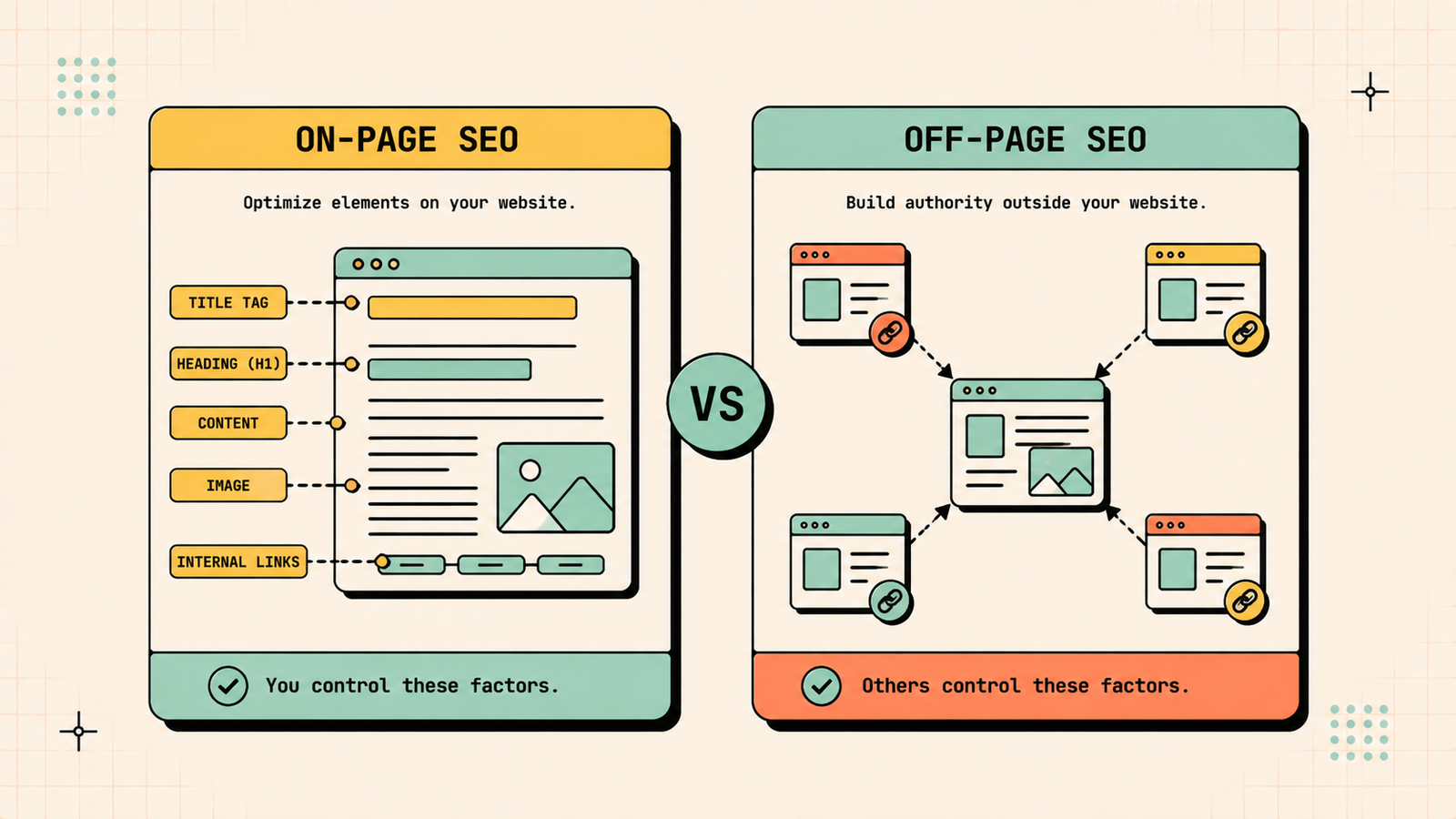
On-page SEO vs off-page SEO
These two work together, and knowing the difference clarifies where each effort goes.
| On-page SEO | Off-page SEO | |
|---|---|---|
| What it is | Optimization on your own pages | Signals from outside your site |
| Examples | Titles, headings, content, URLs, internal links | Backlinks, brand mentions, reputation |
| Control | Fully in your control | Depends on other sites |
| Purpose | Helps Google understand and trust your page | Builds authority and credibility |
You need both. On-page SEO makes each page as strong as it can be, while off-page SEO builds the authority that helps those pages rank. Start with on-page, because there is no point earning links to a page that is not optimized to convert that authority into rankings.
Why on-page SEO matters
On-page SEO does two jobs at once. It helps search engines understand what your page is about, so they can match it to the right searches, and it helps users get a clear, useful experience, which keeps them on the page and signals quality. Get it right and you make it easy for Google to rank you and easy for visitors to stay and convert. Get it wrong and even great content can go unseen, because search engines cannot tell what the page is for. It is also the highest-leverage SEO work you can do, since it costs nothing but attention and applies to every page you publish.
The on-page SEO checklist
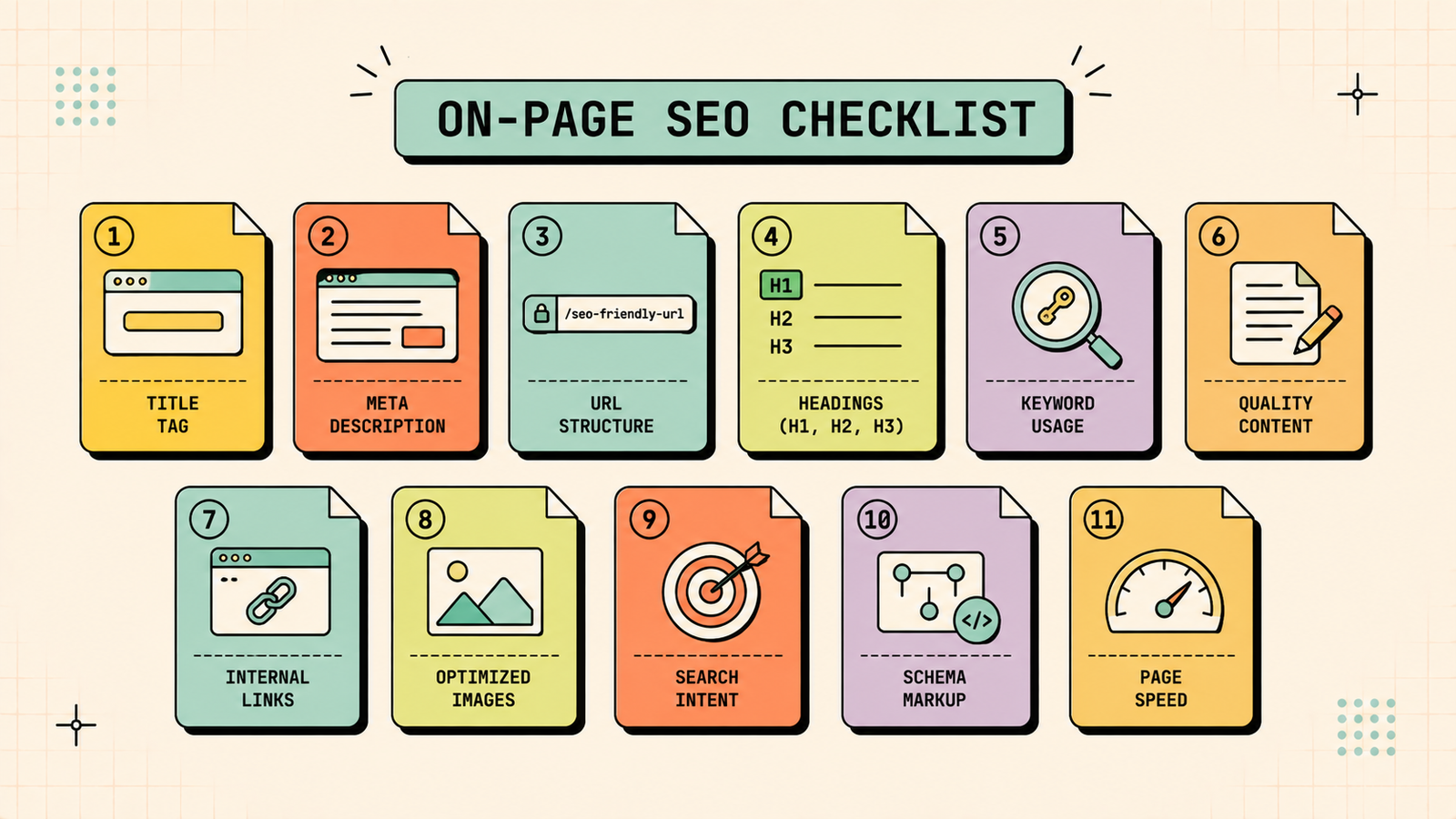
Here are the on-page factors that matter, and how to optimize each.
1. Title tags
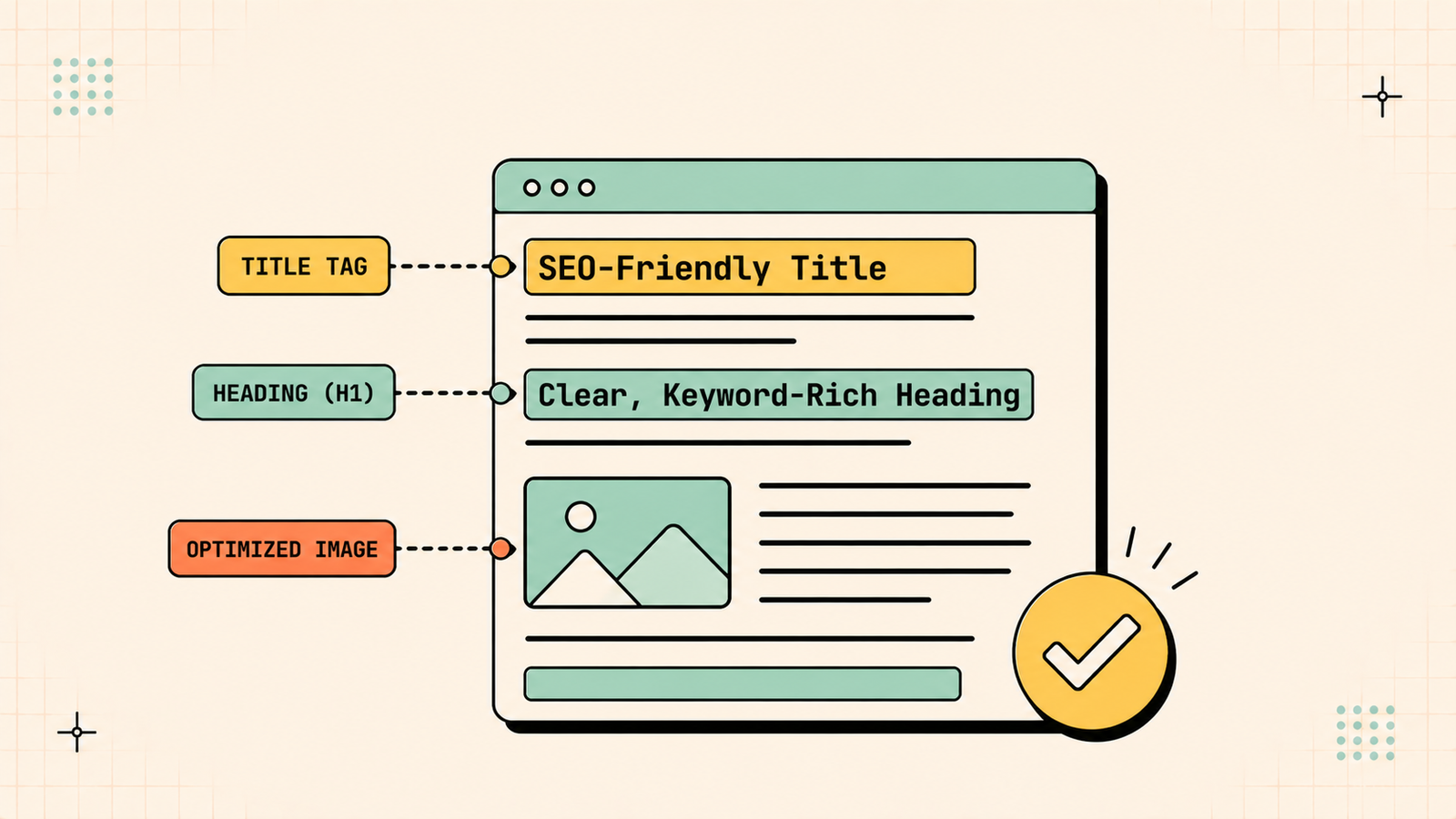
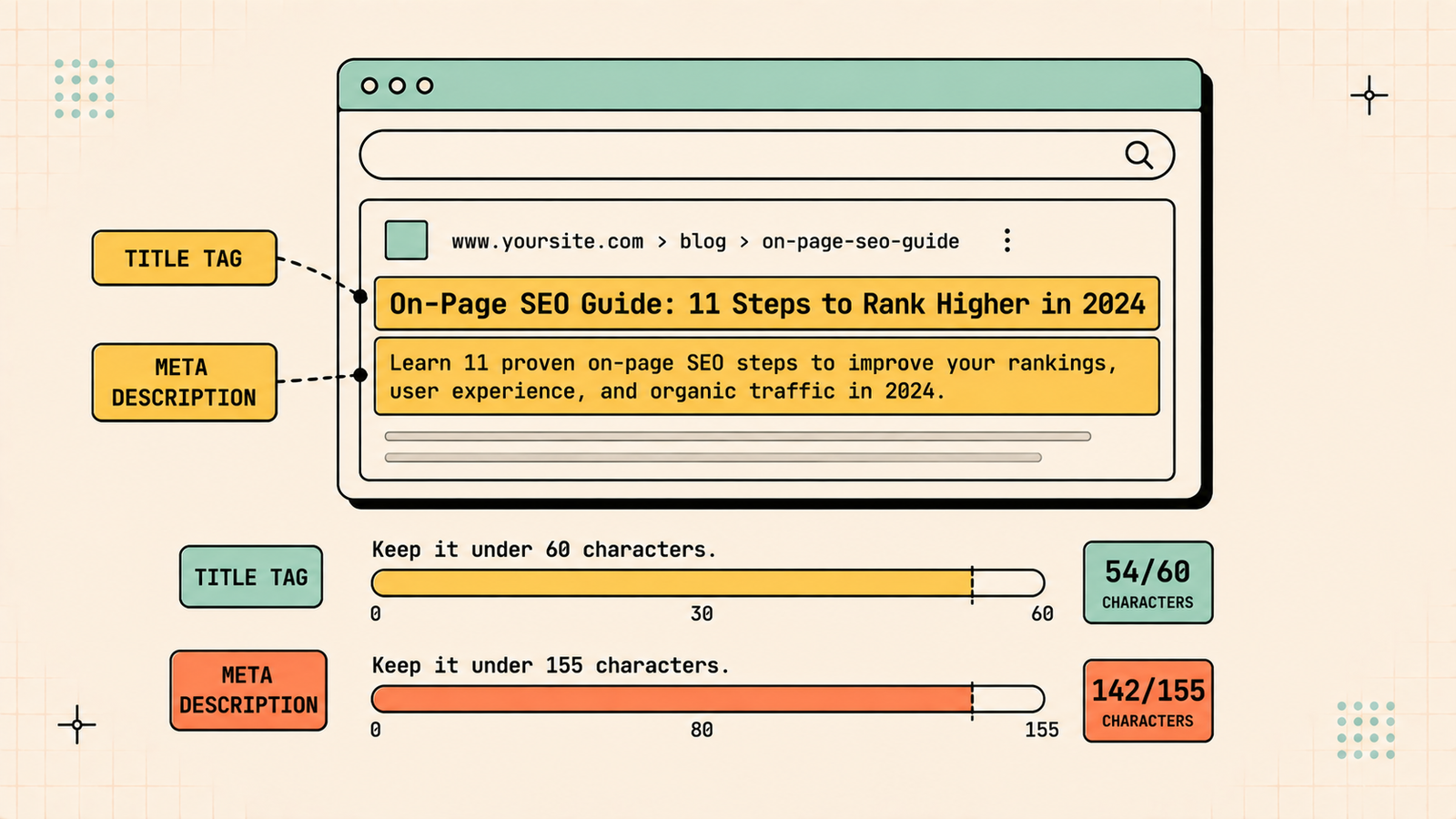
Your title tag is one of the strongest on-page signals and the first thing searchers see. Include your target keyword, ideally near the front, keep it under about 60 characters so it does not get cut off, and make it compelling enough to earn the click. Every page should have a unique, descriptive title.
2. Meta descriptions
The meta description is the short summary under your title in search results. It does not directly affect rankings, but a clear, enticing description improves your click-through rate, which matters. Write a unique one for each important page, include your keyword naturally, and make it read like an invitation.
3. URL structure
Keep URLs short, readable, and descriptive, and include your target keyword. A clean URL like /on-page-seo beats a messy string of numbers and symbols. Clear URLs help both search engines and users understand what the page is about before they even click.
4. Headings and structure
Use a single H1 for the main title, then H2s and H3s to organize your content into a clear hierarchy. Include keywords naturally in headings, and turn them into the questions people actually search, which helps both readers and AI search. Good structure makes content easier to read and easier for search engines to understand.
5. Keyword usage and placement
Include your target keyword in the important places: the title, the first paragraph, at least one heading, and naturally throughout the content. Also use related terms and variations so the page reads naturally and covers the topic fully. Avoid keyword stuffing, which reads badly and can hurt you. Write for humans first, then make sure the key signals are present.
6. Content quality and depth
This is the heart of on-page SEO. Create genuinely helpful, thorough content that fully answers the search behind the keyword. Cover the topic in real depth, add original insight and detail, and aim to be the most useful result on the page. Quality content is what earns rankings, keeps visitors engaged, and gets cited in AI answers.
7. Internal linking
Link between your related pages using descriptive anchor text. Internal links help search engines discover and understand your pages, spread ranking power around your site, and guide visitors to more of your content. A strong internal linking structure is one of the most underused on-page wins.
8. Image optimization
Add descriptive, keyword-relevant alt text to every image, which helps accessibility and image search and reinforces what the page is about. Compress images so they load fast, since heavy images slow your page. Use descriptive file names too, so search engines understand each image.
9. Match search intent
Before optimizing anything, make sure your page matches what searchers actually want for that keyword. If the top results are how-to guides, provide a guide, not a sales pitch. Matching intent is often the single biggest factor in whether a well-optimized page actually ranks.
Link Building in 2026
10. Add schema markup
Schema is code that helps search engines understand your content and can earn rich results like ratings, FAQs, and more. Add relevant schema such as Article, FAQ, and Product where it applies. Richer search listings stand out and win more clicks, and schema also helps AI search parse your content.
11. Page speed and mobile
A fast, mobile-friendly page is now essential. Slow pages and poor mobile experiences lose both rankings and visitors. Make sure your pages load quickly, aiming to load main content in under 2.5 seconds, and work cleanly on phones, where most searches happen.
We'll audit every page and show you exactly what's missing and how to fix it.
Get a clear, data-backed plan to optimize your pages for both Google and AI search, with the specific fixes that will move rankings first.
The on-page checklist at a glance
| Element | Quick win |
|---|---|
| Title tag | Unique, keyword near front, under ~60 characters |
| Meta description | Compelling, unique, includes keyword |
| URL | Short, readable, keyword included |
| Headings | One H1, clear H2/H3 hierarchy, question-based |
| Keywords | In title, intro, a heading, and naturally throughout |
| Content | Genuinely helpful, thorough, best on the topic |
| Internal links | Descriptive anchors to related pages |
| Images | Alt text, compressed, descriptive file names |
| Intent | Matches what searchers actually want |
| Schema | Article, FAQ, or Product where relevant |
| Speed and mobile | Fast load, clean on phones |
On-page SEO for AI search
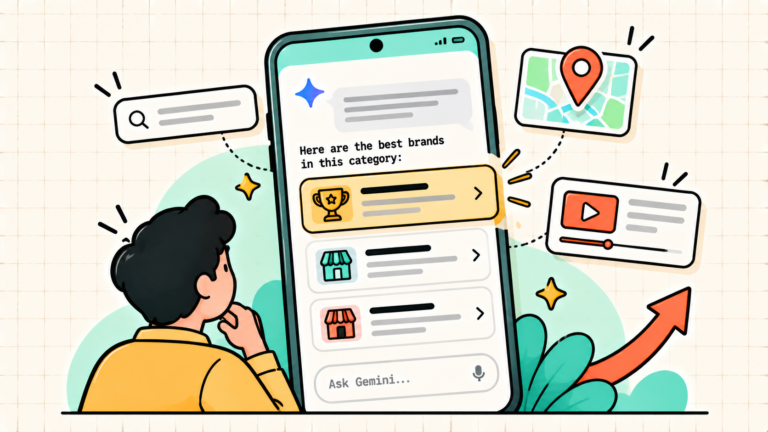
The same on-page work that ranks you on Google also helps you get cited in AI answers. Structure content with clear, question-based headings, open each section with a direct, self-contained answer, use tables and specific details, and add FAQ schema. AI search lifts clean, well-structured passages, so the clearer and better organized your on-page content is, the more likely you are to be quoted. Good on-page SEO is now good AI SEO.
Best on-page SEO tools
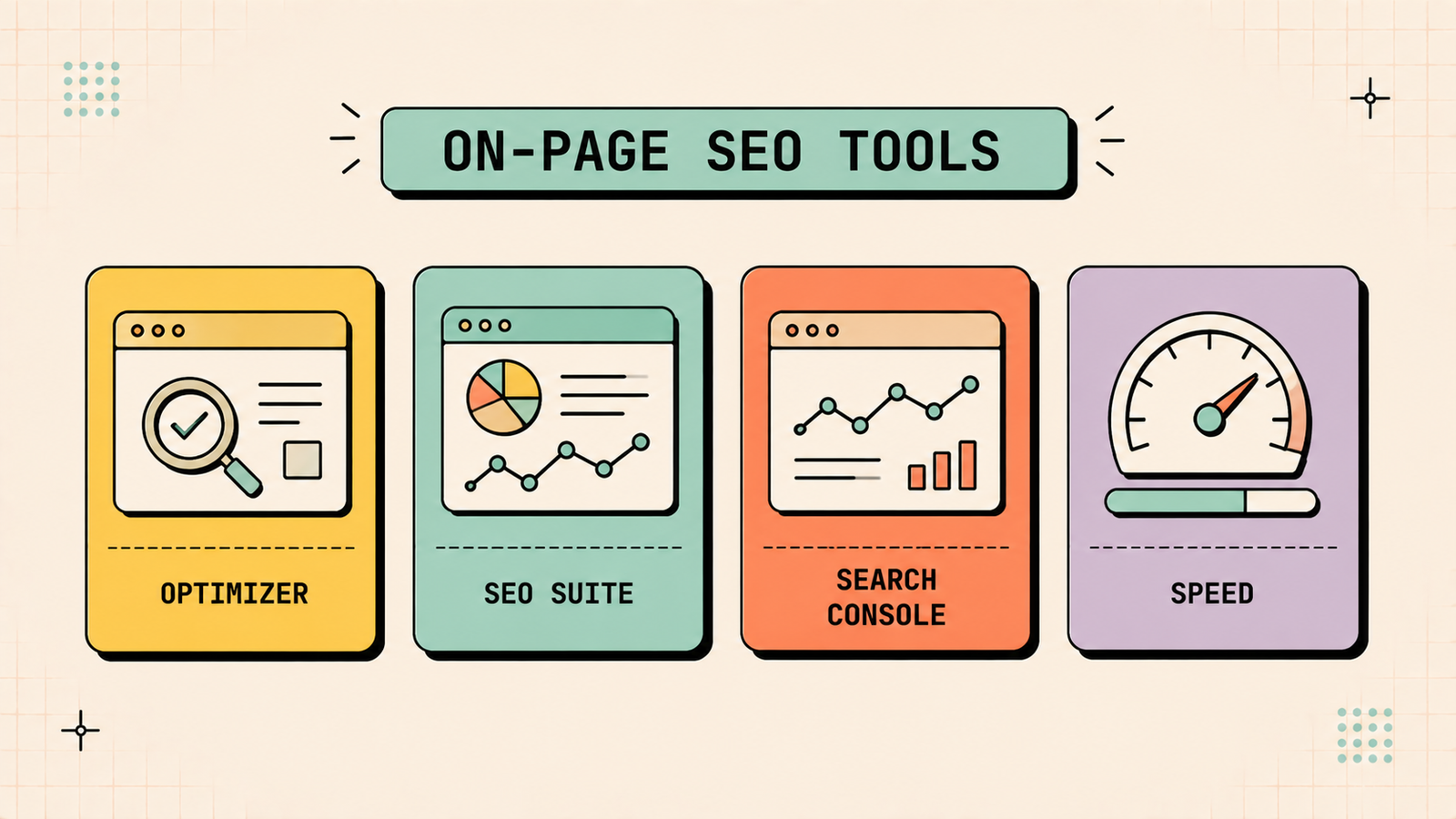
A few tools make on-page work faster and more accurate.
| Tool type | What it does |
|---|---|
| On-page optimization tools (Surfer, Clearscope) | Guide content and keyword coverage to rank |
| SEO suites (Semrush, Ahrefs, Ubersuggest) | Audit on-page issues across your site |
| Google Search Console | Free data on how your pages perform |
| Speed and mobile checkers (PageSpeed Insights) | Diagnose speed and mobile problems |
How to check and audit your on-page SEO
Run a regular on-page audit to catch issues. Check that every important page has a unique title and meta description, a clear heading structure, keyword usage in the right places, fast load times, and proper alt text. An SEO tool can crawl your whole site and flag missing titles, thin content, duplicate tags, and slow pages in one pass. Reviewing your top pages periodically and fixing these basics is one of the highest-return habits in SEO, because on-page fixes are usually quick and often unlock rankings that were being held back.
LetMeRank
Common on-page SEO mistakes
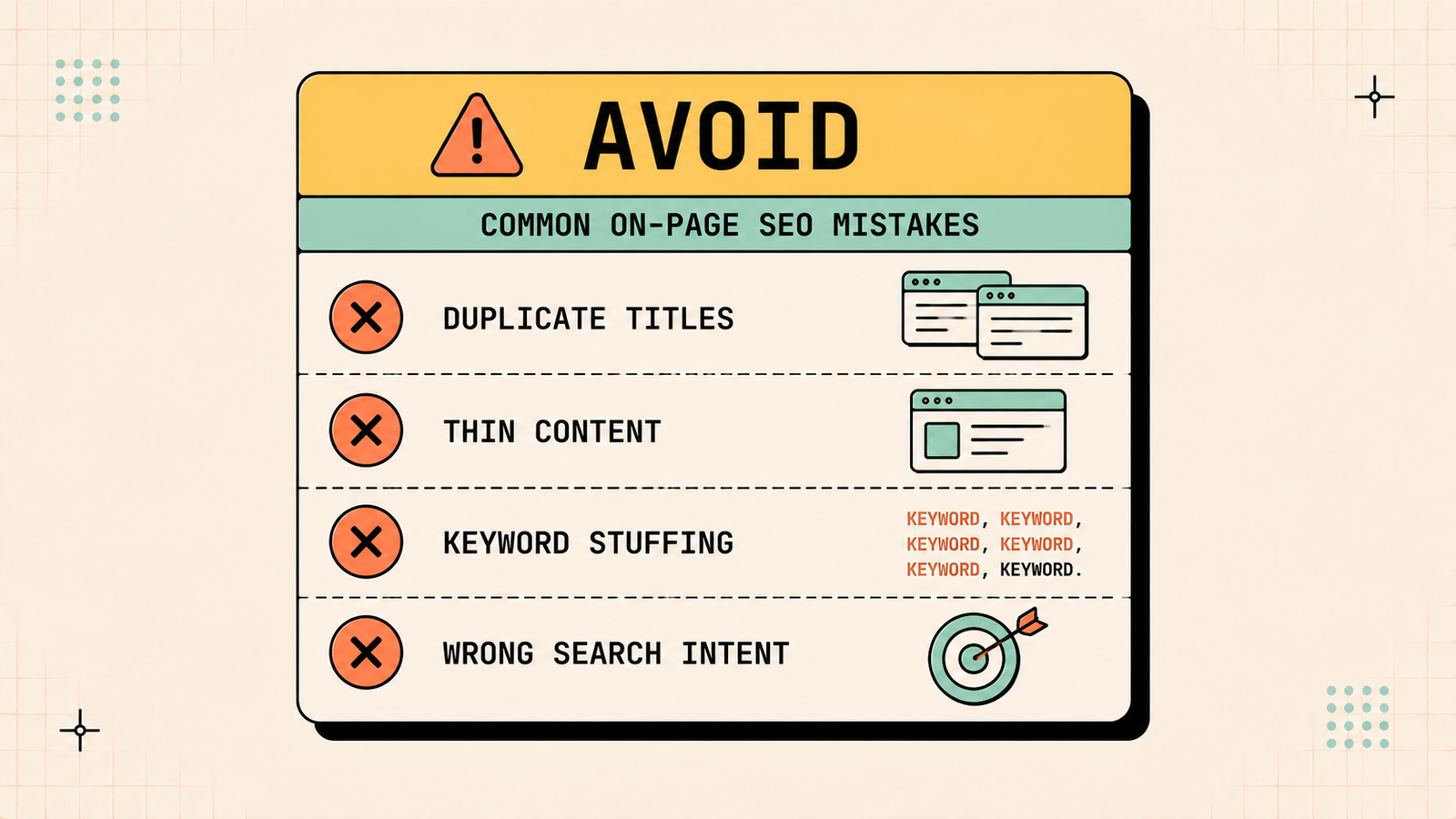
A few errors quietly cap your rankings. Duplicate or missing title tags and meta descriptions waste your strongest signals. Thin content gives Google nothing to rank. Keyword stuffing reads badly and can hurt you. Ignoring search intent produces pages that never rank no matter how optimized. Poor heading structure confuses both readers and search engines. And forgetting image alt text and speed leaves easy wins on the table. Fix these and even existing pages can climb.
The bottom line for founders
On-page SEO is the part of ranking you fully control, and it is the foundation everything else builds on. Optimize your titles, meta descriptions, URLs, headings, content, internal links, and images, match search intent, add schema, and keep pages fast and mobile-friendly. Do this on every page and you give Google, and AI search, every reason to rank you.
If you want experts to audit and optimize every page of your site, LetMeRank offers on-page SEO as part of its services, starting with a free audit of what your pages are missing and the specific fixes that will move rankings first.