You can write the best content in your niche and still get outranked by a weaker page, for one simple reason: the other site has more websites vouching for it than you do. Those votes of confidence are backlinks, and they remain one of the strongest signals Google uses to decide who ranks. But the game has changed. A handful of genuine, relevant links can transform your rankings, while a hundred spammy ones can hurt you. This guide explains what backlinks are, why they still matter, and the proven, safe ways to earn quality links that actually move you up the results.
What are backlinks?
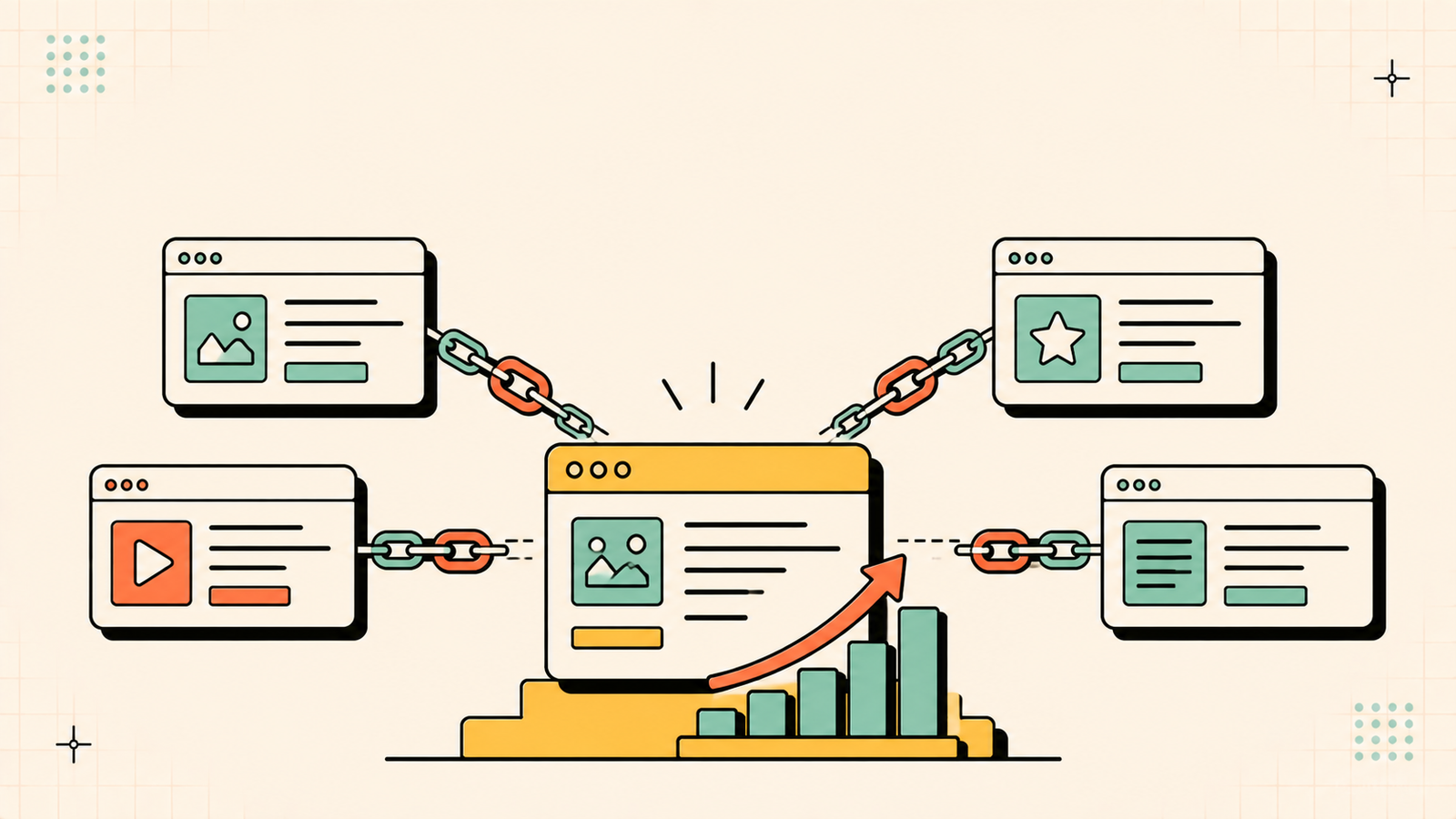
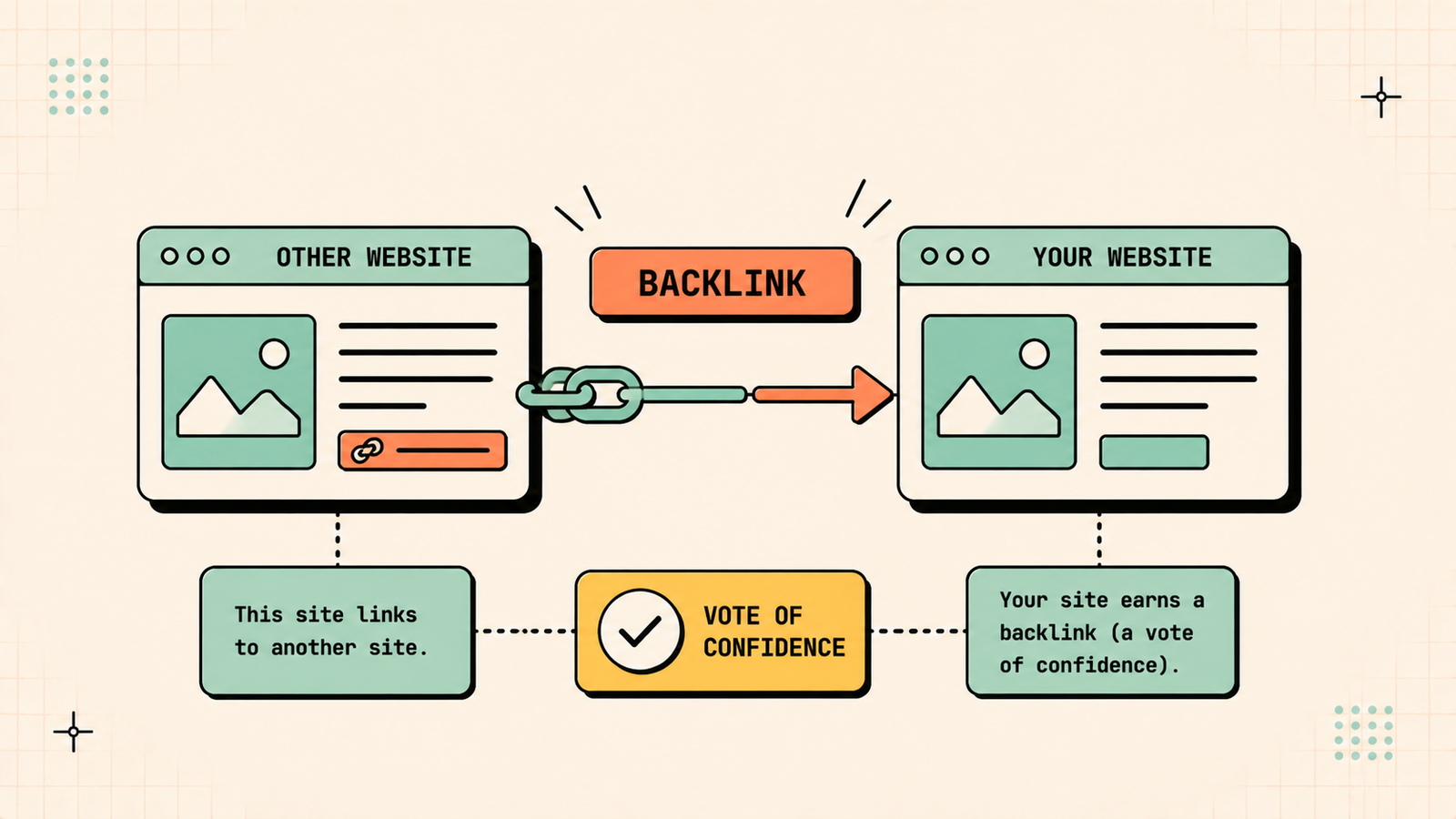
A backlink is simply a link from one website to another. When another site links to your page, that link is a backlink for you. Search engines treat these links like votes of confidence: if reputable sites link to your content, it signals that your content is trustworthy and worth ranking.
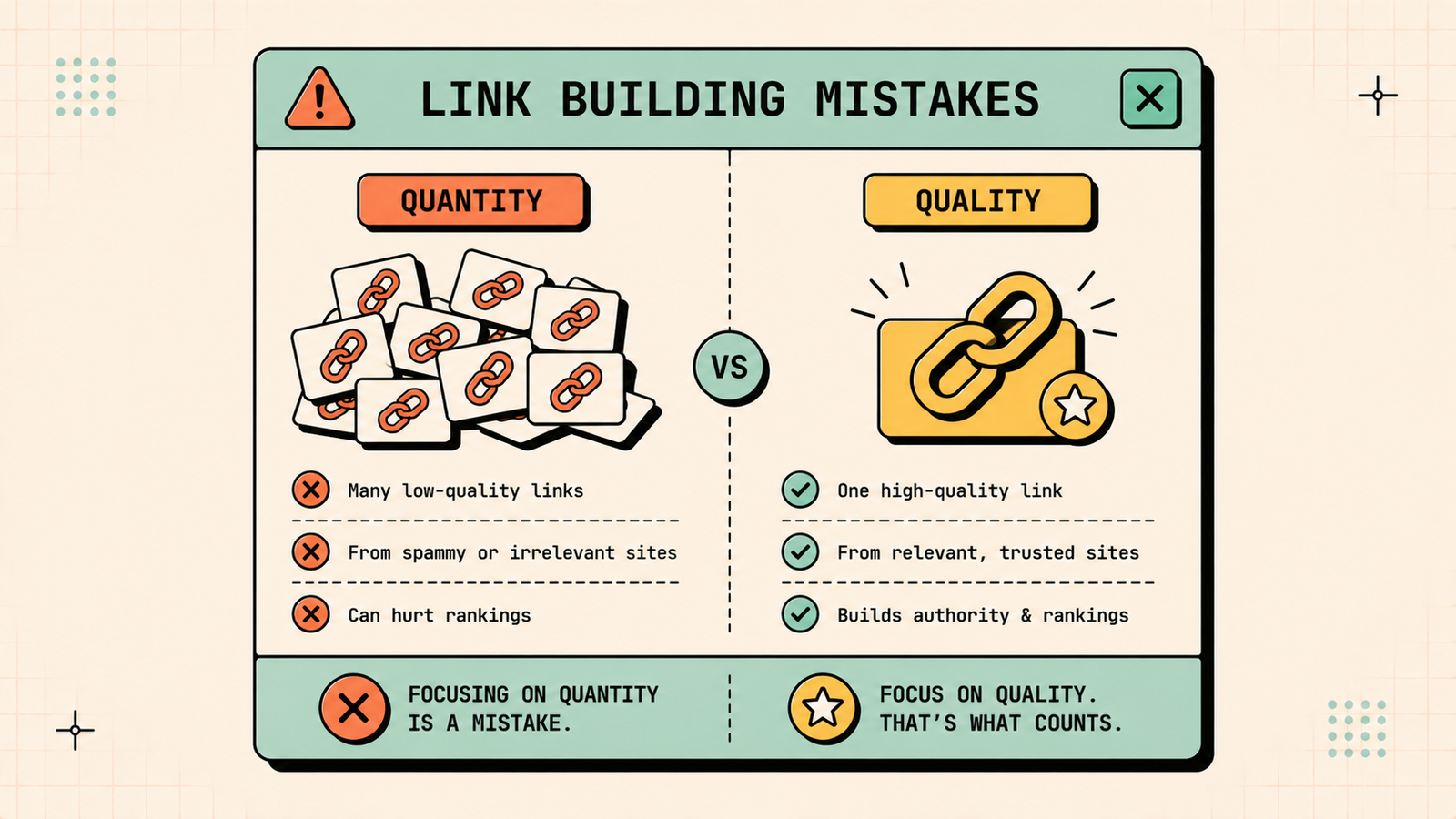
Not all votes count equally, though. A link from a respected, relevant website carries far more weight than one from an unknown or spammy site. That single idea, quality over quantity, is the foundation of modern link building.
How to Do Keyword Research for SEO
Why do backlinks matter for SEO?
Backlinks matter because they remain one of Google's most important ranking factors. They do three key jobs. They pass authority, so links from strong sites lift your own site's credibility in Google's eyes. They build trust, since being referenced by respected sources signals that you are a reliable source too. And they drive referral traffic, because a link on a relevant page sends interested visitors directly to you. For a newer or smaller site, backlinks are often the missing piece. You can do everything else right and still struggle to rank if no one is linking to you, because Google has little outside evidence that your content deserves to be trusted.
Types of backlinks
Understanding the main distinctions helps you focus on what counts.
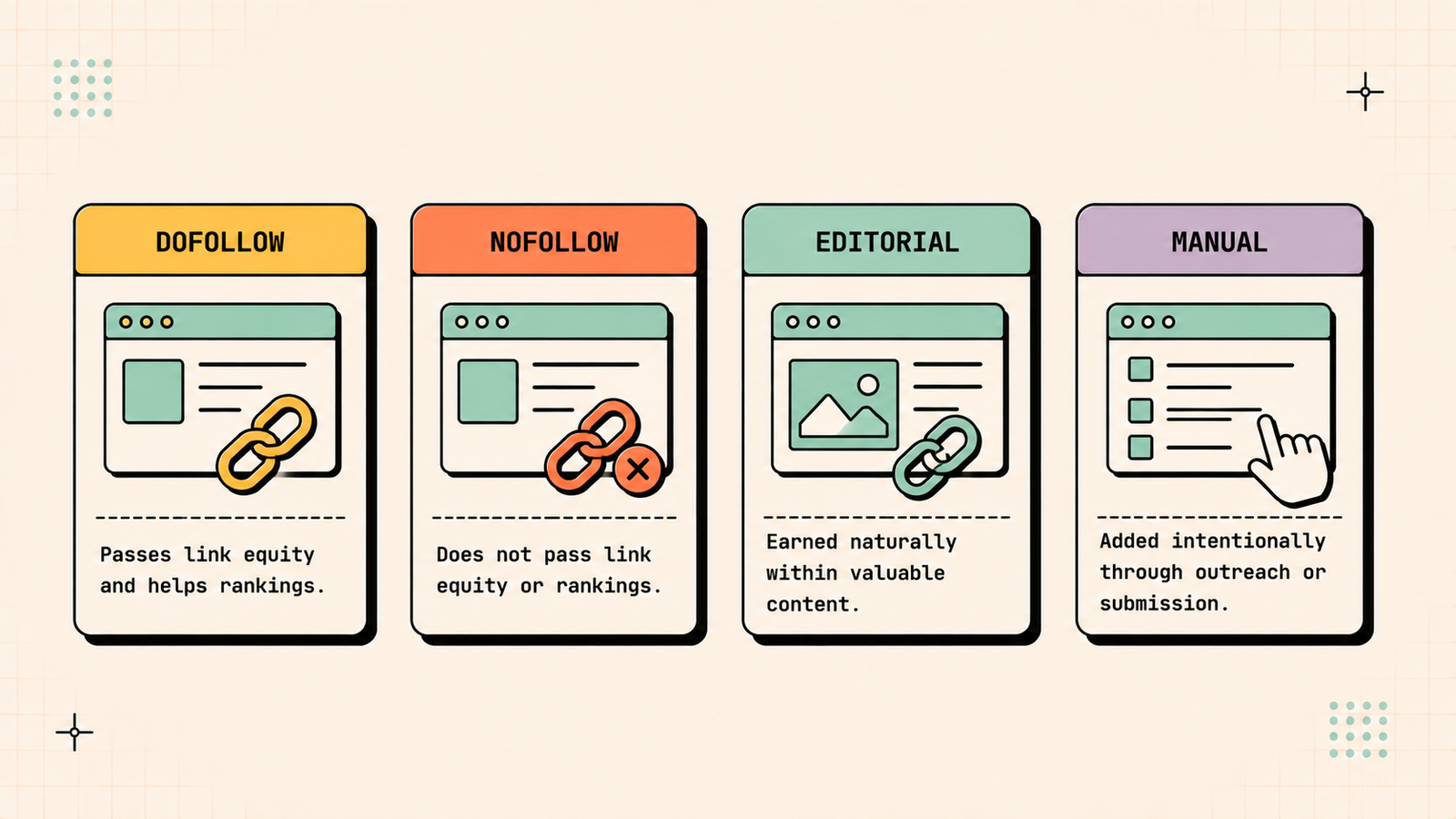
| Type | What it means | Value |
|---|---|---|
| Dofollow | Passes authority to your site | High, the links you most want |
| Nofollow | Tells Google not to pass authority | Lower, but still useful for traffic and a natural profile |
| Editorial | Earned naturally within content | Very high, the gold standard |
| Manual | Actively requested or built | Valuable when relevant and legitimate |
A natural, healthy backlink profile includes a mix. Chasing only one type, or building links in unnatural patterns, is a red flag to Google.
What makes a good backlink?
Before you chase links, know what a valuable one looks like. The best backlinks come from authoritative sites that Google already trusts, and from pages relevant to your topic, since a link from a site in your field counts for far more than a random one. They are ideally dofollow, so they pass authority, and editorial, meaning they were placed naturally because your content was worth referencing. And they sit within real, useful content rather than in a footer or a spammy list. One link that ticks these boxes is worth more than dozens of weak ones. This is why modern link building is about earning fewer, better links, not amassing as many as possible.
How to get quality backlinks
Here are the proven, safe strategies that actually work in 2026.
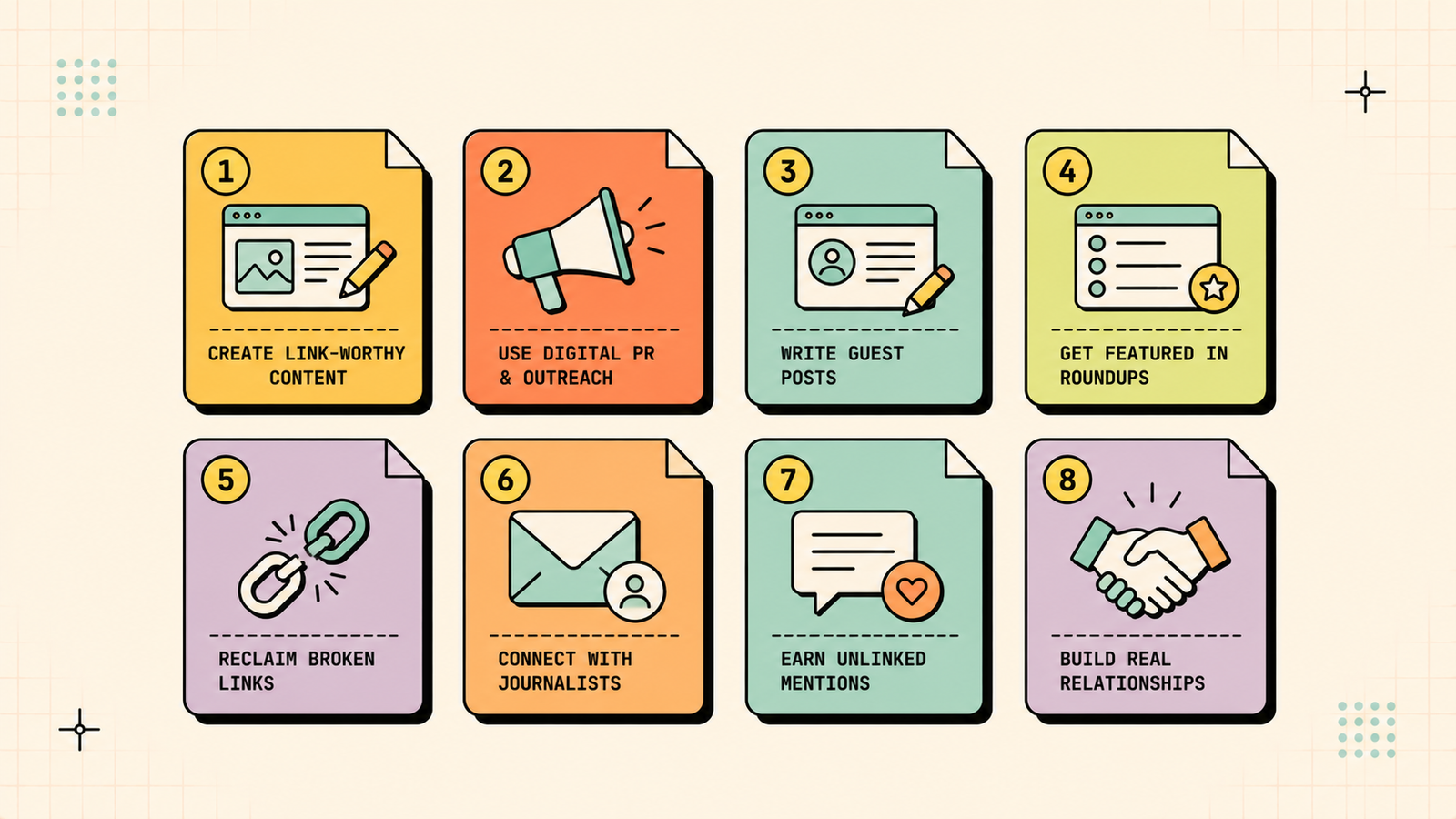
1. Create genuinely link-worthy content
The most sustainable way to earn links is to publish content people want to reference: original research and data, in-depth guides, useful tools, and strong opinions. When your content is the best resource on a topic, other sites link to it naturally. This is the foundation that makes every other tactic easier.
2. Use digital PR
Digital PR means earning coverage and links from news sites and publications by giving them something worth writing about, such as a survey, a data story, an expert take, or a newsworthy angle. Done well, it can land high-authority links that are almost impossible to get any other way.
3. Write guest posts
Contributing genuinely useful articles to reputable sites in your industry, with a natural link back to your site, is a long-standing way to earn quality links and reach a new audience. The key is relevance and real value, not churning out thin posts purely for the link.
4. Get into roundups and listicles
Many sites publish "best of" lists and resource roundups. Getting your product, tool, or content featured in relevant ones earns you links and referral traffic from people already looking for options like yours.
5. Try broken link building
Find broken links on relevant websites that point to content similar to yours, then suggest your working page as a replacement. It helps the site owner fix a dead link and earns you a relevant backlink in return, a genuine win for both sides.
6. Respond to journalist requests
Journalists and writers regularly look for expert sources and quotes. Responding helpfully to relevant requests can earn you links from high-authority news and industry sites, along with useful brand exposure as a quoted expert.
7. Reclaim unlinked mentions
Sometimes other sites mention your brand without linking to you. Find these mentions and politely ask them to add a link. Since they already talked about you, this is one of the easiest links to earn.
8. Build genuine relationships
Many of the best links come from real relationships in your industry: partners, collaborators, and people who know and respect your work. Networking, contributing to your community, and helping others leads to links naturally over time.
Ecommerce SEO Strategy for 2026
We'll show you exactly where your link profile stands and which quality opportunities you're missing.
Get a clear, data-backed plan to build a genuine link profile that lifts your rankings safely and sustainably.
How to check your backlinks and your competitors'
You cannot improve what you do not measure. Use an SEO tool to see your own backlink profile, spot toxic or spammy links, and track new ones. Just as usefully, analyze your competitors' backlinks to find sites that link to them but not to you. Those are proven, relevant link opportunities you can pursue, because if a site linked to a competitor, it may well link to you too. Competitor backlink analysis is one of the fastest ways to build a realistic target list.
Backlinks to avoid
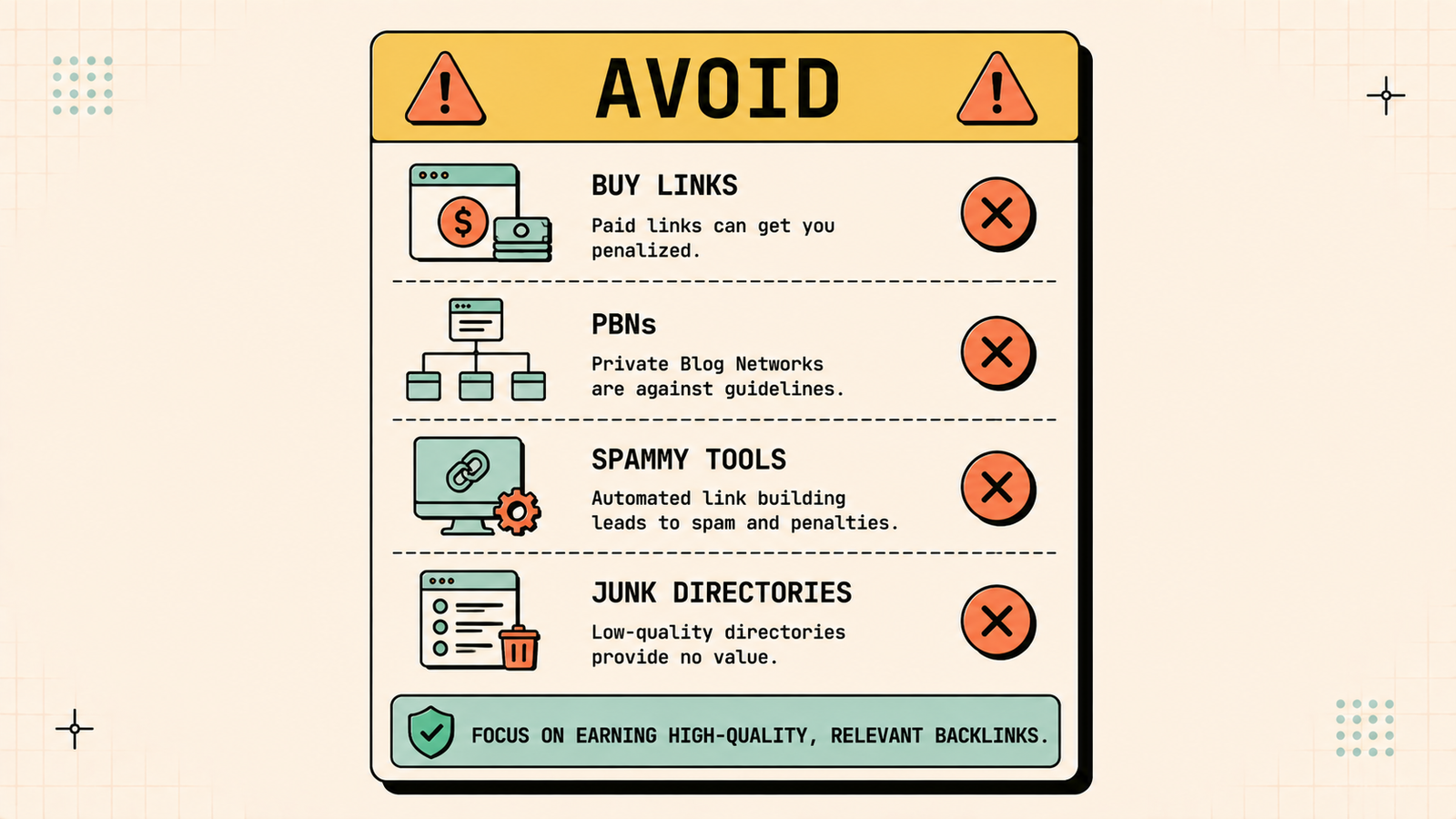
Some links do more harm than good. Avoid buying links, which violates Google's guidelines and can get you penalized. Steer clear of private blog networks and link farms built purely to manipulate rankings. Ignore automated tools promising thousands of instant backlinks, since these are almost always spam. And avoid irrelevant, low-quality directories. The pattern is simple: any shortcut that creates links unnaturally and at scale is a risk. Google has spent years getting better at detecting and penalizing manipulative link building, so the safe long-term path is always earning genuine links.
Backlinks and AI search
Backlinks and brand mentions across the web also influence how AI search sees you. When your brand is referenced and linked across many reputable sites, AI models are more likely to recognize you as an authority and cite you in their answers. The same work that builds your traditional link profile, earning genuine mentions and coverage, also strengthens your presence in AI search, making it doubly worthwhile.
Common link building mistakes
A few errors waste effort or cause harm. Chasing quantity over quality fills your profile with weak links that do little. Buying links or using spammy shortcuts risks penalties that are hard to recover from. Getting links from irrelevant sites adds little value. Using the exact same anchor text repeatedly looks unnatural. And ignoring the content side means you have nothing worth linking to in the first place. Avoid these and your link building compounds safely over time.
LetMeRank
How to do link outreach that actually gets replies
Most link building involves reaching out to real people, and the difference between silence and a yes is usually the approach. Keep outreach personal and specific: reference the exact page you are talking about and why your link genuinely helps their readers, rather than sending an obvious mass template. Lead with what is in it for them, whether that is fixing a broken link, adding a useful resource, or offering a genuinely better source. Keep it short and easy to say yes to. And follow up once, politely, if you hear nothing, since a single reminder often does the trick. Outreach is a numbers game, but personalization is what tilts the numbers in your favor. Ten thoughtful, tailored emails beat a hundred generic ones every time.
How long does link building take?
Link building is a steady, ongoing effort rather than a quick fix. Individual links can come in within days or weeks of outreach, but the real payoff, higher rankings from a stronger overall profile, builds over months as you accumulate quality links and Google recognizes your growing authority. Trying to build too many links too fast can look unnatural and backfire, so a steady, consistent pace of genuine links is both safer and more effective. Treat it as a habit you maintain, not a campaign you finish, and the compounding effect on your rankings is well worth the patience.
The bottom line for founders
Backlinks are still one of the most powerful ranking factors, but the winning approach is quality over quantity. Create content worth linking to, earn links through digital PR, guest posts, roundups, and genuine relationships, learn from your competitors' links, and never risk your site with paid or spammy shortcuts. Build a genuine, relevant link profile and you give Google every reason to rank you.
If you want experts to build quality backlinks safely and lift your rankings, LetMeRank offers link building as part of its SEO services, starting with a free audit of your current backlink profile and the opportunities you are missing.