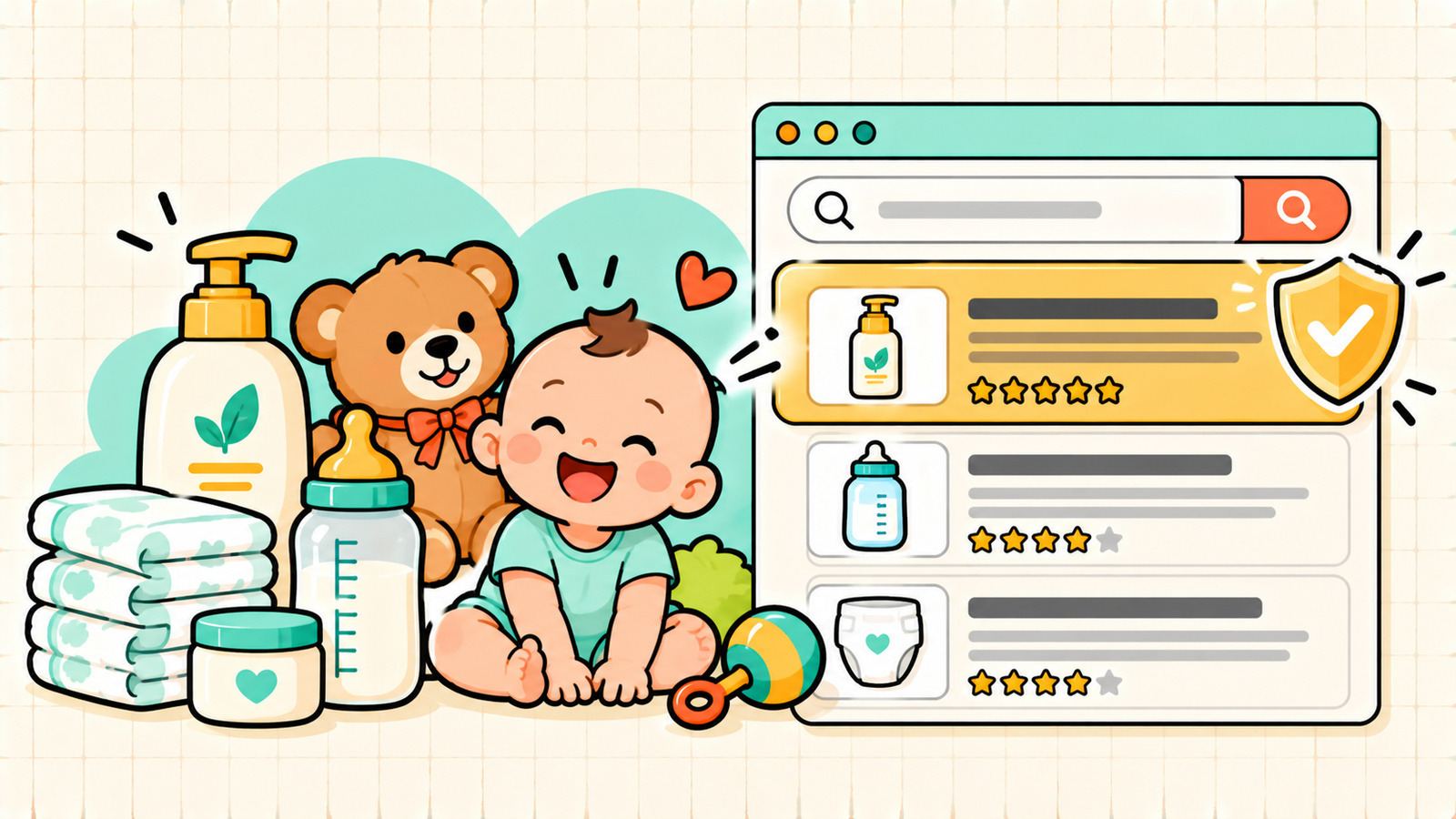
New parents are the most intense researchers on the internet. Before buying a diaper, a baby lotion, a feeding bottle, or a stroller, they read ingredient lists, compare brands, check safety certifications, ask other parents, and search at 3 a.m. while feeding a newborn. Every one of those searches is a moment when a baby brand can either earn trust or be ignored.
Most D2C baby brands compete for parents' attention on Instagram, parenting influencer posts, and marketplaces, which means paying for every new customer in a market where trust decides everything. SEO lets a baby brand become a reliable source parents return to throughout the early years. This guide covers how SEO works for baby care, feeding, and gear brands, the content that ranks and converts, how to handle safety and health topics responsibly, and the mistakes that hold most baby brands back.
Why SEO matters for baby product brands
Parents of young children have more questions than almost any other buyer, and the stakes feel enormous. Is this lotion safe for newborn skin? Which diaper causes fewer rashes? When can a baby start solid food? What size stroller fits in a car? These questions are searched millions of times, and the brands that answer them clearly and safely become trusted names.
Baby products are also highly repeat-purchase and life-stage driven. Diapers, wipes, skincare, and feeding products are bought every few weeks, and needs change as the child grows. A parent who trusts your brand early may buy from you for years, moving from newborn products to toddler products as their child grows.
How parents search
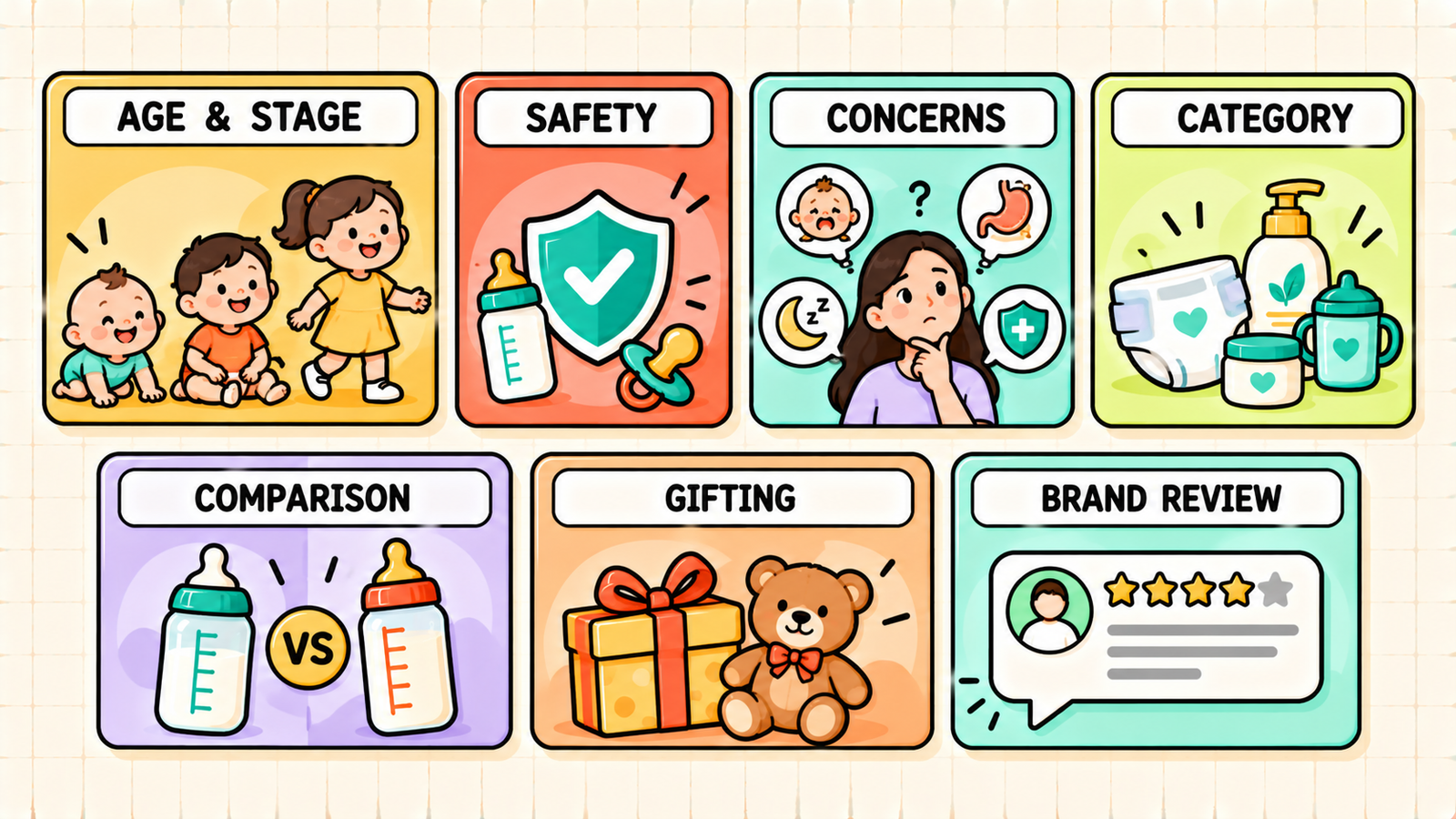
| Search type | Example queries | Best page type |
|---|---|---|
| Age and stage | newborn essentials checklist, 6 month baby food chart, toddler sleep routine | Stage guides and checklists |
| Safety and ingredients | is mineral oil safe for babies, chemical free baby lotion, BPA free bottles | Ingredient and safety guides |
| Concerns | diaper rash remedies, baby dry skin in winter, colic relief tips | Concern guides with doctor guidance |
| Product category | best diapers for newborn, baby massage oil, feeding bottle anti colic | Collection pages |
| Comparison | cloth vs disposable diapers, glass vs plastic feeding bottles | Comparison pages |
| Gifting | baby shower gift ideas, gift hamper for newborn | Gifting collections |
| Brand evaluation | [brand] review, [brand] ingredients, is [brand] safe for newborns | Product, ingredient, and trust pages |
Stage and concern searches bring volume. Safety, comparison, and brand searches decide purchases.
The baby brand SEO playbook
1. Build age and stage guides
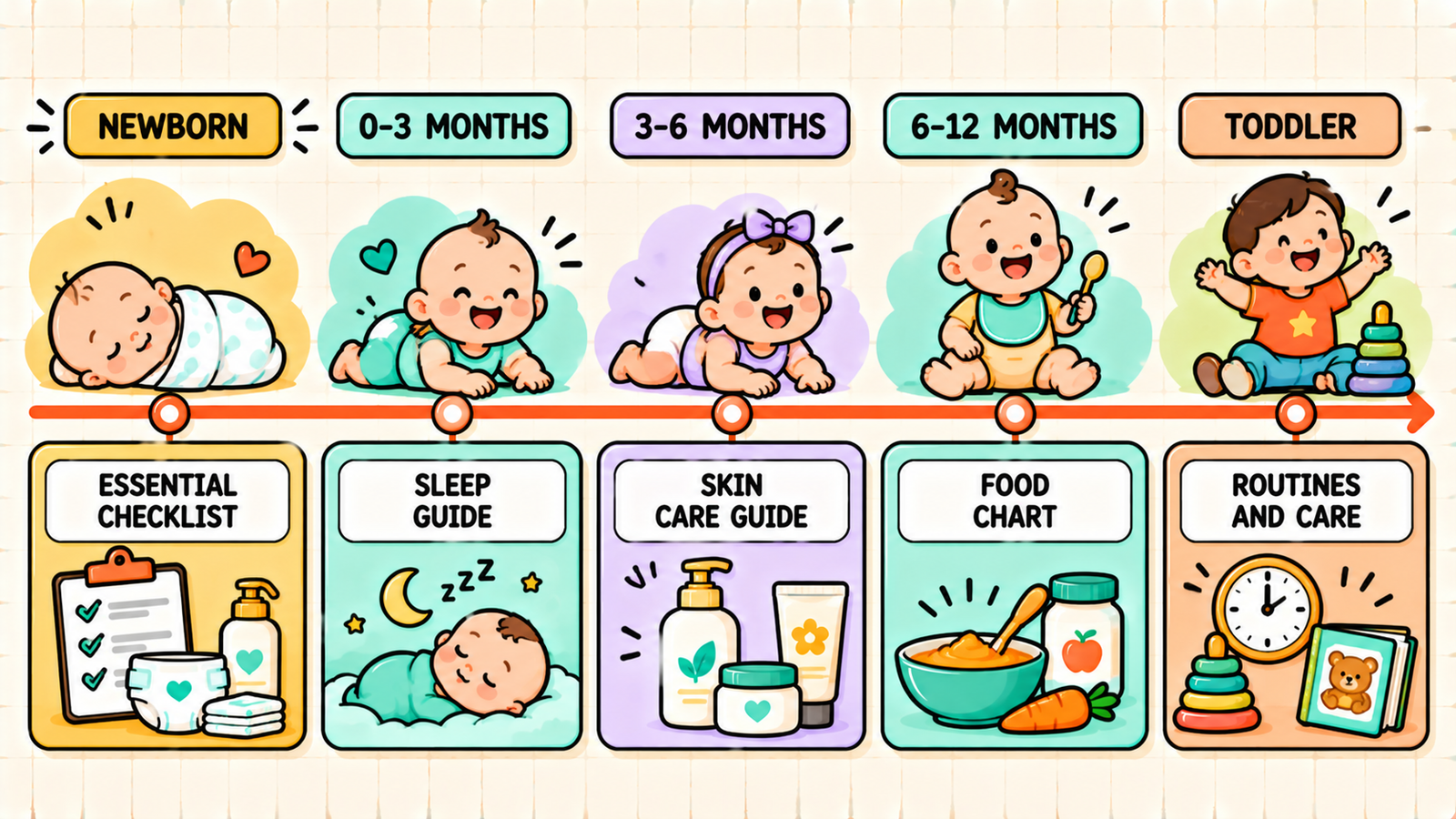
Create guides for each stage: newborn, 0 to 3 months, 3 to 6 months, 6 to 12 months, and toddlers. Cover essentials checklists, feeding milestones, sleep, skin care, and development basics, with links to relevant products. Newborn essentials checklists and baby food charts are among the most searched parenting topics. Practical, Indian-context guides (climate, joint family routines, traditional practices like massage) are especially valuable.
2. Publish ingredient and safety explainers
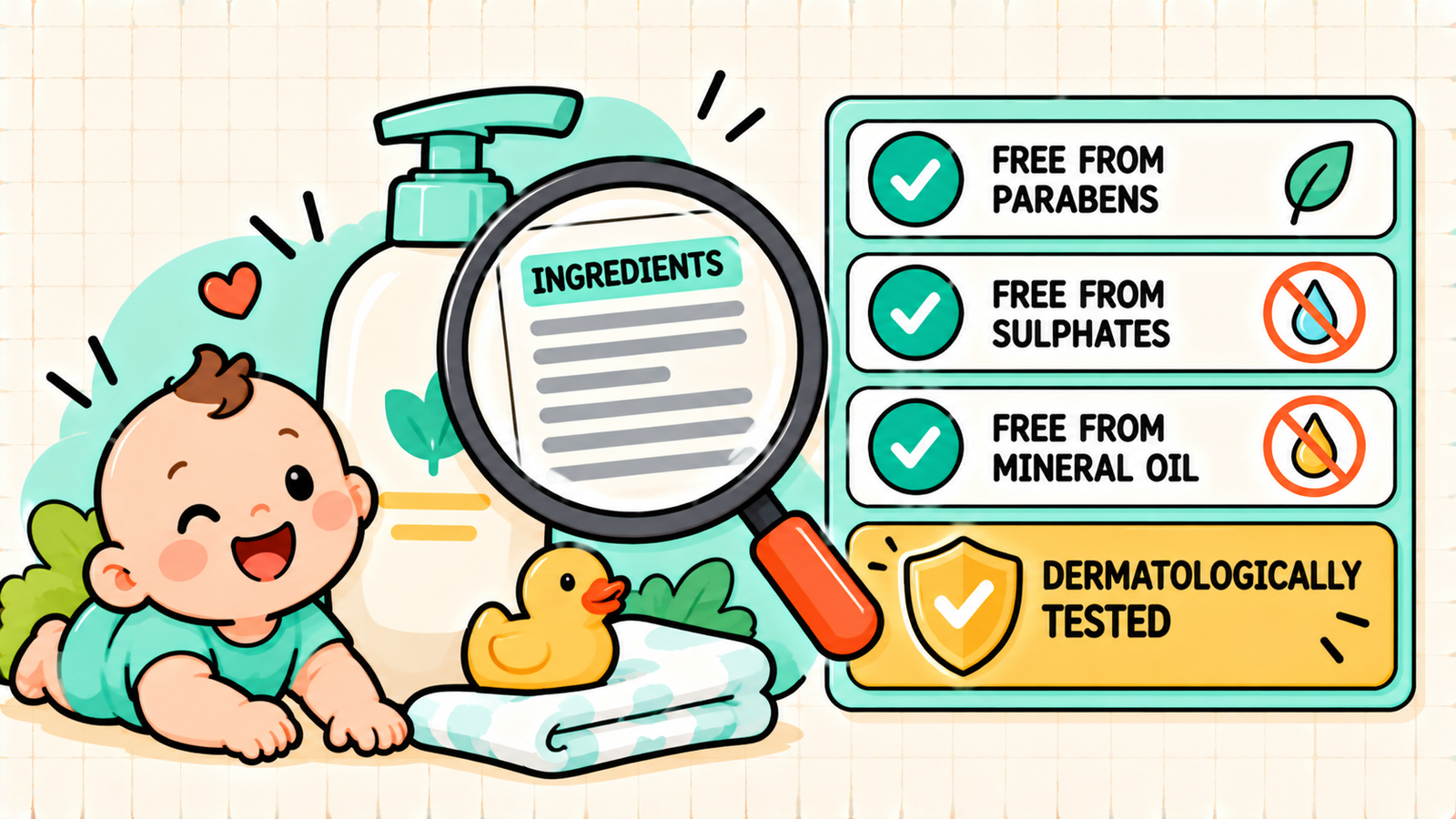
Indian parents increasingly check labels for parabens, sulphates, mineral oil, fragrance, and other ingredients, and they look for BPA-free materials in feeding products. Create clear, balanced explainers on what each ingredient or material is, what the evidence says, and how to read labels. Be factual rather than fear-based: scaring parents may get clicks but erodes trust. Link each explainer to products that meet those standards.
3. Write concern guides with medical caution
Diaper rash, dry skin, cradle cap, colic, teething, and constipation are frequent, worried searches. Write helpful guides on common causes and gentle care, and always include clear warning signs that need a paediatrician. Never present products as treatments for medical conditions. Have this content reviewed by a qualified paediatrician or child health expert, and name them on the page.
4. Create honest comparison pages
Parents compare constantly: cloth versus disposable diapers, glass versus plastic bottles, lotion versus oil for massage, pram versus stroller. Fair comparisons that explain trade-offs, including when another option might suit a family better, build credibility and capture decision-stage searches.
5. Optimise collection pages
Category collections (diapers, wipes, baby skincare, bath, feeding, gear, clothing) target the strongest commercial searches. Add helpful text on how to choose by age, skin type, or need, and an FAQ. Use age-based sub-collections where parents search that way ("newborn skincare," "toddler bath products").
6. Make product pages complete and transparent
Include the full ingredient list or material details, suitable age range, safety testing and certifications, how to use, size charts for diapers and clothing, care instructions, real reviews (ideally with baby age and skin type), clear return policies, and an FAQ. Parents read everything, so thin product pages lose them quickly.
7. Build gifting collections
Baby showers, newborn visits, naming ceremonies, and first birthdays bring strong gifting demand. Create permanent gift hamper collections and gifting guides by budget and occasion, and update them regularly.
We'll find exactly where your baby brand is losing trust and traffic.
Get a clear, data-backed plan to rank stage guides, collections, and product pages, and turn anxious searches into loyal parents. Claim your audit today.
Safety, claims and compliance
Baby products carry the highest trust expectations of any consumer category. Depending on the product, Indian rules may apply, including cosmetics regulations for baby skincare, FSSAI rules for baby food, and BIS quality standards for products like toys. Advertising standards discourage misleading claims. Your website content should be as careful as your packaging.
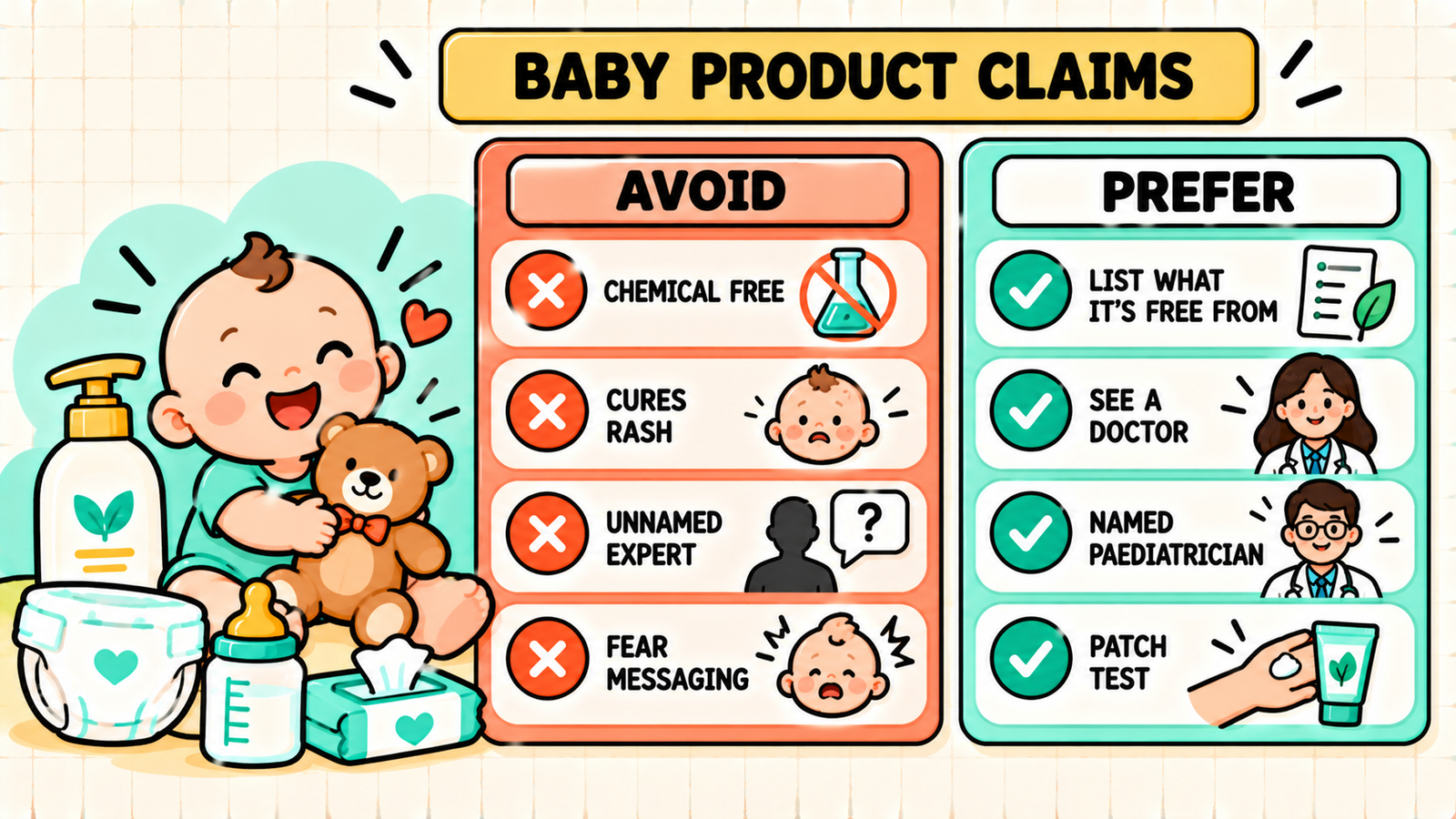
| Avoid | Prefer |
|---|---|
| "100 percent chemical free" | "Free from parabens, sulphates, and mineral oil" (list exactly what) |
| "Cures diaper rash" | "Helps protect delicate skin; see a doctor if rash persists" |
| "Paediatrician recommended" with no name | "Reviewed by [named paediatrician, credentials]" |
| "Completely safe for all babies" | "Dermatologically tested; patch test before first use" |
| Fear-based messaging about competitors | Clear, factual explanations of your own standards |
Accurate, specific, expert-reviewed content is what both parents and search engines reward in this category.
SEO for Jewellery Brands: How D2C Jewellery Brands Win Trust in Search
Traditional practices and Indian context
Indian parenting includes many traditional practices: daily oil massage, ubtan, specific weaning foods like ragi and dal water, and family routines that differ from Western guides. Parents search for these in English, Hindi, and regional languages, often to check whether a practice is safe or how to do it correctly. Balanced content that respects tradition, explains what modern guidance says, and gives clear safety tips helps parents navigate advice from grandparents and doctors alike. This kind of culturally aware content is rare, builds deep trust, and positions your brand as genuinely Indian rather than imported.
Competing with big baby brands and marketplaces
Global baby brands and marketplaces dominate broad terms like "baby lotion" or "diapers." D2C baby brands win on transparency and specificity: ingredient explainers, Indian climate and tradition-based guides, honest comparisons, stage-specific checklists, natural and Ayurvedic baby care niches, and their own branded searches. Subscriptions for diapers and wipes, starter kits, and expert support give parents reasons to buy direct.
Pregnancy and pre-birth content
Parents start researching before the baby arrives. Searches like "hospital bag checklist for delivery," "things to buy before baby is born," and "baby shower gift list" begin months in advance. A pre-birth checklist and starter kit capture families before they choose the brands they will trust for the whole first year.
Using Instagram, YouTube and parenting communities
Parents learn from other parents. Instagram reels and YouTube videos showing how to use products, massage routines, bath time tips, and honest product reviews build trust and appear in search. Parenting communities and forums influence decisions heavily, so genuine mentions and reviews there matter. Embed your videos on guides and product pages to keep parents engaged.
SEO for Fashion Brands: How D2C Clothing Brands Rank Against Myntra and Ajio
User reviews and real parent stories
Reviews from real parents are one of the strongest trust signals in this category. Encourage detailed reviews that mention baby age, skin type, and how long they used the product. Share real parent stories (with consent) in your guides. Respond kindly and helpfully to concerns. Never use fake reviews, which are especially damaging in a category built on trust.
Baby brand SEO and AI search
Parents ask AI assistants questions like "best newborn essentials list India" or "is coconut oil good for baby massage." AI tools are careful with child health topics and favour accurate, well-sourced, expert-reviewed content from credible brands. Clear stage guides, transparent ingredient information, named expert review, and consistent brand details across platforms make your brand easier to recommend responsibly.
How to measure baby brand SEO
Track organic revenue and subscription sign-ups, rankings for stage, category, and safety keywords, traffic from guides and how often those visitors click through to products, branded search growth, and repeat purchase rates for organic customers. Because baby needs change with age, also track how many customers move from newborn products to later-stage products, which shows whether your content keeps them engaged as their child grows.
How long does SEO take for baby product brands?
Specific concern, ingredient, and checklist guides can rank within two to five months. Stage-based collections and comparison pages often take four to eight months. Broad category terms can take a year or more against established brands. Branded and trust searches can improve quickly once your pages are clear and complete.
Common baby brand SEO mistakes
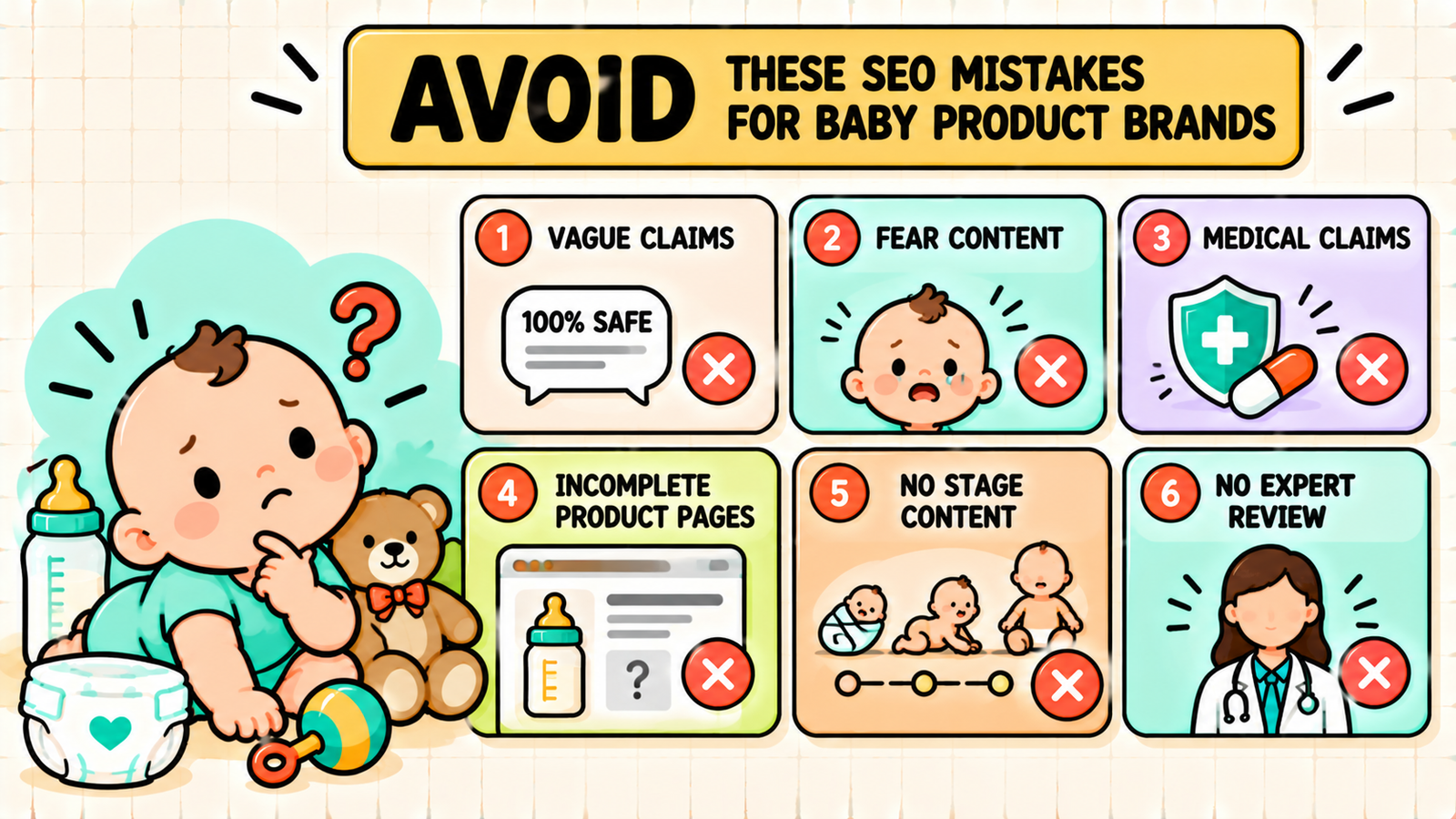
A few patterns appear in most baby brand audits. Using vague claims like "chemical free" damages credibility. Fear-based content about ingredients attracts clicks but loses trust. Presenting products as treatments for medical conditions creates risk. Product pages without full ingredients, age ranges, or certifications lose careful parents. Ignoring stage-based content misses parents at their most active research moments. And skipping expert review on health topics weakens trust in a category where trust is everything.
AI Tools for Marketing
The bottom line
SEO for baby product brands works when you become a calm, accurate guide for anxious parents. Build age and stage guides, publish balanced ingredient and safety explainers, write careful concern content reviewed by a paediatrician, create honest comparisons, optimise collections and product pages, and plan gifting collections. Keep every claim specific and factual. In a category where parents read everything, the most transparent and helpful brand earns the longest and deepest trust.
If you want an SEO strategy built for a baby care, feeding, or parenting brand, LetMeRank works with Indian D2C brands on organic growth, starting with a free audit.