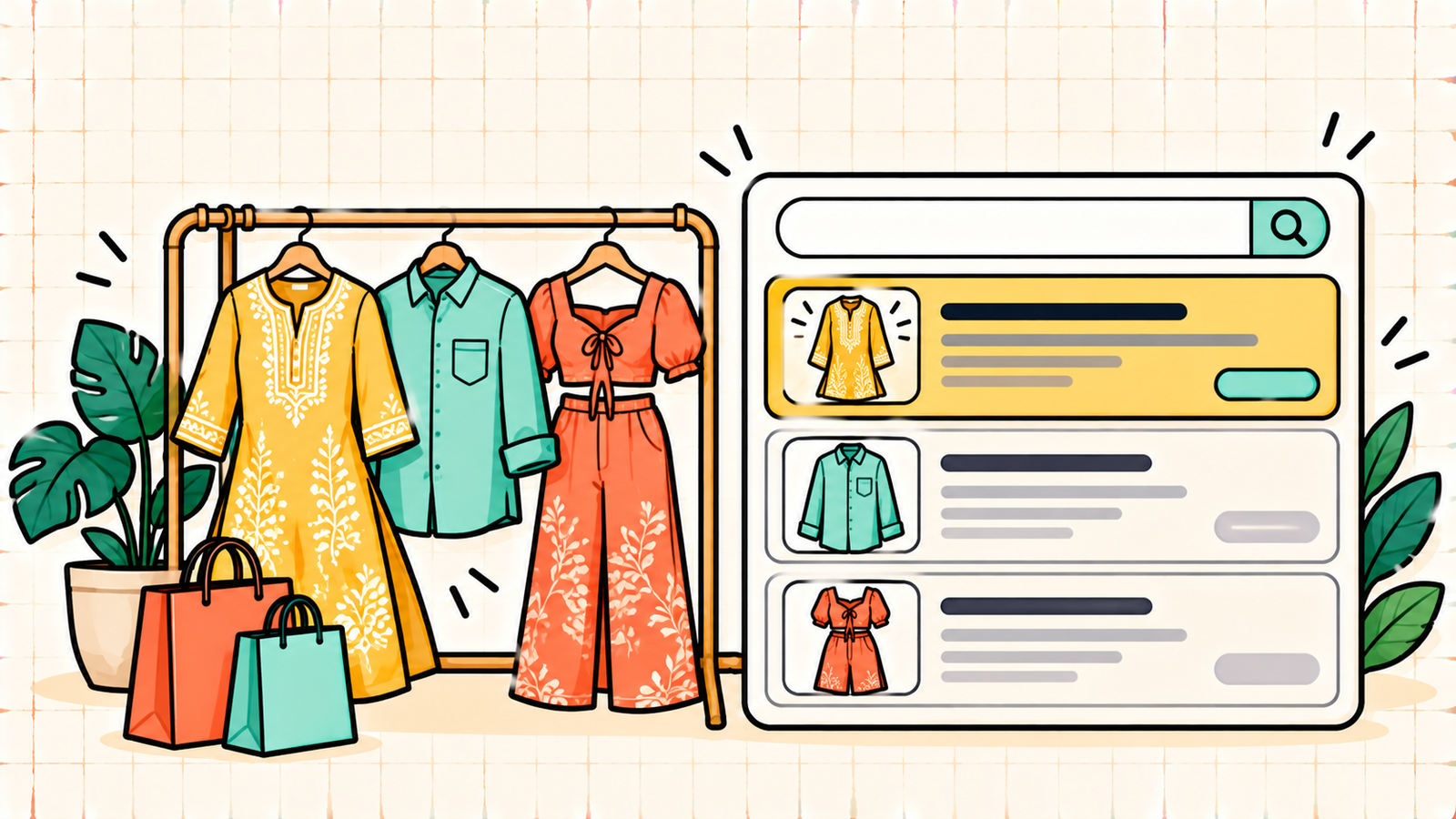
Fashion D2C in India is brutally competitive. Myntra, Ajio, Amazon, and Nykaa Fashion own the marketplaces. Instagram is flooded with new labels every week. Ad costs rise every festive season, return rates eat margins, and many brands discover that without constant spending, their traffic disappears overnight. SEO gives fashion brands something marketplaces cannot: demand that belongs to the brand. People search for specific styles, fabrics, occasions, fits, and outfit ideas every day. A fashion brand that ranks for those searches gets discovered by shoppers who are already looking for exactly what it makes. This guide covers how SEO works for fashion and apparel brands, the pages that drive revenue, the technical problems unique to fashion sites, and the mistakes that keep most labels invisible.
Why SEO matters for fashion brands
Fashion shoppers do a lot of searching that never touches a marketplace search bar: "what to wear to a haldi function," "cotton kurta sets for summer office," "linen shirts for men in humid weather," "how to style wide leg pants." These searches show intent and style preference, and the brands that answer them become part of the shopper's decision early.
SEO also reduces dependence on paid discovery. Fashion brands typically rely on Instagram and Meta ads for new customers. Organic rankings for collection pages and style content bring shoppers without paying for each visit, which matters even more in a category with high return rates, where every rupee of acquisition cost counts.
How fashion shoppers search
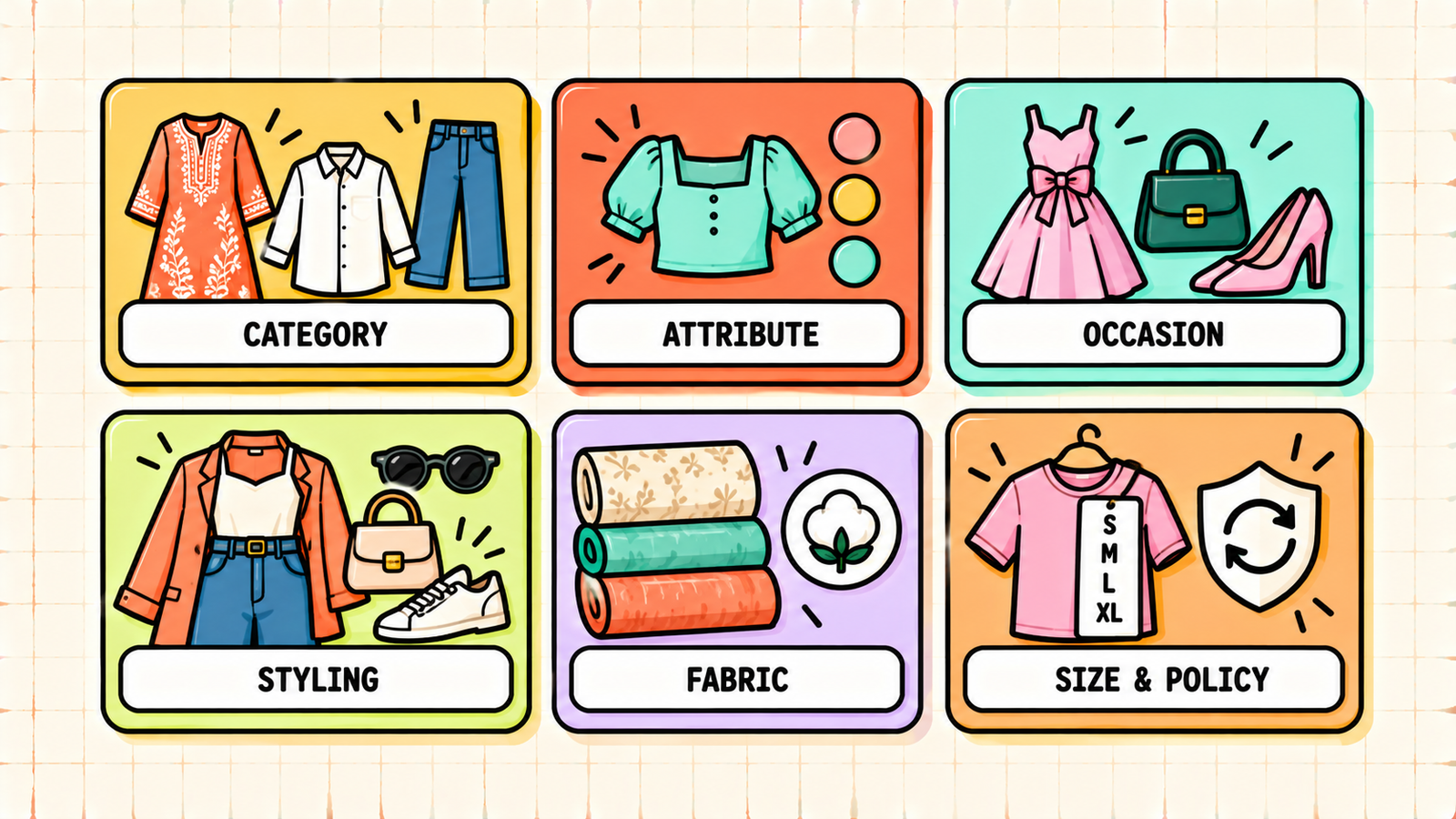
| Search type | Example queries | Best page type |
|---|---|---|
| Product and category | cotton kurta set for women, linen shirt men, co-ord set | Collection pages |
| Attribute-specific | black anarkali with dupatta, oversized t-shirt plus size, handloom saree | Filtered collections, sub-collections |
| Occasion | haldi outfit ideas, office wear for women, wedding guest outfit men | Occasion collections and style guides |
| Styling | how to style a kurta with jeans, what shoes go with co-ord sets | Style guides and lookbooks |
| Fabric and care | is linen good for summer, how to wash silk saree | Fabric and care guides |
| Brand and product evaluation | [brand] review, [brand] size guide, [brand] return policy | Product pages, size guide, policy pages |
Category and attribute searches drive revenue. Occasion and styling searches bring discovery. Size, fit, and policy searches decide the final purchase.
The fashion SEO playbook
1. Make collection pages your SEO priority
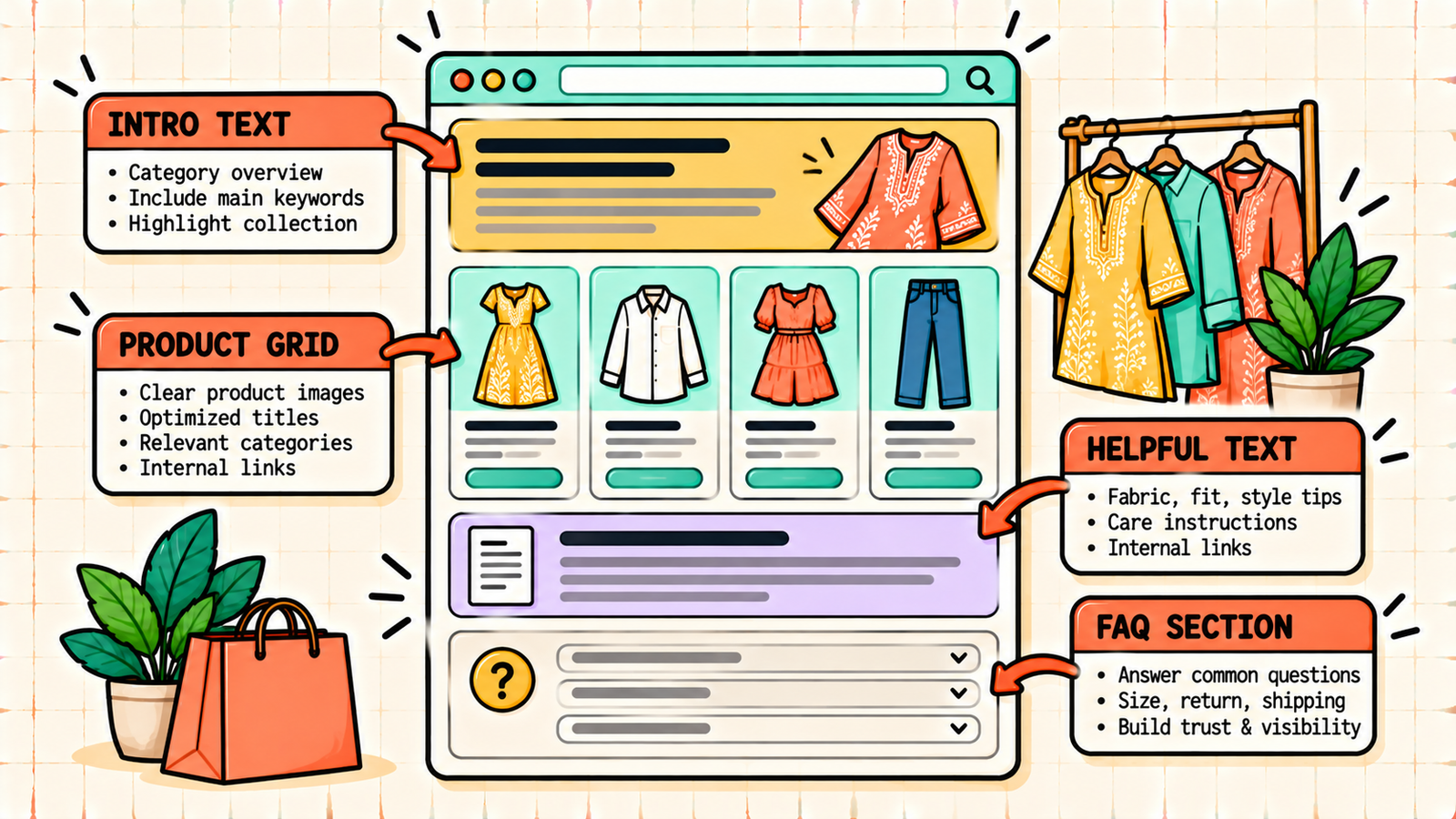
Collection pages target the highest commercial searches in fashion. Each important collection (kurta sets, co-ords, linen shirts, ethnic wear, office wear) should have a clear title, a short introduction above the products describing the style, fabric, and who it suits, and more helpful text and an FAQ below the products. Most fashion sites leave collection pages as image grids with no text, which makes them hard to rank.
2. Build sub-collections for high-demand attributes
Shoppers search by colour, fabric, fit, sleeve, length, and occasion. Create indexable sub-collections for combinations that have real search demand, such as "black cotton kurta sets" or "linen co-ord sets for women." Avoid creating indexable pages for every possible filter combination, which leads to thousands of thin, duplicate pages (more on this in the technical section).
3. Create occasion collections and style guides
Indian fashion is heavily occasion-driven: weddings, haldi, mehendi, festivals, office, college, vacations. Occasion collections ("haldi outfits," "Diwali kurta sets") and style guides ("what to wear to a sangeet") capture shoppers early and link directly to products. Keep festive and occasion URLs permanent and update them before each season.
4. Write product descriptions that are actually unique
Many fashion brands reuse the same template description across hundreds of products, or copy supplier text. Write unique descriptions that cover fabric and feel, fit and silhouette, length, how to style it, care instructions, and model size information. Even a short unique paragraph per product is far better than duplicated text.
5. Answer fit and size questions
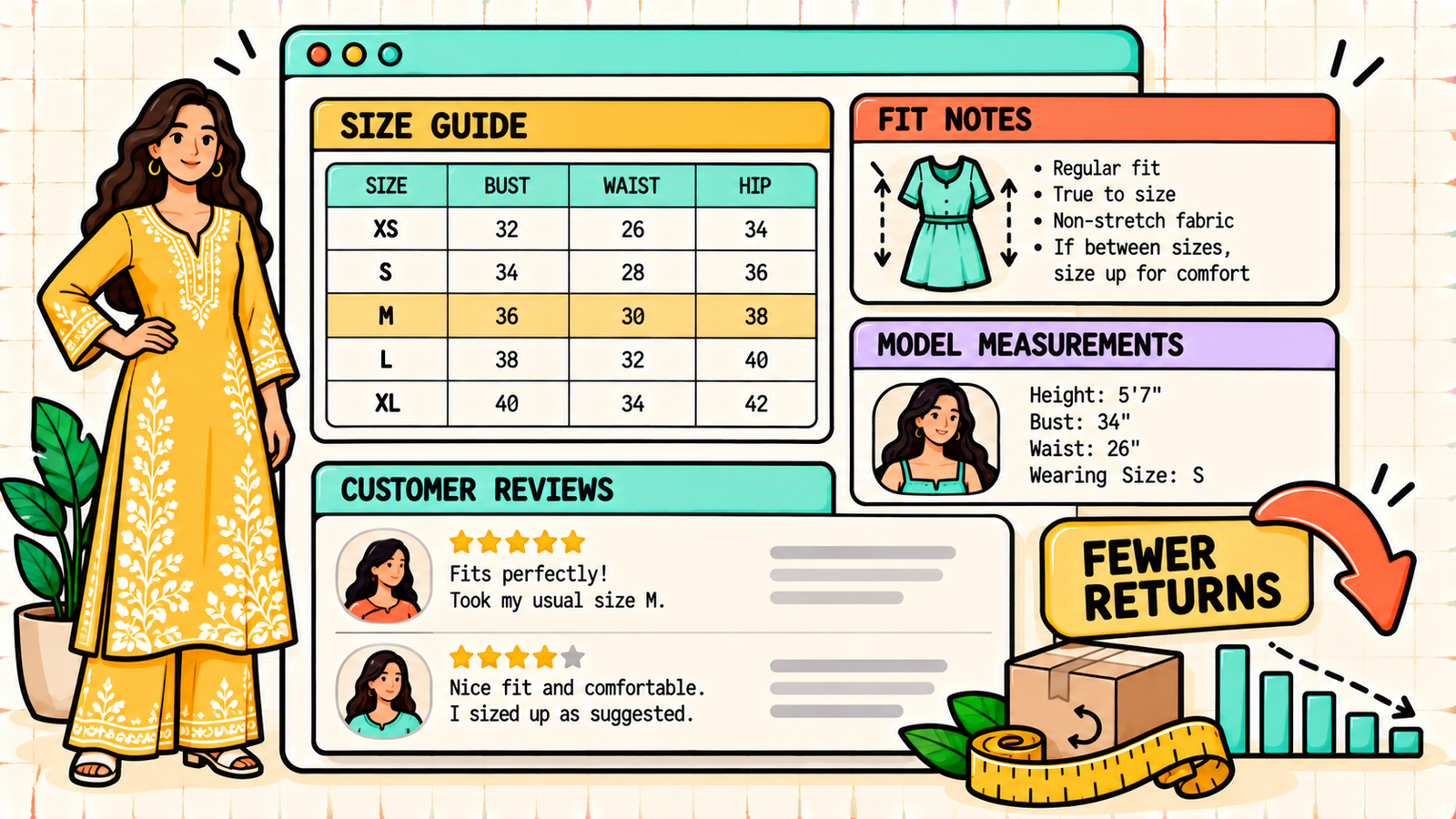
Fit uncertainty is the biggest reason fashion shoppers hesitate and the biggest reason they return products. A detailed size guide, fit notes on every product ("relaxed fit, size down for a closer fit"), model measurements, and reviews that mention size all reduce hesitation and returns. Size and fit pages also rank for branded searches like "[brand] size chart."
6. Publish fabric and care content
Shoppers search for fabric questions constantly: whether linen wrinkles, how to care for handloom, which fabrics suit humid weather. Fabric and care guides build authority and connect naturally to your collections.
We'll find exactly where your fashion brand is losing organic revenue.
Get a clear, data-backed plan to rank collections, occasions, and styling content, and turn search traffic into repeat customers.
Technical SEO problems unique to fashion sites
Fashion sites face some specific technical challenges.
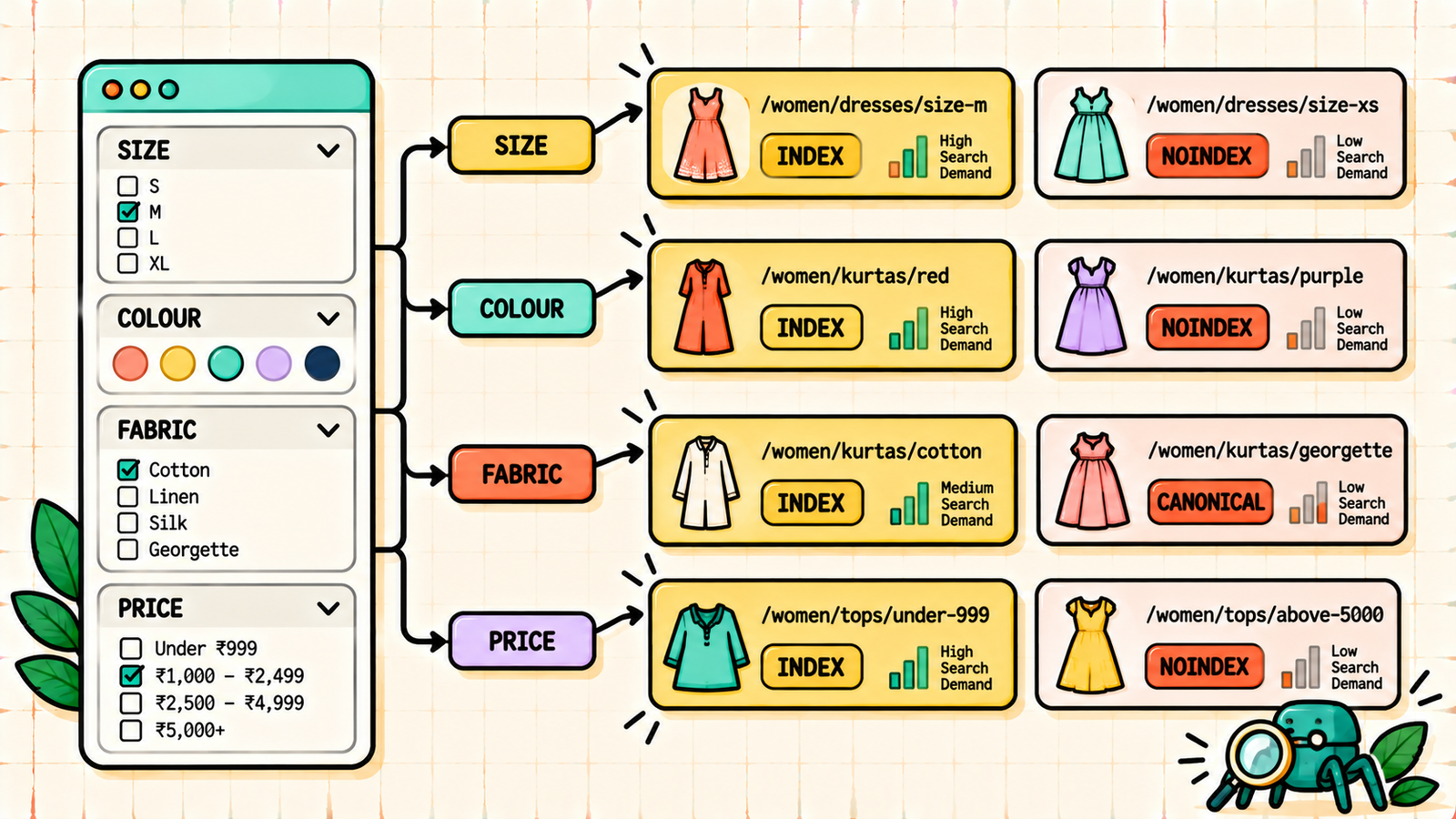
Faceted navigation. Filters for size, colour, price, and fabric can create thousands of URL variations. If they are all indexable, Google wastes crawl effort on near-duplicate pages. Decide which filter combinations deserve indexable pages (those with real search demand) and keep the rest out of the index using canonical tags or noindex.
Out-of-stock and discontinued products. Fashion inventory changes constantly. Do not delete product pages the moment stock runs out. Keep temporarily unavailable products live with a back-in-stock option. For permanently discontinued products with traffic or links, redirect to the closest relevant product or collection.
Seasonal collections. Avoid creating new URLs every season (for example /summer-2026/). Use permanent collection URLs and refresh the products and content each season.
Image weight. Fashion sites are image-heavy, which slows mobile load times. Compress images, use modern formats like WebP, set image dimensions, and lazy-load images below the fold, but not the main product image.
Duplicate colour variants. If each colour has its own product URL with nearly identical content, consolidate or use canonical tags so the variants do not compete with each other.
Regional crafts, handloom and sustainable positioning
Many Indian fashion D2C brands are built on regional crafts: Chanderi, Banarasi, Ikat, Ajrakh, block printing, Kantha, and many more. These searches have strong, specific intent and much lower competition than generic category terms. Create pages that explain the craft, its region, how it is made, how to identify authentic pieces, and how to care for them, linking to the matching collection. The same applies to sustainable fashion, size-inclusive clothing, and slow fashion positioning. A clear, well-explained point of view is one of the few advantages a D2C label has over marketplaces, and content is how you make that point of view searchable.
Reviews, photos and user-generated content
Fashion buyers want to see how clothes look on real people. Encourage reviews that include height, usual size, size purchased, and fit feedback, and invite customers to upload photos. These reviews add unique text to product pages, answer fit questions, reduce returns, and support review stars in search results through Product schema. Featuring customer photos in style guides and lookbooks also gives shoppers a realistic view of the clothes that studio shoots alone cannot provide.
Competing with Myntra, Ajio and Amazon
You will not outrank Myntra for "kurta for women." Marketplaces win broad category terms. D2C fashion brands win on specificity and point of view: specific styles and fabrics, occasion and styling content, regional craft and handloom stories, sustainable or size-inclusive positioning, and their own brand searches. Give shoppers reasons to buy direct too: exclusive designs, early access, easier exchanges, styling help, and loyalty rewards.
Gifting and festive searches
Fashion is one of India's biggest gifting categories during Diwali, Raksha Bandhan, weddings, and birthdays. Searches like "kurta gift for husband" or "saree gift for mother" spike every season. Create permanent gifting collections with clear price bands and gift packaging options, and update them six to eight weeks before each festival.
Using Instagram, Pinterest and YouTube
Fashion is visual, and discovery for most shoppers often starts on Instagram and Pinterest. Pinterest in particular works like a visual search engine for outfit ideas, and pins can drive traffic for months. Create pins and reels for style guides and occasion looks that link back to the matching collection. Lookbook videos and styling content on YouTube also rank in Google. Visual platforms build demand; your website is where you capture and convert it.
Fashion SEO and AI search
Shoppers ask AI assistants questions like "best Indian brands for linen shirts" or "where to buy handloom sarees online." AI tools tend to mention brands that are clearly described and frequently discussed: brands with strong positioning, clear product information, and mentions in fashion articles, roundups, and reviews. A distinctive brand story and consistent product information across your site and marketplaces make your brand easier to recommend.
How to measure fashion SEO
Track organic revenue by collection, rankings for collection and occasion keywords, organic conversion rate, return rate for organic customers compared with paid, branded search growth, and seasonal page performance year over year. If organic customers return fewer products because they found you through detailed style and fit content, that is a meaningful profit advantage.
How long does SEO take for fashion brands?
Branded and size guide searches can improve within weeks. Specific sub-collections and style guides often rank in three to six months. Main category collections usually take six to twelve months against marketplaces. Seasonal pages perform best when published early and kept at permanent URLs.
Common fashion SEO mistakes
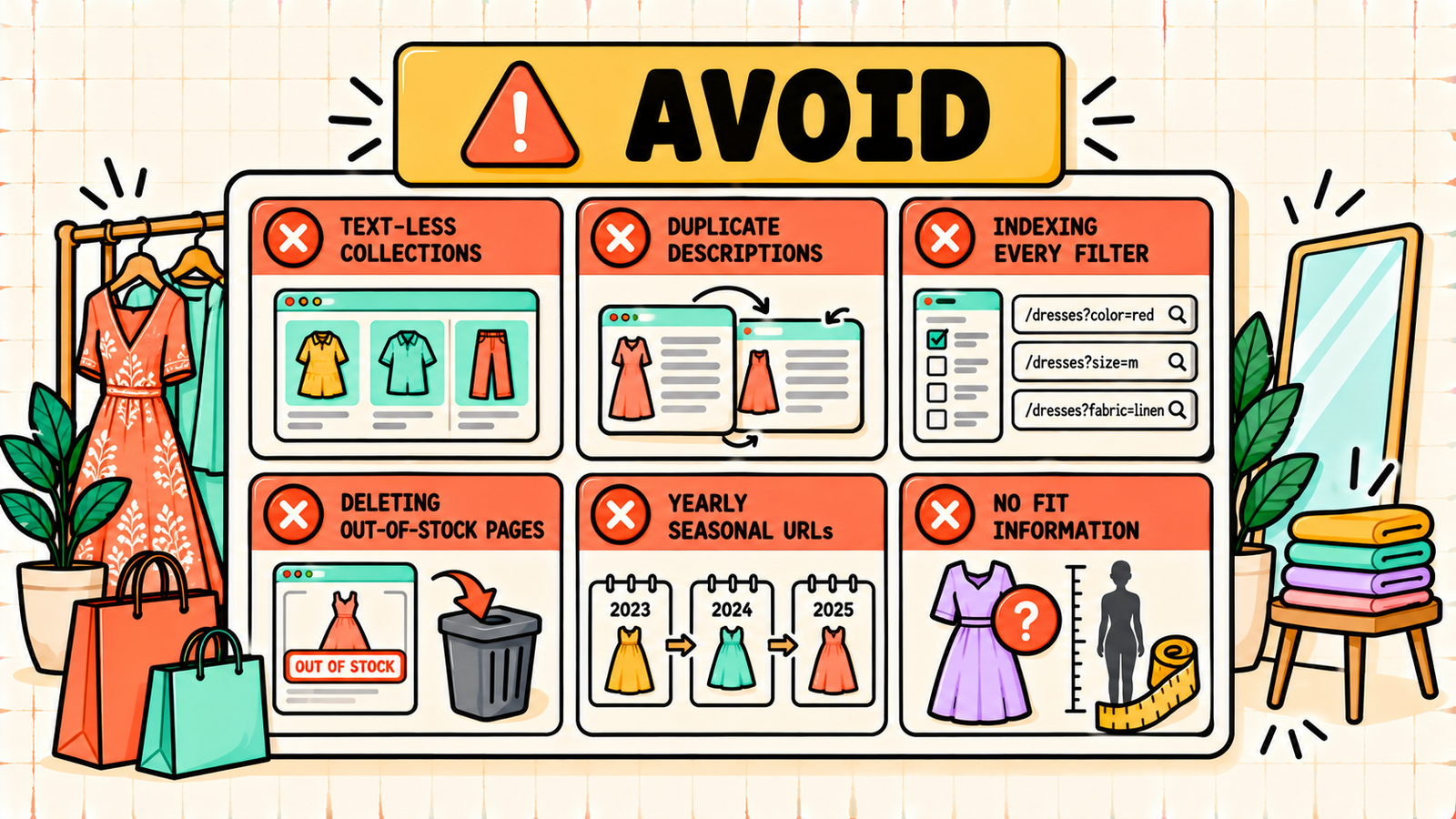
A few patterns appear in almost every fashion audit. Collection pages with no text give Google nothing to rank. Duplicate or supplier product descriptions weaken every product page. Indexing every filter combination creates thousands of thin pages. Deleting out-of-stock products throws away rankings and links. Creating new seasonal URLs every year resets authority. And ignoring fit information leads to hesitation, returns, and poor reviews.
SEO for Supplement Brands: How Nutrition Brands Rank in a High-Trust Category
The bottom line
SEO for fashion brands works when you rank where shoppers show intent and style: collections, attribute sub-collections, occasions, styling, and fabric questions. Make collection pages your priority, write unique product descriptions, answer fit questions thoroughly, manage faceted navigation and inventory carefully, keep seasonal URLs permanent, and use visual platforms to build demand. Marketplaces own the broad terms, but a brand with a clear point of view can own the searches its customers actually make, season after season.
If you want an SEO strategy built for a fashion or apparel brand, LetMeRank works with Indian D2C brands on organic growth and lower CAC, starting with a free audit.