
Ayurveda is having a modern moment. A new generation of D2C brands is selling hair oils, herbal teas, wellness powders, skincare, and daily rituals rooted in traditional knowledge, packaged for urban buyers who want natural options. But the category is crowded with legacy giants, marketplace sellers, and dozens of new brands making similar promises, and the buyers are more sceptical than ever about vague "natural" claims. SEO is where Ayurvedic brands can build lasting trust. People search for herbs, remedies, doshas, routines, and ingredient benefits every day. A brand that explains Ayurveda clearly, honestly, and with real expertise becomes the source buyers return to. This guide covers how SEO works for Ayurvedic and herbal brands, the content that ranks and converts, how to handle claims carefully, and the mistakes that keep most Ayurvedic websites invisible.
Why SEO matters for Ayurvedic brands
Ayurvedic buyers research deeply. They want to know what an herb does, how to use it, whether it suits their body type, how long results take, and whether a product is authentic. That research happens on Google, YouTube, and increasingly in AI assistants. A brand that answers these questions well earns trust that advertising alone cannot buy.
Ayurveda also has an enormous library of search demand that most brands ignore: individual herbs, traditional practices, seasonal routines, and remedies for everyday concerns. Each topic is a chance to introduce your brand to a buyer who is already curious.

How people search for Ayurveda
| Search type | Example queries | Best page type |
|---|---|---|
| Herb and ingredient | ashwagandha benefits, bhringraj oil uses, brahmi for memory | Herb and ingredient explainers |
| Everyday concerns | ayurvedic remedy for hair fall, natural ways to improve digestion | Concern guides with routines |
| Ayurvedic concepts | what is vata dosha, how to know my body type, what is dinacharya | Concept explainers, dosha quiz |
| Practices and rituals | how to do oil pulling, abhyanga benefits, nabhi oiling | Practice and ritual guides |
| Product evaluation | [brand] review, is [product] safe, [brand] ingredients | Product pages, FAQ, trust pages |
| Seasonal | ayurvedic diet for winter, monsoon health tips | Seasonal guides |
Herb, concept, and practice searches bring large volume. Concern guides and product evaluation searches convert.
The Ayurvedic brand SEO playbook
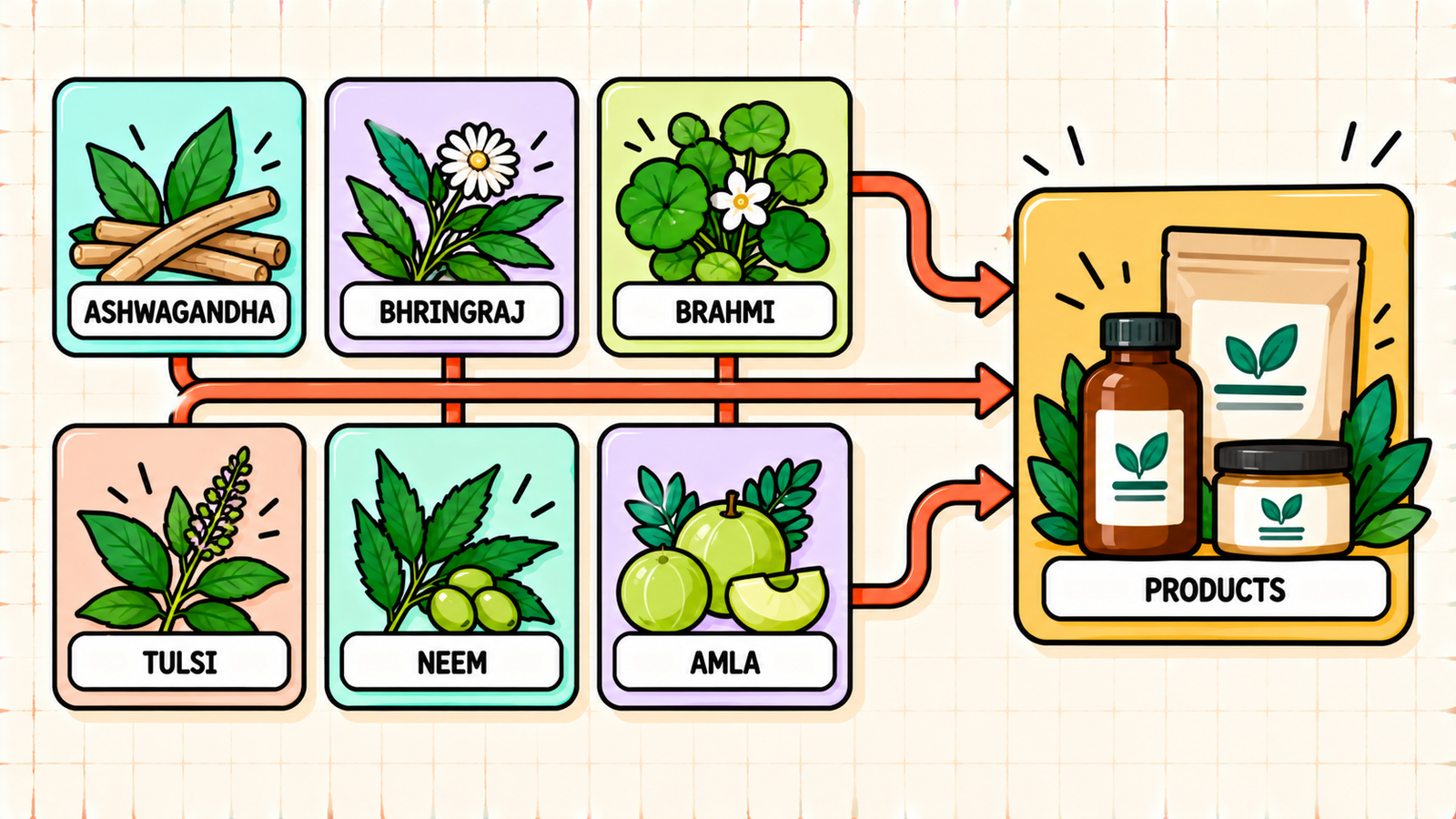
1. Build a herb and ingredient library
Create one detailed page for each herb or ingredient you use: its traditional role in Ayurveda, what modern research does and does not show, how it is commonly used, who should be careful, and which of your products contain it. Use both the common and Sanskrit or Hindi names, since people search in both. These pages attract steady traffic and show that your brand understands what it sells.
2. Explain Ayurvedic concepts clearly
Doshas, prakriti, dinacharya, ritucharya, and agni are searched constantly by curious beginners. Clear, accessible explainers that avoid jargon and mysticism make your brand the friendly guide into Ayurveda. A simple dosha or body type quiz can rank well, capture emails, and recommend relevant products.
3. Create practice and ritual guides
Practices like oil pulling, abhyanga (self-massage), nabhi oiling, tongue scraping, and herbal steam have strong search interest. Step-by-step guides with clear instructions, timing, precautions, and suitable products connect curiosity with purchase naturally.
4. Write concern-based guides carefully
Buyers search for natural approaches to everyday concerns: hair fall, digestion, sleep, stress, skin dullness. Write guides that combine lifestyle, diet, and routine advice with product suggestions, and be honest that results vary and that persistent or serious symptoms need a qualified doctor. This balance is what separates trustworthy brands from hype.
5. Make product pages detailed and transparent
Include the full ingredient list with quantities where possible, the traditional basis of the formulation, how to use it and for how long, who it suits and who should avoid it, any certifications or licences, sourcing information, real reviews, and an FAQ. Transparent product pages answer the authenticity questions Ayurvedic buyers always ask.
6. Publish seasonal content
Ayurveda is built around seasons. Seasonal guides (winter routines, monsoon digestion, summer cooling foods) align with how people search through the year and give you a natural content calendar. Keep permanent URLs and update each season, so every guide builds authority year after year instead of starting from zero.

Claims and compliance for Ayurvedic content
Ayurvedic products in India are regulated under the Ministry of AYUSH framework, and advertising is subject to rules including the Drugs and Magic Remedies (Objectionable Advertisements) Act, which restricts claims about treating specified diseases, along with advertising standards that discourage misleading promises. Search content should be as careful as your packaging.
| Avoid | Prefer |
|---|---|
| "Cures diabetes" or any disease cure claim | Describe traditional use and lifestyle support, and advise consulting a doctor |
| "100 percent natural, no side effects" | "Made with [listed herbs]; patch test or consult a practitioner if unsure" |
| "Guaranteed hair regrowth" | "Traditionally used in hair care routines; results vary" |
| "Ancient secret formula" with no details | Name the ingredients and the classical basis where relevant |
| Unnamed "Vaidya approved" | "Formulation reviewed by [named BAMS practitioner]" |
Having content reviewed by a qualified Ayurvedic practitioner (for example a BAMS doctor) and naming them on the page strengthens trust and E-E-A-T, especially because many Ayurvedic topics touch health.
We'll find exactly where your Ayurvedic brand is losing trust and traffic.
Get a clear, data-backed plan to build herb libraries, concept explainers, and practice guides that rank, convert, and earn buyer trust.
Telling your brand's Ayurvedic story
Ayurvedic buyers care about where a product comes from: the classical texts behind a formulation, the region the herbs are sourced from, how the oil is prepared, and who is behind the brand. A detailed "our story" or "our process" page that explains sourcing, traditional preparation methods (such as slow-cooked oils or sun-dried herbs), quality checks, and the practitioners involved answers authenticity questions and ranks for branded searches. Specific, verifiable details are far more convincing than vague words like "pure" or "ancient." A brand that shows its process openly earns the trust that legacy names took decades to build.
Reaching global Ayurveda buyers
Interest in Ayurveda is not limited to India. Buyers in the US, UK, Middle East, and among the Indian diaspora search for herbs, rituals, and Ayurvedic routines in English. If you ship internationally, content that explains Ayurvedic concepts for people unfamiliar with them, uses common English names alongside Sanskrit names, and addresses shipping and usage for different climates can open a valuable audience. Keep regulatory differences in mind: claims allowed or restricted vary by country, so international pages should be especially careful.
Competing with legacy brands and marketplaces
Large Ayurvedic companies and marketplaces dominate broad terms like "ayurvedic hair oil." Modern Ayurvedic D2C brands win on depth, clarity, and specificity: individual herb pages, concept explainers for beginners, practice guides, honest concern content, regional and Hindi searches, and their own brand story. Many legacy brands have thin, outdated websites, which leaves room for a modern brand that explains Ayurveda well.
Reviews that build trust
Ayurvedic products often take weeks of consistent use before people notice a difference, so reviews are especially important. Ask customers to share how long they used the product, what routine they followed, and what they noticed, and display these details. Detailed, time-based reviews set realistic expectations, reduce disappointment, and add unique content to product pages. Respond politely to critical reviews and explain usage where it helps. Never invent or exaggerate testimonials, especially health-related ones, because one fake review can undo years of trust.
Using YouTube and Hindi content
Ayurveda is often learned by watching and listening. Videos demonstrating rituals like abhyanga or oil pulling, practitioner explanations of herbs, and simple seasonal routines perform well on YouTube and in Google's video results. Hindi and regional language content is especially powerful here, because many buyers first learned about Ayurveda at home in their own language. Queries like "bhringraj tel ke fayde" or "ashwagandha kaise khaye" have strong demand and less competition.

Ayurvedic SEO and AI search
People ask ChatGPT and Gemini questions like "what are the benefits of ashwagandha" or "best ayurvedic hair oil for hair fall." AI tools are careful with health-related topics and favour balanced, well-sourced content from credible sources. Herb pages that separate traditional use from research evidence, named practitioner review, transparent ingredients, and consistent brand information across platforms make your brand easier to cite and recommend.
How to measure Ayurvedic brand SEO
Track organic revenue, traffic to herb, concept, and practice pages, how often those visitors move to product pages, quiz completions and email sign-ups, rankings for concern and product keywords, and branded search growth. Ayurvedic buyers often research for weeks before buying, so look at assisted conversions and returning visitors, not just first-visit sales.
How long does SEO take for Ayurvedic brands?
Herb and practice guides on specific topics can rank in three to five months. Concept explainers and concern guides often take four to eight months. Broad product terms dominated by legacy brands can take a year or more. Hindi content frequently ranks faster because competition is lower.
Common Ayurvedic SEO mistakes
A few patterns hold most brands back. Making disease cure claims creates regulatory risk and erodes trust. Writing vague "ancient wisdom" content with no specific information gives buyers nothing to act on. Copying generic herb descriptions from other sites creates duplicate, low-value pages. Hiding ingredient quantities and sourcing raises authenticity doubts. Ignoring Hindi and regional searches misses the easiest traffic. And publishing content without any practitioner review fails the trust expectations of a health-adjacent category.
SEO for Supplement Brands: How Nutrition Brands Rank in a High-Trust Category
The bottom line
SEO for Ayurvedic brands works when you become the clear, trustworthy guide to Ayurveda. Build a herb library, explain concepts simply, publish practice and seasonal guides, write careful concern content, make product pages transparent, and have content reviewed by a qualified practitioner. Use YouTube and Hindi content to reach buyers where they learn. Legacy brands own the broad terms, but a modern brand that explains Ayurveda honestly can own the questions buyers ask on the way to purchase. Clarity, honesty, and real expertise are the modern brand's biggest advantages over legacy names.
If you want an SEO strategy built for an Ayurvedic or herbal wellness brand, LetMeRank works with Indian wellness and D2C brands on organic growth and trust content, starting with a free audit.