Supplements are one of the fastest-growing D2C categories in India. Protein powders, multivitamins, omega-3s, creatine, collagen, gummies, and plant-based nutrition launch every month, and almost all of them compete for the same fitness audience on Instagram and the same marketplace listings. Customer acquisition costs climb, discounts become the norm, and loyalty is thin. SEO gives supplement brands a way to build trust before the sale, which matters more in this category than almost any other. People are putting your product in their bodies. They research ingredients, dosages, side effects, certifications, and reviews before they buy.
This guide covers how SEO works for supplement and nutrition brands, the content that ranks and converts, how to stay careful with health claims, and the mistakes that hold most supplement websites back.
Why SEO is different for supplement brands
Supplement content sits close to health, which means Google treats much of it as YMYL ("Your Money or Your Life") content. Pages about what a supplement does, who should take it, how much to take, and whether it is safe face higher expectations of accuracy, expertise, and trust. Generic, exaggerated, or anonymous content struggles to rank, and it also fails to convince cautious buyers.
The category is also regulated. In India, health supplements and nutraceuticals fall under FSSAI regulations, which govern labelling, permitted ingredients, and claims. Advertising standards discourage misleading promises. The good news is that the content Google rewards and the content regulators expect point in the same direction: accurate, specific, carefully worded, and expert-reviewed.
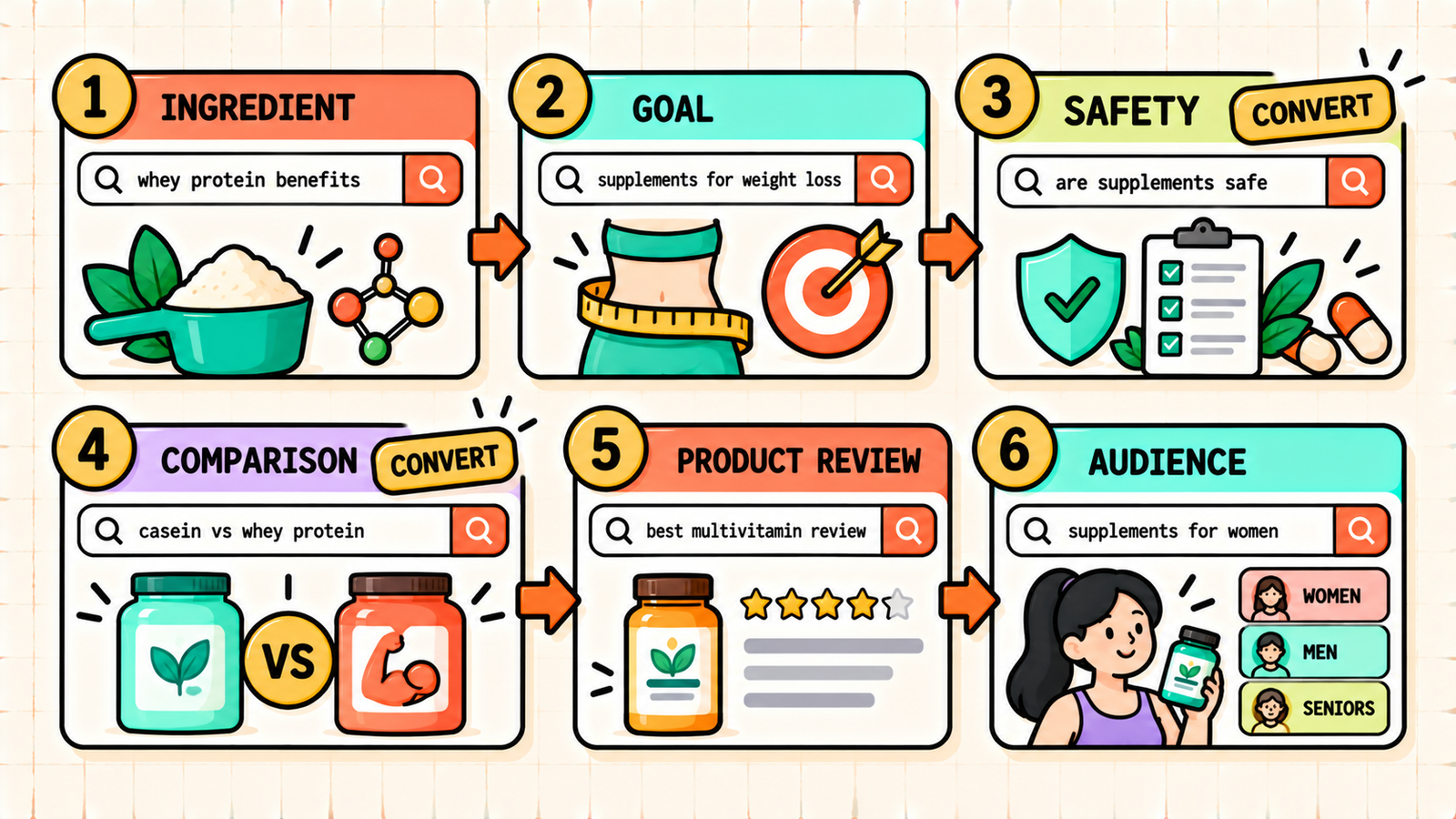
How supplement buyers search
| Search type | Example queries | Best page type |
|---|---|---|
| Ingredient education | creatine benefits, what does ashwagandha do, omega 3 for vegetarians | Ingredient explainers |
| Goal-based | supplements for muscle gain, protein powder for weight loss, vitamins for hair | Goal-based guides and collections |
| Safety and usage | is creatine safe, protein powder side effects, when to take whey | Safety and how-to-use pages |
| Comparison | whey vs plant protein, creatine monohydrate vs HCL, [brand] vs [brand] | Comparison pages |
| Product evaluation | [brand] protein review, [brand] lab test, is [brand] fake | Product, lab report, and trust pages |
| Audience-specific | protein for women, supplements for vegetarians, vitamins for kids | Audience pages and collections |
Ingredient and goal searches bring volume. Safety, comparison, and evaluation searches convert, because buyers ask them right before purchasing.
The supplement SEO playbook
1. Build an ingredient library
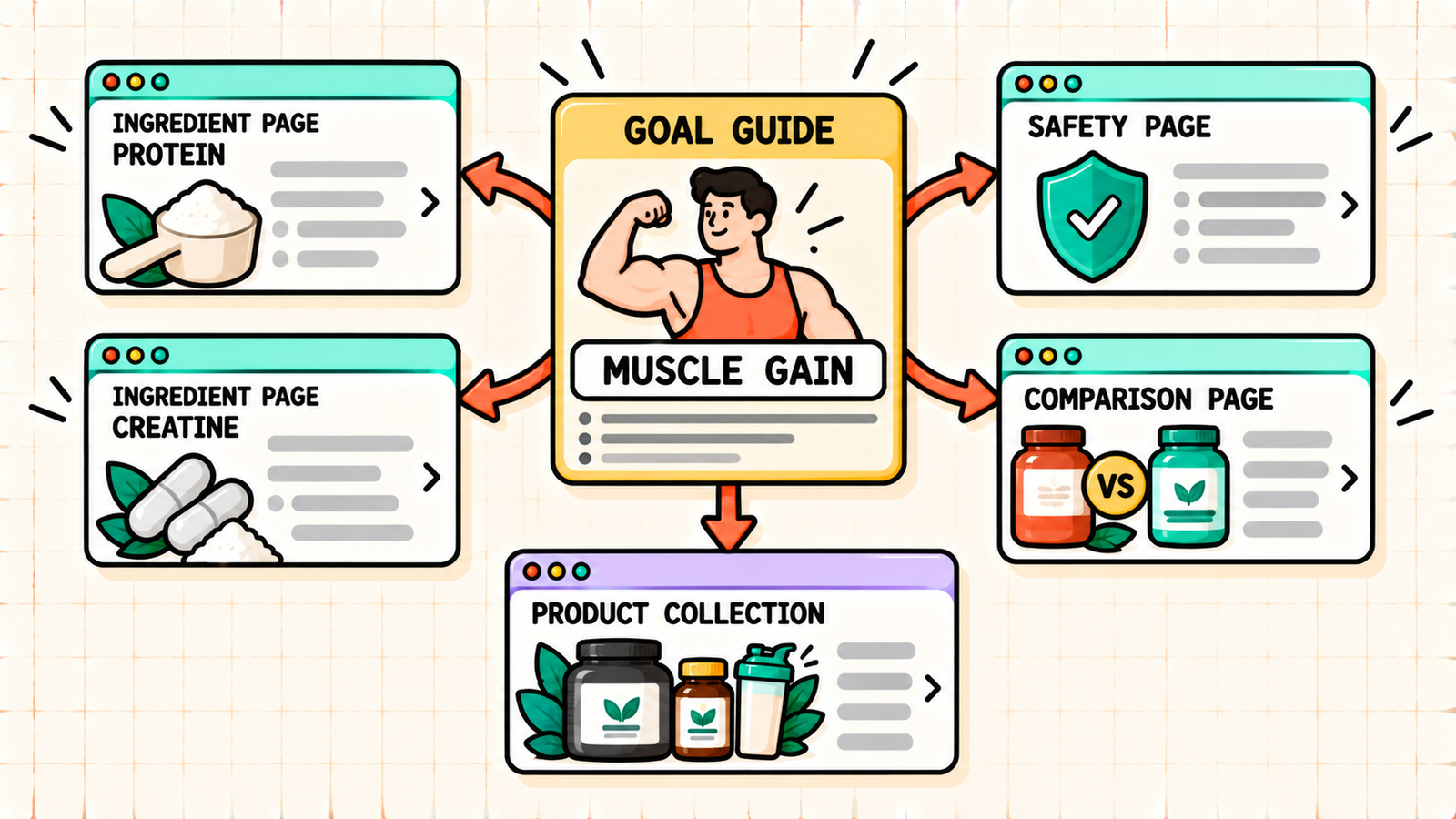
Create one clear, well-researched page for every key ingredient you sell: what it is, what research suggests it does, typical usage, who might benefit, who should be careful, possible side effects, and which of your products contain it. Cite credible research sources and keep the language measured. Ingredient pages attract large search volume and position your brand as knowledgeable rather than hype-driven.
2. Create goal-based guides and collections
Buyers think in goals: muscle gain, weight management, energy, immunity, hair and skin, sleep, joint health. Build guides that explain how nutrition, training, and lifestyle contribute to each goal, and where supplements fit (and where they do not). Link each guide to a matching collection. Honest guides that admit supplements support rather than replace diet and training earn more trust than pages promising transformation.
3. Answer safety questions directly
"Is creatine safe," "can women take whey," "does protein powder damage kidneys" are high-intent searches. Answer them with careful, evidence-based content reviewed by a qualified nutritionist or doctor, and be clear about when people should consult a professional. Brands that address safety openly win buyers that hype-driven competitors lose.
4. Publish lab reports and quality proof
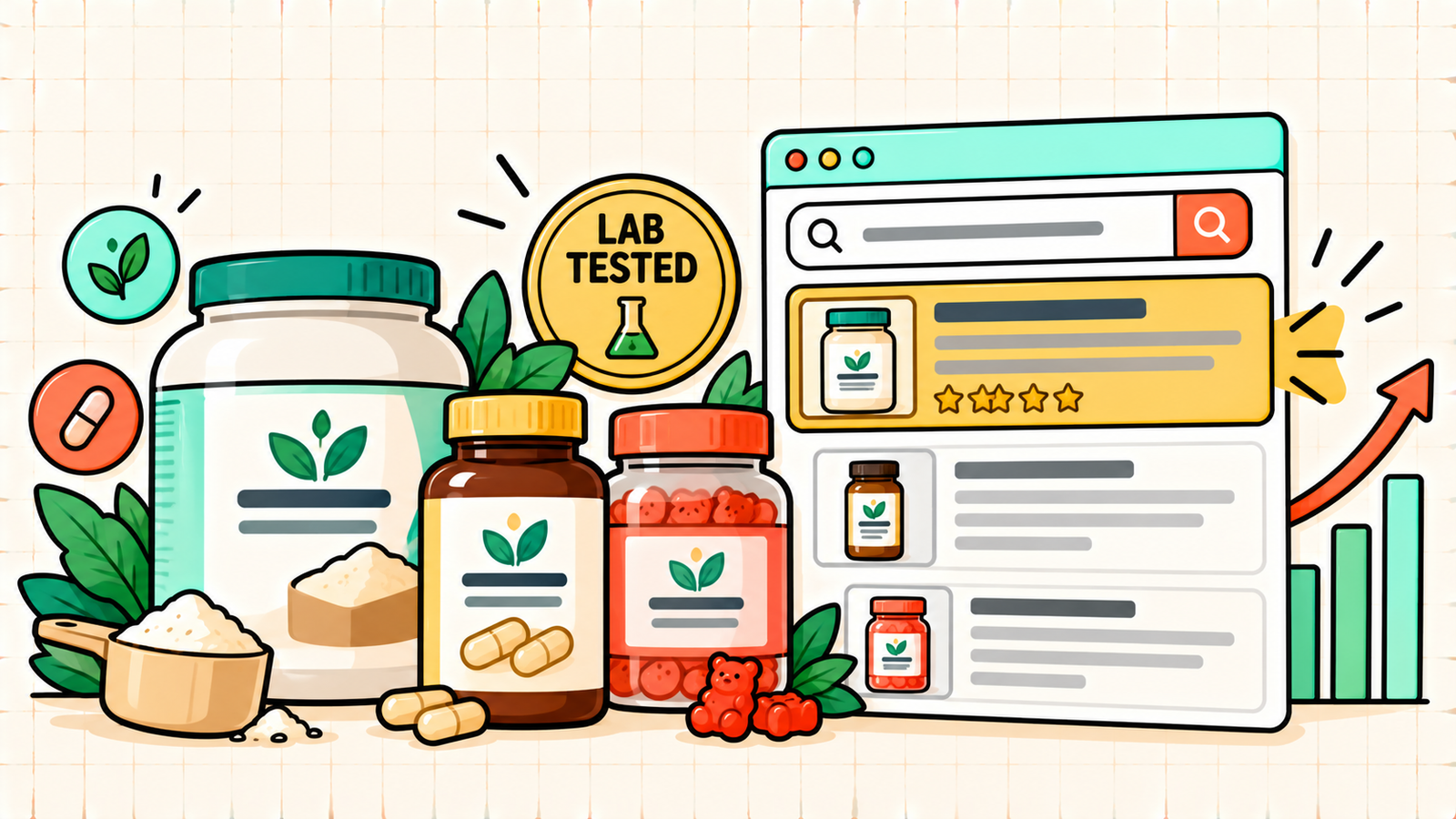
Authenticity and purity are major concerns in India's supplement market, with buyers worried about fake products and label accuracy. Pages showing third-party lab test results, certifications, manufacturing standards, and how to verify an authentic product answer searches like "[brand] lab test" and "is [brand] fake" and give you a strong trust advantage.
5. Make product pages complete
Each product page should include the full ingredient and nutrition panel, serving size and how to use it, who it is for, flavour and mixability notes, allergen and dietary information (vegetarian, vegan, gluten free), lab reports, real reviews, and an FAQ covering safety and timing. Many supplement product pages are mostly images and marketing lines, which gives Google little to understand and buyers little reason to trust.
6. Create comparison pages
"Whey vs plant protein," "creatine monohydrate vs other forms," and "multivitamin tablets vs gummies" are decision-stage searches. Write fair comparisons that explain the trade-offs. Being honest, including when a competitor or a different product type might suit someone better, builds credibility that converts.
7. Create clear usage and timing pages
Many buyers search basic usage questions after buying or just before: "when to take whey protein," "how to take creatine loading phase," "can I take multivitamins on an empty stomach," "how many scoops of protein per day." Short, clear usage pages answer these, reduce misuse, and keep customers satisfied enough to reorder. Show the recommended serving from your label, explain timing options without overstating their importance, and remind readers to follow label directions and consult a professional if they have medical conditions or take medication. These pages also capture post-purchase searches from people who bought your product elsewhere, bringing them to your website for their next order.
Claims and compliance for supplement content
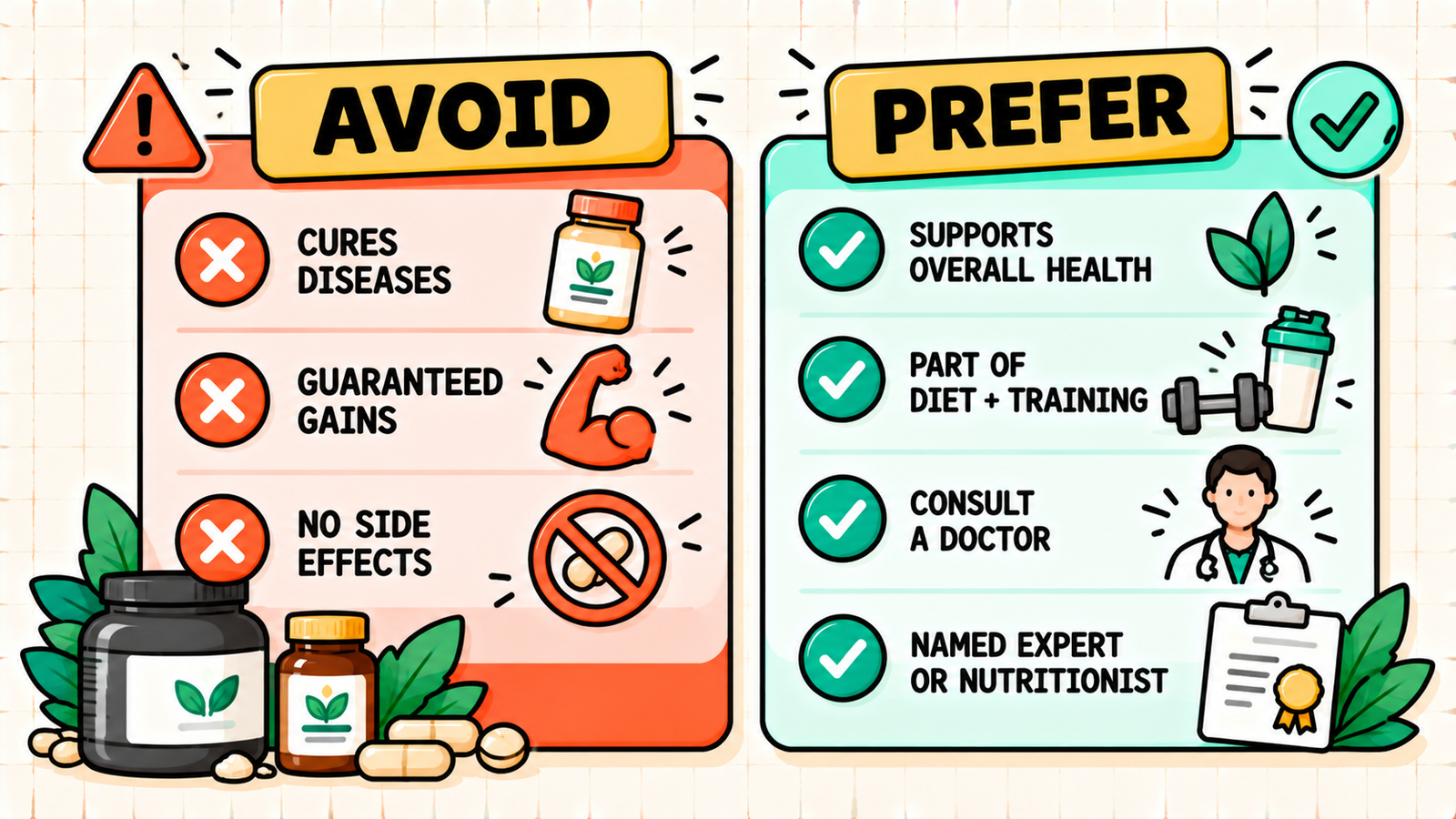
| Avoid | Prefer |
|---|---|
| "Cures," "treats," or "prevents" a disease | "Supports" with specific, permitted nutritional statements |
| "Guaranteed muscle gain in 30 days" | "Can help meet daily protein needs as part of training and diet" |
| "No side effects" | "Generally well tolerated; consult a doctor if you have a medical condition" |
| Unnamed "expert recommended" | "Reviewed by [named nutritionist or doctor, credentials]" |
| Before-and-after photos implying typical results | Clearly labelled individual results with honest context |
Have content reviewed by a qualified professional and checked against applicable FSSAI rules and advertising guidelines before it goes live, and again whenever formulations or regulations change. Careful language is not weaker marketing in this category. It is the reason buyers believe you.
We'll find exactly where your supplement brand is losing organic revenue.
Get a clear, data-backed plan to build trust content, rank for high-intent searches, and turn researchers into repeat customers.
Writing for Indian diets
Most supplement content online is written for Western diets, where meat and eggs make protein easy. Indian buyers often eat vegetarian or largely plant-based diets, and many struggle to meet protein and vitamin B12 needs through food alone. Content that addresses this directly, such as "how much protein vegetarians need," "Indian vegetarian high protein meal plan," "B12 for vegetarians," or "protein sources in Indian food," matches real searches and is far less competitive than generic fitness content. Include practical Indian meal examples (dal, paneer, curd, sprouts, soya) and show honestly where food is enough and where a supplement can help. Buyers trust brands that start with food and treat supplements as a support, not a shortcut.
Fighting fake products with content
Counterfeit supplements are a real concern in India, especially for popular protein and creatine brands sold through unauthorised sellers. Shoppers actively search for ways to check authenticity. Create a clear authenticity page explaining how to verify a genuine product (batch codes, QR verification, holograms, authorised sellers), which marketplaces and sellers are official, and how to report a suspected fake. This page ranks for high-intent branded searches, protects your reputation, and gives buyers a strong reason to purchase directly from your website.
Competing with marketplaces and big nutrition brands
Large brands and marketplaces dominate broad terms like "whey protein." Supplement D2C brands win on ingredient depth, audience-specific content (vegetarian, women, beginners, older adults), honest safety answers, comparisons, Indian dietary context (vegetarian protein sources, Indian meal plans), and branded trust searches. Give buyers reasons to buy direct: authenticity guarantees, subscriptions, consultations with nutritionists, and bundles.
Using YouTube and experts
Supplement buyers watch reviews, mixability tests, and expert explanations. Publish videos with your nutritionists explaining ingredients and answering common questions, along with honest product demos. Embed them on product and ingredient pages. Expert-led video adds both E-E-A-T and conversion power, and it gives buyers a real face to trust behind the brand.
Supplement SEO and AI search
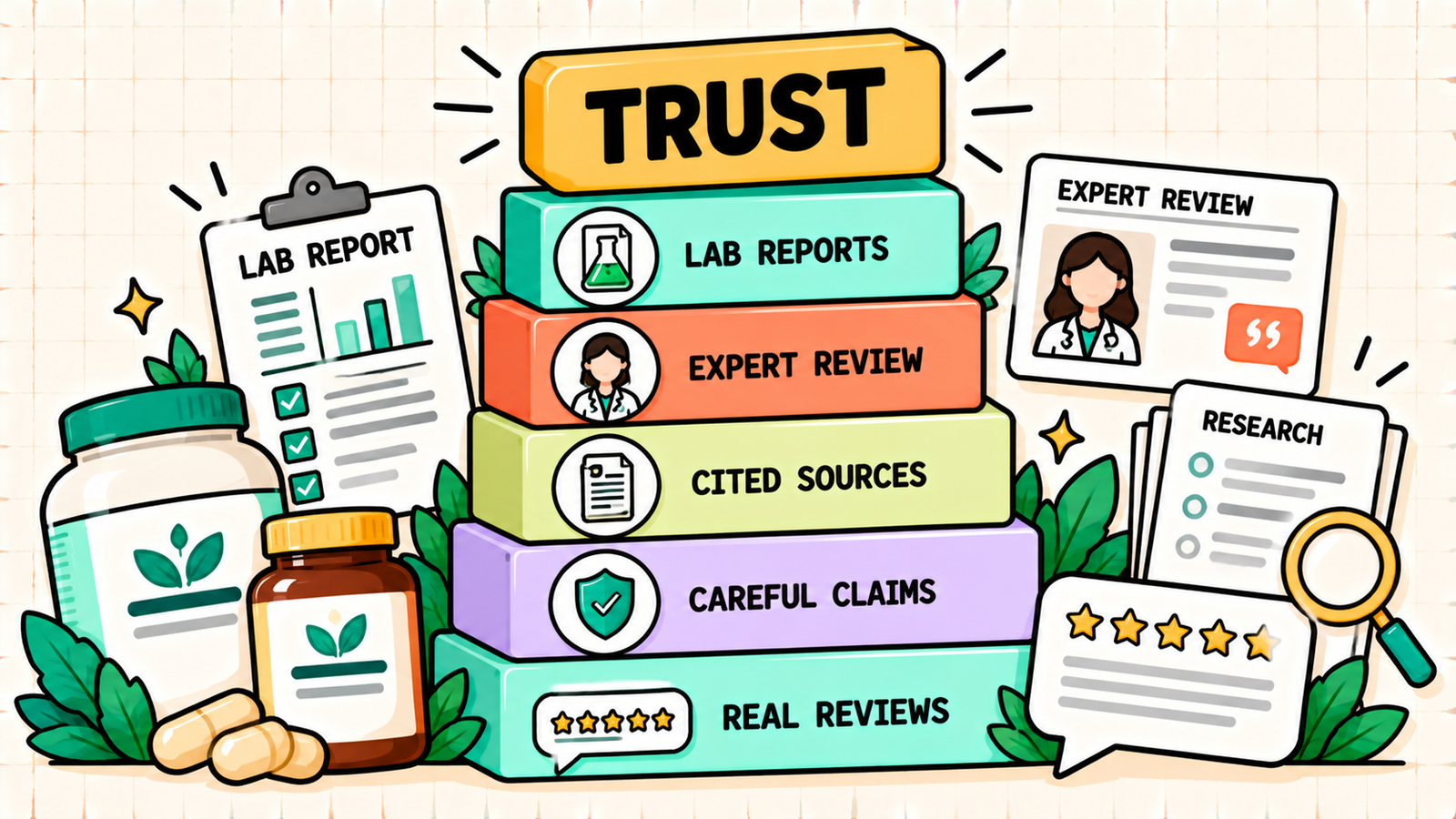
People ask ChatGPT and Gemini questions like "best vegetarian protein powder in India" or "is creatine safe for beginners." AI tools are cautious with health topics and favour accurate, well-sourced, clearly structured content from credible brands. Ingredient pages with citations, transparent lab reports, expert authorship, and consistent product information across your site and marketplaces make your brand easier to recommend responsibly.
How to measure supplement SEO
Track organic revenue and subscriptions, traffic and conversions from ingredient and goal pages, rankings for safety and comparison queries, branded search growth and sentiment, and repeat purchase rates from organic customers. In a repeat-purchase category, an organic customer who subscribes is worth far more than their first order suggests.
How long does SEO take for supplement brands?
Specific ingredient and safety pages can start ranking in three to five months. Goal-based guides and collections usually take five to nine months. Broad product terms can take a year or more against established brands. Lab report and branded trust pages can improve quickly because few competitors publish them well.
Common supplement SEO mistakes
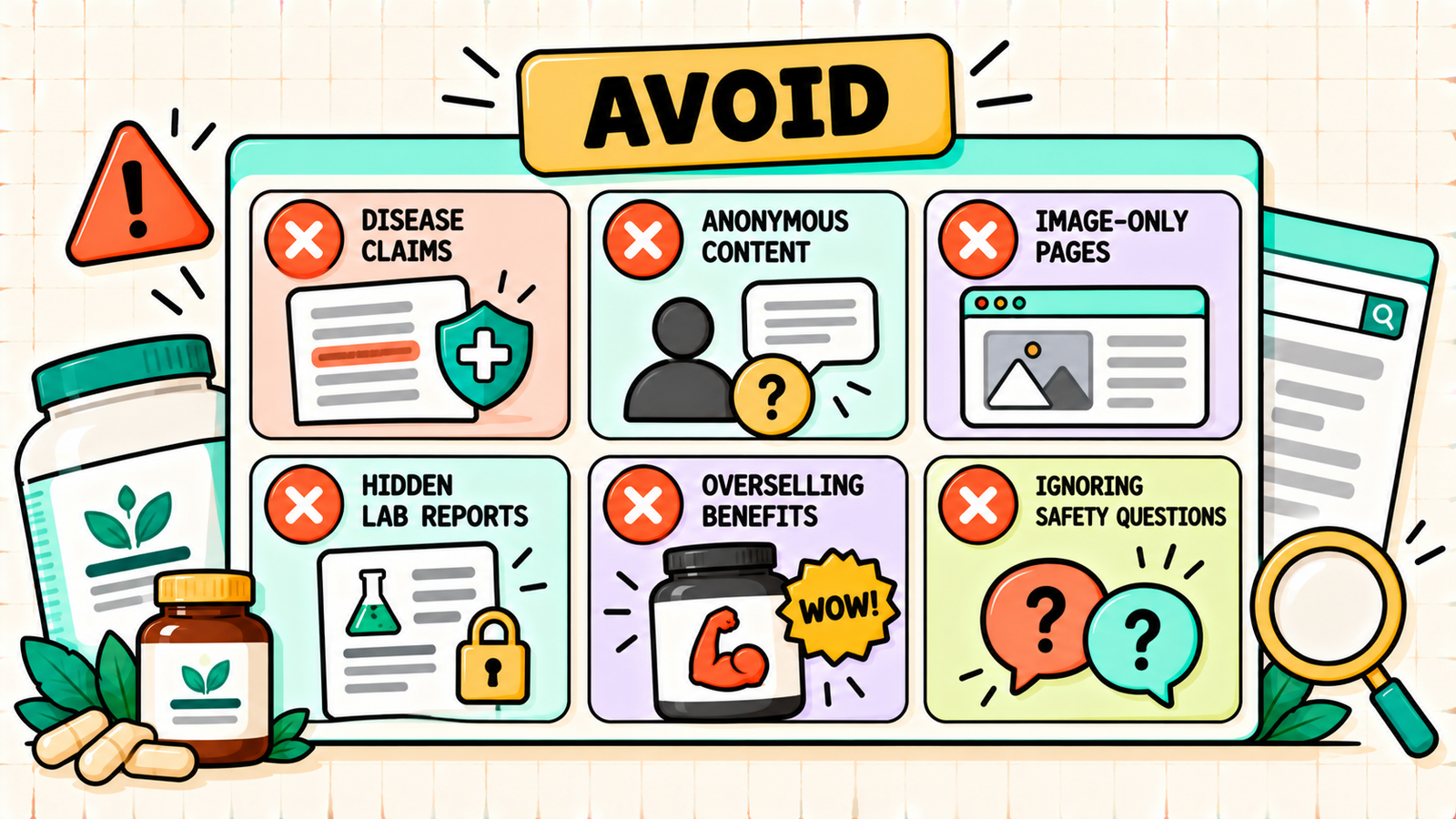
A few patterns appear again and again. Making disease or transformation claims damages trust and creates regulatory risk. Anonymous health content fails YMYL expectations. Image-heavy product pages give Google too little to understand. Hiding lab reports or certifications leaves authenticity questions unanswered. Writing goal guides that oversell supplements loses sceptical buyers. And ignoring safety questions hands the most important searches to competitors and forums.
Edtech SEO: How Indian Edtech Brands Get Student Leads
The bottom line
SEO for supplement brands works when trust leads. Build an ingredient library with credible sources, create honest goal guides and collections, answer safety questions directly, publish lab reports and quality proof, complete your product pages, and write fair comparisons. Keep every claim careful and expert-reviewed. In a category full of hype, the brand that is clearly accurate and transparent becomes the one buyers, Google, and AI assistants trust most. Trust takes longer to build than hype, but it is also far harder for a competitor to copy, and in a repeat-purchase category it keeps paying back with every reorder.
If you want an SEO strategy built for a supplement or nutrition brand, LetMeRank works with Indian D2C brands on organic growth and trust content, starting with a free audit.