Edtech in India learned an expensive lesson. The growth years ran on paid ads, sales calls, and aggressive discounting. When funding tightened, customer acquisition costs became impossible to ignore, and many brands discovered they had built almost no organic demand of their own. Edtech SEO fixes that. Students research constantly: they search for syllabi, previous year papers, exam dates, cut-offs, concept explanations, and course comparisons. Every one of those searches is a chance to meet a future student before a competitor does, without paying for the click.
This guide covers how SEO works for edtech, the content types that bring student leads, how to structure an edtech site, and the mistakes that keep most education brands invisible.
Why SEO matters for edtech
Students and parents do more research before an education purchase than almost any other category. A course is expensive, the outcome matters, and the decision takes weeks. That long research phase happens mostly on Google and YouTube. Brands that show up repeatedly during that phase, answering questions, solving problems, explaining concepts, become familiar and trusted long before the student fills a lead form.
SEO also compounds in a way ads cannot. A well-ranked "JEE Main syllabus" or "NCERT solutions class 10 maths" page can bring thousands of students every month for years. Each of those students is a potential lead at zero marginal cost.
How students search
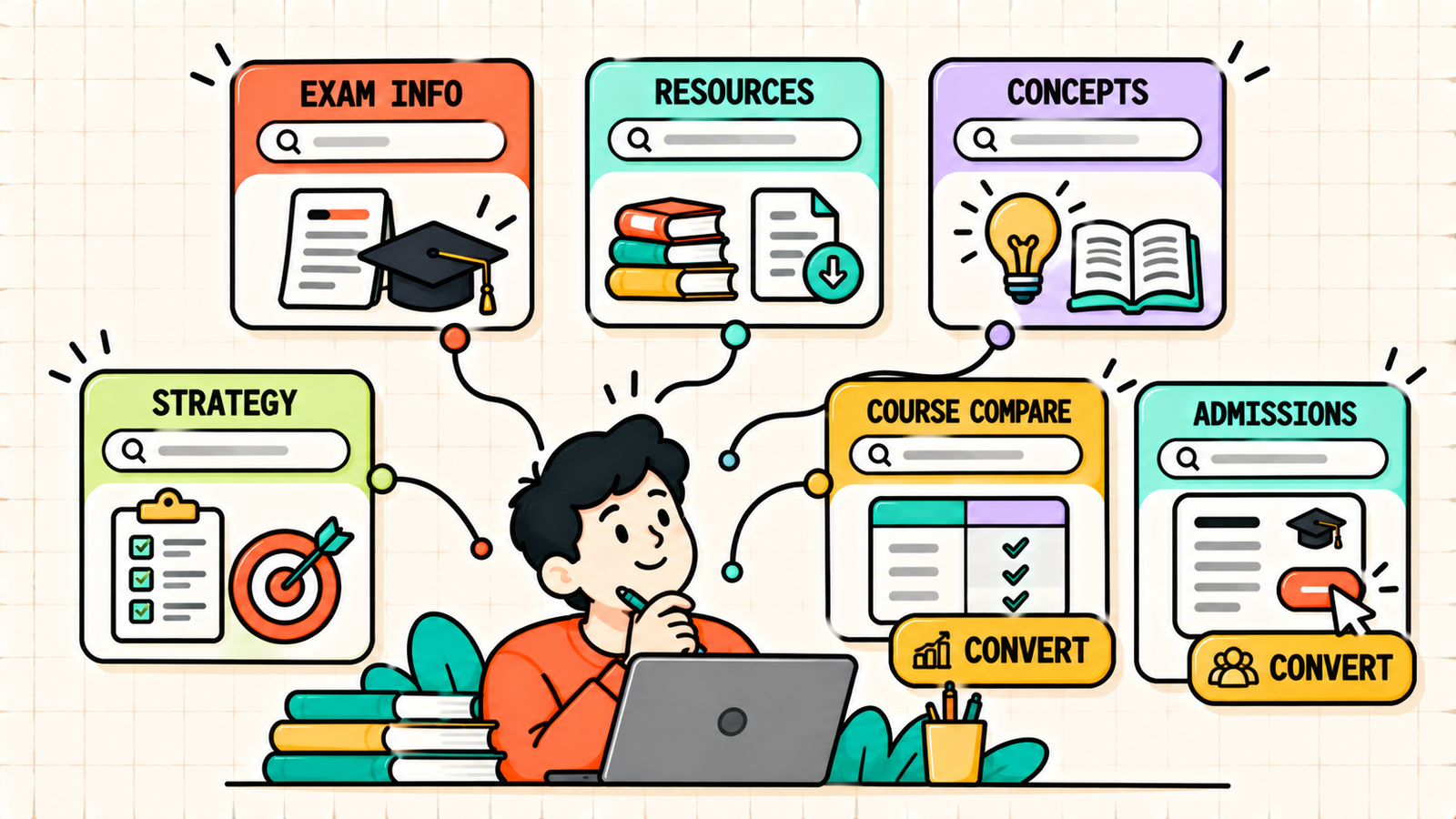
Edtech search demand falls into a few groups, and each needs a different type of page.
| Search type | Example queries | Best page type |
|---|---|---|
| Exam information | JEE Main syllabus, NEET exam date, GATE eligibility | Exam hub pages, updated every cycle |
| Study resources | NCERT solutions class 10 maths, JEE previous year papers | Resource library pages with HTML content |
| Concept explanations | What is integration by parts, Newton's laws explained | Concept explainer pages with examples |
| Course comparison | Best JEE coaching in India, [brand] vs [competitor] | Comparison pages, course pages |
| Brand evaluation | [brand] review, [brand] fees, is [brand] good | Branded trust pages, FAQ, review pages |
| Preparation strategy | How to prepare for NEET in 6 months, study plan for JEE | Strategy guides, study planners |
Content types that bring student leads
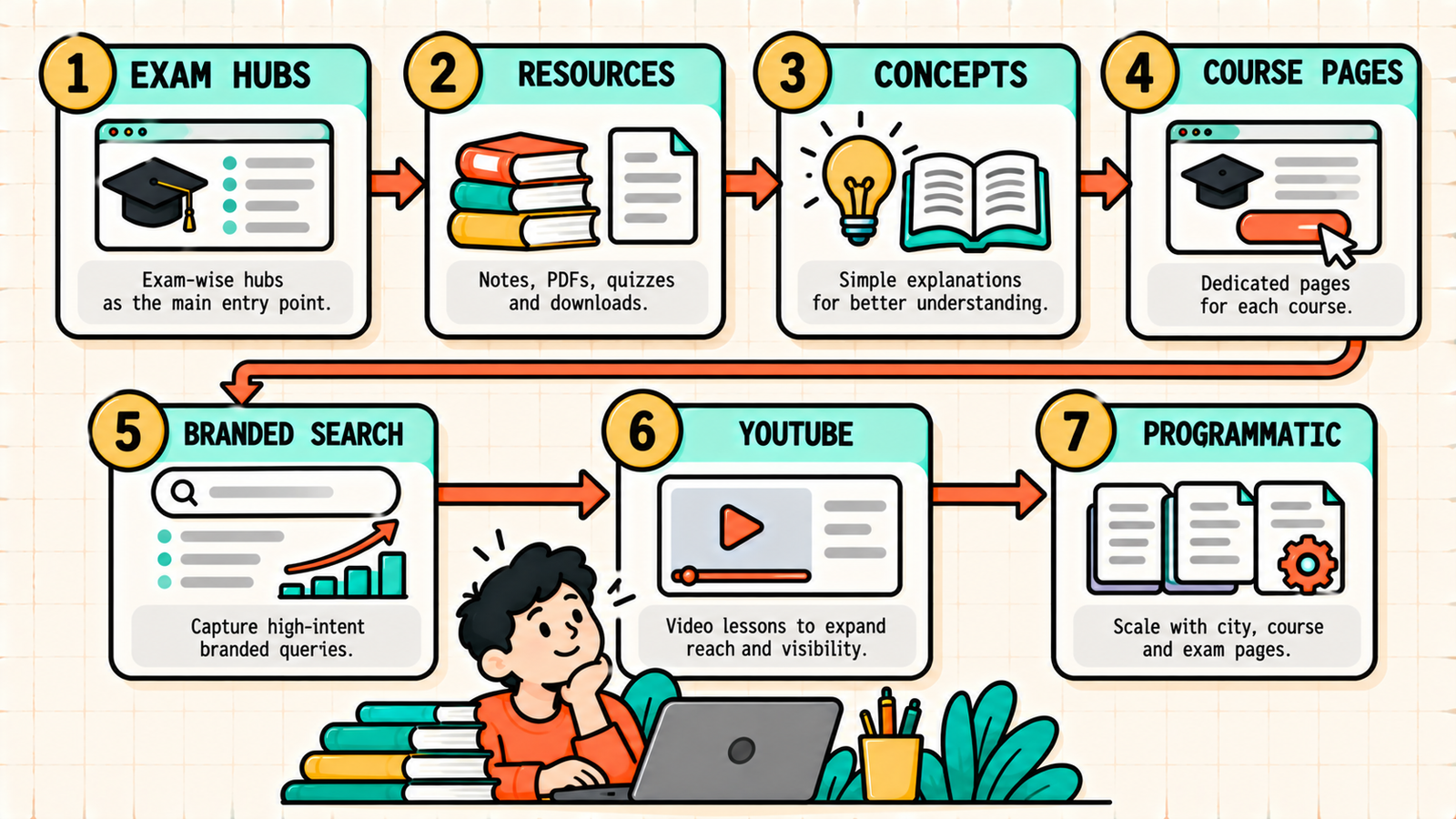
1. Build exam hub pages
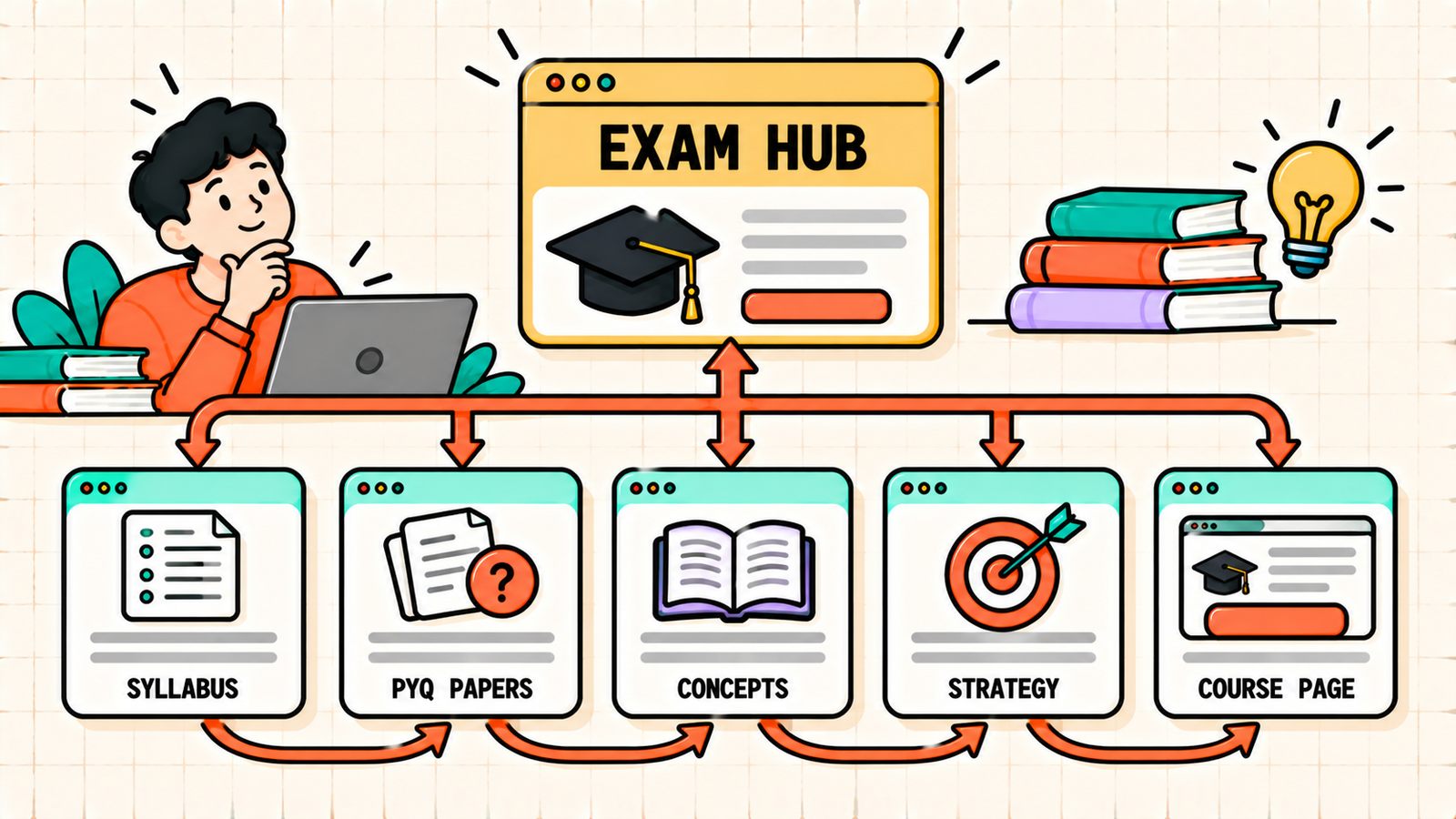
For every exam you prepare students for, create a central hub page covering the syllabus, exam pattern, important dates, eligibility, cut-offs, and preparation strategy, with links to every related resource on your site. Keep the URL permanent (no year in the slug) and update the content every cycle. These hubs become the authority pages that pass strength to everything else.
2. Create resource libraries
NCERT solutions, previous year question papers with solutions, sample papers, formula sheets, and chapter-wise notes are some of the highest-volume searches in Indian education. Build them as clean, fast, mobile-friendly pages, not just PDF downloads. A PDF-only resource gives Google little to index and students little reason to stay. An HTML page with the solution, explanation, and a downloadable PDF does both.
3. Publish concept explainers
Students search individual concepts constantly. Short, clear explainer pages for important topics, ideally with a diagram, a solved example, and an embedded video, rank well and introduce your teaching quality. Prioritise concepts that students find hard, because those searches come with the strongest need.
4. Make course pages that convert
Your course pages should answer everything a parent and student want to know: who the course is for, syllabus covered, schedule, faculty and their experience, results, fees, demo class access, and a clear enquiry or enrol button. Add FAQ sections with real questions from your sales team. Course pages compete on trust, so results and faculty credentials matter more than design.
5. Own your branded and comparison searches
Students search "[brand] review," "[brand] fees," and "[brand] vs [competitor]" before they buy. If complaint threads and competitor pages dominate those results, you lose students at the last step. Create honest pages on fees, results, refund policy, and how your course compares, and encourage genuine reviews.
6. Use YouTube alongside search
YouTube is where Indian students study. Video lectures, solved questions, and strategy sessions rank on YouTube and often in Google's video results. Embed your videos in the matching concept and resource pages, so each page and video support each other.
7. Consider programmatic pages carefully
Edtech has natural programmatic opportunities: chapter-wise solution pages, college-wise cutoff pages, and rank-to-college predictor pages. They can drive huge traffic, but only if each page has accurate, unique, useful information. Thin auto-generated pages hurt your whole site.
Site structure for edtech
A clean structure helps Google understand which pages matter. A simple model: Exam hub (for example /jee-main/) links down to resource sections (/jee-main/previous-year-papers/, /jee-main/syllabus/), concept pages, strategy guides, and the course page. Every resource and concept page links back up to the hub and across to the course page where relevant. This hub-and-spoke model concentrates authority on the pages that rank and the pages that convert.
Seasonality in edtech SEO
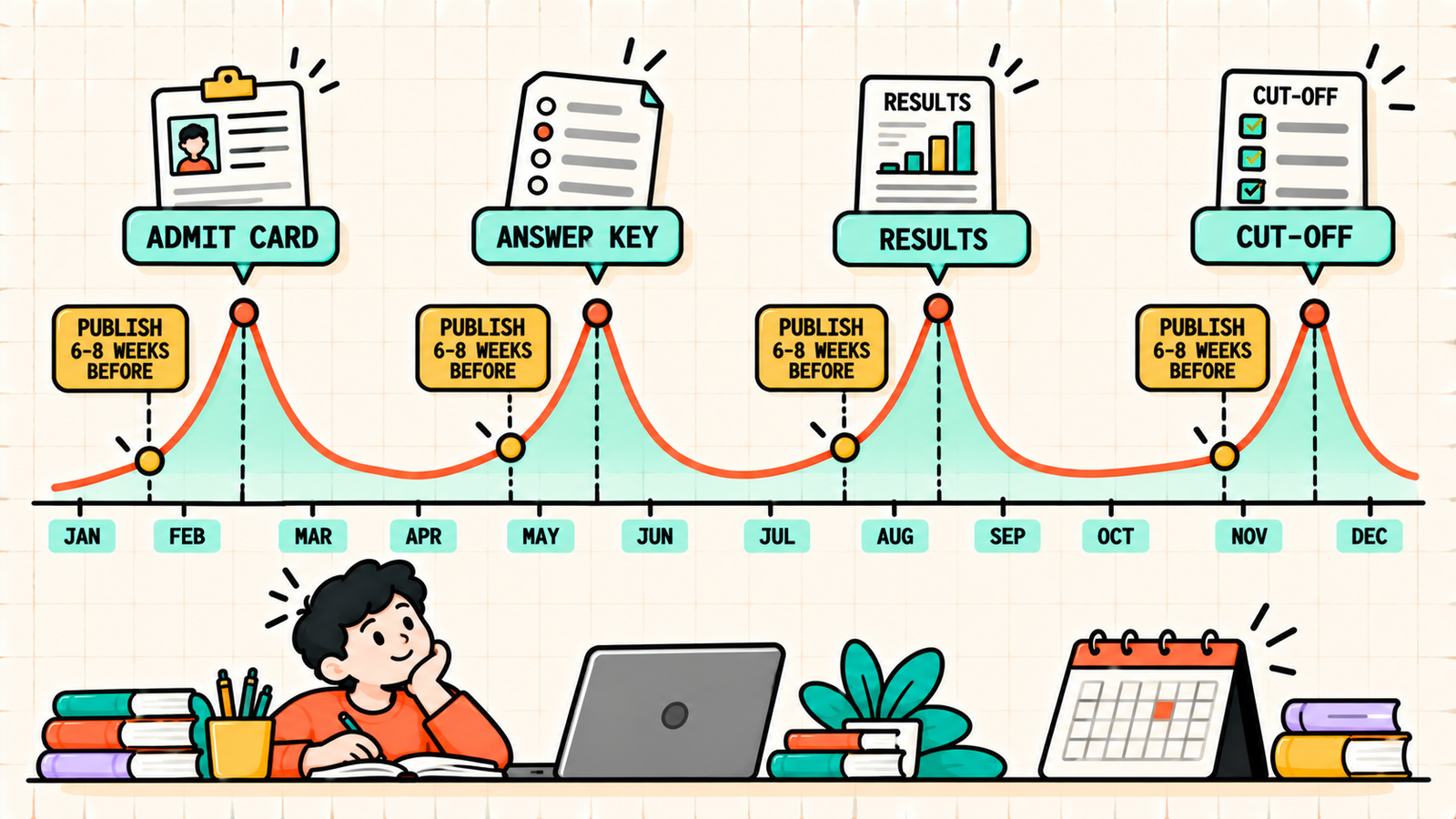
Education search is extremely seasonal. Searches for exam dates, admit cards, answer keys, results, and cut-offs spike around specific dates every year, and board exam resources spike in the months before exams. Because pages take time to rank, update and publish seasonal content six to eight weeks before the peak, and reuse the same URL every year so authority accumulates. A page that ranked last year for "NEET cut-off" can rank again this year if it is updated in time.
We'll find exactly where your edtech brand is losing organic student leads.
Get a clear, data-backed plan to build exam hubs, resource libraries, and course pages that bring students and convert them into leads.
Turning resource traffic into leads
The biggest leak in edtech SEO is resource traffic that never converts. A student downloads previous year papers and leaves. To capture that traffic, add relevant, non-intrusive calls to action on every resource page: a free mock test, a chapter-wise test series, a doubt-solving session, a study planner, or a demo class for the exact exam and subject the student is studying. Gate only genuinely valuable extras (a full test series, detailed solution videos) behind a phone number or email, not the basic resource itself, because gating basic resources hurts rankings and frustrates students. Then follow up quickly on WhatsApp with useful material, not just sales calls. A student who receives a helpful study plan the same day is far more likely to attend a demo than one who receives five sales calls.
Content in Hindi and regional languages
A large share of Indian students, especially in Tier 2 and Tier 3 cities and for state board and government exams, search in Hindi or regional languages. Queries like "class 10 science notes in Hindi" or "NEET ki taiyari kaise kare" have strong demand and much lower competition than English equivalents. Bilingual resource pages and Hindi explainer videos open an audience most large edtech brands serve poorly. Write naturally in the language students use rather than translating English pages word for word.
Edtech SEO and AI search
Students increasingly ask ChatGPT, Gemini, and Perplexity to explain concepts, build study plans, and compare courses. For concept questions, AI often answers directly, so your content needs to be the clear, accurate source it draws from: precise definitions, worked examples, and well-structured explanations. For course comparison questions, AI tools rely on reviews, results, and mentions across the web. Consistent course information, real results, and genuine student reviews help AI describe your brand accurately.
SEO for Fintech: How Indian Fintech Brands Win Search Without Breaking Trust
How to measure edtech SEO
Traffic is the easy part. Track what matters: organic leads and demo class sign-ups by landing page, which resource and concept pages lead students to course pages, rankings for exam hub and course comparison keywords, branded search growth, and cost per lead from organic versus paid. A resource page that brings 50,000 visits but no leads needs better internal links and calls to action. A course page with 500 visits and 40 leads is gold.
How long does edtech SEO take?
Resource and concept pages on lower-competition topics can start ranking within two to four months. Exam hub pages and competitive resource categories like NCERT solutions often take six to twelve months, because large players dominate them. Branded and course pages can improve within weeks once optimised. The brands that win plan around the exam calendar and keep publishing consistently through the year, not just in admission season.
Common edtech SEO mistakes
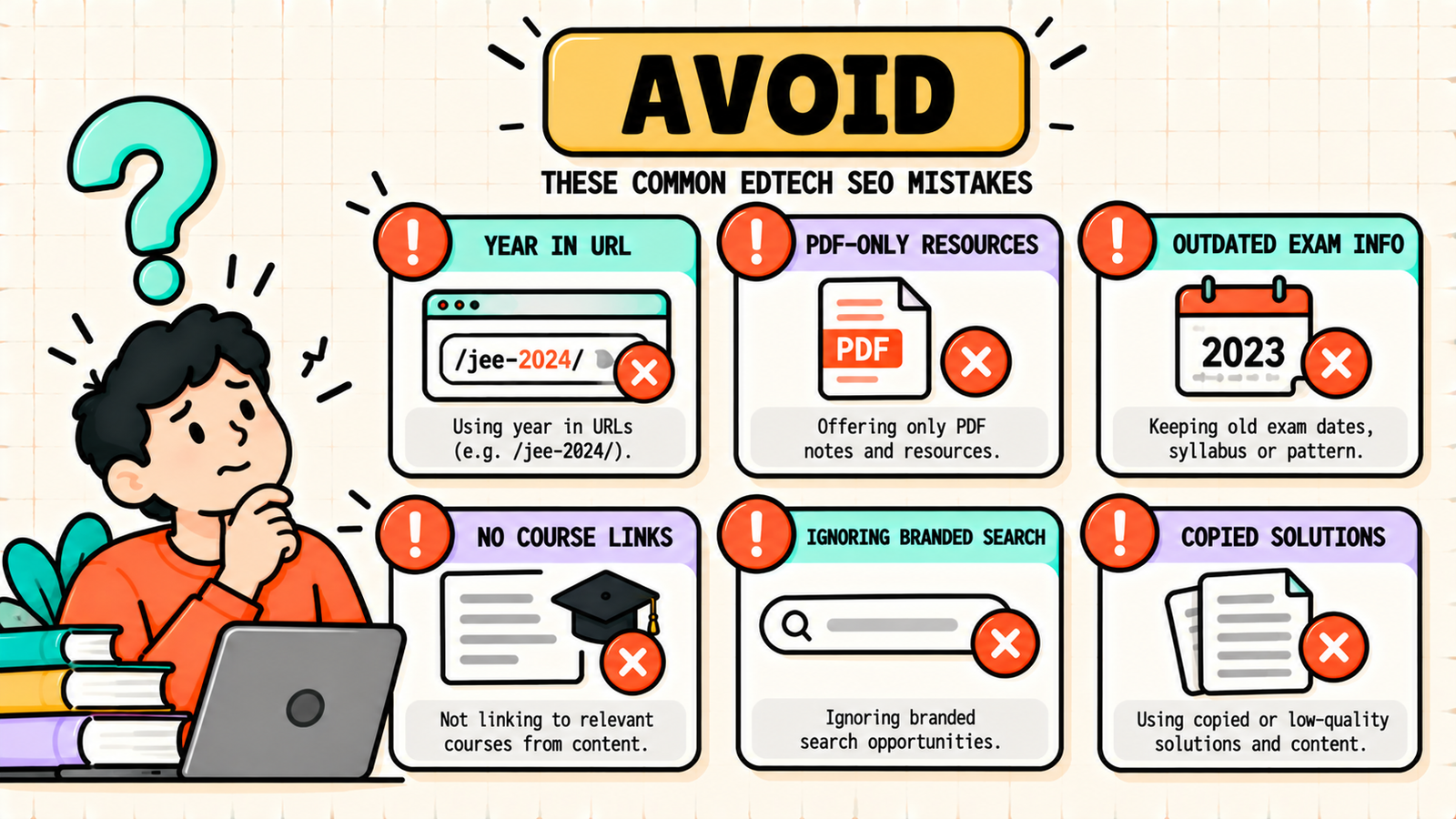
A few patterns appear in almost every edtech audit. Putting a year in exam page URLs forces you to start from zero every cycle. Publishing resources only as PDFs gives Google nothing to rank. Leaving exam information outdated loses trust quickly in a category where dates and patterns change every year. Writing content that never links to course pages wastes traffic. Ignoring branded searches lets complaint threads define your reputation. And producing thin, copied resources, the same solutions every other site has, gives Google no reason to choose you.
Edtech SEO checklist
| Area | Action |
|---|---|
| Exam hubs | One permanent hub per exam, updated every cycle |
| Resources | HTML pages with solutions plus downloadable PDFs |
| Concepts | Clear explainers with examples and embedded video |
| Course pages | Syllabus, faculty, results, fees, demo, FAQ |
| Branded search | Fees, reviews, results, refund, comparison pages |
| Structure | Hub and spoke, every page links to hub and course |
| Seasonality | Publish 6 to 8 weeks before peaks, same URLs yearly |
| Measurement | Organic leads by landing page, not just traffic |
Perplexity AEO: How to Get Your Brand Cited in Perplexity Answers
The bottom line
Edtech SEO turns the long student research phase into a lead engine. Build permanent exam hubs, resource libraries, and concept explainers to attract students, and course, branded, and comparison pages to convert them. Structure the site around hubs, plan content around the exam calendar, connect search with YouTube, and measure leads by landing page. It takes months to build, but every ranked page keeps bringing students without another rupee in ad spend.
If you want an SEO strategy built for an edtech or test prep brand, LetMeRank works with Indian edtech and JEE/NEET brands on organic student acquisition, starting with a free audit.